
Residential IP fraud: 8% of geofeed entries lie
Discover how 8% of geofeed entries misstate locations, turning datacenter blocks into fake residential IPs that risk your network security.

Discover how 8% of geofeed entries misstate locations, turning datacenter blocks into fake residential IPs that risk your network security.

With 67% of large firms reporting changed connectivity, I explain why standard bandwidth fails AI inference and what your network needs today.
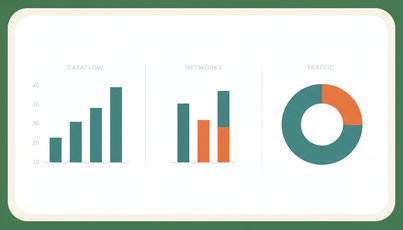
I break down how $110.9B in Q4 cloud spending proves AI is moving past pilots into real production workloads.

Asia's data center vacancy fell to 10.9% in 2025. AI workloads need 30kW racks, straining grids beyond current capacity limits.

China Telecom burns 50M tokens daily, shifting from pipes to compute. We analyze how this new currency redefines telecom revenue streams.

Attackers split 1.7MB DOOM files across 2,000 DNS TXT records to run code in memory without touching disk storage.

With cybercrime hitting $10.5 trillion, I urge networks to swap manual registry entries for cryptographic RPKI validation today.

I analyzed the RIPE 2025 report's EUR 41.1M budget to see how IPv4 transfers really work post-exhaustion.

One peer sent 2.93 billion updates in a day. Learn how to filter this pathological BGP noise and reclaim accurate routing intelligence.

See how 5.4% of accepted announcements bypass filters due to route server blind spots in ASSET expansion logic today.

I break down why the 394-member threshold shapes the 2026 agenda and what it means for your LIR status in Edinburgh.

AWS and Lumen now automate private connectivity, cutting deployment to minutes. Learn how this supports the $3 trillion cloud market by 2034.

With 53% of firms moving to hybrid cloud, I break down APNIC 62's split schedule and how to submit your lightning talk by Sept 8.

Akamai's 4,000 edge PoPs struggle when DNS resolvers hide true user location, causing real latency issues for streaming content in 2026.
With optical fiber holding 90% of the market, I argue that Pacific infrastructure must prioritize local peering over raw international capacity to survive.

See how Cloudflare's 500 Tbps budget absorbed a 31.4 Tbps attack in 35 seconds without engineer help, securing global BGP routes.

APNIC embeds staff locally to help the 7% still offline. I analyze how this pilot bypasses travel barriers for rural engineers.

I'm tracking six draft policies at ARIN 57 this April. With the US holding 1.665 billion addresses, these rule changes directly impact your IPv4 strategy.

Deploy Akvorado on a 6-core NUC to visualize IPv6 traffic. Learn how SNMP and NetFlow v9 reveal hidden ASN data in SOHO networks today.
See how 13,421 RIPE Atlas probes generate 3 billion daily results to map real internet topology beyond theory.

Outdated contacts cause 22% of bounced abuse alerts. Learn how APNIC policy changes and rising leasing rates directly impact your network's bottom line.

ARIN filled 67 requests on April 2. I explain why these cleared blocks beat volatile market rates for your network.

I analyze how the new controller delivers up to 60% better performance by routing traffic via AWS's private backbone instead of the public internet.

I analyzed why your NLB bill spiked after May 2025. Learn how bidirectional charges create a $0.02/GB cost and fix zonal affinity today.

Stop using public gateways. Discover how 3 Availability Zones create the mandatory foundation for compliant, isolated AI workflows today.

CHINOG 13 highlights the $723.78 billion market shift. I analyze why legacy MPLS remains vital despite SRv6 hype in real networks.

With 43.17% of IPv4 routes now signed, ignoring RPKI validation invites preventable outages. Learn why trust is mathematically enforced today.

The Q2 2026 plan targets schema normalization to fix legacy friction. With global investment hitting $2026.71 billion, LIRs need stable tools.

With IngressNGINX retiring in March 2026, I show how Gateway API unifies your EKS routing. Learn to split roles for 82% of container users today.

In July 2025, attackers used forged papers to bypass RPKI. Learn how social engineering now defeats technical validation and what operators must do.

Stop guessing at network health. Use the 3 new native metrics launched March 30, 2026, to see exact prefix counts and session states instantly.

See how LexisNexis replaced 1.25 Gb tunnel limits with a resilient global backbone to stop single points of failure today.

With APNIC growth at just 1.6%, I break down what this stagnation means for your IPv4 holdings and future planning.

Discover why 34% of assigned IPv6 blocks face routing loops. Learn to configure null routes and stop packet amplification before it crashes your links.

With 794 LIRs waiting up to 477 days, I analyze why RIPE's current strain demands immediate IPv4 market action today.

Running 55K in-kernel requests reveals why eBPF fails complex apps. I analyze the runtime constraints blocking true network acceleration today.

Despite 60.3% global ROA coverage, East Asia sits at 31.0%. We analyze why signing resources isn't enough without active ROV filtering.

With 461,596 routes tracked, the CIDR report highlights why strict aggregation is vital for global routing stability today.

Migrate VMware workloads to AWS without refactoring. Learn how the two-layer network model supports the projected 45% public cloud spend shift.

With 820,000 daily IoT attacks projected, I explain why RPKI validation is now mandatory for operators to prevent costly routing hijacks.

Cloudflare's Gen 13 servers run on just 2MB L3 cache per core. See how FL2 handles 41 million sites without legacy bottlenecks.

See how 294 million new users drive APNIC policy. Sharmin shares why operational reality must shape regional internet governance today.

See how bgproutes.io captures 50 distinct views per IXP to close critical routing blind spots legacy tools miss entirely.

With 50% capability reached, I analyze how new physical labs and automated tools prepare operators for the next wave of growth.

Over 7,000 routes stayed invalid in March 2020. See how SCION routing validates every hop to stop hijacks RPKI misses completely.

RIPE selected 16 fellows on 17 Mar 2026 to tackle DNS security gaps where less than 0.5% of queries are validated.

See how npNOG helped tackle the 3.4M cyber role shortage. My journey from local meetups to APRICOT 2026 shows why showing up matters.

See how Betsson cut costs across 3 continents by replacing complex mesh topologies with segment-based Cloud WAN routing policies.

Avoid the $14,056 per minute cost of outages by choosing agent-based tools wisely. Learn when human oversight beats complex declarative models.

I tested how a 250ms head start boosts native IPv6 traffic over 90%. Learn why aliased prefix detection saves your scan budget today.

ARIN confirms a 12-hour outage on March 28 where write APIs reject traffic. As a CEO managing IP assets, I advise halting automation scripts now.

Cloudflare now protects 41 million sites using ASPA. I explain why validating the full ASPATH chain stops leaks that origin checks miss.

Fix IPv4 subnet limits fast with the Nov 2025 CloudFront update. Learn how 90% of orgs now bridge accounts using AWS RAM securely.

Legacy collectors cover less than 2% of ASNs, leaving networks exposed. Learn how BMP aggregation reveals hidden routing leaks and hijacks instantly.

AFRINIC's legal fight with Cloud Innovation blocks IPv4 for 56 countries. I analyze how this paralysis impacts 2,400 members and market stability.

With only 12.3% of ASes enforcing validation, signing routes isn't enough. Learn how Indonesia mandates filtering to stop invalid announcements.

With 97.7% penetration, Baltic operators face tight margins. Learn practical IPv4 transfer strategies and RPKI tools for the 2026 landscape.

Don't let a vendor outage lock your traffic. With 58 million attacks forecast by 2026, keep your own BGP routing keys to stay online.

On March 16, 2026, RIPE NCC unifies six tools for 75 countries. I break down how this €41.1M upgrade simplifies your daily workflow.

With TWNIC hitting 98% IPv6 RPKI validity, I see how seven NIRs are finally turning administrative coordination into a real defense against route hijacking.

With 20% of traffic on Cloudflare, duplicate IPs break paths. Learn how stateful tracking fixes return routing without complex NAT configs.

See how RIPE NCC supports 97.7% of Northern Europe while aiding war-torn areas with payment extensions to keep critical networks running today.

Cloudflare's 2026 data shows silent ICMP drops cause hangs. Learn how dynamic discovery fixes these LTE path failures today.

Geoff Huston's tests prove IPv6 DNS lag is negligible. With 30.5% of queries now IPv6, operators must update RFC 3901 standards today.

I break down how 15 fellows navigate ARIN 57 in Louisville to shape internet number resource policy through direct mentorship and observation.

Reactive filters miss 20.4% of attacks. We analyze invisible weaknesses using LLMs to stop threats before user reports arrive.

Stop losing 60% of resolution control to public resolvers. Learn how DNS logs reveal actual cache nodes and cut latency today.

Cloud attacks rose 26% in 2024. I show how Cloudflare's new read-write CASB integration lets you revoke public links instantly without manual tickets.

ARIN's March 3, 2026 update clarifies LIR rules. With 53% of firms using hybrid cloud, precise IP governance is now critical for compliance.

With a 40% failure rate on fragmented IPv6 packets, relying solely on IPv6 transport risks critical outages. Dual-stack remains essential.

The $199 room rate at Galt House expires March 17. Secure your spot for ARIN 57 to influence IPv4 policy before costs rise.

APRICOT 2026 reveals agentic AI costs $20/month, straining budgets while shifting firewalling tasks to autonomous agents and new roles.

Bryton Herdes warns that relaxing maxLength protections creates a direct path for BGP hijacks, threatening the $205.98 billion security market.

Learn how originAS-only validation secures 450 exabytes of monthly traffic by ignoring maxLength constraints during volumetric attacks.

Italo Cunha notes maintaining 16 route6 objects for a single /44 block proves legacy IRR filtering cannot scale for modern operators.

Geoff Huston warns that 461,596 routing entries risk collapse. Learn how classless design fixes the rigid waste of old class-based blocks.

With 2026 penalties looming, learn why active path data replaces IRR. Avoid fines by verifying real traffic before honoring blackhole requests.

Learn why 25% of operators skip adjacency checks. Secure your BGP by validating multiple paths to stop accidental blackholing today.

Stop linear scans. With traffic hitting 450 exabytes by 2027, switch to ASSET origin checks to secure your DFZ filters now.

RPKI adoption hit 71% by late 2024, yet blind filtering persists. Learn why active path verification prevents the outages Saku Ytti warned about.

While 60% of clients support postquantum encryption, Cloudflare Radar shows origins lag. We analyze the critical gap in end-to-end security.

Cloudflare handles 20% of traffic, yet paths leak. See how ASPA objects cryptographically verify every hop in your BGP chain today.

I break down the APNIC Fellowship's dual tracks, noting the tight window closing on 13 March 2026 for this critical capacity building.

With cybercrime hitting $10.8T by 2026, ignoring routing security leaves your supply chain exposed to hijacks you can't control internally.

I break down the RIPE Labs competition offering full access to Edinburgh. With 120 countries represented, your technical voice could shape future policy.

With 773 LIRs queued and prices at $45, I explain why RIPE membership is now critical for securing your network assets today.

With terms ending May 2026, I analyze how AI impacts governance while IPv4 leases hit $0.50/month. Essential reading for members.

Don't miss the May 20 deadline to register via the LIR Portal. I break down how to vote on the 2025 Financial Report and board seats.

Only 8.11% of queries hit signed domains in 2026. I explain how CDS records remove manual errors and fix secure delegation gaps today.

APNIC serves over 4 billion people, yet prop164 risks routing failures. I explain why keeping IPv6 blocks at /32 protects long-term network stability.

With ASPA customer ASIDs up 539%, path validation is critical. I break down the 2025 shift from basic origin checks to topology-aware security.

Transparent forwarders let attackers bypass rate limiting. With open resolvers down to 1.4M, this invisible layer now fuels massive reflection volumes.

With $79 billion in assets at stake, the RIPE Arbiters Panel resolves critical IP conflicts. Learn how this body handles legacy and member disputes.

With 374 gTLDs disabling legacy ports, I analyze how RDAP handled a surge to 65 billion queries while securing registration data.

The new RIPE NCC course spans 24 hours to fix critical gaps in IPv6 infrastructure design and addressing architecture for modern networks.

With IPv6 stalled at 45%, IPv4x adds a 96bit subspace to extend your current 32bit infrastructure without replacing legacy hardware today.

Join us in Louisville April 22, 2026. With the market hitting $532B by 2035, learn which ARIN 57 tier fits your IPv4 strategy best.

Jakarta hosts APRICOT 2026 as data hits 220 zettabytes. I analyze why manual IPv4 management fails and how new bylaws fix routing security.

Learn how I run an autonomous system with 80,000 peers using FreeBSD. Stop renumbering networks and gain true portability today.

Despite 80.66% penetration, Indonesia's archipelago faces deep connectivity gaps. I analyze the 2025 policy and technical realities ahead of APRICOT 2026.

I break down the Nov 2025 Montevideo workshop. Learn why refining audit protocols matters before the $64.5B market shifts.

Only 4% of routes tag near origin. Learn how spatial correlation maps opaque community values to specific cities with 93% accuracy using passive data.

The NRO NC reviewed feedback from five mailing lists to shape the 2026 framework. See how global consensus drives regional IP stability today.

With a 539% rise in unique ASPA Customer ASIDs, I break down how network operators are securing BGP paths beyond simple origin checks.

ARIN targets full ASPA availability by March 2026. See why manual locking struggles against automated validation and what this means for your BGP security.

See how 30% of enterprises will automate network tasks by 2027. Learn practical IPv6mostly strategies from Google's real-world data today.

Legacy WHOIS fails with only 10-20% match rates. See how RDAP and RegIDs fix this mapping chaos for reliable network discovery today.

ARIN seeks input on 8 million records to fix governance. As a sales lead, I see this as vital for stable IPv4 markets.

I analyzed Q4 2027 data showing 212 state outages, yet physical cuts caused more disruption. See why infrastructure fragility now beats censorship.

As of January 23, 2026, APNIC members can sign documents directly in MyAPNIC using RSCs defined by RFC 9323 for better attestation.

A single automation error caused a 25-minute outage. See how Cloudflare's 12 Gbps route leak exposes gaps in legacy BGP policies.

ARIN 57 shapes policy for 40,000 organizations. See how April's hybrid model in Louisville changes resource governance and voting.

ARIN filled 149 requests with just 59 cleared blocks. I explain why legacy stigma is outdated and how to secure IPv4 now.

Iran's Jan 8 blackout saw a 98.5% IPv6 withdrawal. We analyze the BGP mechanics behind this total digital isolation event.

Applications for the ARIN 57 Fellowship close 26 January 2026. I break down how to prove your NRPM knowledge before AI takes over policy work.

See how 5 specific judges, including 2 former fellows, drive ARIN selection. Learn who shapes global IP policy for 8 million records today.

Eleven distinct route leak events since December prove AS8048 instability. I break down the eight misrouted IP prefixes and why bad code beats hackers.

Only 38% of RADB records matched RPKI in 2021. Use predictive intelligence to score origin-side vulnerabilities before they cause outages.

Tom Beecher rejected static models after seeing 9% IPv6 growth. Learn why originside scoring beats outdated path length heuristics for real risk.

Shorter paths aren't always safer. With only 43.17% RPKI adoption, relying on ASPATH length alone leaves your network exposed to hijacks and manipulation.