Blackhole path verification stops global outages
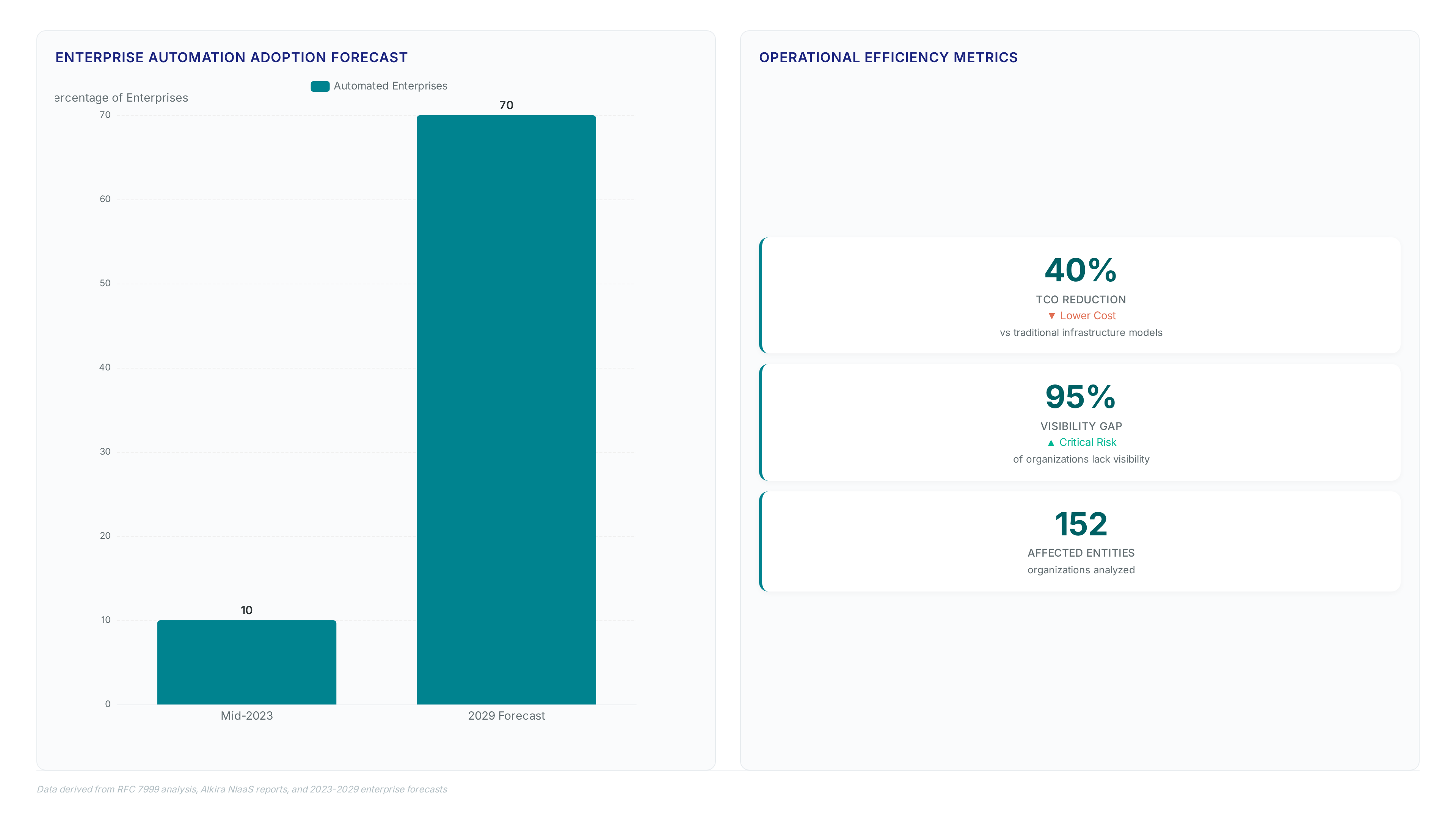
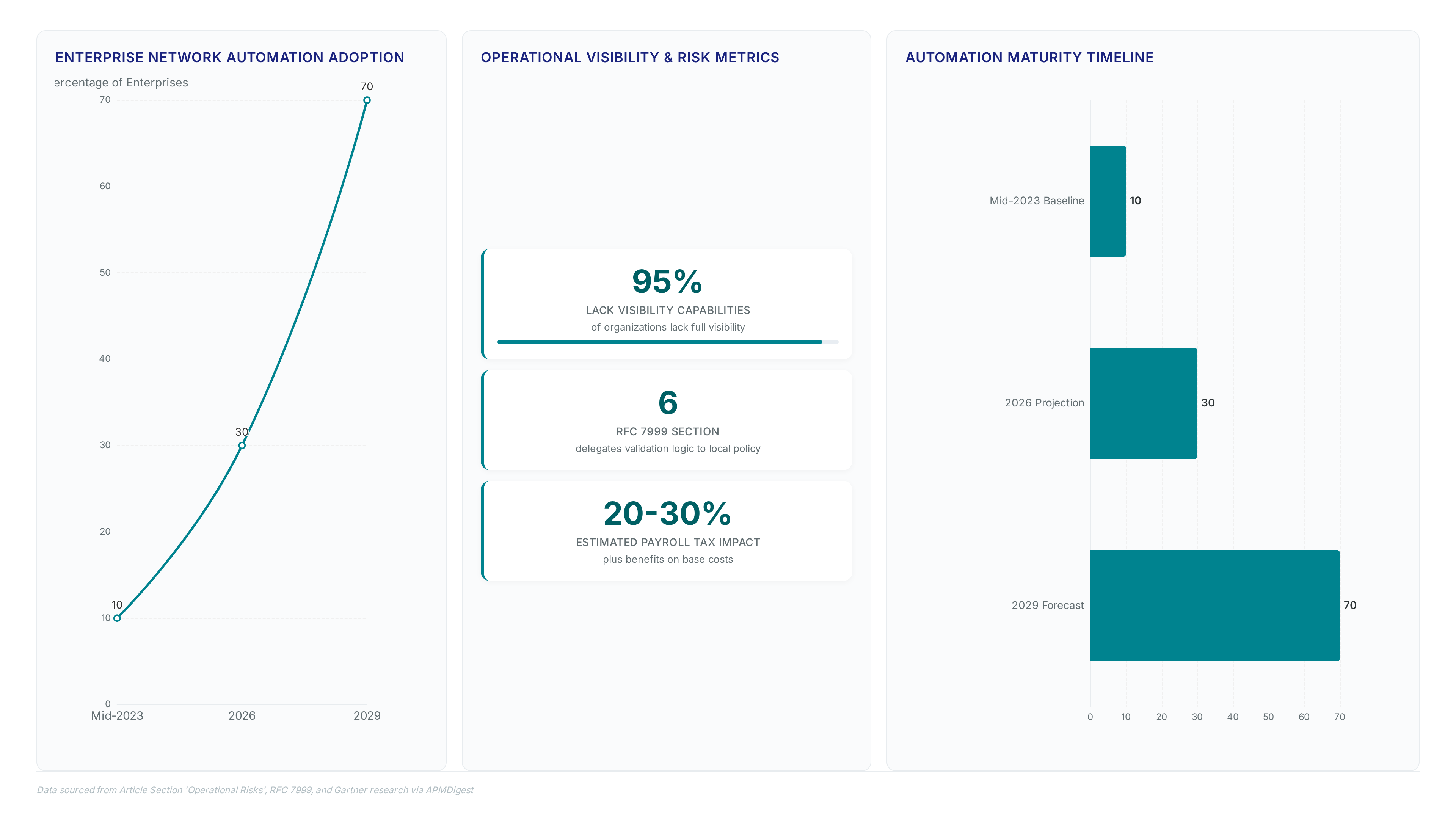
95% of organizations lack visibility into critical segments. That blind spot turns a local mitigation attempt into a global outage. Validating blackhole routes requires active path verification, not faith in legacy IRR data. Cross-referencing real-time MRT updates stops traffic from sinking everywhere instead of at the intended edge. When multiple plausible paths exist from different points of view, active path verification exposes the blind spots that allow unauthorized blackholing. We dissect RPKI validation mechanics to show how validating more-specific prefixes against ROAs prevents middle ASNs from hijacking source ASN intent. Moving past theoretical RFC 7999 ambiguities, we focus on implementation: assuming a route collector peers with all routers fails without strict prefix-list policies.
Gartner forecasts agentic AI dominance in network runtime activities by 2030. The window to manualize these defenses before automation scales existing flaws is closing. Job Snijders argues that erring on the side of caution means rejecting liberal blackhole requests unless the origin matches the directly adjacent customer AS. Using MRT data processing instead of fragile BMP streams allows networks to automate plausibility checks. This approach avoids collapsing diverse paths into a single, erroneous point of view.
The Critical Role of Active Path Verification in Blackhole Security
Active path verification validates BGP announcements against observed forwarding state across diverse vantage points. Job Snijders calls this process "dicy" because multiple active paths exist depending on the specific point of view (POV). A single IP prefix destination frequently appears in multiple customer prefix-lists, creating plausible but divergent routing scenarios. Operators receiving more-specific paths often collapse visibility to a single POV. This masks the true propagation scope of a blackhole request. The risk is tangible: 95% of organizations lack visibility into critical network segments, causing congestion and latency issues to stall mitigation efforts.
Generating Prefix-Lists via MRT UPDATES and Route Collectors
Accurate per-customer prefix-lists come from MRT UPDATES generated by route collectors peering with all routers. Job Snijders advocates using these files to ascertain the plausibility of blackhole requests, bypassing unreliable IRR data. This batch-processing workflow reduces deployment barriers compared to stream-oriented BMP approaches. Without strict validation, a middle ASN might trigger blackholing everywhere instead of the single active port intended by the source. Automation is not just convenient; it is financially mandatory. Specialized Security Specialists command base salaries around a substantial sum. Relying on human oversight for every request introduces latency that contradicts modern mitigation speed requirements.
Mechanics of RPKI Validation and MRT Data Processing Workflows
RPKI-valid-of-more-specific Authorization Logic
Containment works when you allow blackholes only inside prefixes authorized by RPKI ROAs for AS65535. This stops unauthorized traffic sinking. Job Snijders concludes this logic offers a reasonable precaution against middle ASNs injecting invalid routes. The mechanism validates the more-specific prefix against the origin authorization of the covering aggregate. This check confirms the blackhole requester holds legitimate rights to the address space. Legacy IRR data lacks the cryptographic binding required for high-confidence automation.
| Feature | RPKI ROA Validation | Legacy IRR Filtering |
|---|---|---|
| Authorization Scope | Cryptographic origin proof | Self-asserted policy objects |
| Update Latency | Minutes to hours | Days to weeks |
| False Positive Risk | Low (strict matching) | High (stale entries) |
| Deployment Overhead | Requires RIR signing | Requires manual maintenance |
Strict validation creates friction. Legitimate emergency mitigation requests sometimes lack pre-signed ROAs. Operators must balance security with availability, often requiring out-of-band verification for unsigned prefixes. Modern network automation tools struggle here because Day-0 provisioning scripts often collapse under complex Day-2 policy exceptions. Emerging agentic AI platforms promise to replace manual effort in these workflows. Fewer than 10% of enterprises currently automate half their network activities. This hybrid model maintains the integrity of the Zero-Trust Security posture while accommodating operational realities where cryptographic signatures lag behind urgent mitigation needs.
MRT UPDATE Files for Batch Route List Generation
Route collectors aggregate MRT UPDATE files to generate batch prefix lists. This method avoids the complexity of stream-oriented BMP architectures. The workflow parses binary dumps from multiple routers to reconstruct a unified routing table before applying filtering policies. Traditional automation tools often collapse under Day-2 operations. This batch method supports strong policy-driven workflows spanning multi-vendor orchestration. Operators extract candidate prefixes from the dump. They cross-reference them against RPKI ROAs to verify origin authority. The process rejects any blackhole request lacking cryptographic proof of ownership for the covering aggregate.
| Processing Mode | Latency | Resource Overhead | Deployment Complexity |
|---|---|---|---|
| Stream (BMP) | Near real-time | High CPU/Memory | Significant |
| Batch (MRT) | Periodic delay | Low/Moderate | Minimal |
Immediate mitigation speed conflicts with the safety of offline validation. Stream processing offers quicker reaction times but increases the risk of accepting unauthorized routes during transient instability. Batch processing introduces a deliberate delay. Every entry undergoes strict scrutiny before installation. This caution prevents scenarios where a middle ASN triggers blackholing across all points of view instead of a single active port. Platforms replacing manual effort via agentic AI still rely on scripted parsers to handle the volume of update messages efficiently. Data staleness between dump intervals remains a limitation. Rapid route flaps might go missing.
MRT Batch Processing Versus Stream-Oriented BMP
MRT UPDATE files enable offline batch validation. BMP streams demand real-time state synchronization for every route change. The mechanical distinction lies in data consumption patterns. Batch workflows parse binary dumps to reconstruct a unified routing table before applying filtering policies. This approach avoids the resource exhaustion seen when traditional tools collapse under Day-2 operations. Newer frameworks emphasize policy-driven workflows for multi-vendor orchestration.
Stream-oriented BMP architectures push updates immediately. They offer visibility into transient path changes that batch processing misses. Speed introduces complexity in correlating multiple points of view without overwhelming the validation engine. Emerging agentic AI systems aim to replace manual effort for these complex tasks. Most deployments still rely on static lists. Latency competes with precision. Batch methods sacrifice immediacy for thorough historical analysis.
| Feature | MRT Batch Processing | BMP Stream Protocol |
|---|---|---|
| Data Latency | High ( | Low (sub-second) |
| Resource Load | Spiky (CPU/Memory intensive) | Constant (network/CPU) |
| Use Case | Auditing, forensics, policy building | Real-time anomaly detection |
| Complexity | Lower (offline parsing) | Higher (stateful correlation) |
NANOG 97 in Bellevue features a workshop on Network Observability at Scale. The event reflects the industry shift toward advanced data processing methods. Operators must choose based on priority. Catching every transient leak matters less than maintaining a stable, auditable baseline for blackhole authorization in some contexts. Batch processing remains superior for validating static policy sets. Immediate reaction is less critical than absolute accuracy in these scenarios.
Implementing Strict Prefix-List Policies for Customer ASN Restrictions
RFC 7999 Section 6 Validation Framework for Adjacent ASN Policies
RFC 7999 Section 6 mandates that operators choose their own validation methods for restricting blackholes to directly adjacent customer ASNs. Job Snijders confirms this flexibility leaves the specific mechanism to local routing policy rather than a universal standard. Network architects must define strict prefix-list boundaries to prevent middle ASNs from sinking traffic for non-adjacent origins. A failure to enforce these edges allows unauthorized blackholes to propagate across the entire fabric instead of isolating the single active port.
- Configure the ingress policy to accept blackhole communities only from directly connected customer ASN peers.
- Validate that the requested prefix matches an RPKI ROA where the customer holds origin authority.
- Reject any announcement where the more-specific route lacks cryptographic proof of ownership.
This localized approach avoids the complexity of global coordination but requires rigorous boundary enforcement at every peering point. Operators integrating these checks into modern service frameworks often report up to 40% lower Total Cost of Ownership by automating rejection logic early in the pipeline. Traditional tools frequently fail during Day-2 operations, necessitating a shift toward policy-driven workflows that span multi-vendor orchestration.
RFC 7999 Section 6 delegates validation logic to local policy, requiring operators to explicitly limit blackhole permissions to directly adjacent ASNs.
- Define an ingress prefix-list that matches only routes originated by the immediate customer.
- Apply a route-map to reject blackhole community tags from any peer failing the adjacent ASN check.
- Generate the allowed prefix set offline using MRT UPDATE files to capture the full routing table state.
Batch processing MRT dumps avoids the state synchronization overhead inherent in stream-oriented BMP architectures. This method reconstructs a unified view before applying filters, preventing the race conditions where unauthorized sinks propagate across the fabric. The operational burden of maintaining such strict polices drives some entities toward outsourced models; customers adopting Network Infrastructure-as-a-Service However, relying on external platforms sacrifices the granular control needed to prevent middle ASNs from injecting invalid routes for non-adjacent sources. Without this binding, a single misconfigured peer can sink traffic everywhere instead of isolating the single active port.
Validation Checklist for Preventing Multi-Path Prefix List Collisions
Operators must cross-reference MRT UPDATE data against RPKI ROAs to prevent blackholing traffic across unintended points of view.
- Extract candidate prefixes from batch dumps, acknowledging that a single IP destination might appear in multiple prefix-lists due to multiple plausible paths.
- Validate each more-specific route against RPKI ROAs to confirm the customer ASN holds origin authority for the covering aggregate.
- Apply strict ingress filters that reject blackhole community tags unless the prefix matches an authorized origin within the directly adjacent.
- Monitor for path collapse events where receiving more-specific paths reduces visibility to one point of view, potentially hiding alternate active routes.
| Validation Source | Processing Mode | Collision Risk |
|---|---|---|
| IRR Database | Real-time Stream | High |
| MRT UPDATE Files | Batch Offline | Low |
| BMP Stream | Real-time Sync | Medium |
Batch processing MRT files lowers deployment barriers compared to stream-oriented approaches while ensuring thorough state reconstruction before policy application. This method prevents the scenario where unauthorized blackholes sink traffic everywhere instead of the single active port. The cost of this rigor is operational latency; teams cannot react to threats instantly without pre-computed lists. Organizations facing flexible scaling challenges, similar to BARBRI during peak exam periods, find manual monitoring insufficient for validating complex path assertions. Without cryptographic proof of ownership, accepting blackhole requests remains a significant vector for traffic interception.
Operational Risks of Honoring Non-Customer Blackhole Requests
Traffic vanishes across every point of view when operators accept blackhole requests without strict validation. Job Snijders warns that liberal policies cause drops everywhere rather than isolating a single active port. Middle ASNs lack explicit authorization to generate blackhole communities for prefixes they do not originate. This mechanism fails because the source never intended global suppression.
Operators face hidden costs when failing to restrict these announcements to directly adjacent customer ASNs:
- Global traffic loss replaces targeted mitigation due to path collapse.
- Automated systems propagate invalid states quicker than manual intervention allows.
- Trust erosion occurs between peers when unauthorized sinks appear in routing tables.
- Recovery requires full policy audits rather than simple prefix withdrawals.
Validating more-specific routes against RPKI ROAs offers a reasonable precaution. This approach depends on complete ROA Modern platforms promise efficiency. The risk of automated errors grows as organizations shift toward NIaaS Some retailers transformed their networks in just three weeks. Speed without validation increases the blast radius of misconfigured ingress filters. Section 6 of RFC 7999 delegates validation logic to local policy. Operators define the exact boundaries of acceptable risk themselves. The cost is increased operational overhead. The alternative permits unauthorized actors to dictate global traffic flow.
Real-World Impact of Blackholing Everywhere Instead of One Active Port
One non-customer request once triggered global traffic suppression across all points of view. The drop failed to isolate at a single active port. A middle ASN propagated a blackhole community without verifying origin authority. The AS path collapsed into a universal sink. Liberal acceptance policies ignore the distinction between adjacent customer prefixes and transit routes.
- Traffic destined for valid services vanishes at every ingress point instead of the targeted edge.
- Automated agentic AI systems
- Recovery requires flushing global BGP sessions, introducing latency spikes that persist long after the filter correction.
- Legitimate customers lose connectivity while the operator attempts to regain control.
Strict validation increases operational complexity. Unauthorized sinking of legitimate traffic remains the alternative. Job Snijders notes this scenario specifically happened where the source did not want the blackhole to appear. Missing RPKI ROA checks created the danger. Operators must err on the side of caution. The cost of a false positive in availability far outweighs the benefit of automated mitigation. Modern NIaaS platforms They cannot compensate for fundamental policy errors that discard packets everywhere. Rapid response times create tension with the necessity of verifying that the requesting AS actually originates the prefix. The network becomes an unwitting participant in a denial-of-service attack against its own customers without this check.
Ambiguity in Middle ASN Blackhole Generation Permissions
Intermediate carriers hold undefined permissions for blackhole generation. Source authorization remains absent. A transit provider injecting blackhole communities for customer prefixes assumes control without verifying intent. Unauthorized traffic sinking occurs across unintended points of view. Data indicates 30% of enterprises will soon automate network activities. The velocity of unauthorized propagation increases if policies remain liberal. RFC 7999 delegates validation logic entirely to operator discretion. No standardized chain of trust exists for non-adjacent ASNs. Operators must reject non-customer requests to prevent global outages.
Hidden costs of ambiguous permissions include:
- Traffic loss expands from one active port to every ingress point globally.
- Agentic AI systems
- Peer trust erodes when unauthorized sinks alter legitimate transit flows.
- Legal liability may arise from collateral damage inflicted on third-party networks.
- Reputation damage persists long after technical resolution.
InterLIR recommends restricting blackhole acceptance to directly adjacent customer ASNs only. Validating more-specific routes against RPKI ROAs provides a safer alternative than trusting middle-ASN claims. This approach prevents the collapse of multiple plausible paths into a single, incorrect sink.
About
Alexei Krylov serves as the Head of Sales at InterLIR, a Berlin-based marketplace specializing in IPv4 and IPv6 resource redistribution. While his primary focus involves B2B transactions and legal compliance for IP assets, his daily operations require a deep understanding of BGP hygiene and route object integrity. This expertise makes him uniquely qualified to discuss blackhole routes, as validating these paths is critical for maintaining the security reputation of leased IP blocks. At InterLIR, ensuring that addresses are free from hijacking or improper filtering is necessary for customer trust. Krylov's work directly intersects with network observability, as he helps clients navigate complex routing policies to prevent service disruption. By connecting practical sales experience with technical route validation, he offers a grounded perspective on how operators can effectively manage blackholing strategies while preserving the cleanliness of their IP portfolios in an evolving internet environment.
Conclusion
Scaling blackhole mitigation without strict adjacency constraints invites catastrophic failure when Agentic AI begins executing network changes autonomously. By 2030, AI agents will dominate runtime operations, meaning today's permissive policies will soon allow automated systems to propagate invalid state changes quicker than any human team can intervene. The operational cost shifts from manual correction fees to irreversible reputational decay and potential legal liability for collateral damage across third-party networks. Relying on operator discretion under RFC 7999 is insufficient when machine-speed execution amplifies policy ambiguities into global outages within seconds.
Organizations must mandate that blackhole acceptance applies strictly to directly adjacent customer ASNs by the end of Q2 2026. Do not trust middle-ASN claims or liberal community propagation rules; instead, enforce validation against RPKI ROAs for all more-specific routes before sinking traffic. This specific architectural boundary prevents automated agents from collapsing legitimate transit flows into incorrect sinks based on unverified upstream signals. Start this week by auditing your current border router configurations to identify and remove any acceptance filters that allow blackhole communities from non-customer peers.
Frequently Asked Questions
Most organizations lack visibility into critical network segments, causing blind spots. Data shows 95% of organizations cannot see these segments, allowing traffic to sink globally instead of at the intended edge port.
High labor costs make manual oversight financially unsustainable for modern networks. Security Specialists command base salaries around $130,000, making automated list generation via MRT files a necessary cost-saving measure.
Collapsing multiple paths to one point of view masks unauthorized propagation scopes. This error causes blackholing everywhere instead of the single active port, creating catastrophic misconfiguration where traffic sinks globally.
Operators should restrict blackholes to routes originating in the directly adjacent customer ASN. This cautious policy prevents middle ASNs from imposing undesired sinkholes on source networks without explicit authorization or ROA validation.
Batch-processing workflows using MRT UPDATE files lower deployment barriers compared to stream-oriented approaches. This method allows operators to automatically ascertain request plausibility using non-IRR sources while avoiding fragile real-time stream dependencies.