IPv6 city governance: Xiong'an's 2026 APNIC win
On April 6, 2026, APNIC awarded its first city-level plaque to Xiong'an, marking the shift in global network governance. (Xiongan new area delegates visit apnic)
The rise of the IPv6-enabled city represents a strategic pivot where municipal infrastructure directly influences international routing policy and security standards. This is not merely about address exhaustion; it is about embedding resource certification into the physical fabric of smart urban environments. As Gartner predicts global AI infrastructure spending will hit a substantial amount. 5 trillion in 2026, cities like Xiong'an are positioning their networks to handle the massive data loads required by next-generation accelerators and data centers. The thesis is clear: future urban competitiveness depends on treating IP deployment as a geopolitical asset rather than a technical utility.
Readers will examine the strategic role of the city plaque in validating large-scale deployments within the Asia Pacific region. Finally, the analysis covers the operational framework for hosting RPKI training, detailing how Xiong'an uses APNIC cooperation to secure its digital backbone against emerging threats. This is the new baseline for urban survival.
The Strategic Role of the IPv6 City Plaque in Global Network Governance
The IPv6 city plaque formalizes municipal network governance maturity through direct Regional Internet Registry membership rather than symbolic certification. On 6 Apr 2026, APNIC Director General Jia Rong Low presented this inaugural recognition to Dr. Yang Guoliang, marking a shift where cities assume direct accountability for address space stewardship. This designation elevates Xiong'an from a deployment site to a governing entity within the global routing system. Standard IP allocation flows through national ISPs or research institutes, yet this plaque establishes the city as a distinct member of APNIC. Remote delegates, including Wang Yanwei, joined discussions to align local infrastructure with regional policy frameworks. The timing coincides with global native IPv6 access reaching 50.10% of user traffic, signaling that majority adoption now demands granular governance models.
| Traditional Model | City Plaque Model |
|---|---|
| ISP holds address blocks | Municipality holds address blocks |
| Policy set by commercial terms | Policy set by urban planning goals |
| Visibility limited to upstream | Direct visibility in RIR databases |
Direct RIR membership introduces operational overhead that most municipal IT departments lack the staff to manage. The cost is measurable: city engineers must now handle ROA creation and AS path validation directly instead of deferring to an upstream provider. This friction limits rapid replication in smaller jurisdictions without dedicated network operations centers.
A functional IPv6-enabled city mandates direct RIR membership and scenario-driven sensor integration rather than mere address availability. Xiong'an operationalizes this definition through 1,000+ AI-equipped cameras in Rongdong that detect 19 distinct municipal issues without NAT translation layers. This deployment scale requires delegating /48 prefixes to individual sites via DHCPv6-PD, ensuring each camera cluster maintains a globally routable identity. Static addressing remains reserved strictly for backbone point-to-point links to preserve routing table stability. Adoption timing aligns with infrastructure refresh cycles, as enterprise migrations often span multiple years before reaching midpoint completion. Google's experience illustrates that touching every network layer demands a multi-year horizon, making early planning necessary for municipal IoT projects. Operators delaying integration until IPv4 exhaustion face compounded technical debt and complex dual-stack maintenance burdens.
| Deployment Phase | Action Item | Constraint |
|---|---|---|
| Planning | Assign /48 per district | DHCPv6-PD support required |
| Sensor Install | Enable unique global addresses | No private ULA space |
| Governance | Join RIR directly | City assumes liability |
Regional variance complicates benchmarking, as nations like France demonstrate 86% penetration while global averages lag significantly behind. Xiong'an bypasses these disparities by treating the city as a single autonomous system under the Future Network Research Institute. The limitation remains operational complexity; managing direct BGP sessions for municipal services introduces overhead absent in ISP-mediated models.
Validating the IPv6 city plaque requires simultaneous in-person technical leadership and remote administrative delegation from municipal bureaus. Dr. Yang Guoliang accepted the designation physically, while Wang Yanwei joined remotely to confirm data bureau alignment. This dual-presence model ensures that both network architecture and policy governance receive direct stakeholder sign-off before RIR recognition. The process mandates verification of scalable infrastructure capable of handling state-led digital twin experiments without market-led intermediaries.
| Validation Role | Presence Mode | Responsibility Scope |
|---|---|---|
| Institute President | In-Person | Technical architecture acceptance |
| Bureau Director | Remote | Data policy alignment |
| Committee Deputy | Remote | Administrative oversight |
Successful ratification depends on proving system durability under load, such as the Xiong'an Urban Computing Center managing massive concurrent connections during voucher campaigns. Architectural firms like Skidmore, Owings & Merrill define the physical layer, yet network operators must validate the logical overlay independently. A critical limitation exists where remote attendance alone fails to satisfy the physical handover requirement for the initial plaque. Future cities seeking similar status must replicate this hybrid delegation structure to satisfy InterLIR governance standards. Without explicit bureau-level remote participation, technical demonstrations remain insufficient for the membership validation.
Architectural Mechanics of Large-Scale IPv6 Deployment in Smart Urban Environments
IPv6 Addressing Architecture for Xiong'an Smart Sensors
Delegating /48 prefixes to sensor clusters enables unique identification for every node without NAT. This architecture assigns static addresses to backbone point-to-point links while using DHCPv6-PD for flexible edge devices. Such segmentation prevents routing table instability during massive device scaling. The Xiong'an Urban Computing Center validated this approach by sustaining 40,000 concurrent connections during voucher campaigns. Global adoption growth rates of 3% annually support the feasibility of such expansive deployments.
| Addressing Mode | Assignment Protocol | Use Case |
|---|---|---|
| Static | Manual Config | Backbone PtP Links |
| Flexible | DHCPv6-PD | Sensor Clusters |
| Delegated | RIR Allocation | Site Prefixes |
State-led models differ from market-led approaches by co-opting technical organizations for digital twin 1080/12265934.2024.2407785) experimentation. Centralization accelerates standardization but reduces vendor diversity in the supply chain. Operators must balance rapid deployment speed against the risk of single-vendor lock-in. Proper subnetting standards Misconfiguration causes total sensor blindness during municipal issue detection. Failure to monitor these signals allows unauthorized devices to hijack sensor traffic flows. Network engineers must treat address architecture as an active security control rather than passive inventory. Prnewswire. Html) sustained 40,000 concurrent connections during voucher releases by eliminating NAT translation layers.
Migration costs remain substantial as China plans 5 trillion yuan investment for power grid upgrades from 2026 to 2030. Network teams face a tension between immediate service availability and long-term infrastructure hardening. Google enterprise teams noted that touching every network layer extends migration timelines notably beyond initial estimates. Prioritizing critical paths ensures necessary services remain online while backend systems undergo protocol conversion.
IPv4's 4 billion address ceiling forces municipal IoT deployments into complex NAT chains that break end-to-end visibility for the 19 distinct detection types. Legacy stacks rely on port translation to multiplex thousands of sensors behind a single public IP, creating state-table exhaustion risks during peak traffic events. This architectural constraint prevents direct device addressing, forcing operators to manage fragile mapping tables rather than routing logic. In contrast, IPv6 Address Architecture uses 128-bit identifiers to assign globally routable prefixes to every camera cluster without translation layers. The removal of NAT eliminates session tracking overhead, allowing the kernel to forward packets statelessly even under massive concurrency. France already demonstrates this shift with dominant penetration rates, proving that municipal networks can bypass address scarcity entirely. The cost of dual-stack transitions remains non-trivial, requiring parallel configuration of legacy and modern stacks to maintain compatibility during migration windows. Operators must weigh the immediate engineering burden against the long-term elimination of address exhaustion failures. RPKI training programs address the validation gap by teaching teams to cryptographically sign route origins, preventing hijacks that exploit open default-accept policies.
Future City Competition Registration Channels and Timeline
Registration for the 2026 Xiong'an International Smart City Innovation Technology Competition opens exclusively through official Xiong'an Future.
- Navigate to the central competition dashboard hosted by the architectural consortium.
- Select the IPv6 deployment track from the 35 specialized categories.
- Submit technical abstracts detailing sensor integration or energy optimization logic.
- Await preliminary judging results before the June 2026 finals.
The schedule mandates that all preliminary rounds conclude before the final evaluation phase begins in June 2026. This compressed April to June 2026 window forces teams to finalize prototypes rapidly, prioritizing functional demonstrability over theoretical perfection. Organizers anticipate entries from enterprises, research institutions, startups, and independent innovators seeking to validate solutions within the Xiong'an New Area testbed. Early submission avoids gateway congestion as the Xiong'an Urban Computing Center scales to handle peak voucher-release loads. The tight timeline creates a tension between thorough validation and the need for rapid iteration; teams skipping preliminary stress tests risk disqualification during live demonstrations.
Replicating the April 2026 hybrid engagement model requires synchronizing in-person delegates with remote officials from the Xiong'an New Area Administrative Committee
- Secure presence of a senior executive to accept the city-level member plaque physically.
- Coordinate video links for key bureaucrats like Wang Yanwei to discuss technical roadmaps.
- Align visit timing with political inspections, such as the March 23, 2026 review by Xi Jinping, to maximize strategic visibility.
- Prepare scenario-driven agendas that bridge municipal policy with protocol deployment specifics.
Hybrid participation introduces latency risks that can alter real-time configuration reviews during high-stakes presentations. Operators must buffer video streams to prevent audio desynchronization when remote directors present complex IPv6-enabled city architectures. The reliance on remote attendance allows broader bureaucratic inclusion but sacrifices the informal technical rapport built during physical handshake exchanges. This configuration snippet illustrates the stateful inspection rules required to secure management planes during such collaborative sessions. Successful replication depends on matching the the protocol of the Administrative Committee with the technical rigor expected by regional internet registries. Failure to align these distinct operational cultures results in stalled technical cooperation initiatives despite high-level political endorsement.
Validating Eligibility for Enterprises and Research Institutions
Applicants must verify organizational classification against the four accepted cohorts before submitting entries to Xiong'an Future City channels.
- Confirm legal status as an enterprise, research institution, startup, or independent innovator.
- Validate technical capacity to deploy network automation tools, as only 18% of current networks apply thorough automation suites.
- Assess infrastructure readiness for Wi-Fi 7 integration, the forecasts of 117.9 million annual access point shipments in 2026.4. Submit abstracts detailing scenario-driven solutions for smart express logistics or green energy tracks.
| Applicant Type | Primary Focus | Required Validation |
|---|---|---|
| Enterprises | Scale deployment | Automation maturity audit |
| Research Institutions | Protocol innovation | Academic affiliation proof |
| Startups | Niche application | Funding runway statement |
| Independent Innovators | Conceptual design | Technical feasibility demo |
Large organizations dominate the IPv6 market due to scalability demands, yet manual configuration persists as a bottleneck for smaller entrants. Failure to demonstrate specific protocol competency results in immediate disqualification during the preliminary screening phase.
Measurable Impact of Scenario-Driven Innovation Competitions on Urban Technology Adoption
Structure of the 2026 Future City Competition Tracks
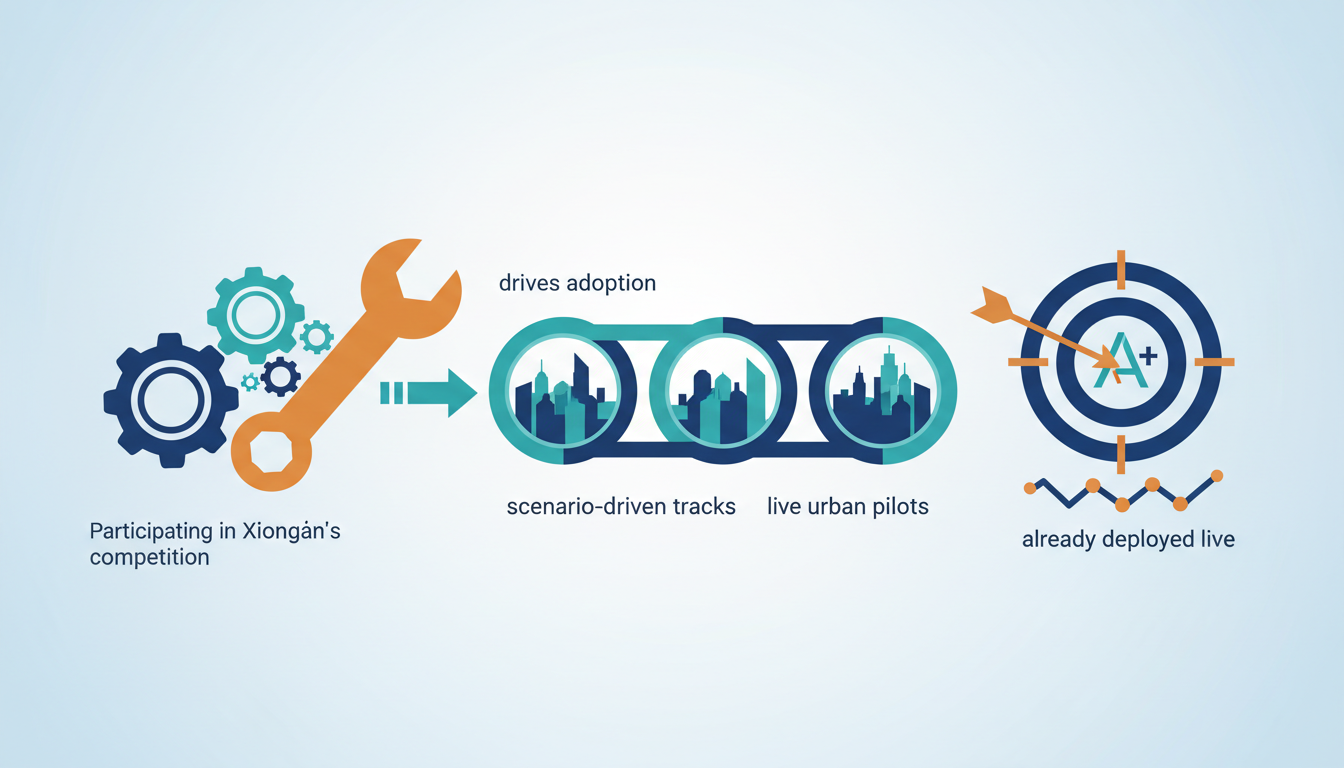
The 2026 edition defines scope through 12 competitions and 35 specialized tracks, explicitly adding Green Energy and Smart Express Logistics themes. This expansion forces participants to address power constraints as data center development shifts toward secondary cities with spare electrical resources. Track design prioritizes scenario-driven submissions over theoretical models, requiring prototypes to demonstrate scalability under load similar to the Xiong'an Urban Computing Center handling 40,000 concurrent connections. Judges evaluate entries based on integration with existing municipal systems rather than standalone performance metrics.
| Theme Category | Strategic Focus | Infrastructure Dependency |
|---|---|---|
| Green Energy | Grid stability for digital loads | Power transmission capacity |
| Smart Express Logistics | Last-mile automation | IPv6 address space abundance |
| Urban Computing | High-concurrency service delivery | Data center site availability |
Embedding the IPv6 contest within the broader smart city track creates a dependency where network protocols must support physical logistics outcomes. This structure prevents siloed innovation that ignores downstream operational realities. Participation yields value only when prototypes address the specific constraint of shifting data center development toward secondary cities Winners gain immediate access to a market where high-carbon factories face bans, forcing a pivot to clean technology innovation firms. The state-owned housing model eliminates real estate speculation risks common in Shenzhen or Pudong, stabilizing long-term operational costs for successful entrants.
| Factor | Traditional SEZ Model | Xiong'an Constraint |
|---|---|---|
| Real Estate | Private market volatility | Subsidized worker rates |
| Industry Focus | Mixed manufacturing | Exclusive tech innovation |
| Energy Policy | Legacy grid reliance | Digital infrastructure upgrade |
However, the scenario-driven requirement creates a high barrier for theoretical research teams lacking physical deployment capacity. Proposals ignoring the 2026-2030 transmission corridor upgrades will fail validation against actual municipal needs. This alignment transforms the competition from a prestige event into a viable procurement channel for national infrastructure projects.
Xiong'an Scenario-Driven Model Versus Traditional Smart City Pilots
Refined track design targets specific application scenarios rather than generic infrastructure, forcing submissions to solve set logistics or healthcare bottlenecks. Traditional pilots often deploy broad sensor networks without clear operational goals, resulting in unused data silos. Xiong'an diverges by mandating that entries address distinct verticals like aerospace or finance through 35 specialized tracks. This approach co-opts non-state actors into a state-steered smart city 1080/12265934.2024.2407785) model, ensuring technology serves immediate municipal needs instead of abstract innovation metrics. Prnewswire. Html) validates this scalability by supporting third-generation social security cards for daily consumption.
| Feature | Traditional Pilot | Xiong'an Model |
|---|---|---|
| Deployment Scope | City-wide sensors | Specific application tracks |
| Primary Driver | Vendor technology push | Municipal issue resolution |
| Success Metric | Number of devices installed | Resolution of set scenarios |
| Housing Policy | Market-led speculation | State-owned subsidized rates |
Som. The limitation remains high entry barriers for small startups lacking resources to build scenario-specific prototypes. General software solutions fail acceptance criteria unless tied to a concrete physical use case. This selectivity reduces wasted capital on unproven concepts but slows total participant volume compared to open hackathons. Operators must align proposals with the state-owned housing mandate to secure long-term viability. InterLIR recommends focusing on scenario-driven submissions that demonstrate immediate utility in regulated environments.
About
Alexander Timokhin, CEO of InterLIR, brings critical expertise to the discussion on IPv6-enabled cities through his deep involvement in global IP infrastructure. While the Xiongan New Area's recent recognition by APNIC highlights the shift toward next-generation networking, Timokhin's daily work managing a specialized IPv4 marketplace provides a unique perspective on the scarcity driving this transition. His experience in redistributing unused IPv4 resources highlights the urgent necessity for municipalities to adopt IPv6 to ensure sustainable growth. At InterLIR, Timokhin oversees transparent transactions and clean BGP operations, giving him firsthand insight into the technical and economic pressures facing modern urban networks. This background allows him to objectively analyze how emerging smart cities like Xiongan must balance legacy address limitations with future-proof IPv6 deployment strategies to maintain reliable digital connectivity.
Conclusion
Scaling IPv6-enabled cities reveals that address abundance alone cannot fix fragmented governance. When municipalities delegate /48 prefixes to sensor clusters without strict operational guardrails, they create unmanageable identity sprawl that inflates long-term maintenance costs. The real bottleneck shifts from IP allocation to the automation gap, where legacy tooling fails to parse the sheer volume of unique device identities. Without thorough management suites, network operators face diminishing returns as device counts rise, turning a connectivity asset into an administrative liability.
City planners must mandate integrated automation stacks before expanding sensor density beyond critical mass. Do not approve new hardware deployments until existing management tools cover nearly all of the current inventory. This discipline prevents the accumulation of technical debt that typically cripples smart city projects within three years. Prioritize vendors who offer native IPv6 orchestration over those selling mere connectivity.
Start by auditing your current network management coverage against total connected endpoints this week. Identify the specific percentage of devices lacking automated lifecycle controls and set a hard deadline to close that gap before authorizing any new pilot programs. This immediate inventory check exposes hidden operational risks that broad adoption metrics often obscure.
Frequently Asked Questions
Majority adoption now demands granular governance models for municipal networks. Global native IPv6 access recently reached 50.10% of user traffic, signaling the shift where cities assume direct accountability.
The city deploys over one thousand AI-equipped cameras without using any NAT translation layers. This approach aligns with regions like France that demonstrate 86% penetration in native protocol usage.
Cities position networks to handle massive data loads required by next-generation accelerators. Gartner predicts global AI infrastructure spending will hit $2.5 trillion in 2026, necessitating robust urban digital backbones.
City engineers must now handle ROA creation and AS path validation directly instead of deferring. This friction limits rapid replication in smaller jurisdictions lacking dedicated network operations centers.
The 2026 edition includes twelve competitions across thirty-five specialized tracks reflecting long-term plans. These categories span aerospace, robotics, healthcare, agriculture, cybersecurity, smart cities, finance, and logistics sectors.