Email phishing losses: The $70M cost of waiting
Phishing losses jumped from $18.7 million to $70 million. That math proves reactive email defense is broken. We need to kill legacy feedback loops and switch to proactive threat modeling driven by deep semantic analysis. Why do reactive detection gaps persist? Because security teams wait for customers to submit missed spam *after* an exploit burns them. We need to dissect LLM-driven sentiment analysis to see how modern systems crush context and intent at a scale manual review can't touch. Then we build targeted phishing models that spot deception patterns before they slip past perimeter controls.
Cloudflare data says 95% of threats hit via email. Yet Index. (Cloudflare's email security phishing gap llm) dev reports only 13% of enterprises see real impact from their AI investments, even with massive budget hikes. Traditional methods wait for failure. Predictive security architectures anticipate it. Stop fighting yesterday's battles. Secure the inbox against the industrialized cyber threats defining 2026.
The Critical Definition of Proactive Email Security and Detection Gaps
Reactive email security analyzes only the surviving messages. Users report them after a breach. This mirrors Abraham Wald's observation: reinforcing visible bullet holes on returning bombers ignores the planes that never came back. Traditional systems run a perpetual call-and-response arms race. They rely on customers submitting original EML files of missed spam so analysts can patch models. Detection improvements depend entirely on successful attacker exploits, not emerging threat patterns.
Invisible weaknesses stay unaddressed until money vanishes. Phishing-driven losses surged from $18.7 million to $70 million because attackers exploit this latency. About 95% of threats Cloudflare observes originate via email, yet reactive loops only process failures post-delivery. Large Language Models hitting the mainstream in late 2022 enabled a shift. We can now process unstructured data for proactive defense. Organizations integrate via API to detect anomalies in sender intent using behavioral baselines instead of waiting for user reports.
| Feature | Reactive Loop | Proactive Modeling |
|---|---|---|
| Data Source | User-reported EML files | Global traffic analysis |
| Update Trigger | Successful bypass | Emerging linguistic patterns |
| Coverage | Visible failures only | Invisible attempts |
Cloudflare acquired Area 1 Security for $162 million to close these detection gaps before compromise. Waiting for feedback has a measurable cost: defenses stay blind to the specific social engineering lures that succeed on the first attempt.
Proactive email security blocks SalesOutreach and PrizeNotification vectors before user reporting triggers model updates. Traditional defenses miss these campaigns because they rely on successful attacker exploits rather than emerging patterns. Missed spam submissions decreased by 20.4% between Q4 2027 and Q4 2027. Threat volumes in distinct categories dropped by two-thirds in Q1 2026, but only after targeted intervention. This shift requires moving beyond reactive feedback loops where customers submit original EML files after financial damage occurs.
Modern solutions integrate via API at the email platform level. They establish behavioral baselines without complex network changes. Such architecture enables smooth integration with Microsoft 365 environments, improving detection accuracy while maintaining operational efficiency at scale. The cost of delayed action remains high as phishing-driven losses continue surging toward projected annual figures exceeding $25 billion.
| Defense Mode | Trigger Mechanism | Coverage Gap |
|---|---|---|
| Reactive | User-reported EML | Invisible successes |
| Proactive | LLM sentiment analysis | Zero-day variants |
Operators must deploy AI-native solution capabilities to flag complex impersonation attempts that static filters ignore. Waiting for user reports guarantees a window of exposure where attackers refine tactics undetected. Traditional defenses operate reactively, waiting for user reports to identify failures, whereas proactive systems analyze sender intent before delivery. Organizations relying on legacy feedback loops face escalating liabilities as attackers exploit unseen vulnerabilities.
The cost of inaction is measurable; losses have surged nearly fourfold as bad actors refine social engineering tactics. Houston construction companies now deploy AI-driven tools to stop malicious emails before employees click, significantly reducing financial exposure. Legacy firewalls frequently miss complex phishing attempts impersonating brands like Netflix or insurance firms, leaving revenue streams vulnerable. Abnormal Security Deployment data confirms that AI-native solutions identify these complex vectors which traditional systems ignore. The limitation of reactive models is their dependence on visible damage to drive improvement, ignoring the "planes that never came back." Operators must shift to behavioral baselines that detect deception without waiting for a breach report. Bankinfosecurity.
Inside LLM-Driven Threat Detection and Sentiment Analysis Mechanics
LLM Token Prediction Mechanics for Intent and Deception Detection
Transformers predict the next token in a sequence using attention layers to map linguistic nuance rather than static signatures. This architecture allows systems to characterize abstract concepts like intent and deception by processing natural language contextually instead of relying on known bad indicators. Large Language Models entered the mainstream in late 2022 and early 2023, shifting analysis from reactive signature matching to proactive behavioral baselining.
The mechanism operates through a specific pipeline that converts unstructured text into actionable risk scores:
- Tokenization breaks email bodies into discrete units for deep learning algorithms to process sequentially.
- Embedding layers assign vector values to words, capturing semantic relationships between sales outreach framing and credential harvesting goals.
- Attention weights highlight manufactured urgency or persuasive language that traditional filters miss entirely.
Strongestlayer.com/blog/ at the platform level, avoiding complex network changes while establishing behavioral baselines for sender activity. This approach detects anomalies in how requests are phrased rather than waiting for user reports of missed spam. The cost is computational overhead; analyzing every message for sentiment analysis requires significant processing power compared to header checks alone.
Operators face a tension between detection depth and latency. Deep token prediction improves accuracy against novel social engineering but introduces milliseconds of delay per message. At global scale, this accumulation matters for high-volume inbound gateways. Deployment requires balancing model complexity against throughput constraints to prevent mail flow bottlenecks during peak traffic windows.
Curating Sales Outreach Training Data via LLM-Generated Tags
Cloudflare used LLM-generated tags to isolate messages with Sales Outreach characteristics, creating a high-precision corpus. This pipeline begins by grouping emails based on linguistic traits like persuasive framing and manufactured urgency identified by deep learning models. Unlike reactive systems waiting for user reports, this method characterizes intent across millions of daily messages before financial damage occurs.
The training process follows three specific technical steps:
- Curating data by clustering messages sharing structural traits such as transactional language and subtle social proof.
- Extracting features focused on sentiment and request phrasing rather than static indicators or known bad domains.
- Training a purpose-built sentiment analysis model optimized for Sales Outreach behavior to tune precision without overloading general classifiers.
This approach addresses the execution gap where enterprise adoption surges but impact remains low. The limitation is computational cost; analyzing every token for deception requires significant processing power compared to signature matching. However, the trade-off yields earlier detection of industrialized threats that bypass traditional gateways.
| Pipeline Stage | Input Signal | Output Artifact |
|---|---|---|
| Tagging | Raw email body | LLM-generated tags |
| Clustering | Linguistic traits | Grouped corpora |
| Modeling | Sentiment features | Risk score |
Organizations using integrated platforms detect threats quicker than those managing multiple standalone tools, reducing the window for credential harvesting. The total industrialization of cyber threats demands this shift from static rules to behavioral baselining. This disparity exists because most deployments treat AI as a standalone filter rather than embedding it within the core routing logic of the email gateway. Traditional systems vs LLM-based detection reveals a fundamental architectural mismatch where legacy tools lack the context windows required for sentiment analysis.
| Feature | Traditional Gateways | LLM-Integrated Platforms |
|---|---|---|
| Data Source | User-reported EML files | Real-time token prediction |
| Update Cycle | Reactive (post-exploit) | Proactive (pre-delivery) |
| Scope | Known signatures | Behavioral intent |
Purchasing an LLM does not automatically grant access to the global telemetry needed for proven training. Organizations failing to link their security stack to a broader network edge miss the volume of data required to tune models against evolving social engineering tactics. By 2027, 72% of enterprises plan to increase their budgets for LLMs, yet without proper architectural alignment, this spending yields diminishing returns on actual threat reduction. Cisco Cloud Email Security and Cloudflare are frequently compared by users, with the latter using its edge network to process traffic before it reaches the enterprise perimeter. Operators must prioritize platforms that unify data ingestion with model inference to close the execution gap. Deploying isolated AI tools creates siloed visibility that attackers easily bypass using novel linguistic patterns.
LLM Discovery Layers Versus Specialized Enforcement Models
Deploying transformer architectures as a discovery layer surfaces linguistic variants that static filters miss before enforcement occurs. Operators must separate the slow, analytical work of pattern identification from the fast, deterministic requirements of mail flow. Large Language Models function as the initial scanner, parsing unstructured text to flag emerging Sales Outreach narratives without blocking traffic immediately. This approach addresses the lag where traditional defenses wait for user reports, a reactive cycle that allows threats to persist until manual analysis occurs.
- The LLM scans message bodies for detailed persuasive framing and manufactured urgency indicative of social engineering.
2.
The architectural tension lies in balancing the depth of language understanding against the strict timing constraints of SMTP transactions. Over-reliance on the discovery layer for real-time decisions introduces unacceptable delay, whereas ignoring it leaves the system blind to novel obfuscation.
Operators must extract forensic-level detail by refining LLM specificity to isolate tactical signatures rather than broad labels. This process shifts detection from reactive user reports to proactive hunting of high-obfuscation vectors at the network fringes.
- Deploy specialized machine learning models to hunt for emerging threats that traditional defenses miss due to lack of context.
- Configure the system to treat LLMs as a discovery layer surfacing new linguistic variants for immediate model retraining.
- Align enforcement policies with the total industrialization of cyber threats where autonomous tooling generates unique payloads.
The output remains a risk score reflecting alignment with known attack patterns, evaluated alongside sender reputation and link behavior. A significant tension exists because 87% of enterprise workloads now run on proprietary models, yet integration complexity often delays deployment. The limitation is that without continuous feedback loops, models stagnate as attackers use generative AI to bypass static filters. This architecture ensures newly observed messages refine the model without waiting for large volumes of user-reported misses. The cost of delayed specificity is measurable in lost revenue as phishing losses climb toward projected billions. Operators ignoring this shift face a widening gap between threat evolution and detection capability.
Continuous Model Refinement Without Waiting for User Reports
Com/blog/llm-architecture/) enables immediate model updates using newly observed messages rather than delayed user reports. This shift eliminates the latency gap where attackers exploit known blind spots before defenders react.
- Ingest raw message streams to identify linguistic variants without waiting for manual EML submissions.
- Group samples by structural traits like manufactured urgency to create high-fitness training clusters.
- Retrain the specialized enforcement model nightly to align with evolving automated phishing tactics.
- Redirect analyst hours from known noise toward critical gaps where the next strike will land.
| Workflow Stage | Reactive Approach | Proactive Refinement |
|---|---|---|
| Trigger | User complaint | New message pattern |
| Data Source | Missed spam files | Real-time token streams |
| Update Speed | Days | Hours |
| Coverage | Historical exploits | Emerging vectors |
The cost of this speed is computational overhead, as processing every message through a discovery layer strains resources more than static filtering. Operators must balance depth of analysis against mail flow throughput to avoid introducing delivery delays. InterLIR recommends isolating the discovery layer to prevent latency spikes during peak traffic windows. Continuous refinement turns invisible vulnerabilities into visible signals before financial loss occurs.
Measurable ROI and Strategic Value of Adopting LLM-Based Defense
Defining Proactive Reinforcement in LLM Email Defense
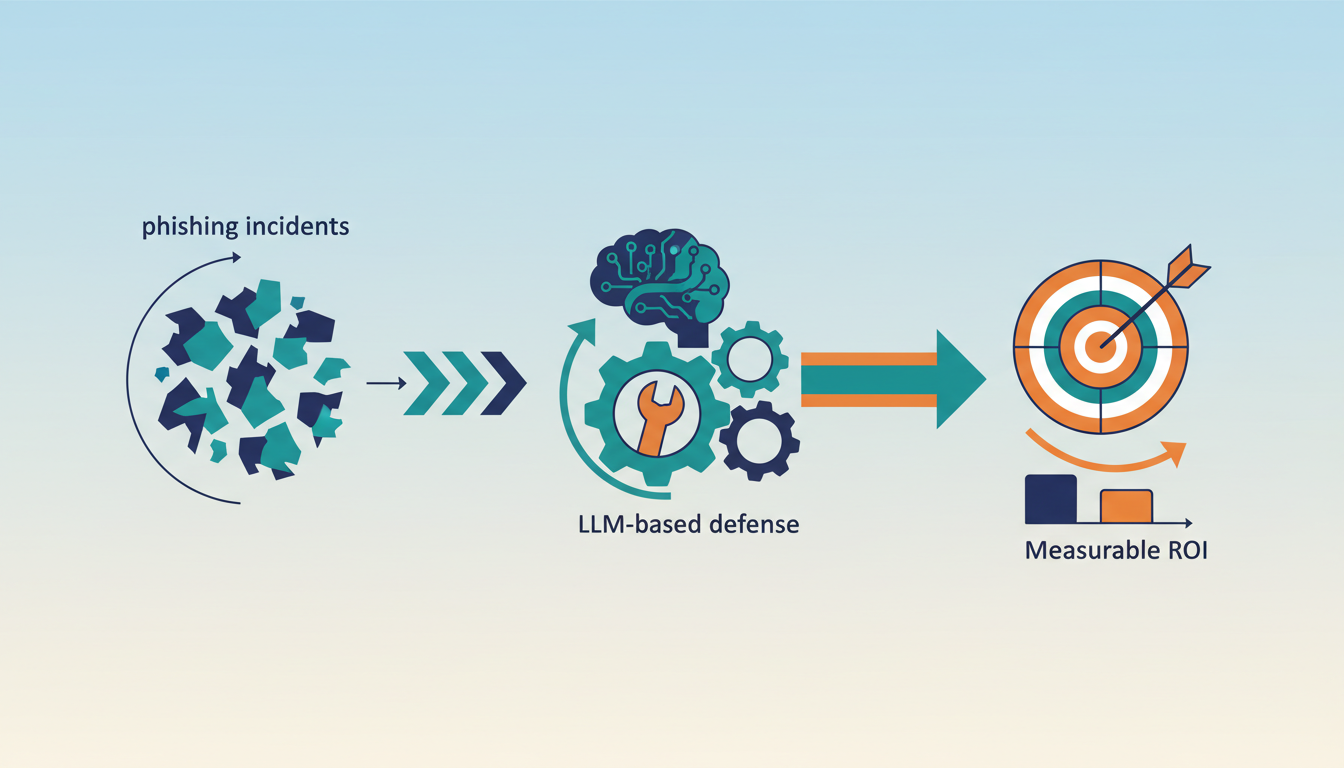
Proactive reinforcement shifts detection from user-reported misses to predictive modeling that blocks Sales Outreach phishing before friction occurs. Historically, these attacks generated high volumes of missed reports because messages resembled legitimate business communication. Traditional systems rely on a reactive loop where analysts update models only after customers submit original EML files of successful bypasses. This delay allows threats to persist until manual intervention occurs. LLMs eliminate this lag by acting as a discovery layer that surfaces new linguistic variants in real-time. The specialized model then enforces policy based on a risk score reflecting alignment with known attack patterns.
The total industrialization of cyber threats means attackers now deploy automated tooling quicker than human teams can analyze reports. Startups like Doppel Inc. Illustrate the market shift toward agentic AI layers that trace campaigns autonomously. Gartner analysts emphasize a defense-in-depth (Gartner's cloudflare vs microsoft) approach because no single vendor catches every variant. The limitation is computational cost; running deep sentiment analysis on every message requires significant infrastructure investment. Operators must balance precision against mail flow latency to avoid bottlenecks. Successful deployment redirects human expertise from known noise toward critical gaps where the next strike lands.
Average daily submissions decreased by two-thirds in Q1 2026, proving Retro Scan efficacy against Sales Outreach phishing. Traditional defenses fail because they wait for user reports, creating a lag where attackers exploit invisible gaps. Cloudflare reversed this flexible by using LLMs to isolate linguistic traits like persuasive framing before enforcement occurs. This proactive stance contrasts sharply with reactive vendors who only update models after financial loss. Market analysis suggests a defense-in-depth approach is now mandatory as no single layer catches every variant. The cost of inaction is visible in broader loss metrics, according to yet specific deployment, immediate friction reduction.
About
Vladislava Shadrina serves as a Customer Account Manager at InterLIR, where she directly manages client relationships within the critical infrastructure of IP resources. While her background lies in architecture, her daily work at InterLIR demands a rigorous focus on network security and IP reputation, core values necessary for maintaining clean BGP and Route Objects. This operational reality positions her uniquely to discuss email security systems, as the integrity of email delivery is fundamentally tied to the trustworthiness of underlying IP addresses. At InterLIR, a Berlin-based marketplace specializing in IPv4 redistribution, Shadrina witnesses how reactive defense mechanisms often fail to address invisible vulnerabilities before they compromise network availability. Her experience ensuring transparent and secure IP transactions provides a practical lens for analyzing why traditional, feedback-loop-dependent security models are insufficient. By connecting daily account management challenges to broader security thesis, she highlights the necessity for proactive measures in protecting digital communication channels.
Conclusion
Scaling email security reveals a critical fracture point where low-cost infrastructure fails to sustain the compute density required for real-time behavioral analysis. Budget tiers offer attractive entry prices, but they degrade under the load of continuous LLM retraining needed to counter evolving social engineering. The hidden operational tax emerges not in subscription fees, but in the analyst hours consumed by false negatives that cheap filters miss. Cost efficiency becomes financial liability when it compromises detection fidelity at the gateway level.
Deploy multi-vendor architectures immediately if your current setup cannot ingest raw streams for nightly model updates without manual intervention. Do not wait for a breach to validate throughput limits; migrate critical inbound gateways to hybrid models within the next two quarters to balance expense with durability. This approach ensures your defense evolves quicker than attacker obfuscation while preserving analyst capacity for high-value hunting. Start by auditing your provider's SLA regarding compute allocation for AI workloads before the end of this month. Verify specifically whether their pricing tier supports unmetered sentiment analysis or caps processing during traffic spikes. This single validation step prevents future budget exhaustion and ensures your security posture remains reliable as threat vectors shift toward sophisticated brand impersonation.
Frequently Asked Questions
They rely on user reports after breaches occur, missing invisible threats. Phishing losses surged from $18.7 million to $70 million because defenses only react to successful attacker exploits rather than emerging patterns.
LLMs automatically surface high-fidelity signals that previously required hours of manual investigation. This shift helps address the fact that 95% of observed threats originate via email by identifying deception patterns before they bypass controls.
Cloudflare acquired Area 1 Security for $162 million to identify threats before they strike. This purchase enables the company to process unstructured data and characterize complex concepts like intent across millions of messages daily.
Targeted interventions caused threat volumes in distinct categories to drop by two-thirds in Q1 2026. Additionally, missed spam submissions decreased by 20.4% between Q3 2025 and Q4 2025 due to proactive modeling.
Only 13% of enterprises see real impact because traditional methods wait for failure instead of anticipating it. Reactive loops remain blind to specific social engineering lures that succeed on the first attempt without user reporting.