Agents buy domains by April 2026 with Stripe
Starting April 30, 2026, coding agents can now provision Cloudflare accounts and deploy production apps without a single manual dashboard click. (Cloudflare's network performance agents week)
Human-mediated cloud setup is dead. Autonomous agents now execute zero-touch deployments by directly managing identity, billing, and API authentication. Gartner predicts 40% of enterprise applications will integrate task-specific AI agents by year-end, yet the protocol enabling this shift matters more than the headline. Most organizations stall in experimentation; Azumo data reveals that while 88% of companies use AI, only 6% achieve scalable production performance. Humans bottleneck the final mile of provisioning. The new workflow eliminates this friction by allowing agents to register domains, start paid subscriptions, and retrieve tokens instantly.
Identity attestation replaces manual verification steps, allowing agents to act on behalf of signed-in users securely. We dissect the three-component protocol co-designed with Stripe that grants agents access to cloud resources without pre-configured skills or MCP servers. Finally, we walk through executing zero-touch production deployments via the Stripe CLI, demonstrating how an agent moves from literal zero to a live, domain-registered application in minutes. This is the infrastructure required to close the gap between AI experimentation and actual high-performance delivery.
The Role of Identity Attestation in Autonomous Agent Deployment
The Three Gaps in Agent Provisioning: Account, Payment, and Token
Code generation means nothing without production execution. Autonomous deployment fails unless identity attestation, payment tokenization, and service discovery bridge the gap between a generated script and a running service. Historically, coding agents hit a wall: they needed a human to secure an account, attach a payment method, and generate an API token. The new protocol resolves these barriers by integrating Stripe as the identity provider and payment processor. It handles tokenization while enforcing a default $100/month cap for agent-initiated subscriptions. This architectural shift addresses a rapidly expanding market where Gartner predicts that 40% of enterprise applications will integrate task-specific AI agents by 2026.
Reliance on a central identity provider for all authorization decisions creates a single point of failure, but the alternative is worse. Payment tokenization replaces static credentials with ephemeral tokens, ensuring the agent never accesses raw card data during deployment. This mechanism creates a hard boundary between agent autonomy and financial liability, distinguishing automated provisioning from human error. While custom platforms remain expensive, infrastructure subsidies lower the barrier for entry significantly. Security isolation relies on isolates that provide precise resource allocation rather than bulky container environments.
| Feature | Agent Deployment | Human Deployment |
|---|---|---|
| Credential Access | Ephemeral Token | Static API Key |
| Spending Limit | Enforced Cap | Manual Budgeting |
| Identity Source | Stripe Attestation | Manual Login |
Human operators often ignore budget alerts until damage occurs, whereas the protocol rejects transactions exceeding the limit instantly. Strict caps may block legitimate scaling events requiring immediate resource expansion. Operators must configure higher thresholds manually if anticipating sudden load spikes. This trade-off sacrifices some flexibility for guaranteed cost containment. As embodied AI increases, the urgency for such automated financial controls in physical systems grows.
Discovery, Authorization, and Payment: The Three-Component Protocol
The `stripe projects catalog` command queries available services via REST, returning JSON that eliminates manual provider selection. Agents parse this output to identify specific resources like Cloudflare Registrar without prior human configuration. This discovery phase replaces static documentation with flexible API responses, ensuring agents always access current service definitions.
Authorization follows discovery. Stripe acts as the identity provider to attest user credentials before resource allocation. New accounts provision automatically, while existing users traverse a standard OAuth flow to grant the CLI access. This mechanism maps each agent to a unique Durable Object, allowing concurrent execution with persistent state isolation. The security model relies on isolates that allocate only necessary resources rather than full container environments.
Payment concludes the triad by injecting a tokenized billing reference instead of raw financial data. Stripe enforces a strict $10.00 monthly cap per provider to prevent runaway spending during autonomous operations. Raw card numbers never reach the agent, creating a hard boundary between code execution and financial liability.
| Component | Input Mechanism | Output Artifact |
|---|---|---|
| Discovery | REST API Query | Service JSON Catalog |
| Authorization | Identity Attestation | API Token or Account |
| Payment | Token Injection | Billing Reference ID |
Operational friction shifts from initial setup to budget calibration, as the default cap may block legitimate high-volume deployments. Operators must raise limits via Budget Alerts before scaling tasks beyond basic provisioning. The protocol succeeds by decoupling identity verification from payment processing, yet this separation demands strict synchronization between the three components to avoid orphaned resources.
Executing OAuth Flows and Tokenization for Automated Account Creation
The `stripe projects add` command triggers an immediate OIDC handshake where Stripe attests user identity before Cloudflare provisions resources. Agents never handle raw credentials because the platform exchanges verified claims for ephemeral access tokens during this Authorization phase. If no account exists, the system instantiates a new profile automatically; existing users complete a standard browser redirect to grant scope permissions. This flow eliminates manual API key rotation while binding every action to a verified human identity.
Payment security relies on tokenization rather than direct card access, ensuring agents operate within strict financial boundaries. Stripe embeds a payment token in the request header, enforcing a hard ceiling on monthly spend without exposing billing details to the code executor. This architecture prevents runaway costs even if the agent logic errors or enters an infinite loop. The default limit protects users, yet enterprises can adjust thresholds via Budget Alerts to match specific deployment scales.
| Component | Standard Mechanism | Agent-Specific Constraint |
|---|
Extending the Orchestrator Pattern to Custom Platform Integrations
Defining the Orchestrator Role for Custom Platform Integrations
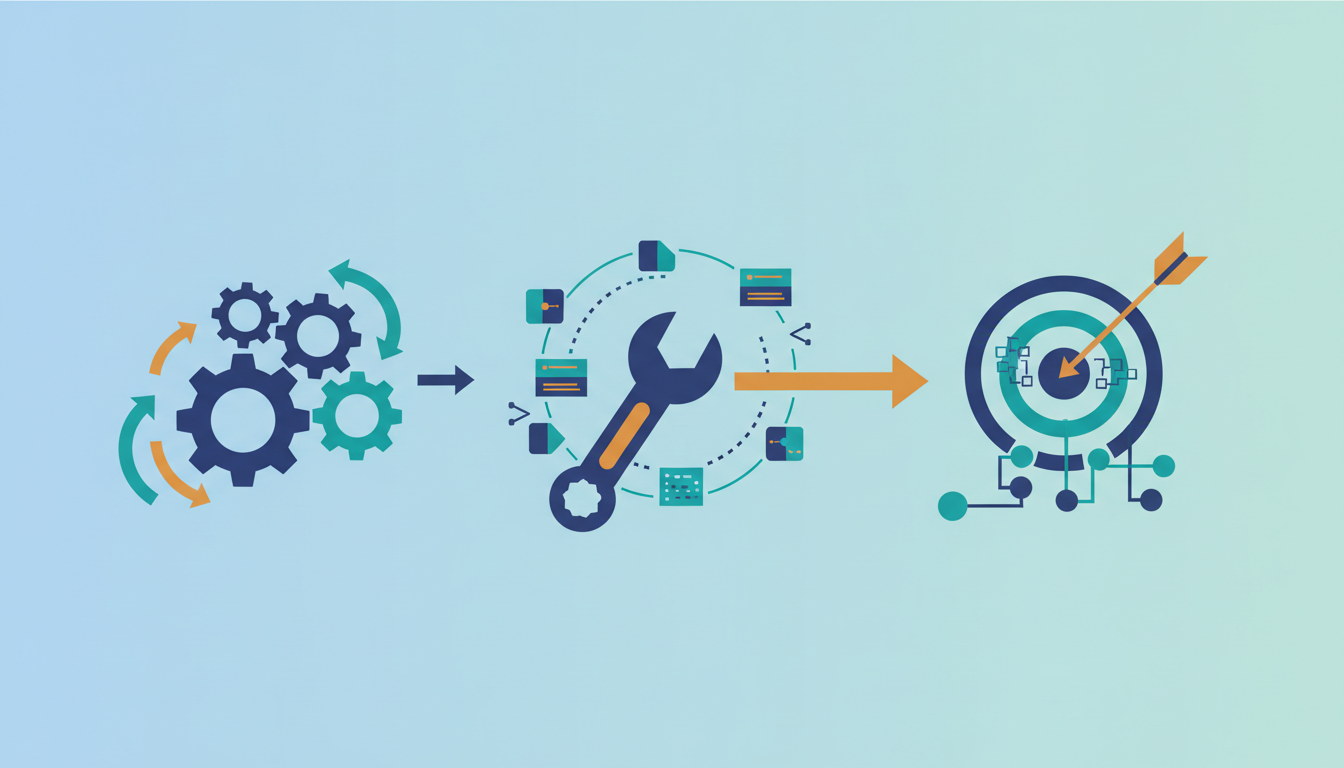
Any platform with signed-in users functions as an Orchestrator by extending OAuth standards into payments and account creation. This shift treats agents as a first-class concern rather than auxiliary scripts, standardizing integrations that were previously bespoke. The protocol removes manual friction by allowing platforms to attest identity and issue payment tokens in a single transaction. Using this standardized approach notably reduces the baseline infrastructure investment required for deployment.
| Integration Type | Setup Complexity | Billing Model |
|---|---|---|
| Bespoke Script | High | Manual |
| Orchestrator Protocol | Low | Tokenized |
OpenAI serves as a critical partner entity, providing frontier models like GPT-5.4 which are now accessible via Cloudflare's Agent Cloud platform. Automation introduces a dependency on the upstream identity provider; if the Orchestrator fails to attest user status, the agent cannot obtain the necessary API token. Operators must verify that their platform supports the required claim attestation before promising zero-touch deployment. Without this capability, the agent reverts to requesting human intervention for account creation.
Implementing One-Call Provisioning for Coding Agents and Databases
A single API call provisions a Cloudflare account and returns an authenticated token for immediate agent use. This mechanism maps each agent to a unique Durable Object actor, enabling concurrent execution with persistent state across tens of millions of sessions. The Planetscale Postgres partnership illustrates this model by allowing database creation directly through the orchestrator using existing payment methods. Operators should use an agent for deployment when the workflow requires flexible service discovery rather than static configuration files. Discovery queries a JSON catalog to identify available services before the agent initiates the Authorization handshake.
Low-code platforms are accelerating market adoption by removing these traditional development barriers, contributing to a sector projected to exceed $50 billion by 2030. Centralized environments like the Gemini Enterprise Agent Platform contrast with edge-distributed models by consolidating governance rather than decentralizing execution. Bespoke methods offer granular policy enforcement but fail to scale when agent counts surge. Standardization sacrifices some custom logic for the ability to provision resources instantly without human intervention. This approach reduces the risk of configuration drift while enabling rapid iteration on deployment topologies. InterLIR recommends adopting the orchestrator pattern to future-proof infrastructure against the rising volume of autonomous tasks.
About
Nikita Sinitsyn serves as a Customer Service Specialist at InterLIR, bringing eight years of telecommunications expertise to the evolving environment of automated infrastructure. While his daily work focuses on managing RIPE database operations and ensuring clean IP reputation, this deep technical foundation uniquely qualifies him to analyze the shift toward autonomous coding agents. As these agents begin provisioning cloud resources like Cloudflare without human intervention, the underlying requirements for secure, verified network identity remain critical. Sinitsyn's experience with KYC procedures and spam control directly correlates to the trust mechanisms necessary for agents to safely obtain API tokens and billing accounts. At InterLIR, a leader in transparent IPv4 resource redistribution, he understands that whether a human or an AI requests network access, the principles of security and efficiency are paramount. His insights bridge the gap between traditional network governance and the future of agent-driven deployment.
Conclusion
Scaling autonomous coding agents reveals a critical fracture point: operational volatility replaces static engineering costs. When agent swarms expand, the inability to enforce real-time spending caps triggers financial bleed that no amount of bespoke integration code can patch post-deployment. The shift from fixed development budgets to variable operational spend demands a fundamental change in governance architecture, moving away from hard-coded authentication toward ephemeral, policy-driven tokenization. Organizations relying on manual oversight for agent transactions will face unsustainable overhead as transaction volumes multiply, rendering traditional approval workflows obsolete for high-frequency micro-tasks.
Adopt a hybrid orchestration model by Q3 2026 for any deployment exceeding fifty concurrent agents. This approach mandates centralized policy enforcement while allowing distributed execution, ensuring that financial guardrails remain intact without throttling innovation speed. Do not wait for a billing shock to restructure your agent topology; the window to implement these controls before legacy debt accumulates is closing rapidly.
Start by auditing your current agent spending limits against projected six-month growth scenarios this week. Identify any workflows lacking flexible caps and implement a provisional ceiling of a modest fee per agent instance immediately to prevent runaway costs during your next scaling cycle.
Frequently Asked Questions
The system enforces a default monthly cap of $100 for agent subscriptions. This tokenization constraint ensures billing safety while allowing agents to manage payments without human entry.
Structured enterprise systems often cost between $25,000 and over $300,000 to deploy. Automating provisioning helps organizations avoid these high custom development expenses during initial setup phases.
Startups incorporating through Stripe Atlas automatically receive $100,000 in Cloudflare credits. These funds directly offset initial infrastructure costs required during the early automated deployment phase.
Retail agent deployments frequently require capital exceeding $50,000 to achieve traction. Subsidized credits become essential for early-stage ventures facing such high initial development and operational costs.
Only 6% of companies currently achieve scalable production performance with AI agents. Most organizations remain stuck in experimentation because humans still bottleneck the final provisioning mile.