ARIN Governance Gaps: Why Three Volunteers Matter
ARIN needs exactly three volunteers on its Nomination Committee by April 28. (ARIN's fee schedule) The clock is ticking. By early 2026, IPv6 traffic will finally overtake IPv4. Yet legacy protocols still carry a substantial majority of global traffic, and a significant majority of websites lack native IPv6 support. This disconnect makes picking the right people for the Board of Trustees and Advisory Council non-negotiable.
Governance here isn't ceremonial. It's financial. With commercial IP leasing markets charging between $0.38 and $0.50 per address monthly, biased or stagnant policy development costs real money. If General Member organizations don't step up with fresh perspectives, the policy development process stalls.
You need to know the rules before you raise your hand. You cannot serve on the committee while running for election. The commitment is a two-year term. Here is how to navigate the application, the eligibility traps, and why your participation matters as we steer through this technological shift.
The Role of the Nomination Committee in ARIN Governance
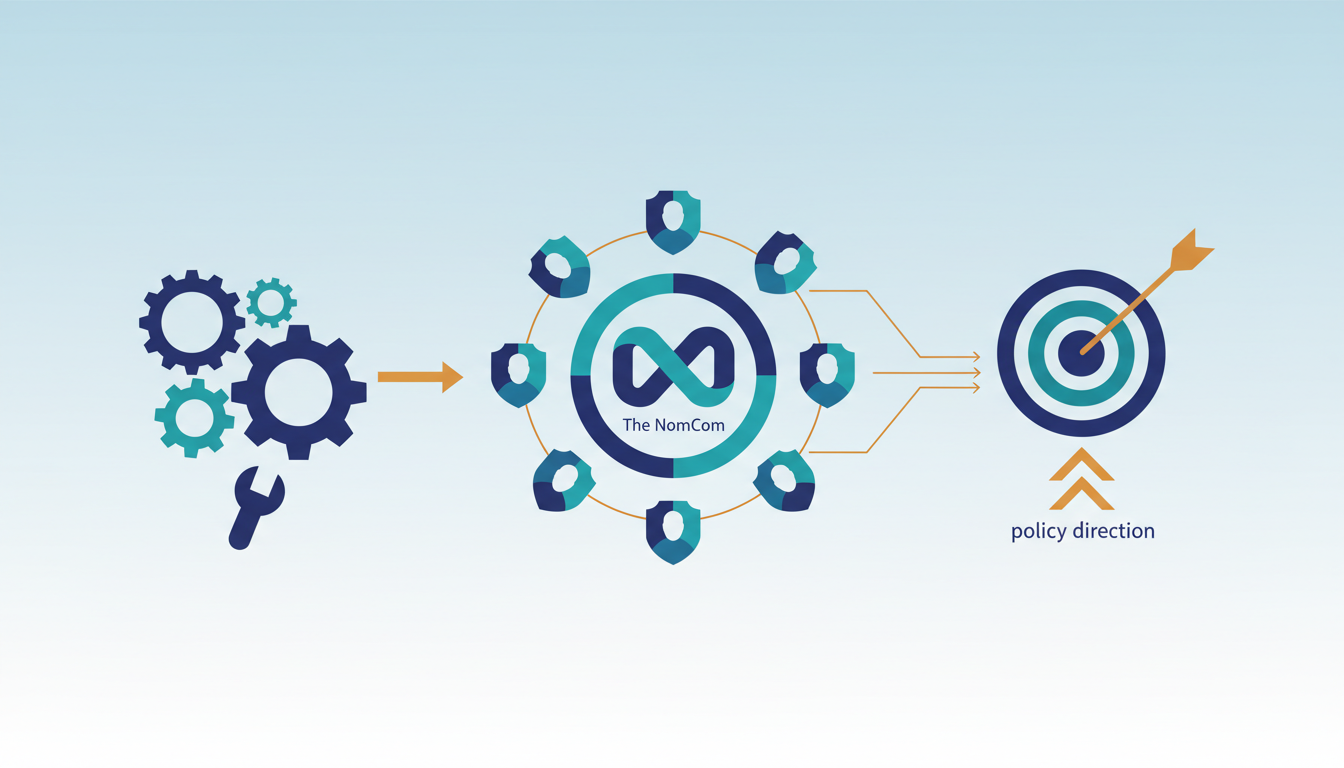
The Nomination Committee (NomCom) picks the leadership. They recruit for the Board of Trustees, Advisory Council, and NRO NC. On 14 Apr 2026, ARIN announced the search for three volunteers. These aren't short-term gigs; the terms run for two years to ensure oversight survives leadership turnover. Unlike commercial entities focused purely on global coordination, this body handles regional allocation and policy ratification (different governance structures). As IPv6 grows, legacy resource management stays critical because a significant share of websites globally lack support (websites globally). The committee's job is to find candidates who get both the tech and the politics.
| Role | Responsibility | Term Length |
|---|---|---|
| Board of Trustees | Fiduciary oversight | Two years |
| Advisory Council | Policy development | Two years |
| NRO NC | Global coordination | Two years |
Only General Member organizations in Good Standing can supply volunteers. If you are running in an ARIN Election, you cannot sit on this committee. That hard line prevents conflicts of interest. The selection process shapes how ARIN rolls out routing security tools like Resource Public Key Infrastructure alongside standard registration services. But there is a bottleneck: the eligible pool shrinks whenever potential candidates hold concurrent elected offices. The committee constantly balances filling seats today against building leadership for tomorrow.
Right now, the roster is thin. Two General Member representatives sit on the committee, leaving three seats vacant. Peter Harrison chairs the group, working with trustees Rob Seastrom and Chris Tacit. Christopher Quesada and William Sylvester fill the current General Member representative slots. This partial staffing creates a real operational headache for the 2026 ARIN Elections coming later this year. The committee needs a full team to recruit Board of Trustees and Advisory Council candidates before the October voting window opens.
| Role Type | Occupied Count | Vacant Count | Status |
|---|---|---|---|
| Trustee | 2 | 0 | Active |
| Chair | 1 | 0 | Active |
| General Member Rep | 2 | 3 | Partial |
Incomplete rosters delay vetting. Commercial entities operate with different structures focused on global coordination rather than regional policy ratification (different governance structures). The NomCom must screen applicants against the Number Resource Policy Manual to ensure they meet Version 2025.1 standards. Missed appointments compress the evaluation timeline for Board of Trustees candidates. General Members in Good Standing need to act now to secure representation before the slate closes.
Volunteer Application Deadline and Term Requirements for NomCom
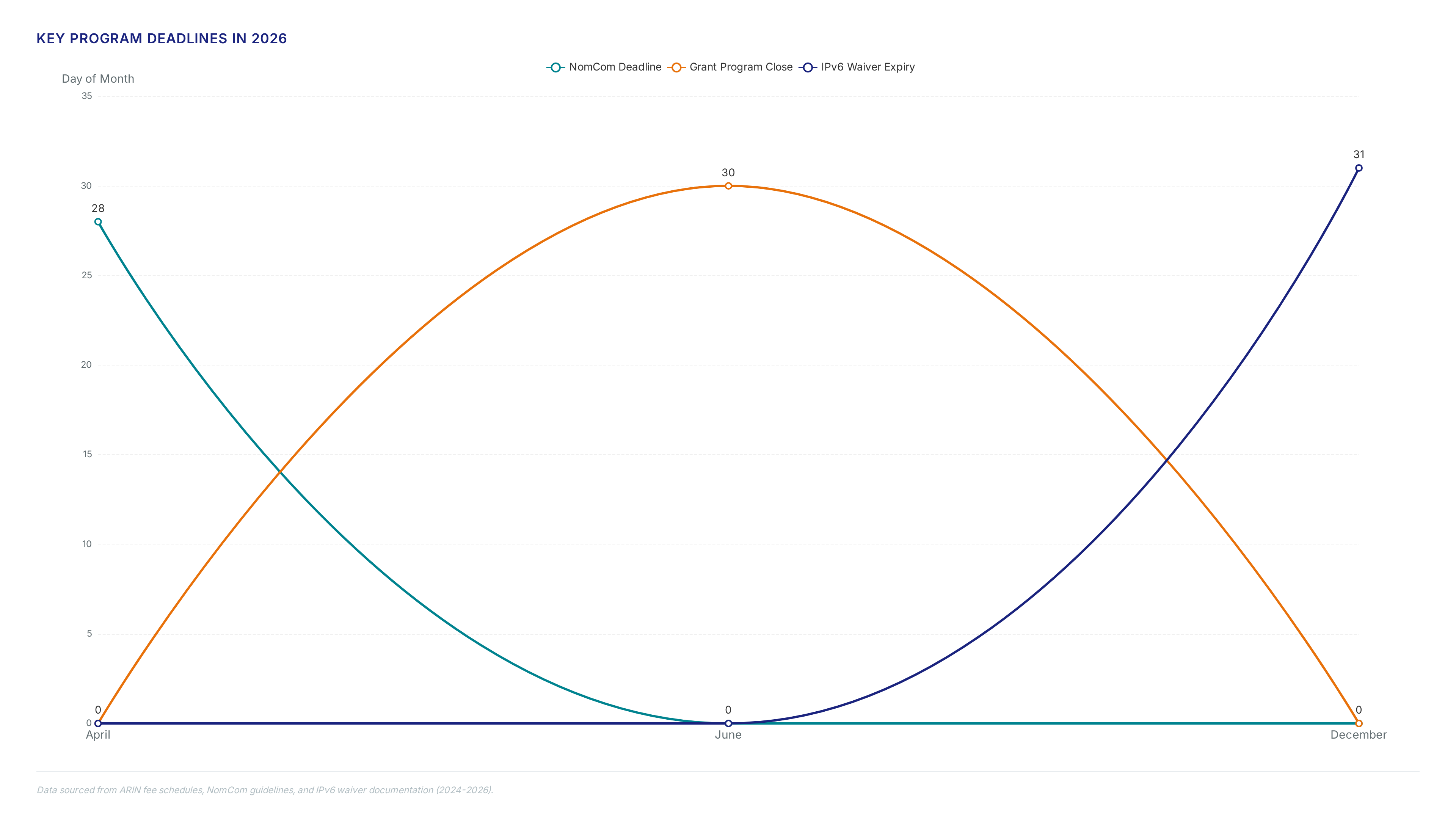
Mark your calendar: Tuesday, 28 April 2026 at 7:00 PM ET. That is the hard stop for General Member participation. Submit the questionnaire before this timestamp or you miss the two years of service required to staff the Nomination Committee (NomCom). This deadline clashes with a massive infrastructure shift. IPv6 is projected to overtake IPv4 traffic volume in early 2026. Who leads the registry now determines how we manage the transition away from legacy protocols while keeping the lights on during the temporary IPv6 fee waiver expiration later this year. Operators must choose between fixing immediate governance gaps or betting on long-term protocol adoption. You can't do both without the right people in the room.
Committee Composition and Eligibility Requirements for Volunteers
Mechanics: Defining General Member Representative Eligibility for NomCom
To be a General Member representative, you must come from an ARIN General Member organization in Good Standing. This filter limits the pool to entities with skin in the game-active financial and operational commitments. There is a strict exclusion: if you hold a seat, you cannot be a candidate in an ARIN Election. This rule stops a selector from simultaneously seeking a spot on the Board of Trustees or Advisory Council. Governance diversity often fights with political neutrality here. You either bring a fresh view or you run for office; you cannot do both.
Integrating Advisory Council Members into NomCom Composition
The rules allow one to two actively serving Advisory Council members to join Trustees to hit the required volunteer count. The Advisory Council has 15 elected members who handle policy ratification, creating a distinct staffing pool. This overlap means the people defining policy also pick the future leadership.
The selection sequence is rigid:
- Verify the candidate holds an active seat on the 15-member council.
- Confirm the individual originates from an organization in Good Standing.
- Ensure the volunteer accepts the two-year term without running in the upcoming 2026 ARIN Elections.
| Component | Count Limit | Function |
|---|---|---|
| Advisory Council Members | 1–2 | Provide policy continuity |
| Trustees | Fixed | Offer board perspective |
| General Members | Remainder | Represent broad community |
This design trades electoral neutrality for institutional memory. Sitting councilors bring deep procedural knowledge to the Nomination Committee, but they risk conflating current advocacy with future evaluation. This hybrid composition directly influences which candidates survive the screening for the Board of Trustees. The constraint forbids any committee member from becoming a candidate, forcing a clean break between selection duties and personal ambition.
Check your organization's Good Standing status before the April 28 deadline. Missing this validation disqualifies you, especially with the 2026 ARIN Elections scheduled for October. Many operators overlook that committee service bans simultaneous candidacy for the Board of Trustees or Advisory Council. The Charter for the NomCom defines these exclusions to maintain neutrality. Review your financial obligations too; entities benefiting from the capped $250 legacy fee structure must confirm their registration status aligns with voting rights.
Executives should run this four-step verification:
- Confirm the organization appears on the active General Member roster.
- Cross-reference personal names against the October election candidate list.
- Read the full charter to understand the two-year term commitment.
- Validate that no outstanding fees violate the Good Standing definition.
Timing is the enemy. Discovering ineligibility late wastes community resources during recruitment.
Step-by-Step Guide to Volunteering for the ARIN NomCom
Good Standing Requirements for ARIN General Member Volunteers
Your application fails if your organization isn't in Good Standing with active fee obligations.
- Confirm the entity avoids simultaneous candidacy in the 2026 ARIN Elections.
- Verify financial compliance. Legacy holders benefit from capped fees, while new adopters face standard rates until the IPv6 Fee Waiver expires.
- Submit the questionnaire before the 28 April deadline to grab one of the three available seats.
| Constraint Type | Requirement Detail | Operational Impact |
|---|---|---|
| Financial | Active payment status | Prevents delinquent accounts from influencing leadership selection |
| Political | No election candidacy | Eliminates conflicts of interest during candidate recruitment |
| Temporal | 2-year term | Ensures continuity across multiple policy cycles |
Ignore the election exclusion and you get disqualified immediately. If no replacement exists, you create a governance gap. You must choose: immediate political ambition or long-term committee influence. The Charter for the NomCom clarifies these binding exclusions. Adhere strictly, or your volunteer effort amounts to nothing.
Submitting the NomCom Questionnaire by the 7:00 PM ET Deadline
Get the brief questionnaire to the registry by 7:00 PM ET on Tuesday, 28 April. Late submissions do not count.
- Draft responses addressing organizational standing and potential conflicts of interest.
- Verify the sending entity maintains active status before the 2026 ARIN Elections cycle begins.
- Transmit the completed form via email to the assigned elections channel.
- Retain a copy of the sent message for internal audit records.
Note the administrative window closes while the 2026 ARIN Community Grant Program remains open for unrelated funding requests until June. The April cutoff is narrow and distinct from other community timelines. Do not confuse the two.
Strategic Impact of NomCom Selections on Internet Resource Policy
NomCom Influence on Board Trustees During IPv4 Market Shifts
Board composition dictates how we handle diverging purchase and leasing valuations in the IPv4 market. Large blocks like /16s face sharp price corrections, yet smaller allocations hold value due to enterprise right-sizing strategies. Trustees must prioritize tactical flexibility over static asset accumulation. North America retains 39.5% of global allocations, creating a concentrated pressure point for regional policy. Operators are shifting from buying just-in-case inventory to tactical leasing models to avoid depreciation risk. Market data shows Leasing Prices remain resilient near $0.50 per IP monthly despite purchase instability. The NomCom must select leaders who can navigate this bifurcation without crashing the secondary market. Appointing trustees without market literacy risks fee structures that ignore actual utilization. Rigid transfer policies stifle necessary liquidity. Governance must reflect that purchase volatility no longer predicts leasing stability.
Guiding Advisory Council Policy for IPv6 Adoption Gaps
NomCom-selected Advisory Council members must bridge the gap between 82% hyperscaler adoption and the majority of websites lacking IPv6 support. They do this through targeted Number Resource Policy Manual updates. The mechanism involves drafting clauses that mandate stricter justification for new IPv4 requests while simplifying IPv6 allocation tiers. Version 2025.1, published on March 3, 2026, already requires registering static reassignments containing a /47 or larger in the WHOIS directory. This technical anchor forces visibility on subdelegations that previously hid behind aggregate announcements. However, policy ratification relies on voluntary compliance from enterprises dependent on legacy geotargeting tools. Strict enforcement creates friction for organizations needing small blocks for compliance rather than growth. The Advisory Council functions differently than global coordination bodies focused on broader internet number resources. Network engineers must shift toward documenting every subdelegation to avoid administrative rejection during audits.
| Policy Focus | Current State | Proposed Change |
|---|---|---|
| IPv4 Justification | Broad availability | Strict necessity proof |
| IPv6 Registration | Optional for small blocks | Mandatory for /47+ |
| Enforcement | Post-allocation audit | Pre-allocation validation |
Fail to adapt documentation practices, and resource approvals will stall as the Advisory Council tightens validation. The divergence between hyperscaler capabilities and general web presence creates a policy pressure point only governance can resolve.
Financial Risks of Legacy Fee Caps and IPv4 Leasing Volatility
Ignoring the ARIN Fee Increase Approved for 2027 exposes organizations to severe budget shocks when legacy protections expire. Current rules cap annual costs at a fixed rate for qualifying holders, yet commercial models charge recurring monthly fees per address without ceilings. This divergence creates a false sense of security. Large allocations like /16s have seen sharp price corrections in the purchase sector, yet smaller blocks maintain value due to enterprise right-sizing tactics. Leasing builds no equity, locking tenants into perpetual payments while owners face depreciation. InterLIR advises that boards selected by the NomCom must prioritize policies distinguishing between asset ownership and tactical access to prevent fiscal instability. Failure to adapt governance frameworks before the 2027 adjustment leaves operators vulnerable to unpredictable cost spikes. Treating temporary fee caps as permanent market insulation is a strategic error.
About
Evgeny Sevastyanov serves as the Head of Customer Support at InterLIR, a specialized IPv4 marketplace based in Berlin. His daily work managing IP address leasing and creating objects within RIPE and APNIC databases provides him with direct, practical insight into the critical importance of internet number resource governance. (APNIC's history of the internet) This hands-on experience makes him uniquely qualified to discuss the ARIN Nomination Committee, as he navigates the very regulatory frameworks the committee oversees. At InterLIR, Sevastyanov ensures transparency and security in IP transfers, aligning closely with the mission of regional internet registries to maintain stable infrastructure. As the industry transitions toward IPv6 dominance, his frontline perspective on IPv4 redistribution highlights why qualified leadership within organizations like ARIN is necessary. By connecting his operational expertise in IP resource management to the broader needs of the internet community, Sevastyanov offers a grounded view on why participating in the NomCom is vital for the future of global connectivity.
Conclusion
Static regulatory caps clash with flexible market realities, creating operational friction. By 2027, AI-driven network management will shift decision-making to the edge, making manual IP justification processes a critical bottleneck. Organizations clinging to legacy fee assumptions face unbudgeted liquidity drains once the 2027 schedule adjustments hit. Leasing models generate zero asset equity while consuming recurring capital. The current two-year term limits for leadership often prevent the multi-cycle consistency needed to overhaul these deep-seated financial vulnerabilities.
Leaders must decouple operational budgeting from historical fee schedules before the next fiscal planning cycle begins in Q3. Treat every leased block as a temporary tactical stopgap, not a permanent infrastructure component. Mandate a full audit of subdelegation records to survive upcoming pre-allocation validations. Do not wait for the Advisory Council to enforce stricter necessity proofs; proactive compliance is your only buffer against approval delays. Start by auditing your current IPv4 leasing contracts against the 2027 fee projection table this week to identify exposure gaps. This specific financial stress test reveals exactly where your organization transitions from stable operator to vulnerable tenant, allowing you to renegotiate terms or accelerate migration to owned assets before market volatility tightens.
Frequently Asked Questions
Legacy resource holders pay a capped annual fee regardless of their total IPv4 volume. This fixed cost remains at $250 annually for organizations with active agreements entered into before January 1, 2024.
Leasing prices stay resilient near specific rates despite significant instability in the direct purchase market. Monthly costs for addresses remain steady between $0.38 and $0.50 per IP through 2026.
Urgent oversight is needed because a majority of global websites still lack native IPv6 support today. Reports indicate that 63% of websites globally currently operate without this essential modern protocol capability.
Legacy protocols continue managing a substantial portion of global data traffic even as IPv6 adoption grows. These older systems still handle up to 70% of all global internet traffic volume today.
Incomplete rosters significantly delay the vetting process for crucial leadership roles governing regional allocation. Without full staffing, the committee cannot effectively recruit candidates before the October voting window opens.