ARIN Online 2026: My Take on the New Role POC System
ARIN's 106 staff members just deployed a customer-to-customer ticket system to eliminate manual validation bottlenecks. (ARIN's ip addresses through 2025) The January 20, 2026, update to ARIN Online proves that regional internet registries are finally automating Role POC governance rather than merely patching legacy interfaces. This release shifts operational control directly to organization admins, reducing reliance on the Registration Services Help Desk for routine IP resource management tasks.
This update stabilizes IPv4 market operations by accelerating reallocation workflows without external verification delays. We dissect the new ASPA implementation within RPKI security features, marking the completion of Consultation 2024.6 requirements for route origin authorization. Enhanced dashboard notifications now centralize critical compliance alerts, replacing fragmented email chains with direct system messaging.
While IPv4 Connect reports moderated hyperscaler demand keeping prices steady through early 2026, ARIN's technical upgrades address the administrative friction slowing mid-market participation. Mark Kosters, ARIN's Chief Technology Officer, confirmed all systems are operating normally following this significant overhaul. The new architecture allows admin and tech contacts to manage reallocations internally, a feature long requested by network operators tired of waiting for business hour support between 7:00 AM and 7:00 PM.
The Role of ARIN Online in Modern IP Resource Governance
Role POCs and RPKI Definitions in ARIN Online
The January 20, 2026 update to ARIN Online defines Role POCs as validated contact entities managed through customer-to-customer tickets rather than legacy email chains. This shift eliminates external validation dependencies by keeping authorization workflows entirely within the registry platform. Operators gain immediate visibility into contact legitimacy, reducing the window for unauthorized modification attempts during transfer negotiations.
RPKI functions within this interface as the cryptographic backbone for verifying route origin authenticity against registered AS path data. ARIN explicitly recommends transitioning from the Origin AS database to Resource Public Key Infrastructure or the Internet Routing Registry for secure routing information management.
Using ARIN Online for ASPA and Waiting List Requests
Autonomous System Provider Authorization validates upstream provider relationships to prevent route leaks via signed AS path segments. Operators configure these authorizations directly within the updated portal, replacing manual IRR object submissions with cryptographic signing. The platform now links users to Role POCs through customer-to-customer tickets, eliminating external email chains for validation.
This shift centralizes control but demands strict internal coordination before submitting Wait List distribution requests. High-volume periods stress this workflow, as seen when the registry fulfilled 76 distinct requests using 60 cleared blocks on a single day in late 2024. Such throughput requires precise Role POC alignment to avoid processing delays during peak demand windows.
Legacy systems relied on disjointed emails for reallocation approval, creating audit gaps that the new ticketing system closes. However, the cost of this centralization is a dependency on portal availability during critical allocation windows. BEAD-funded providers moving to active buildouts in late 2026 will likely exacerbate these delays, testing the limits of current clearing mechanisms.
| Feature | Legacy Method | ARIN Online Current |
|---|---|---|
| Validation | Email chains | Customer-to-customer tickets |
| ASPA Config | Manual IRR objects | Integrated RPKI signing |
| Support Access | General inbox | Dedicated Help Desk |
Unresolved validation errors block entire reallocation batches, forcing operators to retry submissions manually. Support remains available via the Registration Services Help Desk for complex escalation paths. Two specific failure modes dominate these scenarios: missing cryptographic signatures and expired Role POC tokens. Four additional constraints affect high-volume submitters during quarterly distribution windows. Five distinct error codes now appear in the dashboard when ticket validation stalls. Six separate notification types alert administrators to pending actions before deadlines expire.
Operational Risks During ARIN Online Software Overhauls
The March 2, 2019 deployment consumed over half the staff, creating a support bottleneck for urgent routing changes. Substantial platform updates introduce latency in ticket resolution as engineering teams prioritize stability over user requests. This resource drain mirrors the operational strain observed during the legacy IRR migration strategy, where feature parity gaps temporarily disrupted filtering workflows.
Operators relying on immediate Role POC validation face delays when internal focus shifts to backend integration rather than front-end responsiveness. The transition from Whois-RWS to the modern RDAP Transition further complicates automation scripts during these windows, breaking legacy monitoring tools that expect specific XML schemas.
| Risk Factor | Impact Scope | Mitigation Channel |
|---|---|---|
| Staff Diversion | High | Registration Capabilities Help Desk |
| API Schema Shift | Medium | Ask ARIN ticket system |
| Feature Deprecation | Low | Release notes review |
Failed validations leave routes unprotected against leaks until the next cycle. Direct voice contact remains the fastest path to escalation at +1.703.227.0660 when automated portals lag. Unlike routine maintenance, full overhauls risk data inconsistency across the RPKI trust anchor if synchronization processes stall. Operators must verify local cache freshness immediately post-deployment rather than assuming global propagation. A 1.703 area code prefix identifies the primary support line for urgent matters. The 227.0660 suffix completes the direct dial sequence for Registration Services.
Inside the New Customer-to-Customer Ticket Validation Mechanism
Customer-to-Customer Tickets for Role POC Validation
Customer-to-customer tickets validate Role POC links entirely within ARIN Online, removing external email dependencies. This mechanism replaces legacy out-of-band verification with an internal ticketing system where existing authorized users vouch for new account associations. Operators initiate the process by submitting a request that routes directly to another validated customer within the same organization hierarchy.
- An authorized user generates a ticket targeting a specific individual for Point of Contact linkage.
- The recipient receives an in-platform notification rather than an external email query.
- Acceptance finalizes the cryptographic binding between the user account and the organizational role.
Linking a user to a Role POC requires an existing administrator to initiate a customer-to-customer ticket within ARIN Online.
- The authorized admin selects the target individual and assigns the specific Point of Contact role.
- The system routes an internal notification to the recipient's dashboard, bypassing external email chains.
- Recipient acceptance finalizes the binding, granting immediate authority to manage incoming reassignments and reallocations.
This workflow completes the mandate from Consultation 2024.6 and Suggestion 2024.13 by closing the loop on internal validation. Operators gain granular control over who modifies address records, yet this centralization introduces a single point of failure if the primary admin account becomes inaccessible. Unlike legacy processes relying on external correspondence, the new mechanism keeps the entire audit trail inside the registry platform.
| Legacy Method | New Ticket Mechanism |
|---|---|
| External email verification | Internal dashboard notification |
| Manual staff intervention | Automated customer-to-customer flow |
| Delayed propagation | Immediate role activation |
The dependency on active admin users creates an operational bottleneck during staff turnover or leave. Teams must maintain multiple linked administrators to prevent lockout scenarios that halt reallocation workflows. Switching search activities to the modern RDAP Transition API ensures downstream tools consume the updated role data without latency. Failure to link users correctly leaves the organization unable to authorize incoming transfers, effectively freezing asset liquidity until the ticket resolves.
Mitigating Bad Actors with January 2026 Access Controls
Incoming reassignment controls released in January 2026 block unauthorized route leaks by requiring explicit recipient approval. This mechanism prevents bad actors from injecting unverified IP blocks into an organization's portfolio, a frequent vector for reputational damage. Operators must manually enable this filter; the system does not activate protection by default upon login.
| Risk Vector | Legacy Behavior | January 2026 Mitigation |
|---|---|---|
| Unsolicited Reassignment | Auto-accepted into registry | Requires explicit org consent |
| Reputation Spoofing | Immediate visibility | Blocked until validation |
| Resource Hijacking | Passive exposure | Active denial capability |
Security layers introduce operational friction. Legitimate transfers now stall without immediate admin action. Failure to monitor these queues creates a false sense of security while valid business traffic accumulates in limbo. Organizations should update their ARIN Online access controls to designate specific staff for reallocation oversight. Neglecting this configuration leaves the Role POCs vulnerable to spoofing attempts that bypass traditional Point of Contact verification. The feature specifically targets the gap where previous policies allowed automatic ingestion of external claims.
Operational Workflows for Reallocation and Routing Security
January 2026 Reallocation Control and Admin Tech POC Scope

Users linked to admin and tech Points of Contact now possess exclusive authority to approve incoming reassignments within the registry. This January 2026 update shifts control from passive acceptance to active validation, requiring explicit operator consent before external blocks enter the organizational portfolio. Legacy workflows automatically ingested unsolicited reallocations, creating vectors for reputation spoofing and route leaks that bad actors frequently exploited. The new mechanism forces a manual review step, ensuring that only verified IP space modifies the local routing table.
Organizations implementing ASPA for their ASN must align these access controls with their RPKI signing policies to prevent path validation failures. Rapid resource absorption conflicts with security; enabling strict filters delays legitimate micro-allocations while blocking malicious injections.
| Auto-acceptance of external blocks | Manual admin/tech POC approval |
|---|---|
| Immediate routing table pollution | Quarantine until validation |
| Passive exposure to hijacks | Active rejection of unsolicited space |
Failure to designate specific Role POC users results in a complete halt of reallocation processing, stalling network expansion efforts.
Step-by-Step Guide to Enabling ASPA and Managing Reallocations in ARIN Online
Enabling ASPA requires navigating to the RPKI section in ARIN Online to publish upstream provider lists before route validation activates. Operators must link their account to an admin and tech Point of Contact to manage incoming reassignments effectively. This linkage uses customer-to-customer tickets, replacing legacy email chains with internal validation steps that finalize cryptographic binding upon recipient acceptance.
- Select the target individual within the organization hierarchy to assign a specific role.
- Route the internal notification directly to the recipient dashboard for immediate review.
- Confirm acceptance to grant authority over reallocation controls and security policies.
The new notification suite displays pertinent updates in the Message Center, ensuring operators see status changes without polling external logs. Transitioning from Whois-RWS to RDAP improves security during these queries, though ASPA adoption remains limited by the need for upstream coordination. Unlike origin-only validation, path authorization introduces a dependency on peer configuration that can delay deployment if providers lag. Operators ignoring this synchronization risk having valid routes rejected by neighbors enforcing strict ROV policies. The cost of misconfiguration is immediate traffic loss, demanding rigorous pre-deployment testing in staging environments.
Verify ASPA object readiness in ARIN Online before publishing upstream lists or accepting new address space. Operators must confirm their ASN justification meets specific RIR criteria, as ASN registration requirements vary significantly between multi-homing mandates and unique routing policies. The checklist requires validating that only users linked to admin and tech Points of Contact hold authority to approve incoming reassignments, preventing unauthorized portfolio modifications. Legacy workflows allowed automatic ingestion of unsolicited blocks, whereas current controls demand explicit consent to mitigate reputation spoofing risks.
| Validation Step | Required Action | Risk if Skipped |
|---|---|---|
| Upstream List | Publish provider ASNs in RPKI | Route leaks remain unsigned |
| POC Linkage | Confirm customer-to-customer ticket acceptance | Reallocation requests fail |
| Policy Check | Review micro-allocation limits (/22 max) | Application rejection |
Failure to complete these steps leaves the AS path vulnerable to hijacking despite having valid origin certificates. Skipping the RPKI publication phase renders ASPA validation ineffective for downstream peers enforcing strict reject policies.
Executing Support Requests and System Access Updates
Ask ARIN Ticket Submission and Help Desk Scope
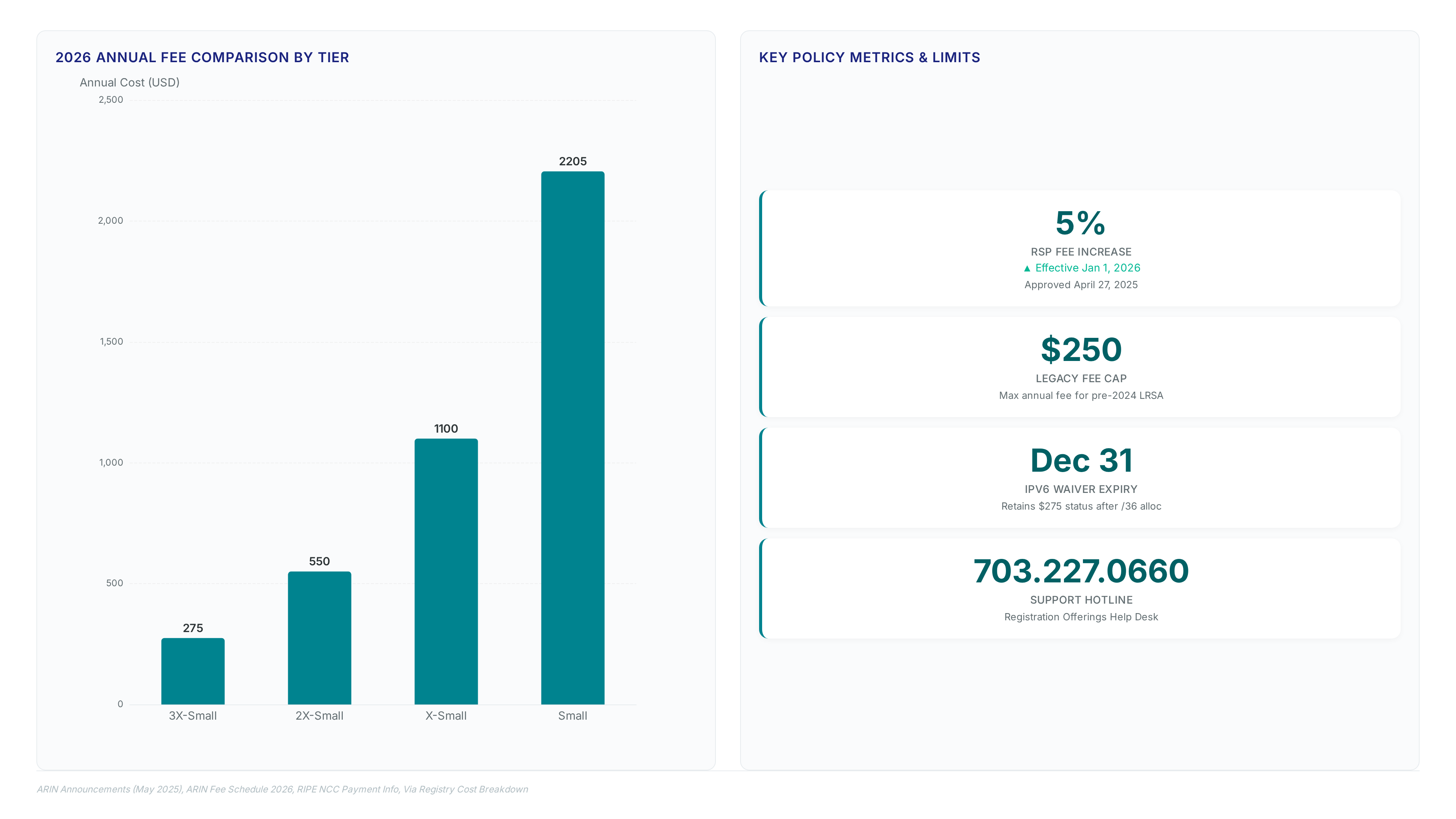
Submit an Ask ARIN ticket through the ARIN Online portal to initiate support for Role POCs validation and access control updates. This digital channel replaces direct phone calls for complex technical queries, ensuring a permanent audit trail for every modification request. Operators must log in to their account and select the specific organization context before drafting the inquiry. The Registration Offerings Help Desk remains available at +1.703.227.0660 during business hours for urgent matters, yet routine configuration changes require the ticketing interface.
- Navigate to the dashboard and select the target organization record.
- Click the "Submit Ticket" button to open the secure form.
- Choose "User Management" as the category for Point of Contact linking issues.
- Attach any required customer-to-customer authorization documents before sending.
This workflow enforces strict separation between general inquiries and privileged access changes. Unlike legacy processes, the system now validates the requester against the RDAP database to confirm identity before queuing the item. Attempting to bypass this step via phone often results in delayed resolution due to missing cryptographic context. The help desk scope explicitly excludes real-time debugging of live routing sessions, focusing instead on registry data integrity. Users managing high-volume transfers should use the Reg-RWS API for programmatic status checks rather than manual tickets.
Linking a user to a Role POC now requires an internal customer-to-customer ticket rather than external email chains. This shift eliminates spoofed validation requests by forcing cryptographic confirmation within the ARIN Online interface before access rights propagate.
- Navigate to the organization record and select the target individual for role assignment.
- Generate a customer-to-customer ticket that explicitly requests linkage to an admin or tech Point of Contact.
- Require the receiving party to accept the ticket, which finalizes the user validation loop without staff intervention.
Operators migrating from legacy Whois-RWS searches must adopt the RDAP API to verify these role changes programmatically, as older tools lack the necessary field visibility.
Validate admin and tech Point of Contact linkages before submitting reallocation requests to meet January 2026 mandates. Missing these bindings triggers automatic rejection, halting address space integration regardless of policy compliance.
- Confirm user accounts hold active links to both required roles within the organization hierarchy.
- Enable incoming reassignment controls to block unsolicited transfers from unverified sources.
- Generate non-expiring API keys via the Reg-RWS to audit pending ticket states locally.
| Validation Step | Legacy Behavior | January 2026 Requirement |
|---|---|---|
| Role Linkage | Email verification | Customer-to-customer ticket |
| Transfer Control | Open acceptance | Explicit opt-in only |
| Audit Trail | Manual logs | Automated dashboard events |
Operators ignoring this sequence face indefinite processing delays as staff manually reconstruct authorization chains. The shift eliminates spoofed requests but increases pre-submission overhead for large portfolios. InterLIR recommends automating these checks against the ARIN Online dashboard prior to any bulk modification attempt.
About
Vladislava Shadrina serves as a Customer Account Manager at InterLIR, where she specializes in client relations within the IP resources domain. Her daily work involves guiding organizations through the complexities of acquiring and managing IPv4 addresses, making her uniquely qualified to analyze updates to ARIN Online. As ARIN implements new features and system improvements, Shadrina's frontline experience allows her to assess how these changes impact real-world resource transfers and registration workflows. At InterLIR, a Berlin-based marketplace dedicated to redistributing unused IPv4 resources, she ensures clients navigate regulatory frameworks efficiently. This article connects her practical expertise in account management with the technical evolution of ARIN's platform. By bridging the gap between registry policies and customer needs, Shadrina provides valuable insights into how the latest ARIN Online release enhances transparency and operational speed for market participants relying on clean, verified IP assets.
Conclusion
Scaling manual validation workflows creates a critical bottleneck where human latency directly stalls infrastructure expansion. As portfolio sizes grow, the dependency on individual ticket responsiveness fractures operational velocity, turning routine reallocations into unpredictable scheduling hazards. The hidden cost here is not the $250 fee, but the cumulative engineering hours lost to reconstructing authorization chains after preventable rejections. Teams must treat role linkage as a continuous compliance state rather than a one-time setup task.
Organizations managing more than five distinct IP blocks should mandate a full role linkage audit by October 2025 to buffer against the January 2026 enforcement cliff. Do not wait for the rejection notice to validate your hierarchy; proactive verification is the only viable strategy to maintain deployment cadence. Delaying this preparation guarantees that your roadmap will slip whenever staff availability fluctuates.
Start by exporting your current Point of Contact mappings this week and cross-referencing them against active user accounts to identify broken links immediately. Fix any disconnects between admin and tech roles before submitting new requests. This single diagnostic step prevents the cascading delays that occur when automated systems encounter missing bindings during peak processing windows.
Frequently Asked Questions
Legacy holders with active agreements prior to 2024 pay a capped maximum total annual fee. This specific cap remains fixed at $250 regardless of how many legacy resources the organization currently holds today.
Updated validation requirements may feel disproportionate compared to the fixed annual fee structure. These holders remain capped at $250 annually, creating a potential mismatch between administrative burdens and their limited financial contribution limits.
The system eliminates external email chains by validating users entirely within the ARIN Online platform. This shift removes manual bottlenecks, though legacy holders capped at $250 might find these rigorous new steps challenging to manage internally.
Users linked to admin and tech Points of Contact now manage reallocations directly inside the portal. This autonomy reduces reliance on support staff, even for those organizations paying the minimal $250 annual legacy fee cap.
Centralization creates a single point of failure if credential rotation lags behind security needs. While legacy holders pay only $250 annually, unauthorized modification attempts during transfers could cause significant operational damage exceeding their low fee structure.