Cloudflare CASB: Agentless Visibility for Claude
Cloudflare extended CASB support to the Claude Compliance API on 21 May 2026, enabling agentless monitoring directly in the dashboard. This move cements the thesis that modern AI security requires out-of-band visibility rather than relying solely on network blocking or endpoint agents. The integration addresses the critical gap where organizations can stop unauthorized tools but remain blind to data exposure within sanctioned applications.
Readers will learn how the agentless CASB architecture observes conversational and persistent AI workflows that traditional SaaS controls miss. We examine the specific data flow between Claude Enterprise and Cloudflare Gateway, detailing how prompts containing customer data or API keys are intercepted before reaching the model. The discussion also covers configuring DLP policies to govern these unique generative outputs and agent framework interactions.
While IT teams race to deploy productivity tools, governance often lags, leaving sensitive inputs exposed inside approved platforms. Unlike static applications, these AI systems generate new content and connect to multiple records, demanding a security model that spans the entire lifecycle. By using Cloudflare AI Gateway and Cloudflare Access, enterprises can finally enforce rate limits, audit agent connections, and prevent data loss without sacrificing the speed of adoption.
The Role of Agentless CASB in Modern AI Security Architectures
Cloudflare CASB and the Claude Compliance API Extension
On 21 May 2026, Abe Carryl announced the extension of Cloudflare's cloud access security broker (CASB) to support the Claude Adherence API. This native integration delivers agentless monitoring for enterprise AI workflows, allowing security teams to observe Claude usage directly within the Cloudflare dashboard. The architecture eliminates endpoint agents entirely. Traditional tools fail to inspect conversational AI interactions, creating a visibility gap this integration closes. Organizations gain out-of-band visibility into sanctioned applications through a single API connection. Administrators detect sensitive data in prompts, chat files, and generated artifacts without deploying software to user devices.
The Claude Observance API provides necessary programmatic access to security-the data across workspaces and organizations. Inline proxies add latency. This agentless model consumes endpoints to surface actionable security findings without requiring inline traffic inspection. Security findings appear alongside posture data from other SaaS applications, unified under one governance workflow. Design choices provide thorough visibility into usage patterns while reducing operational overhead on client machines. The integration relies on the provider-side Compliance API to deliver security-the data about organizations, workspaces, and usage directly to the dashboard.
Industry trends show a clear shift toward API-driven observability away from heavy endpoint agents. Network teams prioritize configuring these read-only connections. Conversation logs get captured before data exposure incidents occur.
Stopping Data Leaks in Conversational AI Workflows
Conversational interfaces create unique data loss vectors where users paste customer personally identifiable information directly into prompts. Static file transfers differ notably. These interactions require inspecting freeform text and generated responses. Cloudflare Gateway and Data Loss Prevention policies block these unauthorized transmissions before they reach the AI model. Risks include employees pasting customer data into prompts. Developers accidentally share API keys. AI applications generate content containing company secrets. The Cloudflare AI Gateway sits between applications and providers like Anthropic to provide observability into requests and token spend.
Agentless Monitoring Versus Traditional Endpoint Security
Agentless monitoring secures conversational AI by inspecting API traffic rather than relying on host-based software agents. Traditional security approaches struggle. AI interactions are persistent, conversational, and deeply integrated into workflows via complex agent frameworks. Employees frequently paste customer data into prompts or accidentally share API keys. Static file scanners miss these risks entirely. These conversational interfaces generate flexible content containing company secrets. A security model observing the full lifecycle of data generation becomes necessary.
| Feature | Traditional Endpoint Security | Agentless CASB |
|---|---|---|
| Visibility Scope | Device storage and processes | API traffic and cloud data |
| Deployment Model | Requires local software agents | No endpoint agents required |
| AI Interaction | Limited static file analysis | Real-time prompt and response inspection |
| Data Context | Isolated file events | Full conversational thread context |
The integration addresses challenges enterprise teams face when observing user interactions with both sanctioned and unsanctioned applications. Administrators enforce rate limits. They cache responses. Fine-grained routing decisions happen without impacting developer velocity. This approach eliminates blind spots inherent in legacy tools that cannot parse freeform text within active chat sessions. Shifting to an API-centric model uses the cloud provider's compliance data rather than local process verification. Network operators ensure their DLP policies account for generative output, not inbound file transfers. Infrastructure security requires adopting architectures designed for modern AI workloads today.
Inside the Data Flow Between Claude Enterprise and Cloudflare Gateway
Read-Only API Endpoints for Conversation Retrieval
Dedicated read-only API endpoints retrieve conversation content without risking data loss during security scans. Cloudflare CASB connects to the Claude Alignment API to surface compliance data including organizations, projects, chats, and roles for Claude Enterprise. The mechanism relies on specific read-only endpoints that extract messages and uploaded files while preventing any modification to the source data. This architectural choice ensures that security auditing never interferes with active developer workflows or accidental data deletion.
Operators monitoring AI usage in dashboard views gain visibility into chat files, artifacts, and user prompts that violate DLP policies. Security teams can triage findings such as shared projects or sensitive file attachments using established workflows similar to those used for Microsoft 365, Google Workspace, or Salesforce.
| Data Type | Retrieval Method | Risk Profile |
|---|---|---|
| Chat Messages | Read-only API | None |
| Uploaded Files | Read-only API | None |
| Project Roles | Read-only API | None |
Enterprises enforce governance on conversation retrieval processes without deploying endpoint agents. Activity feed support remains planned for the near future rather than available immediately. Security teams achieve full lifecycle coverage from API call to data rest. Inspection does not equal interaction in this compliant environment.
Converting Security Findings into Gateway Policies
Detected security findings convert into Cloudflare Gateway policies using read-only API data. This translation mechanism allows operators to change raw compliance alerts from the Claude Conformance API into network enforcement actions. The process functions by mapping specific violation types, such as unauthorized file uploads or sensitive prompt content, to predefined Data Loss Prevention rules.
Administrators execute distinct remediation workflows based on the severity of the detected risk:
- Block uploads to Claude for specific user identities while maintaining general access.
- Restrict access to the application entirely for non-compliant workspaces.
- Limit functionality within the platform until the security team resolves the underlying issue.
- Isolate specific project contexts where policy violations occur repeatedly.
Operational friction often arises when findings appear missing from the dashboard or API keys fail validation during initial setup. These gaps typically stem from insufficient read permissions on the organization object. Resolving these issues requires verifying that the API key possesses explicit scope for project and chat retrieval endpoints.
| Action Type | Scope | Use Case |
|---|---|---|
| Block Uploads | User Identity | Prevent specific leakers from exporting data |
| Restrict App | Workspace | Contain breach within a single department |
| Limit Function | Global | Enforce pause during active investigation |
Policy conversion speed directly correlates with the window of exposure for sensitive data. Delayed enforcement leaves generative AI channels open for exfiltration while teams manually triage alerts. Automating these policy mappings helps eliminate human latency in the response chain.
Member modifications and file operations require validation by monitoring specific API triggers for workspace changes and API key creation. Cloudflare CASB surfaces these critical events for the Claude Platform, ensuring operators detect unauthorized access or data exfiltration attempts immediately. Unlike basic traffic filtering, this integration tracks identity mutations and asset movements that standard network logs often miss.
| Event Type | Visibility Scope | Action Trigger |
|---|---|---|
| Member Change | Workspace Level | Policy Re-evaluation |
| API Key Creation | Organization Wide | Alert Generation |
| File Operation | Project Specific | DLP Scan |
Resolving API key integration issues requires verifying that the connected account possesses sufficient read permissions for these specific audit logs. Administrators monitor AI usage in dashboard interfaces to confirm that file create or download events appear alongside conversation data. Support for the full Activity Feed remains planned for the near future, requiring current deployments to rely on these discrete event streams for compliance validation. Broad visibility aids security, yet excessive alerting on minor member updates desensitizes teams to genuine threats. Configuring granular thresholds distinguishes between routine administrative churn and suspicious activity patterns. This targeted approach preserves developer velocity while maintaining strict governance over sensitive organizational resources. 365 days of historical data retention supports long-term forensic analysis without impacting real-time performance metrics.
Configuring DLP Policies and Governance Rules for AI Workloads
Application: Defining Conversational AI Data Risks in Enterprise Workflows

Conversational platforms operate differently than static SaaS applications because they generate new content continuously through provider responses. This architectural shift creates unique governance gaps where standard perimeter controls fail to inspect flexible prompt streams. Employees frequently paste customer data into prompts, while developers accidentally share API keys that remain unrotated for months. Unlike static file storage, these interactions generate new sensitive content continuously through provider responses. Cloudflare CASB addresses this by consuming the Claude Adherence API to surface findings without inline traffic inspection. Security teams can now detect policy violations across projects, chat files, and generated artifacts directly in the dashboard.
Configuring Cloudflare Gateway Policies to Block Sensitive AI Prompts
Cloudflare Gateway inspects AI traffic to block prompts containing customer personally identifiable information before transmission. Administrators define Data Loss Prevention rules that scan outbound request bodies for specific regex patterns matching financial records or health data. When the gateway detects a match, it terminates the connection immediately, preventing the large language model from ever processing the sensitive payload. This approach secures the data plane without requiring agents on developer endpoints.
The integration relies on the Claude Observance API to correlate these blocked attempts with user identity and project context. Security teams observe findings grouped by severity within the dashboard, mirroring workflows used for Microsoft 365. Operators can triage chat messages and project attachments that violate organizational policies alongside traditional SaaS risks.
Aggressive blocking policies may interrupt legitimate debugging workflows if developers test systems using synthetic data that resembles real PII. The cost of false positives is developer friction, requiring a phased rollout strategy starting with alert-only modes. Network operators must balance strict governance with operational continuity. Configure these policies today to establish a defensible perimeter around your AI adoption. Contact InterLIR to secure the underlying IP availability required for strong global deployment.
Operational Checklist for Converting CASB Findings into Access Controls
Transforming detected security findings into enforced access controls requires a disciplined workflow that bridges visibility and action. Operators must first triage chat messages and project attachments flagged by the Claude Alignment API integration within the dashboard.
- Identify high-severity violations involving sensitive data patterns in user prompts.
- Map specific violation types to corresponding Cloudflare Gateway DLP rulesets.
- Configure policy actions to block uploads or restrict application access immediately.
- Validate that Microsoft 365 style workflows apply consistently across AI assets.
| Asset Type | Detection Scope | Enforcement Action |
|---|---|---|
| Chat Files | User uploads | Block Transfer |
| Artifacts | Generated content | Quarantine File |
| Projects | Sharing scope | Restrict Access |
Detected security findings can be converted into Cloudflare Gateway policies in minutes, enabling rapid response to emerging threats. Aggressive blocking without context may alter legitimate developer workflows requiring iterative prompt engineering. The operational cost lies in balancing strict governance with the need for experimental flexibility in AI adoption. InterLIR recommends starting with audit-only modes before enforcing hard blocks to calibrate tolerance levels. This approach ensures organizations maintain developer velocity while securing data at rest.
Deploying the Claude Compliance Integration via the zero-trust Dashboard
Prerequisites for Claude Enterprise Compliance API Access
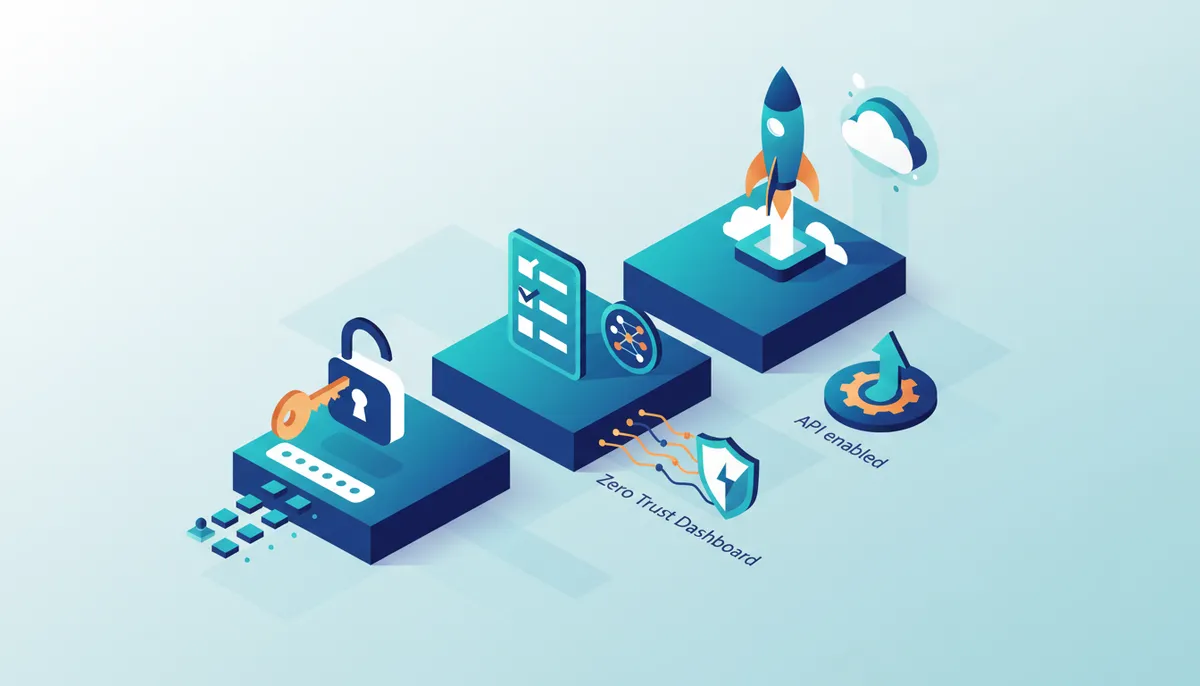
Activation demands a Claude Enterprise subscription paired with explicit Compliance API access granted by Anthropic. The zero-trust dashboard fails to retrieve security findings or scan conversation content for data loss without these specific credentials. Architecture depends entirely on read-only endpoints to surface project attachments and chat messages, avoiding inline inspection methods.
- Verify your organization holds an active Claude Enterprise subscription tier.
- Request Compliance API access directly through your Claude administrative console.
- Generate a dedicated API key with read-only permissions for security audits.
- Navigate to Cloud & SaaS within the Cloudflare zero-trust interface.
Existing customers enable the integration directly inside the dashboard once the key arrives. Provider-side approval processes create the primary constraint; security teams cannot bypass the requirement to request API access from Anthropic before configuration begins. This manual step ensures only authorized personnel expose conversational data to external scanning tools.
Configuring the Anthropic Integration in zero-trust Dashboard
Administrators activate scanning by navigating to zero-trust > Integrations > Cloud & SaaS within the dashboard interface. This specific path leads directly to the configuration module where you select Add Integration and choose Anthropic from the available provider list. Input your previously generated Compliance API key into the assigned field to establish the secure, read-only connection required for data visibility. The system consumes this endpoint to surface actionable security findings from your Claude Enterprise environment.
- Log in to the Cloudflare dashboard and access the zero-trust portal.
- Select Integrations from the sidebar, then click Cloud & SaaS.
- Click Add Integration, locate Anthropic, and paste your API key.
- Confirm the activation to start scanning of projects and chat files.
Findings appear in the dashboard grouped by category and ordered by severity, offering visibility into potential data loss events. This visibility relies on the accuracy of the initial API key permissions to retrieve security-the data about organizations, workspaces, and usage. Operators must balance broad access for thorough auditing against the principle of least privilege to maintain a secure posture. This agentless approach eliminates endpoint friction while maintaining strict governance over AI-generated content.
Validating DLP Profiles and Scan Results for Uploaded Files
Confirming that DLP profiles correctly flag project attachments requires verifying specific scan triggers within the dashboard interface. Security teams can triage, assign, and remediate risks using workflows similar to those used for Microsoft 365, Google Workspace, or Salesforce. The system processes chat files and artifacts through the same detection engine used for standard SaaS content, ensuring consistent policy enforcement across all data types.
- Navigate to the findings panel to view detected violations sorted by severity level.
- Select a specific chat file entry to inspect the matching rule and data context.
The integration scans for misconfigurations, improper data sharing, and other security risks through lightweight API integrations. By connecting to the Claude Conformance API, the system provides programmatic access to security-the data without requiring inline traffic inspection. This allows organizations to regain visibility and control over their expanding investments in SaaS apps and AI tools.
About
Alexander Timokhin, CEO of InterLIR, brings a strategic perspective to the evolving environment of cloud security and AI adoption. While InterLIR specializes in optimizing IPv4 address availability, Timokhin's deep expertise in IT infrastructure and network governance provides unique insights into the fundamental resources required for secure cloud operations. As organizations integrate tools like Cloudflare CASB to monitor Claude usage, the underlying demand for clean, reputable IP addresses becomes critical for maintaining secure connections and verifying identity. Timokhin's daily work managing global IP marketplaces and ensuring BGP security directly correlates with the need for reliable visibility across network boundaries. His experience in navigating complex international telecommunications regulations allows him to articulate how compliance APIs and resource management intersect. By connecting network availability with advanced security brokers, Timokhin highlights how enterprises can safely scale AI initiatives while maintaining rigorous control over their digital assets and data integrity.
Conclusion
Scaling this agentless model reveals that API key permissions become the single point of failure for data visibility. If the initial integration grants insufficient scope, security teams face blind spots in chat files that no amount of downstream triage can fix. The operational cost here is not compute resources but the latency in detecting misconfigurations before they result in data loss. Relying on periodic scans rather than continuous monitoring creates windows of exposure that traditional inline inspection would catch immediately.
Organizations must treat the Anthropic connection as a critical data pipeline, not a simple toggle. Start by auditing your current API key scopes against the principle of least privilege this week to ensure they cover all necessary workspaces without over-reaching. This specific validation step prevents the common pitfall where broad access requirements clash with security mandates. You should mandate a review of DLP profiles within 30 days of activation to confirm that severity sorting aligns with your internal risk taxonomy.
The real shift is moving from reactive flagging to proactive governance where policy enforcement happens before data leaves the enterprise perimeter. Adjusting your Cloudflare zero-trust settings now ensures that as AI usage grows, your control surface expands with it rather than fracturing under the weight of unmanaged prompts.
Frequently Asked Questions
No, the solution operates without endpoint agents to reduce operational overhead. Administrators gain visibility through a single API connection that eliminates the need for deploying software to user devices.
The system identifies customer personally identifiable information and unrotated API keys in prompts. Security teams can triage these findings alongside posture data from other SaaS applications within one workflow.
Network blocking stops unauthorized tools but leaves data exposure inside sanctioned apps invisible. This integration provides out-of-band visibility to monitor interactions within approved applications effectively.
Yes, Data Loss Prevention policies block prompts containing confidential material before transmission. This prevents the generation of content containing company secrets by stopping risky inputs at the source.
It offers programmatic access to security-relevant data across workspaces and organizations. This allows teams to observe usage patterns directly in the dashboard without inline traffic inspection.
References