npNOG gatherings fix what school missed for engineers
Attending npNOG 10 as a fellow launched a career trajectory that Gartner predicts will define 30% of enterprise networks by 2027.
Technical mastery means nothing without the collaborative ecosystems found in Network Operator Groups. Yes, the industry is shifting toward automation, but human community sharing remains the only reliable accelerator for professional evolution. Informal exchanges at regional gatherings translate directly into hardened infrastructure.
The technical workflows taught in the APRICOT Masterclass, including uRPF and RTBH filtering, move beyond abstract theory into operational reality. Fellowship programs serve as gateways to these exclusive circles, transforming isolated engineers into connected stakeholders. Panel participation breaks down confidence barriers, proving soft skills matter as much as configuration knowledge. APNIC reports confirm that this multi-stakeholder model has sustained 56 economies for over three decades, offering a proven alternative to top-down governance. (APNIC's organization)
The Role of NOG Communities in Modern Network Infrastructure
NOG Communities as Peer-to-Peer Learning Ecosystems
Network Operator Groups function as open technical forums where engineers validate configurations against peer-reviewed operational data rather than vendor documentation alone. These communities solve the isolation problem in tech by enforcing a culture of sharing that transforms individual troubleshooting into collective durability. Prakriti Timilsina observed this flexibility at npNOG 10, where fellows exchanged solutions for routing security without the hesitation typical of competitive corporate environments. The broader mission spans 56 economies, yet specific security mechanisms like Route Origin Validation face adoption hurdles due to limited deliberate implementation discussions among Pacific operators (Route Origin Validation).
Local npNOG chapters prioritize immediate configuration troubleshooting, while APRICOT conferences drive regional policy alignment through multi-stakeholder governance. Small groups enable rapid exchange of FreeRADIUS architecture patterns for distributed authentication without WAN dependence (local network closets Large gatherings coordinate multi-stakeholder governance models that reject centralized government control over address space allocation (government-controlled models). Operators face a hard constraint: choose between depth of technical detail or breadth of strategic influence.
Adopting unified platforms often yields 40% lower Total Cost of Ownership compared to fragmented legacy systems (Total Cost of Ownership). Around 55% of organizations now integrate networking and security operations to reduce siloed management overhead (platform unification). Local events suit engineers needing immediate help with Route Origin Checking deployment errors. Global forums benefit architects designing cross-border durability strategies against systemic threats. Local solutions rarely scale without the consensus built at larger regional meetings. Strategic growth demands moving from isolated fixes to coordinated policy frameworks.
Inside the APRICOT Masterclass Curriculum and Technical Workflows
RPKI Route Origin Confirmation Mechanics in APRICOT Labs
The masterclass workflow enforces cryptographic signatures on route origins to stop hijacks before traffic shifts. Operators generate Route Origin Authorizations linking IP prefixes to specific Autonomous System numbers within the RPKI hierarchy. BGP speakers then fetch these signed objects to build a local cache of valid origin assertions. Instructors demonstrated how routers compare incoming AS path data against this cache to assign validity states. Traffic matching a valid state proceeds normally, while invalid routes trigger immediate rejection policies. This mechanical check prevents attackers from announcing stolen address space even if they control the upstream link.
Updated training labs focusing on IPv6 Pacific operators face distinct hurdles since deployment in Pacific economies Limited anecdotal discussion suggests many networks still lack deliberate implementation of these validation filters. Skipping this step leaves networks totally exposed to origin spoofing attacks without any protocol-level defense. Automation trends indicate that by 2029, forecasts suggest 70% of enterprises will deploy agentic AI agents to operate IT infrastructure. Human engineers must define the validation logic today before autonomous systems manage these decisions tomorrow.
| Valid | Accept | None |
|---|---|---|
| Invalid | Reject | High |
| Unknown | Accept | Moderate |
Strict uRPF deployment drops spoofed packets at the ingress interface by verifying the source IP against the Forwarding Information Base. Operators configure strict mode on customer-facing links and loose mode on upstream peering points to balance security with traffic engineering requirements. A single misconfigured access list can blackhole legitimate traffic, proving that small implementation details dictate overall network durability. RTBH filtering complements this by steering attack traffic to a null route using a specific community tag. The mechanism relies on setting a next hop address of 192.0.2.1 to trigger immediate discard across the backbone without consuming CPU cycles on edge routers.
| Feature | uRPF Strict | uRPF Loose | RTBH |
|---|---|---|---|
| Verification | Full path check | Source existence | Community tag |
| Drop Location | Ingress interface | Ingress interface | Core egress |
| Use Case | Customer edges | Multi-homed peers | DDoS mitigation |
Automation drives adoption as 30% of enterprises now automate more than half of their network activities, reducing human error in filter application. This shift supports agentic AI workflows that predict attack vectors and push RTBH policies before congestion occurs. Aggressive filtering risks discarding valid traffic during asymmetric routing events, forcing operators to maintain manual override capabilities. Automated speed versus operational safety requires strict change-management protocols. Updated training.
Strict uRPF checks drop legitimate traffic when asymmetric routing paths exist, creating immediate availability loss for downstream customers. Limited anecdotal discussion among operators about deliberate implementation leaves many networks exposed to simple spoofing attacks. Small implementation details dictate whether a defense mechanism protects the core or fractures the edge.
APRICOT Masterclass and the 5-Month Fellowship Structure
The APRICOT Masterclass functions as a rigorous technical training component embedded within a broader 5-month capacity-building initiative. This structure distinguishes the program from standard conference attendance by enforcing a prolonged timeline for skill acquisition rather than a single event. Applications for the 2026 APNIC Fellowship and Policy Fellowship tracks officially closed on March 13, 2026, at 23:59 UTC+10, marking the end of the competitive selection window. The curriculum mandates hands-on engagement with IPv6 Operators must navigate a trade-off between the depth of technical mastery gained and the significant time commitment required over five months. A successful application demands proof of operational readiness before the submission deadline passes.
Initiating a career trajectory requires joining local technical communities like npNOG before targeting global fellowships. Operators must first engage with regional peers to identify specific skill gaps in routing security or infrastructure hardening. This local grounding prepares candidates for the rigorous selection process of the 5-month Fellowship program. Attendance at workshops provides the necessary context for understanding complex operational challenges faced across the Asia-Pacific region. Professionals should monitor application cycles closely, noting that deadlines such as March 13 often pass without extension. Successful applicants transition from passive learners to active contributors by sharing knowledge gained during training events.
Extending fellowship ROI requires participating in the 2026 APNIC Survey This mechanism captures operator intent on fee structures and resource allocation, directly influencing future budget constraints for the 56 economies served. Participants entering the process could win one of eight prizes, creating a tangible incentive beyond simple data collection. Operators must distinguish between local community grounding and regional scale when planning attendance.
| Feature | npNOG Focus | APRICOT 2026 Scope |
|---|---|---|
| Primary Goal | Local peer troubleshooting | Regional policy alignment |
| Training Depth | Informal knowledge exchange | Structured IPv6 labs |
| Outcome | Immediate config fixes | Long-term career pathways |
Survey participation predicts trends rather than enforcing immediate technical changes on routing security deployments. Data indicates that Route Origin Authentication adoption in Pacific economies remains difficult to observe directly despite such feedback loops. Ignoring these signals leaves operators blind to upcoming infrastructure cost shifts mandated by regional bodies. Strategic planning without this input results in reactive rather than proactive network management.
Executing Your First Community Engagement and Fellowship Application
APNIC Fellowship and Policy Fellowship Program Scope
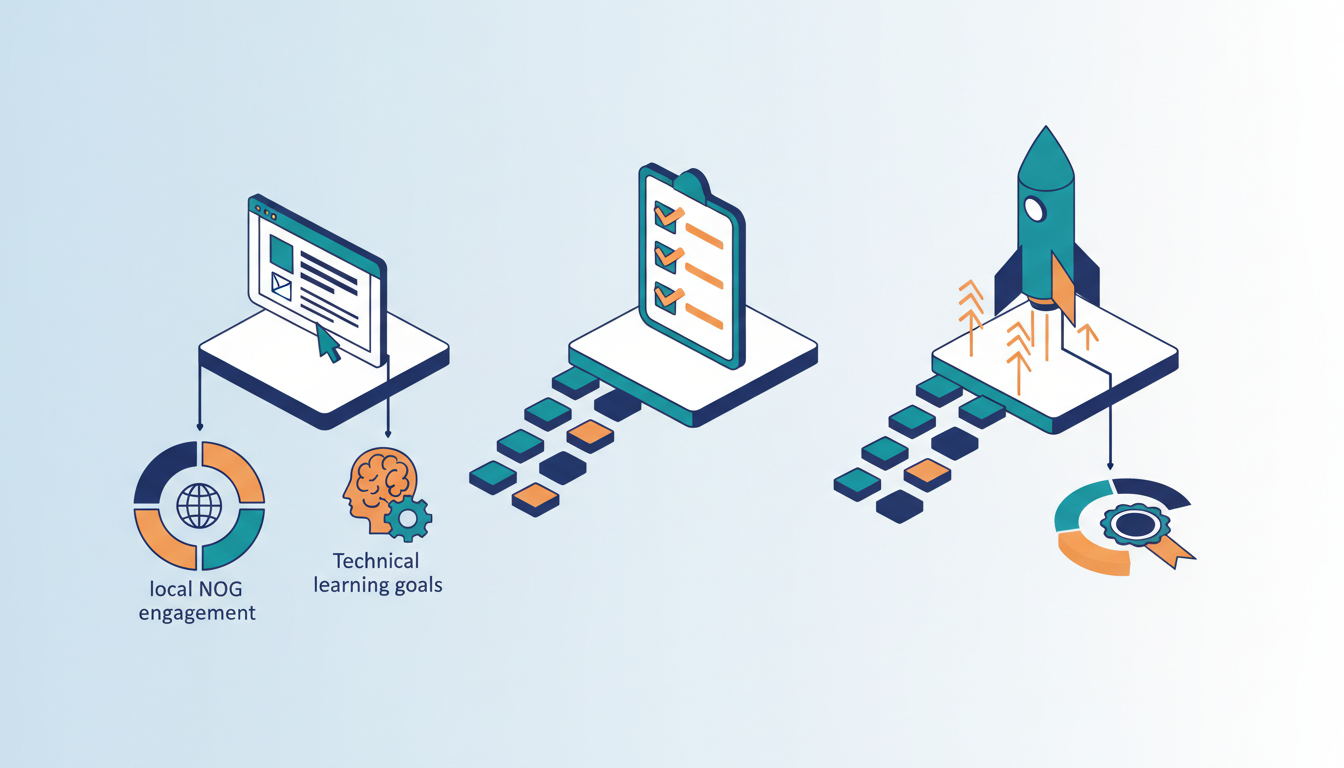
The 2026 APNIC Fellowship distinguishes technical operations from policy governance through separate application tracks within a fixed 5-month initiative. Applicants must select between the Youth, Professional, or Masters categories, each requiring proof of active engagement in local network communities before submission.
- Validate eligibility against the structured capacity-building initiative guidelines published by APNIC.
- Document prior attendance at regional gatherings like npNOG to demonstrate community integration.
- Prepare a technical statement outlining specific routing security skills intended for development.
- Submit the complete dossier before the March 13 deadline, as late entries receive automatic rejection.
The Policy Fellowship track specifically targets individuals aiming to influence the multi-stakeholder governance model Technical fellows focus on RPKI deployment while policy fellows address regulatory frameworks. Competitive selection means only a fraction of applicants secure funding, creating a bottleneck for smaller operators. Cross-disciplinary candidates often struggle to fit their hybrid skills into a single application within this dual-track system.
Navigating the March 13 Fellowship Application Deadline
The 2026 application window for the 2026 APNIC Fellowship officially terminated on March 13, 2026, at 23:59 UTC+10, enforcing a hard cutoff for all submissions. Late entries face automatic rejection regardless of technical merit, as the selection committee adheres strictly to this temporal boundary. Successful candidates enter a structured 5-month program that mandates continuous skill development rather than single-event attendance. Post-acceptance coordination with the fellowship committee begins immediately to align individual learning goals with available training resources. Operators targeting future cycles must recognize that preparation extends beyond filling out forms to documenting prior community engagement.
- Monitor official channels for the next cycle opening dates well in advance of the deadline.
- Gather evidence of participation in local groups like npNOG to satisfy eligibility criteria.
- Draft a technical statement highlighting specific operational challenges faced in production environments.
- Submit the complete package before the UTC+10 timezone constraint triggers system closure.
Applicants often underestimate the administrative overhead required to validate their community integration history. The program distinguishes itself by offering Youth, Professional, and Masters categories, each demanding proof of active local involvement. A 25% fee discount applies to very small tier account holders in graduating economies, altering the financial calculus for some applicants. Missing the deadline creates a twelve-month gap in professional development trajectories for isolated engineers. Strategic planning requires aligning personal upskilling goals with the rigid temporal constraints of the fellowship committee. Future applicants should note that updates regarding APNIC 64 often signal shifts in regional focus areas for upcoming cohorts.
Pre-Application Engagement via npNOG 12 and SANOG 44
npNOG 12 and SANOG 44 in Nepal provide immediate hands-on technical training before fellowship submission. Candidates must first join these local communities to demonstrate active engagement rather than passive interest. Prospective fellows should attend workshops to practice RPKI Route Origin Verification in live lab environments. This direct participation validates the applicant's commitment to the structured capacity-building initiative managed by APNIC. Selection committees prioritize documented community contribution over raw technical certifications. Engagement creates a track record that distinguishes serious candidates from casual applicants during review.
| Action | Outcome | Requirement |
|---|---|---|
| Attend npNOG 12 | Gain local mentorship | Physical presence |
| Complete SANOG 44 labs | Verify uRPF skills | Lab participation |
| Network with peers | Secure references | Active dialogue |
Execute the following configuration to prepare for advanced routing security modules:
Contacts from previous events frequently inform members about upcoming Future City innovation programs. Such early warnings allow candidates to align their study plans with regional development tracks. InterLIR recommends documenting every attended session to build a verifiable portfolio for the application. Failure to engage locally results in generic statements that lack the specific operational context selectors demand.
About
Vladislava Shadrina serves as a Customer Account Manager at InterLIR, a specialized IPv4 address marketplace based in Berlin. Her daily work revolves around managing client relations and facilitating access to critical network resources, making her uniquely qualified to discuss the value of Network Operator Groups. Through her role, she directly observes how operators solve network availability challenges, mirroring the collaborative spirit described in the article. While the text highlights community engagement at events like npNOG, Vladislava's professional experience ensures that these connections translate into tangible solutions for IP resource distribution. At InterLIR, she bridges the gap between individual operators and the global market, emphasizing transparency and efficiency. This practical exposure to the operational needs of network engineers allows her to authentically connect the culture of sharing found in NOGs with the strategic importance of securing clean, reliable IPv4 addresses for sustainable growth.
Conclusion
Scaling community-driven network operations reveals a critical fracture point: volunteer fatigue inevitably stalls growth when governance relies solely on enthusiasm rather than funded mandates. While initial fellowship costs appear manageable, the hidden operational burden of maintaining a 30-year ecosystem without dedicated automation budgets creates a silent deficit that erodes service reliability by 2029. Organizations attempting to bridge this gap with manual processes will find their capacity capped precisely when agentic AI deployment reaches critical mass across the sector. You must transition from ad-hoc participation to formalized automation frameworks before the 2026 fiscal cycle begins, or risk becoming a bottleneck for regional connectivity.
Commit to integrating unified platform architectures within the next eighteen months to secure the projected 40% reduction in total ownership costs, but only if your team simultaneously adopts strict governance protocols for AI-driven mitigation. Do not wait for external grants to dictate your timeline; the window for establishing these fundamental controls closes as enterprise adoption accelerates. Start by auditing your current manual intervention logs this week to identify the top three repetitive tasks suitable for immediate script-based automation. This specific baseline measurement provides the data necessary to justify the capital expenditure required for next-generation tooling before the 2026 budget planning phase.
Frequently Asked Questions
Initial customer acquisition costs start at $1,500 in 2026 before scaling operations. Community fellowships effectively waive this financial friction to allow engineers to focus entirely on technical mastery rather than funding logistics.
Engineers validate configurations against peer-reviewed operational data instead of relying solely on vendor documentation. This approach transforms individual troubleshooting into collective durability by enforcing a culture of sharing within the open technical forums.
The curriculum covers Unicast Reverse Path Forwarding and Remote Triggered Blackholing filtering techniques. These hands-on labs move beyond abstract theory to address real operational challenges regarding routing security and infrastructure protection directly.
Panel discussions address representation and confidence barriers by fostering honest and empowering conversations. Participating in these sessions proves that soft skills are just as vital as configuration knowledge for overcoming personal professional hurdles.
Gartner predicts this specific career path will define 30% of enterprise networks by 2026. Attending events like npNOG as a fellow launches the trajectory that leads to such significant professional evolution and success.