
RIPE NCC Account: Secure Your Registry Roles
Three exam vouchers are granted per LIR, tying certification directly to the RIPE NCC Access structure. This account functions as the single mandatory gateway for all registry interactions, enforcing strict two-factor authentication across every service. Without this specific credential, an organization cannot manage its identity or resources within the European region.
The RIPE NCC mandates 2FA for all accounts, eliminating legacy access methods to secure the system. Users navigate distinct operational silos based on assigned roles, separating general LIR Account Details from financial data. Only those with billing roles view invoices, while regular roles handle organizational updates and General Meeting registration. This segmentation ensures that critical changes to the Default Maintainer or postal address require specific authorization levels.
Readers will examine how API Access Keys enable automated scripts for admins while manual workflows persist for resource transfers. The discussion covers the separation between the My LIR portal and the Resources section, where IPv4 and IPv6 analyzers track allocation usage. We also detail the IPv4 Transfer Listing Service mechanics and the necessity of RPKI Dashboard access for modern routing security. Understanding these specific modules reveals the rigid architecture governing modern Internet number resource management.
The Role of RIPE NCC Access in LIR Identity Management
RIPE NCC Access as the Central Authentication Hub
Forget legacy logins. RIPE NCC Access is the only key that opens the registry door. This centralized layer forces validation through the portal before anyone touches internet number resources or database objects. Security protocols now demand two-factor authentication (2FA) for every account, locking down organizational assets against unauthorized entry.
Control hinges on linkage. Operators must connect their SSO account to specific mntner objects to retain command over IP blocks and autonomous system records. Once linked, authenticated users update organization objects via the web interface and recover lost passwords independently. No more ticketing the RIPE NCC for routine resets. The shift to mandatory 2FA guarantees that all accounts apply strong verification steps, removing weak links from the chain.
Staff transitions introduce friction into this rigid model. InterLIR helps network operators navigate these identity constraints while optimizing existing IPv4 portfolios through marketplace solutions.
Membership is the prerequisite. The RIPE NCC requires it to access the registry system, tying resource ownership directly to identity verification. Once established, the system grants three vouchers for the LIR Fundamentals exam to registered contact persons, validating their capacity to manage Internet number resources effectively. Workforce certification now aligns strictly with active organizational roles inside the access system.
Distinct permission tiers define user capabilities within this framework. Regular users view organization details and manage tickets. Admin users hold exclusive rights to authorize API access keys and modify user account listings. This separation lets admins authorize scripts to interact with the RIPE NCC while granting broad staff visibility. Operators relying on InterLIR for IPv4 leasing benefit from understanding these internal Role-Based Access Controls (RBAC), as accurate contact data is necessary for smooth resource transfers. The structural dependency between membership validity and voucher eligibility creates a clear incentive for maintaining current administrative records. Updated records ensure continued access to training resources needed for compliant network operations.
RIPE NCC Access Versus APNIC MyAPNIC Silos
Global IP management is not unified; it is fractured by geography. RIPE NCC Access functions as a distinct identity gateway compared to the proprietary MyAPNIC system used by APNIC in the Asia-Pacific region. This divergence confirms that global IP resource management relies on siloed login infrastructures set by geographic jurisdiction rather than a unified standard. Operators managing assets across multiple regions must navigate these separate authentication protocols, since no single credential grants access to both European and Asian registry databases.
| Feature | RIPE NCC Access | APNIC MyAPNIC |
|---|---|---|
| System Name | RIPE NCC Access | MyAPNIC |
| Scope | Europe, Middle East, Central Asia | Asia-Pacific |
| Architecture | Centralized SSO Portal | Proprietary Regional Silo |
| Management | LIR Portal Integration | Dedicated Access Control |
Updating organizational objects in one region provides no automatic synchronization with the other, forcing manual reconciliation of contact data. This fragmentation increases the operational burden on network teams who must secure and audit two distinct identity ecosystems simultaneously. Managing credentials for both systems remains necessary for maintaining resource access. Managed Service providers often bridge this gap, yet direct LIR access stays necessary for managing resources directly.
Security Architecture and Two-Factor Authentication Mechanics
Mandatory 2FA Enforcement in RIPE NCC Access
Two-factor authentication operates as the mandatory gatekeeper for every RIPE NCC Access account. Login attempts lacking a valid second factor fail immediately, regardless of password accuracy. This security layer restricts service access to verified administrators only. Resource Certification modules, including Route Origin Authorizations, remain accessible strictly through this unified platform. Administrators must visit access.ripe.net to link credentials and satisfy the enforcement policy. Scripts depending on static passwords for API interactions will fail until updated. Automated tools require dedicated API Access Keys authorized by a user holding the "admin" role. Legacy authentication methods cannot bypass the identity check. The system design prioritizes verified identity over simple knowledge-based secrets.
| Feature | Without 2FA | With Mandatory 2FA |
|---|---|---|
| Login Access | Blocked | Granted |
| Object Updates | Impossible | Permitted via Web Interface |
| RPKI Signing | Inaccessible | Active |
Operational continuity demands that automation scripts switch to API Access Keys. Static password usage is no longer viable for maintaining access.
Step-by-Step 2FA Enablement and Password Recovery
Secure single sign-on credentials by enabling two-factor authentication through the official guide. This mandatory layer stops unauthorized entry even after password compromise. RIPE NCC Access governs all member services, making this configuration necessary for managing registry data or requesting new blocks. The platform denies entry to users without an active second factor, halting administrative workflows completely. Password recovery mechanics rely entirely on SSO association with the maintainer object in the database. Accounts linked to the mntner allow instant credential resets without external help. Missing SSO association combined with legacy MD5 hashes disables self-service recovery. The system prompts users to add their RIPE NCC Access account to the maintainer first in such cases. Failure to authenticate for this update forces reliance on alternative mechanisms. Support teams may need to verify organizational control, introducing significant operational delays.
- Navigate to the provided enablement link and follow the 2FA enrollment steps.
- Ensure your SSO account appears on the mntner object for self-service recovery.
- Avoid legacy MD5 passwords to prevent being locked out of password recovery flows.
Missing this association creates a single point of failure where lost credentials result in lost administrative rights.
Access Risks of Unassociated SSO and Mntner Privileges
Unlinked SSO accounts face immediate denial when updating mntner objects protected by legacy MD5 hashes via the web interface. This gap prevents operators from modifying organisation records or recovering credentials without manual intervention. The RIPE Database requests association only if the target maintainer uses MD5 authentication. Other configurations remain locked until an existing admin updates the object externally.
| Privilege Level | Unassociated Risk | Recovery Path |
|---|---|---|
| Regular | Cannot update objects via Web UI | Admin assistance required |
| Admin | Cannot manage users | Manual ticket escalation |
Operators failing to associate their identity face a binary choice: depend on another administrator or submit a support ticket to resolve the access denied state. This dependency introduces operational latency contradicting the self-service portal design. The limitation is clear: explicit linkage transforms the two-factor authentication mandate from a barrier into a shield. Validating these linkages ensures uninterrupted IP resource management. Neglecting this step risks total administrative lockout during critical network events. Infrastructure security requires verifying every account linkage immediately.
Operational Workflows for Resource and Database Management
Distinguishing My LIR Management from Resource Object Control

Separating organizational metadata from technical Internet number resources establishes the necessary operational boundary within the portal interface. The My LIR section functions exclusively for administrative governance, restricting access to logged-in users associated with a specific registry entity. Operators manage billing details, update postal addresses, and configure API Access Keys inside this domain without touching routing data. Personnel changes or invoice disputes never accidentally impact the stability of active network allocations because these systems remain distinct.
The Resources section serves as the technical control plane for managing objects directly in the RIPE Database. Users verify issue dates, review sponsored space, and deploy RPKI signatures for BGP announcement security within this environment. Administrative roles handle account status separately. The IPv4 Analyser and transfer listing services are available specifically to "regular" or "admin" users representing an LIR to review usage, free space, and manage transfers.
A common configuration error occurs when administrators fail to associate their RIPE NCC Access account with the specific mntner object protecting their resources. The single sign-on system cannot authorize updates to IP blocks via the web interface without this explicit link. Users may be prompted to add their SSO account to the maintainer or update the maintainer through another mechanism. Holding LIR status grants portal entry, yet object control demands precise maintainer association.
Marketplace solutions integrate with these established workflows to enable secure IPv4 leasing without compromising administrative boundaries.
Executing RPKI Dashboard Operations and ROA Management
Direct management of Route Origin Authorizations begins within the specific RPKI Dashboard module accessible via the central portal. This interface enables operators to cryptographically validate BGP route announcements, a critical step for preventing unauthorized use of IP space. Unlike the administrative functions found in My LIR, this technical workspace allows users to create and modify ROAs that directly influence global routing tables. Access extends beyond standard Local Internet Registries to include non-LIR organisations holding sponsored resources, ensuring broad security coverage across the system.
Enabling these protections requires precise coordination between the dashboard and existing maintainer objects. Identity management couples tightly with routing security, meaning RIPE NCC Access serves as the mandatory gateway for all such operations. A significant limitation arises if an organization fails to associate its SSO account with the maintainer, as this prevents updates to the authorization data through the web interface. Operators must ensure their SSO account is associated with the maintainer or apply alternative mechanisms to publish the necessary configurations.
Optimizing existing resources through rigorous ROA management reduces the risk of hijacking without requiring new capital expenditure. Properly signed routes maintain stability even when upstream filtering policies tighten globally. Network operators using these built-in tools secure their infrastructure against common path anomalies.
Validating Role Requirements for Billing and Organization Updates
Administrative workflows require specific role assignments to function correctly. Operators must verify specific access levels before modifying critical organisation objects or reviewing financial data to prevent workflow interruptions. The LIR Account Details section requires a "regular" role to modify the Default Maintainer, postal address, and subscribed mailing lists. Viewing invoice history and charged assignments demands the distinct "billing" role, creating a necessary separation of duties within the management portal.
| Function | Required Role | Access Scope |
|---|---|---|
| Organisation Details | Regular | Address, Phone, Email |
| Billing Information | Billing | Invoices, Account Status |
| Resource Transfers | Regular | Mergers, Name Changes |
Role segmentation implies that a single user account may lack permissions for thorough guide to managing resources in RIPE Database tasks if role assignments are incomplete. Teams should audit their current role allocations immediately to ensure appropriate credentials are assigned for steps for requesting IPv4 transfer coordination and financial oversight. InterLIR advises clients to align these internal permissions with their operational governance policies before initiating any resource transactions.
Implementation Steps for Account Association and Certification
RIPE NCC Access Portal Registration and Account Linking
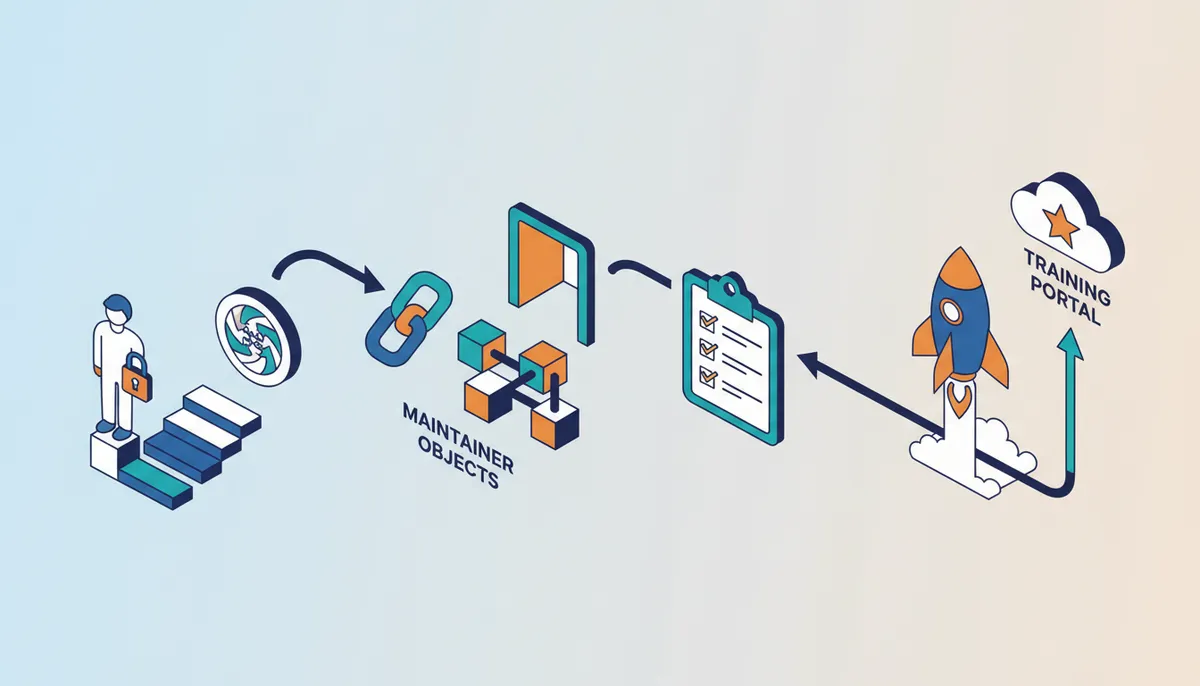
Membership in the RIPE NCC unlocks the My LIR section, acting as the primary gate for identity management and resource control. Operators secure infrastructure by following specific registration protocols.
- Register a RIPE NCC Access account at the official portal.
- Link the user identity to the organization's maintainer objects in the database.
- Enable two-factor authentication, which is mandatory for all RIPE NCC Access accounts.
The platform issues LIR Fundamentals exam vouchers to registered contact persons, tying certification directly to the member account. Associating an organisation's mntner object with a RIPE NCC Access account enables self-service password recovery. Without this link, resetting credentials requires direct intervention from the RIPE NCC. Immediate linkage guarantees uninterrupted management of internet number resources.
Configuring API Keys and Accessing LIR Fundamentals Vouchers
Administrators log in to generate API Access Keys for script authorization. This setup permits automated workflows while maintaining security at the RIPE NCC Access gateway. Users holding admin privileges navigate to the assigned portal section to create credentials, allowing external tools to interact safely with registry data.
Workforce development runs parallel to technical configuration through integrated certification benefits. The system allocates LIR Fundamentals exam vouchers to registered contact persons. These credentials validate an individual's capacity to manage Internet number resources as an LIR administrator. Personnel locate these assets by selecting the My Training link to register for the exam. Identity access connects directly to professional validation, confirming that those managing infrastructure possess verified skills. This benefit remains intrinsic to the membership structure. Using included resources helps teams maintain high operational standards. Centralizing technical access keys and educational credentials reduces the administrative overhead typically linked to compliance and automation setup. Network operators secure IPv4 assets while simultaneously upgrading staff expertise.
Validation Checklist for Role-Based Billing and Resource Updates
Viewing invoices and charged assignments strictly requires the billing role. Operators must verify role assignments against this matrix before attempting configuration updates:
| Feature Section | Minimal Role | Function |
|---|---|---|
| Billing Information | billing | View Account Status |
| API Access Keys | admin | Authorize Scripts |
| Organisation Details | regular | Update Postal Address |
| IPv4 Analyser | regular | Review Free Space |
- Log in to RIPE NCC Access using mandatory two-factor authentication.
- Navigate to User Accounts to confirm the specific regular or billing designation.
- Generate API Access Keys only if holding admin privileges for automation.
User roles within the LIR determine feature access; only users with the billing role view Billing Information, whereas regular users cannot. Exam vouchers issue to contact persons to support professional development alongside resource management responsibilities.
About
Alexei Krylov, Head of Sales at InterLIR, brings extensive expertise in managing relationships with Regional Internet Registries (RIRs) to this discussion on RIPE NCC Access accounts. With a professional background spanning B2B sales and civil law, Alexei navigates the complex legal and technical landscapes of IP resource ownership daily. At InterLIR, a specialized IPv4 marketplace founded in Berlin, his team relies on secure RIPE NCC Access credentials to enable transparent IP address transfers and maintain clean BGP route objects for clients globally. Understanding the critical nature of Two-factor Authentication (2FA) and role-based permissions within the My LIR portal is necessary for ensuring the security and efficiency of these transactions. This article reflects the operational reality at InterLIR, where precise management of registry access directly supports the company's mission to solve network availability problems through the reliable redistribution of unused IPv4 resources.
Conclusion
Scaling network operations exposes the fragility of relying on shared credentials rather than distinct role assignments. When teams grow, the operational cost of troubleshooting access denied errors for billing data or API scripts consumes valuable engineering time. You must implement strict role segregation immediately to prevent workflow bottlenecks and maintain security hygiene. Do not wait for an audit cycle or a specific calendar date to rectify these permissions; the risk of unauthorized changes or obscured billing visibility exists today.
Start by auditing your current user list against the provided role matrix this week. Identify any accounts holding admin privileges that strictly require only regular or billing access and downgrade them accordingly. This immediate adjustment reduces the attack surface while ensuring staff can access only the specific tools their function demands. InterLIR helps organizations simplify this governance through our specialized consulting services, which design sustainable identity frameworks for LIRs managing complex asset portfolios. By centralizing technical access keys and educational credentials, you secure IPv4 assets while simultaneously upgrading staff expertise without introducing third-party dependencies. The path forward requires disciplined adherence to least-privilege principles rather than reactive fixes after a security incident. Take action now to align your team's digital permissions with their actual operational responsibilities.
Frequently Asked Questions
You must recover your password independently without contacting the RIPE NCC. Associating your SSO account with your maintainer object enables this self-service recovery feature for all users.
The system grants three vouchers to registered contact persons within your LIR. This structural link ensures only verified staff members can access these specific certification resources directly.
Only users with the admin role can authorize scripts to interact with the RIPE NCC. Regular users lack this specific permission to generate or manage API access keys securely.
No single credential grants access because MyAPNIC operates as a distinct regional silo. Operators managing assets across Europe and Asia must navigate these separate authentication protocols manually.
Users with billing roles view invoices while regular roles handle organizational updates. This segmentation ensures that financial data remains separate from general maintenance tasks like address changes.
References