
RIPE Network Coordination: Why Riga Matters Now
Global AI infrastructure spending hits $2.5 trillion in 2026. That number changes everything. Regional coordination is no longer optional; it is a survival mechanism. Network operators must leverage RIPE NCC Days Baltics to lock in technical alignment before market forces fracture the region's connectivity. This analysis dissects how regional network cooperation counters the specific pressures crushing Latvian and Baltic infrastructure providers. We break down the presentation submission mechanics managed by the Programme Committee, highlighting the hard stop on 17 April 2026 for plenary and workshop proposals. The conclusion evaluates the strategic necessity of these discussions as the industry faces fiber deployment cost surges and the fallout from the General Meeting in Edinburgh.
That $2.5 trillion forecast targets the exact servers and data centers these operators manage. Without the collaborative framework of the RIPE Network Coordination Center, individual entities face isolation amid rapid technological shifts. The upcoming event in Riga transforms these macro-economic threats into actionable, localized solutions for the Northern European internet backbone.
The Role of RIPE NCC Days Baltics in Regional Network Cooperation
RIPE NCC Days Baltics: Purpose and Regional Scope in Riga
RIPE NCC Days Baltics lands in Riga on 3-4 June 2026. This open regional forum for technical exchange arrives immediately after the RIPE NCC General Meeting in Edinburgh. That timing creates a critical window for operators to align before final votes on charging schemes. Northern Europe boasts near-universal internet penetration, but local infrastructure durability relies on direct peer coordination, not global metrics.
The core objective is simple: define network operator cooperation as the active alignment of routing policies and incident response playbooks among Latvia neighbors. Free registration removes financial barriers, yet the schedule pressures attendees to resolve disputes before fee structures harden. Organizers from the RIPE Network Coordination Center facilitate dialogue on IPv4 market stabilization and fiber deployment costs without mandating specific technical outcomes.
| Feature | Constraint | Operator Impact |
|---|---|---|
| Open Access | No travel stipends | Self-funded attendance limits junior engineer presence |
| Technical Focus | No voting rights | Proposals remain advisory until the next General Meeting |
| Regional Scope | Baltic states only | Cross-border latency issues outside the region get deferred |
Holding this event right after Edinburgh invites attendee fatigue. This risks reducing the depth of technical scrutiny applied to regional peering agreements. Operators must weigh travel costs against the value of informal consensus building, knowing policy changes require separate ratification. The InterLIR framework indicates that while open access broadens participation, the lack of binding authority means outcomes depend entirely on voluntary adoption by local ISPs.
Operators gather to resolve IPv4 market stabilization and navigate the fixed EUR 1,800 LIR fee structure. Secondary market addresses in the RIPE region currently trade between $25 and $35 per IP. This forces a /22 block acquisition cost between $25,000 and a substantial sum.
Procedures for Registering and Submitting Presentation Proposals
Programme Committee Proposal Types and 17 April 2026 Deadline
The Programme Committee enforces a hard stop on 17 April 2026 for all submission categories: Plenary, Panels, Lightning talks, and Workshops. Align your proposal timelines with this absolute constraint to secure a slot at RIPE NCC Days Baltics. Miss this window, and you lose any chance of presenting, regardless of topic urgency or technical novelty.
- Select a format matching the depth of your technical analysis.
- Draft content addressing high-relevance domains like Wi-Fi 7 or AI infrastructure.
- Submit the finalized proposal before the deadline expires.
Global enterprise adoption of AI presentations has crossed 60%, with consulting and SaaS verticals leading at over 75% adoption. This surge creates intense competition for limited speaking slots within the four accepted tracks. Wi-Fi 7 adoption forecasts predict 117.9 million access point shipments, making it a prime candidate for Plenary sessions. However, the shift toward policy-driven workflows complicates simple tool demonstrations. Modern network automation tools now span six distinct types, ranging from configuration management to source-of-truth platforms workflows. A proposal focusing on a single script fails to address this architectural complexity. Operators who ignore this distinction risk rejection despite having valid technical insights.
Submitting Proposals on AI Infrastructure and Policy-Driven Workflows
Frame submissions around the $2.5 trillion global spending forecast to align with 2026 strategic priorities.
- Identify a specific gap in policy-driven workflows where current manual processes fail under scale.
- Quantify the operational risk using the shift from 8% to 40% AI-agent-driven infrastructure as a baseline for urgency.
- Draft the abstract to explicitly reference network automation evolution rather than generic cloud trends.
The Programme Committee prioritizes concrete data over theoretical architecture descriptions. Proposals lacking specific metrics on AI infrastructure spend often fail to demonstrate immediate regional relevance. Broad industry trends clash with local operator constraints; successful entries bridge this gap by mapping global forecasts to Baltic fiber deployment realities. Generic discussions on automation without referenced tool categories appear outdated given the six distinct types now available. This approach demands precise data alignment, which excludes speculative topics. Operators ignoring the policy-driven workflows shift risk presenting obsolete strategies. Leadership figures like CEO Hans Petter Holen expect proposals to address tangible economic pressures. Submissions must prove that the suggested solution reduces the capital burden of modernizing legacy stacks.
Strategic Value of Participating in Baltic Internet Infrastructure Discussions
Defining Strategic Value in Baltic Internet Infrastructure Discussions
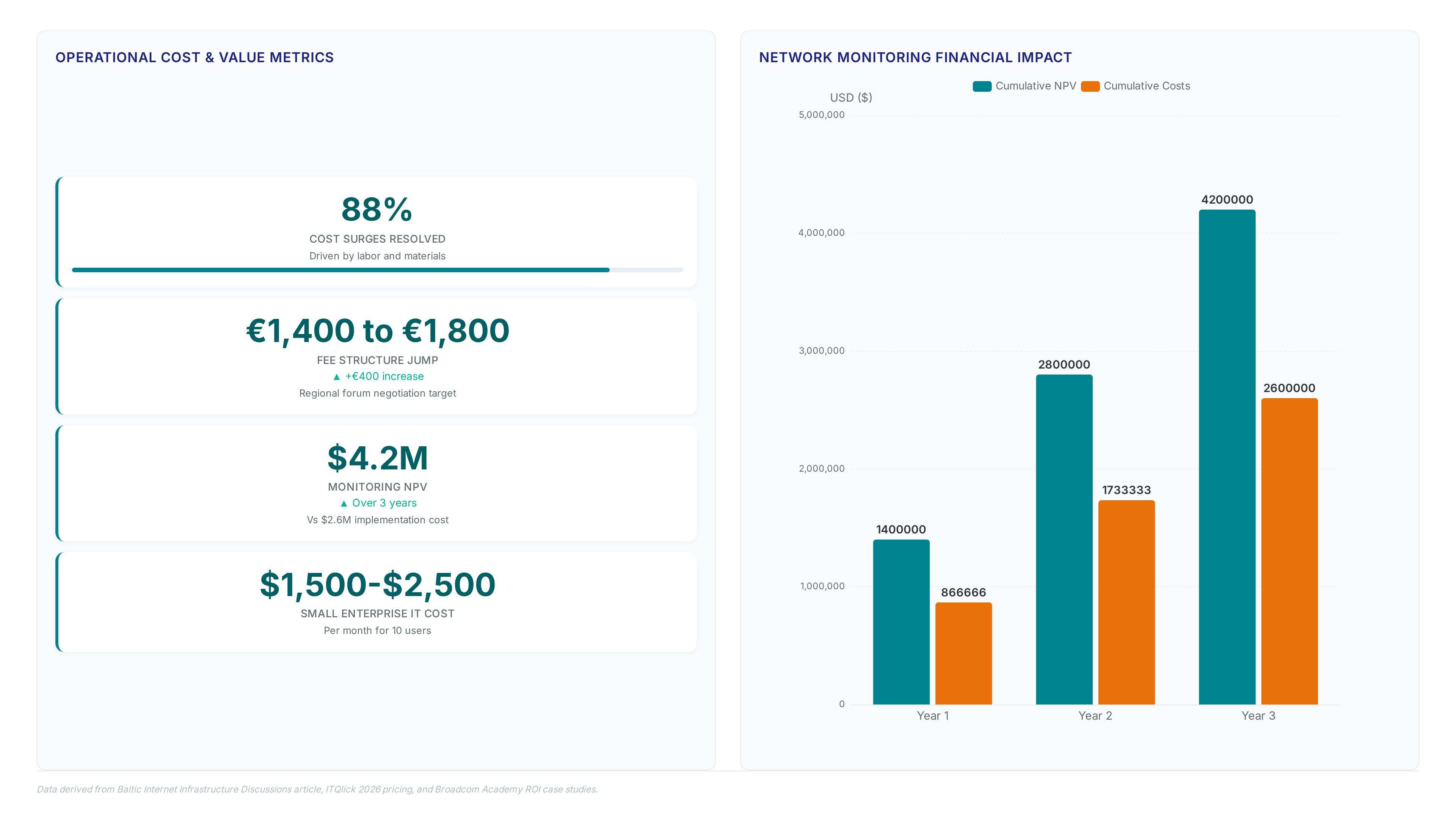
Days Baltics derives its value from resolving the 88% of cost surges driven by labor and materials through direct operator alignment. Regional forums change abstract budget pressures into actionable fee structure negotiations, specifically addressing the jump from €1,400 to €1,800. Operators exchange data on how satellite internet alternatives alter rural deployment economics, creating a counter-balance to traditional fiber expenses. The meeting agenda prioritizes solving specific IPv4 market stabilization issues where price compression below $20 per IP impacts larger block valuations. Individual operators fail to influence the Number Resource Organization policy harmonization efforts without unified data presentation.
About
Vladislava Shadrina serves as a Customer Account Manager at InterLIR, a specialized IPv4 address marketplace based in Berlin. Her daily work focuses on managing client relations and facilitating access to critical network resources, making her uniquely qualified to discuss the evolving environment for network operators. As operators in the Baltics and beyond face challenges regarding IP availability and infrastructure growth, Vladislava's expertise in connecting organizations with clean, verified address space is directly relevant. At InterLIR, she helps solve network availability problems by redistributing unused resources through transparent and efficient processes. This article highlights the importance of regional cooperation, such as the upcoming RIPE NCC Days, which aligns with her mission to support the IT sector's development.
When capital locks into static IPv4 holdings at a modest fee per IP, operators lose the liquidity required to fund the high-density server farms necessary for next-generation workloads. This friction turns address space from a utility into a speculative anchor, slowing deployment velocity precisely when market windows are narrowest. You must treat legacy address blocks as flexible balance sheet items rather than permanent fixtures.
Commit to a quarterly address portfolio revaluation starting immediately, specifically targeting /22 blocks that exceed a significant share of your annual infrastructure budget. If your current holding costs surpass the efficiency gains of native IPv6 translation layers by Q3 2026, initiate a partial divestment strategy to fund AI-ready compute nodes. Do not wait for policy harmonization to solve these margin issues; the market moves quicker than consensus. Start by auditing your top three largest block acquisitions against current cloud interconnection rates before Friday's closing bell. This specific comparison reveals whether your legacy assets are funding your future or cannibalizing it. Shift procurement focus from bulk accumulation to just-in-time leasing for non-core services. This approach frees up the cash flow needed to compete in an intelligence-driven economy without exposing the network to unnecessary asset risk.
Frequently Asked Questions
Acquiring a /22 block currently costs between $25,000 and $35,000 due to market volatility. This price results from individual IP addresses trading between $25 and $35 each across the secondary market.
Northern Europe maintains an internet penetration rate of 97.7% while facing specific local infrastructure durability issues. Regional operators must coordinate directly to sustain this high connectivity level against emerging technical pressures.
Global AI infrastructure spending reaching $2.5 trillion forces network operators to seek technical alignment immediately. Without this coordination, market forces risk fragmenting regional connectivity and isolating individual entities from vital resources.
Operators attend to transform abstract policy debates into actionable financial defense playbooks before fee structures harden. This specific forum allows direct access to staff regarding address pricing and potential base fee alterations.
Failure to coordinate leaves individual networks exposed to arbitrary price spikes without any effective recourse or support. Collective bargaining during these sessions helps mitigate disparities caused by volatile secondary market address trading.