
Routing fixes for identical private IP chaos now
With over tens of millions of websites protected, Cloudflare One now resolves identical 10. (Cloudflare's thea heinen) 0.1.0/24 conflicts without manual NAT hacks.
Automatic Return Routing (ARR) breaks the architectural deadlock where standard tables fail to differentiate between duplicate private networks. As SASE adoption accelerates and organizations budget less for discrete hardware boxes at branches in 2026, relying on clumsy Virtual Routing and Forwarding configurations becomes untenable. This technology uses stateful tracking to ensure return traffic reaches its specific origin, bypassing the non-deterministic routing errors that plague merged enterprises and cookie-cutter retail architectures.
We will dissect how stateful tracking creates logical separation for overlapping subnets, allowing distinct paths for identical addresses. The mechanics of symmetric path logic within a unified routing architecture reveal how the system remembers exactly where a request originated. Finally, we contrast ARR against traditional VRF and NAT approaches to demonstrate why automatic return routing offers a superior, configuration-free solution for modern Secure Access Service Edge deployments.
The Role of Stateful Tracking in Resolving IP Address Overlap
IP Address Overlap Conflicts in Private Enterprise Networks
IP address overlap occurs when distinct private networks reuse identical subnets like 10.0.1.0/24, creating logical collisions that standard routing tables cannot resolve. Global addressing authorities prevent such duplication on the public Internet, where a single IP must point to a unique destination even within massive anycast deployments serving more than a significant share of global traffic. Private enterprise backbones lack this central coordination, leading to ambiguity during mergers, extranet integrations, or cookie-cutter branch deployments. When two sites advertise the same source prefix, return packets hit an architectural wall because the router cannot distinguish between identical paths.
Automatic Return Traffic steering eliminates IP overlap conflicts by storing tunnel origin data per flow instead of consulting static routing tables. This mechanism shifts resolution logic from destination-based lookups to stateful flow tracking, allowing the system to distinguish between identical private subnets like 10.0.1.0/24 based on ingress context. Traditional routers treat every packet as a stateless event, requiring unique destination IPs to function, whereas ARR records the specific IPsec or GRE tunnel that initiated the conversation during flow setup. Return traffic bypasses ambiguous routing decisions entirely by matching active sessions to their recorded entry point.
Stateful flow tracking resolves the "John Smith" ambiguity by binding return traffic to the specific ingress tunnel rather than a destination IP. Traditional stateless routers treat every packet as an isolated event, forcing a lookup against a routing table that cannot distinguish between two identical 10.0.1.0/24 subnets. This architectural limitation causes non-deterministic forwarding when duplicate prefixes exist, often dropping valid return packets or sending them to the wrong site.
| Feature | Stateless Routing | Stateful ARR |
|---|---|---|
| Lookup Basis | Destination IP only | Full flow context |
| Overlap Handling | Fails (non-deterministic) | Succeeds via tunnel ID |
| Config Overhead | High (NAT or VRF) | Zero manual lines |
| Memory Usage | Low per packet | High per active flow |
The userspace-driven approach employed by ARR stores the origin tunnel ID during flow setup, bypassing the routing table entirely for symmetric return. This method eliminates the administrative toil associated with maintaining complex VRF configurations or translating addresses via NAT. However, maintaining per-flow state increases memory consumption on the edge compared to stateless forwarding. Networks with ephemeral, high-churn connections may observe higher control-plane load during peak initialization periods. Operators must shift from pre-provisioning static routes to relying on flexible session persistence for correctness.
Unified Routing merges Cloudflare zero-trust userspace logic with Cloudflare WAN kernel primitives to resolve split-brain architecture constraints. Historically, the WAN layer relied on isolated Linux network namespaces and eBPF hooks, creating interoperability friction with userspace proxies. The new model shifts the initial routing decision entirely into the zero-trust userspace, enabling Mesh and Tunnel coexistence without manual route leaking. This architectural consolidation allows metadata, such as originating Tunnel IDs, to attach directly to flow entries within the central.
| Component | Legacy Model | Unified Model |
|---|---|---|
| Decision Plane | Kernel data plane | Userspace logic |
| Isolation Method | Network namespaces | Flow context tags |
| Visibility | Fragmented logs | Unified analytics |
Operators gain immediate observability improvements because Network Analytics now closes visibility gaps previously inherent in separated stacks. The transition removes the need for complex VRF configurations by treating all ingress traffic through a single logical processing engine. However, this functionality strictly requires the new Unified Routing. The cost of this unification is the abandonment of direct kernel bypass for specific high-throughput paths, trading raw packet processing speed for logical consistency.
Stateless Routers Treating Packets as Strangers Versus ARR Flow Memory
ARR records the specific tunnel initiating a connection to resolve 10.0.1.0/24 subnet conflicts without NAT. This mechanism shifts intelligence from static routing tables to stateful flow tracking, allowing identical private IP ranges to coexist within the same account. Traditional routers treat every packet as a stateless stranger, forcing a lookup against a table that cannot distinguish between duplicate prefixes. The system instead binds return traffic to the original ingress context, ensuring symmetric paths regardless of destination ambiguity.
The operational sequence follows four distinct stages. First, a packet arrives via an IPsec or GRE tunnel from a remote site. Second, the Cloudflare Virtual Network inspects headers to match existing flow entries. Third, if no match exists, the system initializes a new flow and stores the originating tunnel ID in memory. Finally, return traffic bypasses standard lookups entirely by retrieving the stored tunnel identifier for egress. This process guarantees that responses traverse the exact same connection as the initial request, preventing asymmetric routing failures common in merged networks.
| Routing Mode | Decision Basis | Overlap Support | Configuration Load |
|---|---|---|---|
| Stateless | Destination IP | Fails | High (VRF/NAT) |
| Stateful ARR | Flow Context | Succeeds | Zero-touch |
This capability requires activation of the Unified Routing. Operators must migrate control logic from kernel primitives to userspace before using these benefits. The shift moves intelligence from kernel primitives to userspace logic, allowing Network Analytics. A critical limitation emerges: stateful tracking consumes memory proportional to active sessions, creating a scaling ceiling absent in stateless designs. High-volume environments may face resource contention if flow expiration timers do not match traffic burst patterns. This trade-off replaces configuration complexity with runtime resource management. While this eliminates manual route leaking, it demands full adoption of the unified control plane to function correctly. Failure to enable this mode leaves overlapping subnets unresolved, forcing administrators back to complex Network Address Translation mappings.
Traditional stateless routers treat every packet as a stranger, forcing a fresh lookup that fails against duplicate 10.0.1.0/24 subnets. This architectural blindness creates non-deterministic forwarding where return traffic randomly selects an egress tunnel. Stateful tracking maintains a memory of network conversations, binding return packets to the specific ingress path recorded during flow initialization. The system bypasses ambiguous routing tables entirely by asking where a conversation originated rather than where an IP lives.
| Attribute | Stateless Logic | ARR Flow Memory |
|---|---|---|
| Packet Context | Isolated event | Part of ongoing flow |
| Overlap Resolution | Impossible without NAT | Native via tunnel ID |
| Configuration | Manual VRF or NAT | Zero-touch deployment |
| Failure Mode | Non-deterministic drops | Symmetric returns |
Operators deploying this model must enable the new Unified Routing mode.
Comparing ARR Against Traditional VRF and NAT Approaches
Brittle Cross-VRF Route Leaking Versus Zero-Touch ARR Logic
Virtual Routing and Forwarding (VRF) creates isolated tables that render cross-domain communication brittle and complex at scale. Administrators must manually configure route leaking policies to permit traffic between these silos, a process prone to human error during mergers or rapid expansion. This manual overhead contrasts sharply with zero-touch routing logic, which eliminates static mapping requirements entirely.
| Dimension | Manual VRF Leaking | ARR Stateful Tracking |
|---|---|---|
| Configuration Scope | Per-tunnel policy rules | Global flow memory |
| Overlap Resolution | Fails without NAT rewrite | Succeeds via tunnel ID |
| Operational Toil | High per-site effort | Zero additional lines |
| Failure Mode | Silent drop or loop | Deterministic return |
Legacy approaches demand continuous administrative toil for each new site or partner connection, scaling linearly with network complexity. The Brittle Cross-VRF model forces operators to choose between security isolation and connectivity agility. Stateful tracking resolves this tension by recording the specific tunnel initiating a flow, bypassing the routing table for return traffic. This mechanism allows overlapping subnets to coexist without Network Address Translation. The hidden cost of VRF architectures is not configuration time but the increased probability of misconfiguration during urgent changes. Automatic Return Forwarding (ARR) removes this financial penalty by eliminating the need for Network Address Translation (NAT) mappings entirely. Organizations relying on traditional enterprise VPN pricing models face escalating costs as each new site requires unique address space or manual translation rules. The administrative toil associated with maintaining these NAT policies grows linearly with every added partner connection.
| Cost Factor | Traditional NAT/VRF | ARR Deployment |
|---|---|---|
| IP Address Fees | High (per static IP) | Zero |
| Configuration Time | Hours per site | Minutes |
| Overlap Handling | Manual rewrite | Automatic |
| Scaling Model | Linear cost increase | Flat rate |
Enterprises adopting modern Cloudflare Tunnel pricing structures avoid these hidden fees by using user-based licensing instead of IP-based constraints. While Virtual Routing and Forwarding (VRF) isolates traffic effectively, it demands complex route-leaking policies that often fail during rapid merger activities. The hidden cost of VRF lies not in software licenses but in the engineering hours consumed by troubleshooting brittle cross-domain communication.
SD-WAN alternatives offer roughly 25% savings over legacy MPLS circuits according to SD-WAN cost analysis, yet they still struggle with the specific IP ambiguity problems ARR resolves natively. Operators should deploy VRF only when strict kernel-level isolation is mandatory for compliance reasons. For most partner extranets, the stateful flow tracking inherent in ARR provides sufficient separation without the overhead of managing duplicate routing tables.
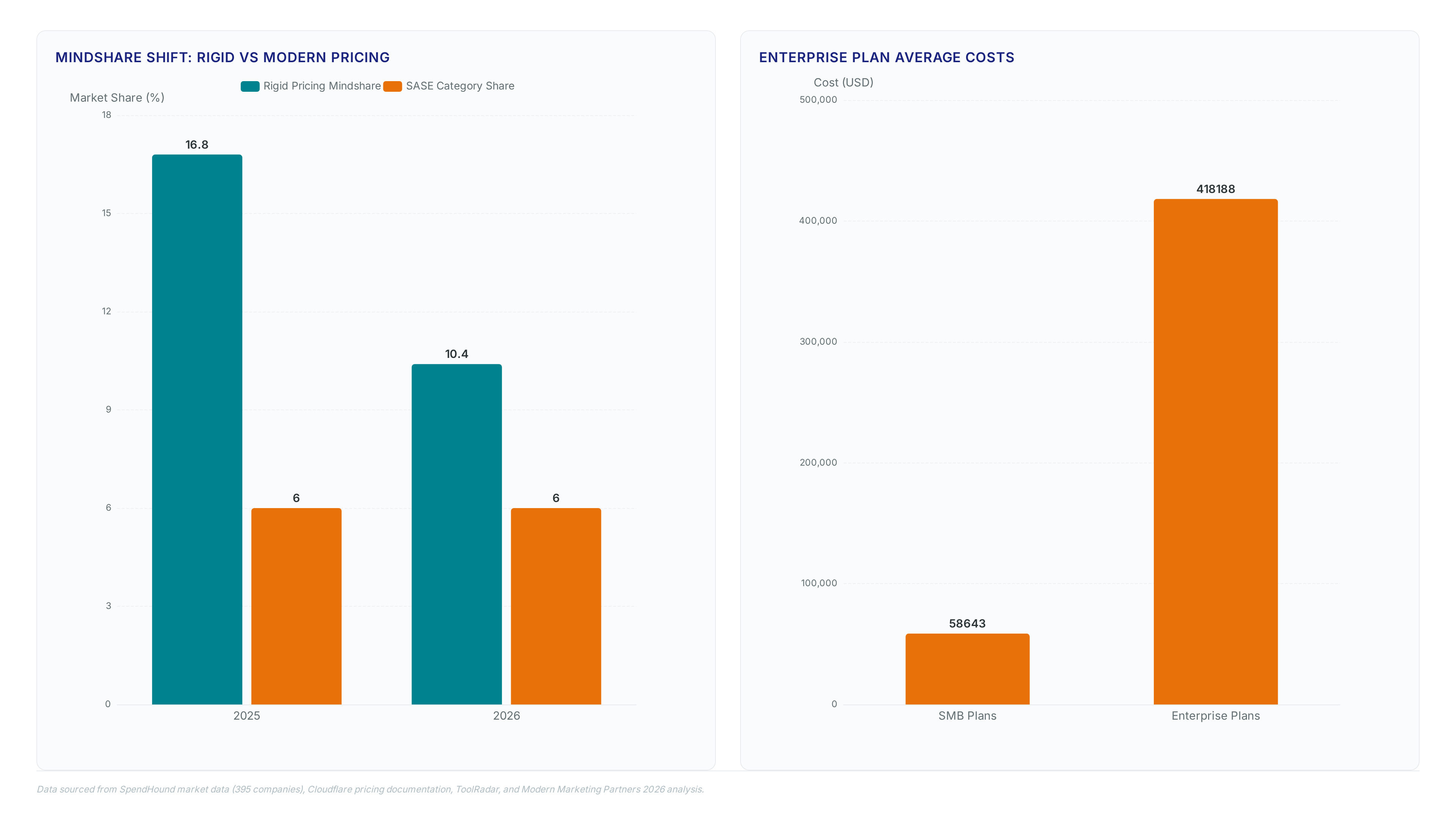
Total cost of ownership drops significantly when operators delete NAT mappings and avoid Virtual Routing and Forwarding table sprawl. Traditional methods to resolve IP ambiguity introduce significant administrative overhead and complexity that scales linearly with site count. Maintaining unique address spaces for every merger or partner connection forces engineers into manual configuration loops. Competitor platforms often bundle these requirements with expensive static IP add-ons, driving up the real enterprise cost. Market data shows Palo Alto Networks Prisma Access mindshare falling from 16.8% to 10.4% as buyers reject such rigid pricing models. Some users report competitor solutions are a lot cheaper, yet hidden fees for overlap resolution erode those initial savings. ARR eliminates this friction by binding flows to ingress tunnels rather than rewriting headers.
| Dimension | Traditional VRF/NAT | ARR Zero-Touch |
|---|---|---|
| Overlap Logic | Manual prefix translation | Stateful tunnel binding |
| Scaling Cost | Increases per site | Flat operational load |
| Failure Mode | Asymmetric return paths | None (flow-aware) |
| Config Effort | High (per-peer rules) | Zero (automatic) |
The hidden drawback of VRF lies in route leaking, which becomes brittle and error-prone as the number of isolated tables grows. A single misconfigured leak policy can expose internal services or drop legitimate traffic entirely. ARR bypasses this risk by ignoring the routing table for return traffic decisions. This architectural shift removes the need for static IP purchases often required by legacy vendors. Operators gain immediate relief from the toil of managing unique subnets for every new acquisition. The result is a network that handles duplicate 10.0.0.0/8 ranges without complex hardware replacements or rewritten address plans.
On 5 Mar 2026, Cloudflare limited Automatic Return Path selection (ARR) availability to a Closed Beta scope focused exclusively on Secure Web Gateway traffic. This deployment boundary restricts operators to resolving IP overlap for Internet-bound flows while private data center access remains unsupported until future roadmap phases. The feature requires enabling the new Unified Routing mode. ARR guarantees symmetric routing.
Administrators cannot currently deploy this zero-touch architecture for hybrid cloud interconnects or mid-flow failover scenarios. The trade-off is immediate simplicity for SWG use cases versus delayed support for complex private network topologies. Organizations must accept that overlapping subnets accessing private resources still require traditional Virtual Routing and Forwarding (VRF) isolation or Network Address Translation (NAT). Cloudflare One holds a mindshare of 6.0% in the SASE category, suggesting early adoption risks for teams requiring broad vendor interoperability today.
| Capability | Closed Beta Status | Roadmap Target |
|---|---|---|
| Internet Access | Supported | N/A |
| Private DC Access | Unavailable | Future Release |
| Mid-flow Failover | Unavailable | Future Release |
Configuring Zero-Touch Return Routing for Private Data Center Access
Cloudflare is extending support to include Private data center access, enabling operators to deploy overlapping subnets without manual route definitions. This configuration pins flows to a primary onramp, ensuring return traffic follows the exact ingress path recorded during initialization. Mid-flow failover pins a flow to a primary onramp and smoothly detects failover to a backup onramp, maintaining session continuity during link degradation. The system bypasses traditional routing table lookups for established conversations, relying instead on stateful flow tracking to identify the correct tunnel. Operators implement this by enabling Unified Routing mode, which shifts decision logic from the kernel to userspace memory.
The operational consequence is a reduction in configuration drift during mergers, as identical IP schemes no longer trigger routing loops.
Access to Automatic Return Route handling requires active enrollment in a paid Cloudflare One tier, excluding Free accounts from closed beta features. Organizations evaluating private WAN connectivity must budget for significant licensing differences between market segments. Average pricing for Cloudflare SMB plans is reported at $58,643, while Enterprise plans average $418,188 based on aggregated market data. Smaller teams often initiate deployment through the Pay-as-you-go structure, which establishes a baseline cost of $7 per user per month for secure remote access. This entry point avoids the capital expenditure of traditional MPLS circuits while enabling stateful flow tracking.
| Plan Tier | ARR Eligibility | Cost Structure |
|---|---|---|
| Free | Excluded | No cost |
| Pay-as-you-go | Eligible | Per-user |
| Enterprise | Eligible | Flat annual |
Billing occurs per zone rather than per account, meaning every added domain incurs the full monthly fee with no volume discounts on self-serve tiers. Operators must verify zone counts before committing to ensure budget alignment with actual usage patterns. InterLIR recommends auditing existing subscriptions against these thresholds prior to requesting beta access.
About
Alexander Timokhin, CEO of InterLIR, brings critical expertise to the complex challenge of automatic return traffic steering and IP overlap. As the leader of a specialized IPv4 marketplace founded in Berlin, Timokhin manages the global redistribution of scarce network resources daily. His deep understanding of IP addressing principles and BGP security directly informs this analysis of how private network conflicts mirror public addressing failures. At InterLIR, his team ensures every leased block maintains clean route objects and unique identity, preventing the exact duplication issues discussed in the article. This practical experience managing network availability for diverse enterprises allows him to articulate why strict addressing authority is vital as connectivity clouds expand. Timokhin's work bridging IT infrastructure gaps provides a factual foundation for understanding the risks of IP reuse and the necessity of reliable routing protocols in modern architectures.
Conclusion
Scaling Automatic Return Forwarding exposes a hidden friction point: state synchronization latency across geographically dispersed on-ramps often degrades performance before billing alerts even trigger. While legacy MPLS circuits offer predictable latency, the shift to SASE architectures introduces variable jitter that demands active monitoring rather than passive reliance on vendor SLAs. Organizations attempting to migrate entire fleets without first isolating critical workloads risk application timeout cascades during the initial handshake phase. The market data indicates a clear divergence; buyers are rejecting rigid pricing models not just for cost, but for the operational inflexibility they impose on flexible hybrid environments.
Commit to a phased migration strategy by Q3 2026, targeting non-critical branch offices first to validate flow table persistence under load. Do not attempt a "big bang" cutover for enterprise-wide deployments until you have verified that your specific traffic patterns do not exceed the in-memory flow table limits of your chosen tier. Start by auditing your current zone count and user licenses against the substantial SMB threshold this week to prevent unexpected billing shocks when enabling beta features. This immediate inventory check ensures your budget aligns with the per-zone billing reality before you configure a single tunnel.
Frequently Asked Questions
Static IP requirements for allowlists often incur approximately $40 monthly fees per location. This compounding operational cost makes manual mapping significantly more expensive than using configuration-free automatic return routing solutions.
ARR stores tunnel origin data per flow instead of consulting static routing tables. This stateful tracking allows the system to distinguish between identical private subnets based on ingress context rather than destination.
Managing cross-VRF communication requires complex route leaking policies that become brittle at scale. Unlike ARR, these rigid configurations demand significant administrative overhead for every new partner connection or branch addition.
Yes, ARR resolves conflicts even in massive anycast deployments serving more than 20% of global traffic. It ensures return packets reach specific origins without non-deterministic routing errors plaguing merged enterprises.
If the edge node loses flow table context during a failover, return traffic may drop until a new handshake occurs. This dependency on connection state memory is the primary architectural trade-off.