IPv4 Leasing Strategy: Avoid Procurement Delays
Leasing IPv4 addresses now averages $0.40 per IP, offering immediate relief from exhausted inventories.
 Alexei Krylov
15 min read
Alexei Krylov
15 min read

IPv4 transfer markets, BGP routing security, RPKI adoption, and ASN governance — analysis for network operators.
Leasing IPv4 addresses now averages $0.40 per IP, offering immediate relief from exhausted inventories.
Alexei Krylov
15 min read

The global IPv4 transfer pool shrank nearly 60% from 2015 to mid-2024, forcing ISPs to adopt leased address blocks.
 Nikita Sinitsyn
15 min read
Nikita Sinitsyn
15 min read
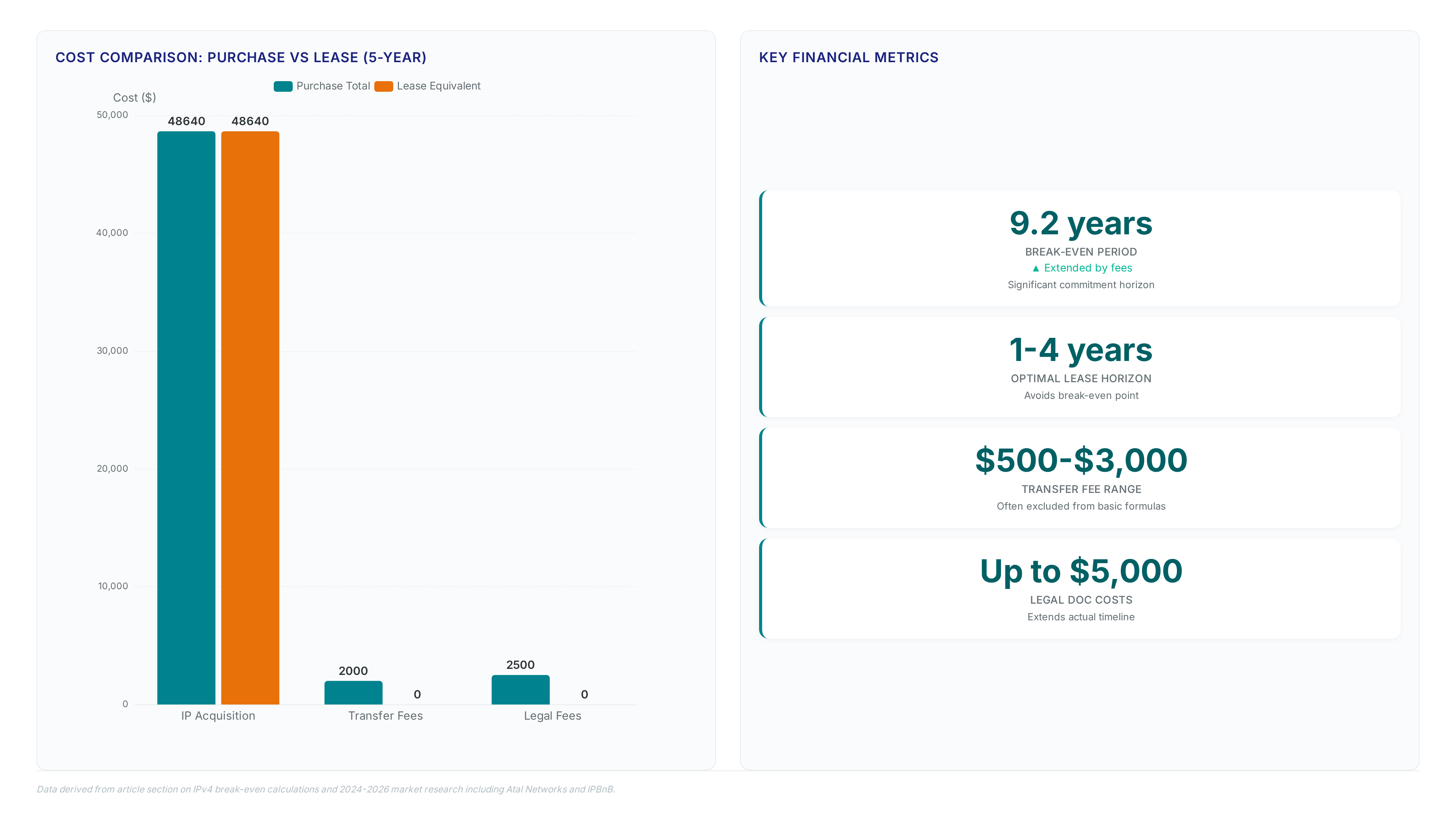
Leasing IPv4 addresses costs $0.30 to $0.55 per IP monthly while purchase prices sit between $38 and $58 according to IPv4.Global data from May 2026.
Alexei Krylov
13 min read

Lease IPv4 blocks to bypass high upfront capital while maintaining legacy systems. Avoid the IPv4 poverty penalty with flexible monthly terms.
 Georgy Masterov
14 min read
Georgy Masterov
14 min read

Inter-RIR transfers take between 4 weeks and 10 months to complete depending on the registries involved.
 Vladislava Shadrina
14 min read
Vladislava Shadrina
14 min read

Zen Internet withdraws free IPv4 blocks after originating 500,000 addresses. Learn how the shift to leasing impacts your network budget and planning.
Vladislava Shadrina
14 min read

APNIC policy version 015 takes effect 20 February 2025, redefining IPv4 transfer rules and compliance for the Asia Pacific region.
 Evgeny Sevastyanov
15 min read
Evgeny Sevastyanov
15 min read

AI cuts manual routing errors and speeds response by validating ownership against RIPE data before forwarding abuse reports to owners.
Nikita Sinitsyn
15 min read

Five Regional Internet Registries manage global IP allocation, acting as the sole gatekeepers between IANA and the wider network infrastructure today.
Alexei Krylov
15 min read

Modern managed DNS providers are dropping per-request query fees while layering latency-based routing, DNSSEC, and CDN integration on a single anycast edge.
Evgeny Sevastyanov
15 min read

Execute a six-phase migration to AWS Cloud WAN using Terraform. This guide details how to unify global networks without disrupting production traffic.
Nikita Sinitsyn
15 min read

AWS Sign-In enforces network restrictions on console access starting 24 Jun 2026. Administrators can now define resource-based policies that block...
 Alexander Timokhin
14 min read
Alexander Timokhin
14 min read