IPv4 leasing risks: stop inherited blocklist pain
Global IPv6 availability hovers around 40%. That leaves a massive gap. Organizations lease IPv4 blocks to bypass permanent acquisition costs while maintaining necessary connectivity. This isn't about avoiding IPv6; it's about surviving the transition. You need to understand the operational mechanics distinguishing leasing from buying, how to mitigate abuse residue risks through proper KYC and RPKI implementation, and why outdated WHOIS data remains the primary driver of blocklist misaturation.
The average market rate for leasing these addresses in 2026 ranges between $0.38 and a moderate amount per IP monthly. This price point allows firms to access scarce capacity without the capital expenditure of buying. Don't let the low entry cost fool you. The primary danger lies not in the leasing model itself but in poor visibility controls that leave operators vulnerable to inherited reputation issues. Blocklist risks frequently stem from prior misuse tied to specific addresses rather than the current tenant's actions.
Stop viewing leasing as a grey market activity. It is a mainstream tool for resource optimization. Implementing an abuse-response playbook and ensuring current contact information prevents the misaturation that plagues the sector. By understanding these dynamics, IT leaders can secure the dual-stack environments necessary for modern operations while IPv6 adoption remains gradual and uneven across different geographies.
The Strategic Role of IPv4 Leasing in Modern Network Infrastructure
IPv4 Leasing as a Time-Bound Right Distinct from Ownership Transfer
Leasing grants a time-bound right to use and route IPv4 space. Ownership stays with the holder. This structure stands apart from purchasing, where a single transaction grants permanent registration rights and full ownership transfer recognized by Regional Internet Registries. A lessor keeps the asset safe while a lessee gains operational control to announce routes and assign IPs for a fixed duration set by contract.
Global connectivity depends on this flexibility because IPv6 availability hovering around only 40% according to public statistics leaves a significant gap. Companies apply leasing to access scarce capacity without the capital intensity of buying, where a single /24 block can cost a significant amount. However, this model introduces specific risks like abuse residue, where prior misuse of an IP block affects the new lessee's reputation. Operators must verify RPKI/ROA records, which provide cryptographic authorization stating which ASN is allowed to originate a prefix, to prevent routing failures. Network engineers understand that leasing shifts financial burden but increases dependency on lessor hygiene; if the lessor fails to maintain accurate WHOIS data, the lessee inherits the blocklist penalties.
Operational Drivers for Cloud Providers and Scraping Platforms to Lease IPv4 Space
Cloud providers and scraping platforms face fluctuating customer demand. Scaling infrastructure directly with that demand drives them to lease IPv4 addresses. This operational expense model eliminates the capital risk of purchasing permanent blocks before revenue streams are proven. Teams apply flexible leasing to match capacity precisely to real-time workload requirements instead of locking funds into static assets.
Market data indicates that leasing IPv4 addresses in 2026 ranges between $0.38 and an undisclosed amount per IP address per month, offering predictable budgeting. Proxy businesses expand into new markets quicker by using leased IPs instead of buying address space upfront, avoiding long procurement cycles. Speed wins here. Buying takes weeks; leasing takes hours.
Mitigating Abuse Residue and Legacy Dependency Risks in Leased Blocks
Lingering reputation damage from prior misuse persists within an IP block as abuse residue. Historical spam signals remaining active in global filters cause immediate delivery failures for this hidden liability. Lessees face the risk of inheriting these blocklist entries despite having clean operational practices themselves. Providers like Atal Networks manage abuse prevention in-house and monitor leased blocks continuously to ensure clients do not inherit damaged assets.
New tenants suffer connectivity penalties for violations they did not commit without such oversight. Buyers assume the risk of asset depreciation while lessees can switch providers if blacklist issues arise. WHOIS data must reflect current operators to prevent misaturation during incident response. Organizations often maintain dual-stack environments because global IPv6 availability remains incomplete. Rushing access often means accepting uncleaned space. Operators must verify that lessors perform rigorous due diligence before handing over control. Ignoring legacy dependencies forces networks to run parallel systems longer than necessary. Proper governance transforms leasing from a stopgap into a strategic bridge for modernization.
Operational Mechanics of Leasing IPv4 Blocks Versus Permanent Acquisition
The Five-Step Workflow for IPv4 Lease Provisioning and RPKI Setup
Operators initiate provisioning by defining block size, routing regions, and strict compliance needs before contacting a lessor. A responsible IPv4 leasing process typically follows steps including counterparty verification such as KYC, use-case review, and historical abuse signals check to prevent inherited reputation damage. Once vetted, parties establish a contract detailing acceptable use policies and incident response frameworks to govern the relationship.
The technical handover requires precise registry and routing hygiene where the lessor updates WHOIS records to reflect current operational contacts. Simultaneously, the holder must create RPKI ROAs to cryptographically authorize the lessee's ASN to originate the prefix. Skip this step, and your routes get dropped.
Executing Lease Contracts and Managing Ongoing Abuse Monitoring
Executing a valid lease requires defining clear incident response rules and enforcement frameworks before any traffic flows. Contracts must explicitly state acceptable use policies and return conditions to prevent disputes during the lease term. Without these written guardrails, operators face ambiguity when addressing abuse residue from prior tenants.
- Verify counterparty identity through strict KYC and historical signal checks.
- Establish a shared playbook for rapid incident response and blocklist remediation.
- Schedule routine WHOIS updates to ensure public records match current usage.
- Monitor routing announcements constantly to detect unauthorized path changes.
Cogent has been cited in community discussions as leasing IPv4 space at approximately a premium rate per /24 block, a rate that reflects the premium on clean, well-managed assets. Operators paying such rates demand rigorous hygiene to protect their investment. The leasing process operates across three planes: the contractual agreement, the registry authorization, and the routing plane, all requiring strict alignment to function predictably Operational Workflow.
| Risk Factor | Mitigation Strategy |
|---|---|
| Stale Records | Maintain accurate WHOIS data |
| Inherited Spam | Require pre-lease blocklist audit |
| Route Hijack | Enforce RPKI ROA signing |
A critical tension exists between speed of deployment and depth of vetting; inadequate due diligence can lead to inheriting blocked ranges that take time to clear. Prioritizing lessors who provide transparent abuse histories helps ensure network reputation remains intact while scaling capacity.
Capital Expenditure Differences Between Permanent IPv4 Acquisition and Leasing
Permanent acquisition demands immediate capital outlay, whereas leasing converts this burden into a manageable operational expense. In contrast, leasing grants time-bound usage rights without the heavy balance sheet impact of ownership transfer. This model allows organizations to scale capacity up or down based on real-time demand rather than speculative long-term needs.
| Feature | Permanent Acquisition | Leasing Model |
|---|---|---|
| Ownership | Full transfer of title | Retained by lessor |
| Cost Type | High CapEx upfront | Low OpEx monthly |
| Flexibility | Static asset | Scalable term |
| Deployment | 4–8 week process | Often under 24 hours |
The speed differential is stark; buying involves a 4–8 week process for RIR transfer paperwork, while some providers claim deployment within 24 hours. This agility prevents capital from sitting idle in unused address space. Organizations avoid locking funds into infrastructure that might become obsolete, instead aligning costs directly with revenue-generating traffic. Leasing marketplaces enable this fluidity by connecting lessees with verified holders, ensuring clean routing hygiene without the permanent commitment. Choosing between them depends entirely on whether your strategy prioritizes asset accumulation or operational flexibility.
Mitigating Abuse Residue and Blocklist Misattribution in Leased Spaces
Defining Abuse Residue and Blocklist Misattribution Mechanics
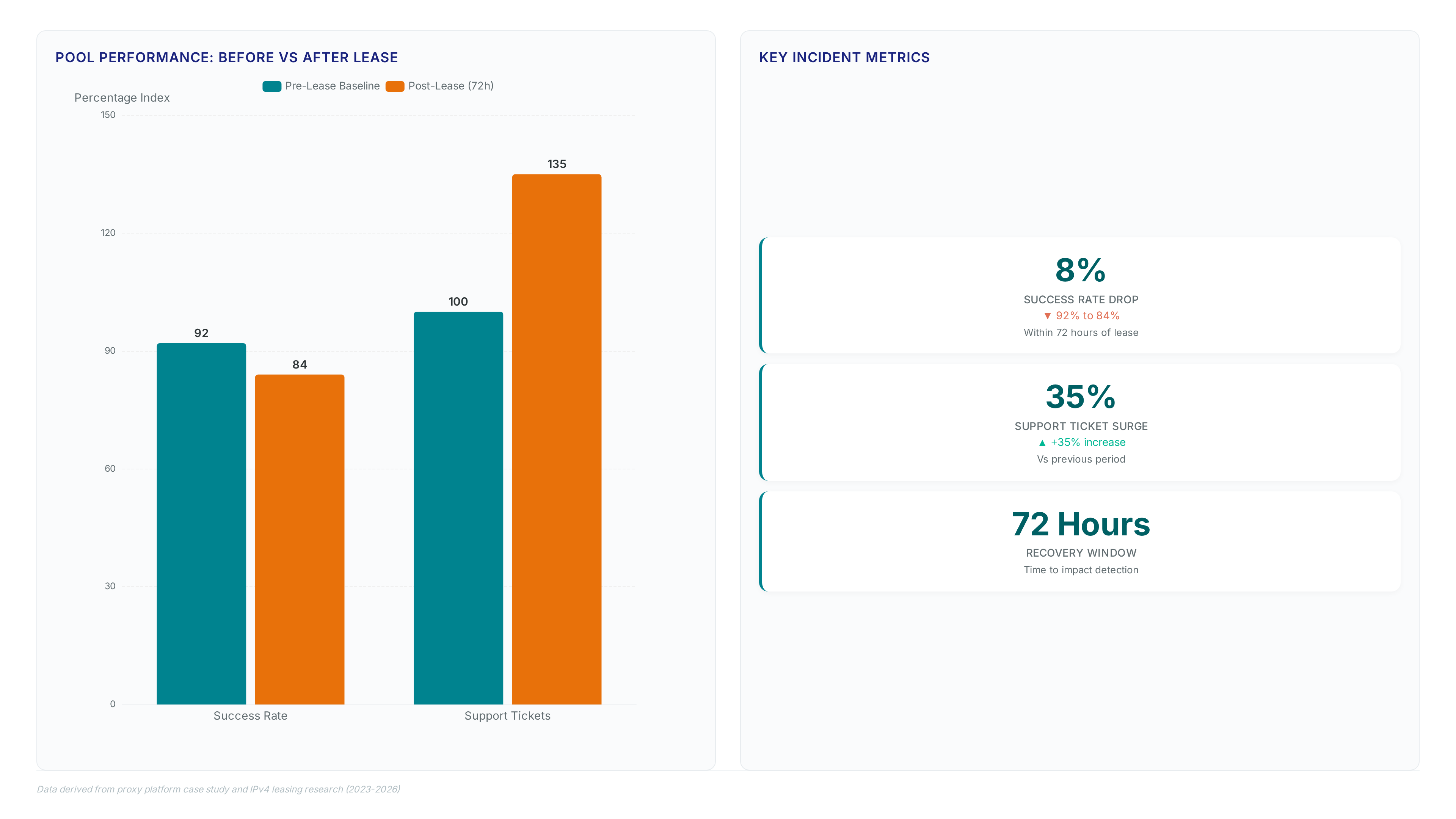
Abuse residue sticks to IPv4 blocks like mud on boots, forcing new tenants to scrub away sins they never committed. Historical blocklist baggage persists on leased IPs, causing attribution signals to misalign with current operators due to stale records. A network might face connectivity penalties for violations committed by a previous tenant. Leased addresses may appear on blocklists at higher rates due to visibility gaps in global filtering systems. Blocklist misattribution arises when the current operator is blamed for abuse that predates their lease or persists due to time-lags in attribution updates. Flexible market liquidity clashes with static reputation databases here. Historical spam signals often remain active in global filters long after the original abuser disconnects.
Proxy Platform Case Study: Recovering from Inherited IP Reputation Damage
A proxy platform case study illustrates how abuse residue from prior tenants immediately impacts new operators who skip rigorous vetting. In this scenario, within 72 hours, customers experienced higher CAPTCHAs, intermittent 403/429 errors, and increased verification friction. Support tickets in the region jumped 35%, and the pool's successful request rate dropped from 92% to 84%. The root cause was not current behavior but historical blocklist baggage persisting in global filtering systems. Recovery required a workflow combining pre-lease screening with rapid incident response protocols. Real-time abuse monitoring detects reputation drift early. Aligning RPKI records clarifies legitimate originators for downstream filters.
Operational Risks of Stale Attribution and Visibility Gaps in Leased Space
Stale registry records create immediate visibility gaps where current operators inherit blame for historical misconduct. This attribution lag means network teams face connectivity penalties for violations occurring before their lease began. The primary danger lies not in the leasing model itself, but in the absence of rigorous governance controls. Risk reduction relies on operational discipline, accurate records, and proper RPKI configuration. Without strong due diligence, organizations cannot distinguish between active threats and lingering reputation noise.
Executing a Secure IPv4 Lease Through Due Diligence and Best Practices
Defining Sustainable Leasing Through Governance and Visibility Controls
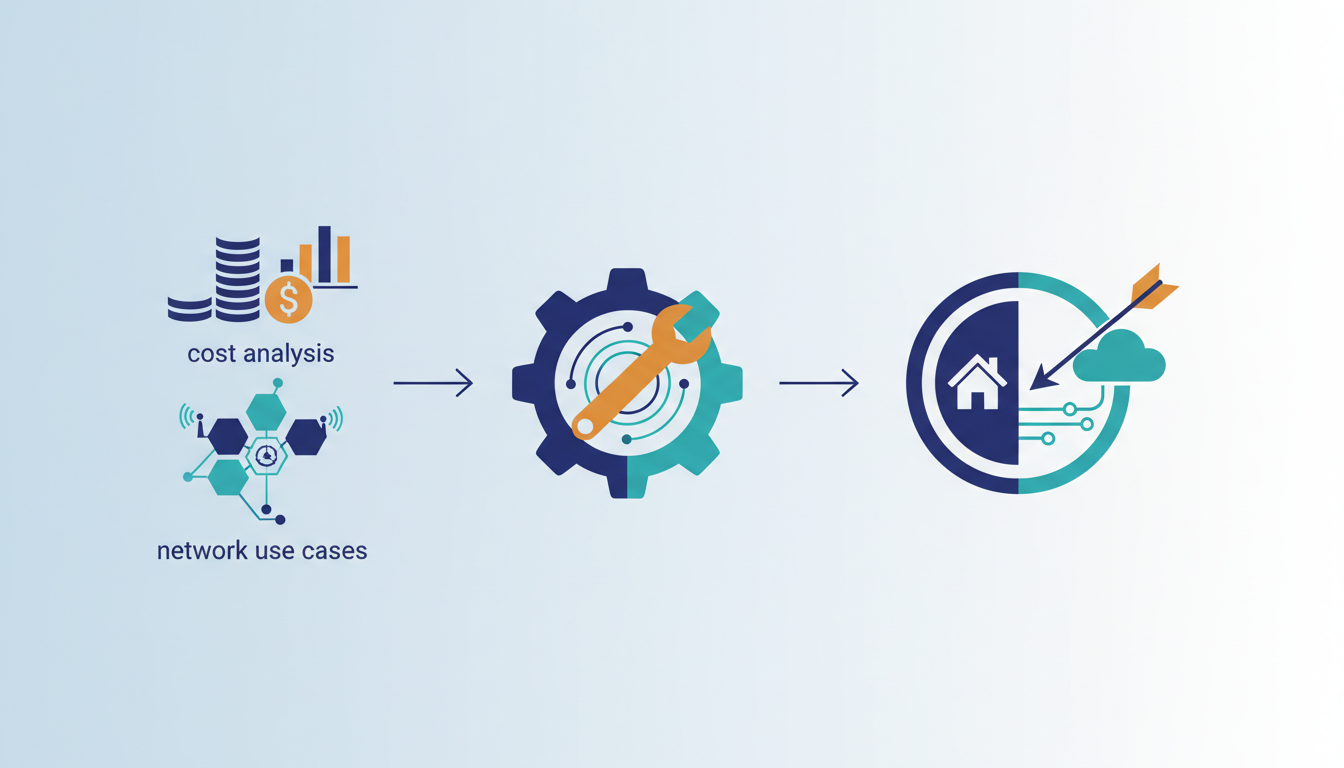
Sustainable leasing separates itself from risky speculation by demanding transparent alignment with registry policies instead of merely renting space. Large holders increasingly choose to lease out surplus space instead of selling, a trend driven by the need to retain assets for future network expansion. This strategic shift requires strong operational governance to prevent the transferred space from becoming a liability. Strict adherence to KYC protocols and accurate record maintenance creates the line between a secure arrangement and a problematic one. Operators risk inheriting abuse residue that triggers defensive filtering across the internet without these controls. A legitimate leasing framework demands active registry hygiene and real-time visibility into block reputation rather than just a signature. Verification that lessors maintain current WHOIS data and proper RPKI configurations ensures routing legitimacy.
| Control Element | Sustainable Practice | Risky Behavior |
|---|---|---|
| Verification | Rigorous KYC and use-case review | Anonymous or automated approval |
| Records | Real-time WHOIS updates | Stale or missing contact info |
| Response | Set abuse-response playbook | No incident handling process |
InterLIR emphasizes that risk reduction relies on these governance pillars rather than avoiding third-party resources entirely. Organizations ignoring these due diligence steps often face prolonged connectivity issues despite paying market rates. True sustainability comes from verifying the history and management quality of the IP block before announcement.
Executing the Five-Step Leasing Workflow from Counterparty Verification to Monitoring
Initiating a secure lease requires aligning three distinct operational planes: contractual, registry, and routing. This alignment ensures that the leasing process functions predictably across all network layers. Operators must first define precise block sizes and regional needs before engaging in counterparty verification. This stage involves rigorous KYC checks and reviewing historical abuse signals to prevent inheriting reputation damage. Once a partner is vetted, the workflow moves to establishing clear contract policies. These agreements must specify acceptable use, incident response rules, and enforcement frameworks.
- Define lease terms and return conditions clearly.
- Document assignment contacts for rapid incident response.
- Establish protocols for abuse detection and mitigation.
- Update WHOIS records and create RPKI ROAs to authorize route origins.
- Execute BGP announcements and coordinate routing with upstream providers.
- Perform ongoing monitoring where continuous blocklist checks detect any drift in reputation.
Simplified steps through RIPE NCC and ARIN ecosystems now reduce traditional transfer paperwork notably. Regional ISPs apply this structured approach to offer public IPv4 to business subscribers effectively. Neglecting any single step in this sequence creates visibility gaps that expose networks to misattribution risks.
Validating Lease Security Through RPKI Deployment and Current Contact Records
Securing a lease requires validating that RPKI ROAs authorize your specific ASN to originate the prefix. Traffic may be dropped by downstream networks enforcing strict route validation without this cryptographic proof. Operators must also verify that contact records in public directories are current to ensure rapid incident response. Stale attribution data often causes false blocklisting, where new tenants inherit penalties for prior misuse.
| Control Measure | Primary Function | Risk Mitigated |
|---|---|---|
| RPKI Deployment | Authorizes route origin | Route hijacking |
| Current Contacts | Enables direct communication | Attribution lag |
| KYC Checks | Verifies counterparty identity | Abuse residue |
Effective due diligence transforms leasing from a liability into a scalable operational expense. Buying space avoids some administrative overhead, yet leasing offers flexibility without the capital intensity of purchasing a /24 outright. Continuous monitoring remains an absolute necessity. Operators cannot distinguish between active threats and lingering reputation noise if abuse detection workflows are missing. InterLIR recommends integrating these checks into every onboarding sequence to maintain network integrity. Organizations ensure their infrastructure remains reachable and trusted by prioritizing registry hygiene. This disciplined approach allows businesses to expand capacity safely while IPv6 adoption continues its gradual global rollout.
About
Vladislava Shadrina serves as a Customer Account Manager at InterLIR, where she directly manages client relationships within the global IP resources marketplace. Her daily work involves guiding organizations through the complexities of acquiring and managing IPv4 assets, making her uniquely qualified to address the nuances of IPv4 address leasing. At InterLIR, a specialized Berlin-based provider focused on redistributing unused network resources, Vladislava ensures that every transaction adheres to strict transparency and security standards. This firsthand experience allows her to explain how proper due diligence, accurate WHOIS records, and reliable abuse response playbooks mitigate the real risks associated with leasing. By connecting operational realities with registry policies, she illustrates why leasing remains a vital bridge strategy amidst uneven IPv6 adoption. Her insights reflect InterLIR's commitment to clean BGP routes and IP reputation, offering readers a practical understanding of how sustainable leasing practices support network availability without compromising governance.
Conclusion
Scaling infrastructure through IPv4 address leasing shifts the operational burden from capital expenditure to rigorous, recurring compliance management. As market pricing normalizes in 2026, the primary risk is no longer acquisition cost but the failure to maintain continuous registry hygiene. Networks that treat leasing as a simple transaction without integrating automated reputation monitoring will face escalating connectivity gaps as downstream providers enforce stricter validation policies. The window for passive operation has closed; active governance of route origin authorization is now a baseline requirement for stability.
Organizations should commit to a six-month operational review cycle to audit their lease portfolios against current RPKI data and contact record accuracy. Do not wait for a delivery failure to discover stale attribution data. Start this week by running a manual validation check on your most critical prefixes to ensure your specific ASN is cryptographically authorized to originate them. This single verification step prevents the immediate loss of traffic visibility that occurs when downstream networks reject unverified routes. By prioritizing these technical controls over mere cost comparison, businesses secure reliable expansion paths while the industry slowly transitions toward broader IPv6 adoption.
Frequently Asked Questions
Leasing avoids the high capital cost of buying a block for an undisclosed range Instead, operators pay monthly rates between $0.38 and an undisclosed amount per IP, preserving cash flow for other critical infrastructure investments today.
Global IPv6 availability hovers around only 40%, forcing many firms to maintain dual-stack environments. Leasing provides the necessary IPv4 capacity to ensure connectivity for remaining users without requiring permanent asset acquisition.
The main danger is abuse residue, where prior misuse causes blocklist misaturation for new tenants. Poor visibility controls and outdated WHOIS data often lead to immediate deliverability failures despite clean current operational practices.
Leasing allows providers to match infrastructure scaling directly to real-time workload requirements. This operational expense model avoids locking funds into static assets while global IPv6 availability remains limited at approximately 40%.
Operators must verify RPKI records to ensure cryptographic authorization for prefix origination. Without this step, lessees risk routing failures and inherited reputation issues from lessors who fail to maintain accurate registry data.
References