Routing intelligence: why self-hosted beats cloud tools
FastNetMon launched Netomics on July 10, 2026, to eliminate reliance on third-party lookup services for BGP data. This release confirms that modern network infrastructure demands a self-hosted routing intelligence architecture to ensure data sovereignty and operational continuity. Organizations can no longer afford to depend on external tools that impose rate limits or expose sensitive query patterns to the public internet.
Readers will examine the strategic necessity of keeping routing intelligence ownership within the enterprise perimeter rather than trusting cloud-based lookups. The discussion details the underlying architecture required for live BGP monitoring and RPKI validation systems that process BMP feeds and IRR data locally. We will also explore how teams can operationalize this data through REST API automation and AI integration without leaking proprietary network topology details.
The current environment forces engineers at ISPs and cloud providers to fragment their workflow across multiple disjointed tools. By consolidating routing software capabilities into a single on-premises application, operators gain a distinct advantage in incident response times. This approach ensures that critical routing history and geofeed information remain private assets. The shift toward localized control represents a fundamental change in how large IP networks manage security and visibility.
The Strategic Role of Self-Hosted Routing Intelligence in Modern Network Infrastructure
Netomics as Self-Hosted Route handling Intelligence Platform
Netomics functions as an on-premises application that aggregates live BGP feeds, RPKI validation data, and registry records into a unified internal source of truth. This self-hosted traffic steering intelligence model addresses the fragility inherent in depending on fragmented public lookup services for critical network operations.
Internet routing has become critical operational infrastructure, yet many organisations still depend on multiple external services to understand what is happening in their own networks. Reliance on third-party query tools introduces latency during incident response and exposes operational data to external rate limits or service outages. The consolidation of global routing visibility within the customer's own infrastructure eliminates these external dependencies, ensuring that routing intelligence remains private and always available.
| Feature | Public Lookup Tools | Netomics Platform |
|---|---|---|
| Data Location | External Cloud | On-Premises |
| Availability | Rate Limited | Unlimited |
| Integration | Manual Query | API & MCP Native |
The strategic implication for network operators is clear: moving routing intelligence on-premises transforms raw data into an actionable asset for automation and security. Unlike cloud-based alternatives, this approach prevents leakage of internal network topology queries to outside entities. The shift from external reliance to internal ownership represents a fundamental maturity step for ISPs and cloud providers managing complex IPv4 environments.
Operational Use Cases for ISPs and IXPs Using Netomics
Engineers adopt on-premises routing intelligence when external tool fragmentation delays incident response.
Network operators frequently consult disparate public utilities to investigate routing incidents or validate prefix ownership. This dependency creates operational risk during outages when third-party services become unavailable. Netomics consolidates live BGP feeds, RPKI validation, and registry data into a single internal platform. Operators gain the ability to filter unauthorized BGP announcements using declared Route Origin Authorizations without external queries. The platform eliminates rate limits inherent in public lookup services while keeping intelligence private. However, self-hosting requires sufficient local compute resources to process global routing tables continuously. The trade-off is infrastructure overhead versus guaranteed availability during global internet disturbances.
Specific adoption scenarios include:
- Validating route origins against RPKI data during active hijack attempts
- Automating workflow responses via REST APIs without external latency
- Auditing historical routing changes for forensic analysis after incidents
Organizations should transition when reliance on multiple external services hinders rapid troubleshooting capabilities. Complete ownership of routing data ensures continuous operation regardless of public service status. InterLIR provides the strategic framework necessary for ISPs to implement these strong, on-premises solutions effectively. The shift from fragmented public tools to unified internal systems represents a maturity step for modern network infrastructure. Network teams regain full control over their operational truth source.
Self-Hosted Forwarding Intelligence vs Public Lookup Services
Netomics eliminates external dependency by hosting routing intelligence entirely on-premises rather than querying fragmented public lookup functions. Engineers currently consult multiple external tools to validate prefix ownership or check route origins, introducing latency and rate-limit constraints during critical incidents. Public utilities expose operational workflows to third-party outages, whereas a self-hosted model maintains an internal source of truth independent of external availability. The platform targets Internet service providers, cloud entities, and IXPs requiring uninterrupted access to global BGP data without reliance on outside infrastructure. By consolidating live feeds and registry records locally, organizations avoid the fragmentation that plagues standard cloud-based query methods.
Operators gain complete ownership of their data while integrating directly with automation workflows via REST APIs. The strategic trade-off involves shifting maintenance responsibility from a vendor to the internal team to secure absolute control over network visibility. This approach ensures that routing analysis remains functional even when public internet services degrade or become inaccessible.
Inside the Architecture of Live BGP Monitoring and RPKI Validation Systems.
Live BGP Monitoring Protocol and RPKI Validation Mechanics
Netomics ingests Live BGP Monitoring Protocol (BMP) feeds to capture real-time router updates without polling delays. This mechanism mirrors the stream of adjacency state changes directly from the network edge to the analysis engine. Operators gain immediate visibility into prefix withdrawals and path attributes as they occur on the wire. The architecture processes these streams locally, eliminating reliance on external collectors that might throttle data access during incidents.
RPKI validation functions as a cryptographic filter for Border Gateway Protocol announcements. This framework allows network owners to validate route origins against signed certificates held in Regional Internet Registries. Routing equipment alone cannot distinguish between legitimate and malicious routing announcements, but operators implementing validation can reject unauthorized advertisements. The problem with standard route origin validation lies in the default-accept behavior of many legacy configurations. Without explicit filtering policies, routers process invalid paths alongside verified ones, creating exposure to hijacks.
| Feature | External Lookup Service | Netomics On-Premises |
|---|---|---|
| Data Privacy | Shared infrastructure | Fully private |
| Rate Limits | Applied per IP | None |
| BMP Integration | Indirect via exports | Direct stream |
Relying on third-party cloud lookups introduces latency and potential single points of failure during widespread outages. Local processing ensures that critical security decisions remain under direct administrative control. The trade-off is the requirement for local compute resources to handle full-table analysis. However, this cost secures the network against external service degradation. Organizations optimizing existing IPv4 resources benefit from accurate, uninterrupted origin data. Maintaining an internal source of truth prevents dependency on vendor uptime schedules.
Implementing On-Premises BMP Feeds and RPKI in Netomics
Deploying Netomics on-premises captures Live BGP Monitoring Protocol streams directly from border routers to bypass external rate limits. This local ingestion model ensures routing intelligence remains private and fully under the organization's control, unlike public lookup capabilities. Operators configure their infrastructure to push adjacency state changes to the platform, creating a continuous internal feed of global routing data.
The system aggregates Internet Routing Registry records, WHOIS details, and RPKI validation results into a single queryable database. This consolidation allows engineers to correlate route origin authorizations with historical path changes without leaving their security perimeter.
| Feature | Public Lookup Offerings | Netomics On-Premises |
|---|---|---|
| Data Availability | Subject to external throttling | Unlimited local access |
| Privacy | Queries exposed to third parties | Intelligence stays internal |
| Integration | Manual API calls required | Direct infrastructure hooks |
RPKI acts as a cryptographic filter, yet relying on distant validators introduces latency during mass hijack events. Local validation removes this dependency, allowing immediate rejection of unauthorized announcements based on signed certificates. The trade-off involves maintaining local synchronization with Regional Internet Registry data, which requires stable upstream connectivity.
Securing the routing table locally protects asset integrity improved than reactive external monitoring. Network teams gain a definitive source of truth for troubleshooting and automation workflows.
Self-Hosted Architecture vs Cloud-Native SaaS Routing Models
Self-hosted deployment eliminates external rate limits by processing Live BGP Monitoring Protocol feeds within the organizational perimeter. This architecture contrasts sharply with multi-tenant cloud structures where pricing models often correlate directly with data volume consumed. Competitors like Kentik and ThousandEights typically operate these shared environments, creating cost drivers that scale linearly with network size. The emergence of Netomics highlights a specific demand for on-premise deployment to avoid such variable expense structures. Operators retain full sovereignty over routing intelligence, ensuring sensitive path data never leaves their physical control.
| Feature | Self-Hosted Model | Cloud-Native SaaS |
|---|---|---|
| Data Location | On-premises | Third-party cloud |
| Cost Driver | Hardware capacity | Data volume |
| Rate Limits | None (Local) | Enforced by vendor |
| Availability | Internal dependency | Internet dependent |
The primary limitation involves the upfront responsibility for hardware provisioning and maintenance cycles. Cloud models shift this burden to the vendor but introduce latency when querying large historical datasets. Local processing enables immediate RPKI validation against downloaded global datasets without waiting for remote API responses. This speed is vital when filtering unauthorized announcements during active route hijack events. The trade-off is that the organization must manage its own update schedules for RPKI data.
Keeping validation logic internal prevents exposure to outbound connectivity failures. Network teams gain the ability to run complex queries across petabytes of flow data without incurring egress fees. This model transforms routing intelligence from a reactive lookup service into a proactive asset. Control over the entire stack ensures consistent performance regardless of external network conditions.
Operationalizing Routing Data Through AI Integration and REST API Automation
Model Context Protocol and Native AI Integration in Netomics
Native Model Context Protocol (MCP) support connects on-premises routing intelligence directly to AI assistants like ChatGPT and Claude. This integration permits large language models to query local BMP feeds and RPKI validation data without crossing security boundaries. Engineers ask natural language questions regarding prefix ownership or AS path anomalies while the underlying data stays inside the infrastructure perimeter. Standardized MCP interfaces translate these AI queries into structured requests against the local Netomics database. Sensitive routing topology and customer prefix information never leave the organizational perimeter during such analysis. ISPs requiring strict data sovereignty benefit from this self-hosted approach while using modern automation tools. The platform aggregates IRR information, WHOIS records, and historical routing changes into a unified context window for the AI engine. Selected features appear at www.netomics.com, yet the full MCP-enabled system operates strictly within customer infrastructure. Network teams troubleshoot incidents using conversational interfaces without exposing internal state to third-party processors. This model shifts the trust boundary by placing the intelligence layer inside the network rather than depending on external lookup services.
Automating Incident Response with Netomics REST APIs
Raw routing updates convert into actionable alerts through this mechanism, removing manual polling latency entirely. Operators configure hooks that parse RPKI validation results to isolate invalid prefixes automatically upon detection. Global routing data merges with local IRR information within the platform to enrich these automated decisions. Deploying these REST APIs allows organizations to synchronize incident data with existing ticketing systems instantly. Reliance on external lookup services disappears, removing the latency they introduce during outages. Self-hosted intelligence guarantees that sensitive routing logs never traverse public networks.
The network reacts at machine speed, creating a resilient operational environment. Visit www.netomics.com to explore specific API capabilities for your deployment.
Deploying On-Premises Routing Intelligence for Private Control
Private control over critical network data arrives by deploying self-hosted path selection intelligence. Install the platform within your infrastructure to aggregate BMP feeds and RPKI validation locally. This architecture eliminates external rate limits while securing AS path visibility from public exposure. Operators apply local REST APIs to feed BGP updates directly into AI assistants. Native MCP support bridges on-premises databases with ChatGPT. Maintaining the platform within customer infrastructure ensures data remains under the organization's control. Deployment occurs entirely on-premises, differing from managed services that rely on external infrastructure.
Routing intelligence remains available and under the organisation's control through this approach. Select features are visible at www.netomics.com before full internal deployment. Complete ownership of WHOIS records and IRR information is maintained by running the platform internally. Network teams gain authority over their global routing data without relying on third-party lookup services.
Deploying On-Premises Routing Platforms for Enhanced Security and Control
Implementation: On-Premises Deployment Architecture for Netomics Routing Intelligence
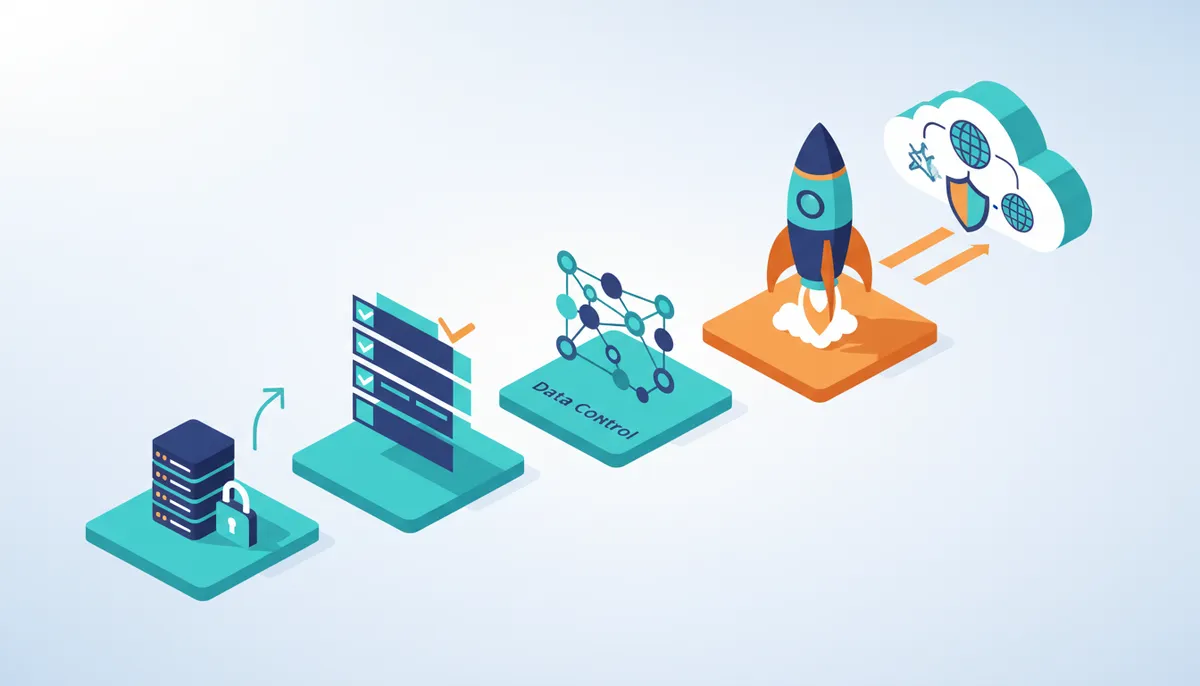
Deploying the platform requires installing the application stack directly within the organization's secure infrastructure boundary. This architecture ensures all routing intelligence remains private and eliminates reliance on external lookup services that impose rate limits. The deployment process aggregates live BGP Monitoring Protocol (BMP) feeds, Regional Internet Registry (RIR) data, and RPKI validation results locally.
- Provision dedicated server hardware meeting the computational requirements for processing global routing tables.
- Configure the system to ingest live BMP feeds from border routers for real-time update analysis.
- Integrate local caches of WHOIS records and Internet Routing Registry (IRR) information to enrich prefix data.
- Enable the built-in RPKI validator to cryptographically verify route origins without external dependencies.
Operators gain a distinct advantage by keeping sensitive network topology data inside their own perimeter. Public services often expose query patterns that reveal infrastructure planning to competitors. Self-hosted route handling intelligence prevents this leakage while guaranteeing availability during broader internet incidents. The trade-off involves assuming responsibility for local storage capacity and update cycles. By owning the full-stack, organizations avoid the latency penalties associated with remote API calls during critical incident response. The resulting system serves as a single source of truth for network operations teams.
Eliminating Data Egress Costs and Rate Limits in ISP Routing Operations
On-premises deployment of Netomics removes recurring egress fees by processing petabytes of flow data within the operator's own boundary. This architectural choice directly addresses the economic constraint where data egress and storage costs scale prohibitively for ISPs handling massive telemetry volumes.
- Install the platform on local servers to retain full ownership of routing intelligence.
- Configure direct ingestion of live BMP feeds to bypass external API rate limits entirely.
- Integrate local RPKI validation to enforce security policies without third-party latency.
The shift to self-hosted models eliminates the variable cost structure inherent in cloud-native SaaS alternatives. Operators no longer face financial penalties for increasing their monitoring granularity or retaining historical BGP monitoring records. The platform aggregates global path selection data and IRR information locally, ensuring that query volume does not impact operational budgets.
However, this approach demands sufficient local compute resources to process the full global routing table updates. The trade-off is a fixed upfront infrastructure investment versus a variable per-gigabyte expense model. For networks with strict data sovereignty mandates, keeping WHOIS records and geofeed information on-site satisfies compliance requirements that public tools cannot. This configuration transforms routing visibility from a rented service into a permanent, controlled asset.
Self-Hosted Netomics vs Multi-Tenant SaaS Models Like Kentik and ThousandEyes.
Multi-tenant cloud structures correlate price directly with data volume, creating unpredictable operational expenses for high-volume carriers. Competitors like Kentik and ThousandEyes typically operate on these models, forcing organizations to sample traffic or discard historical logs to manage costs. Strict data sovereignty requirements drive the demand for on-premise deployment, ensuring sensitive routing intelligence never leaves the organizational perimeter. This architectural divergence means self-hosted platforms eliminate recurring egress fees while retaining full fidelity of BGP monitoring data.
| Feature | Multi-Tenant SaaS | Self-Hosted Netomics |
|---|---|---|
| Cost Model | Variable, scales with volume | Fixed infrastructure cost |
| Data Location | External Cloud | On-Premises |
| Rate Limits | Enforced by vendor | None |
| Sovereignty | Shared responsibility | Complete control |
InterLIR recommends deploying self-hosted traffic steering intelligence to secure permanent access to global routing tables without external throttling. The tension between immediate scalability and long-term cost predictability resolves in favor of on-premises solutions for networks exceeding standard telemetry thresholds. Operators gain the ability to run complex queries against historical routing data without incurring additional charges per gigabyte scanned.
- Install the platform within the secure network boundary to establish a local source of truth.
- Ingest live BMP feeds directly from border routers for real-time visibility.
- Query local RPKI validation states instantly during incident response workflows.
The hidden consequence of cloud dependency is the potential loss of granular forensic capability during critical outages when API limits are reached. Retaining data locally ensures that network operators maintain analytical continuity regardless of external service status or subscription tier. This approach transforms routing data from a variable expense into a controlled strategic asset.
About
Evgeny Sevastyanov, Customer Support Team Leader at InterLIR, brings direct operational expertise to the discussion of self-hosted forwarding intelligence. At InterLIR, a specialized IPv4 marketplace founded in Berlin, Evgeny manages critical backend processes including the creation of objects in RIPE and APNIC databases and the detection of spam listings. This daily work requires rigorous validation of BGP routes and IP reputation checks, making the visibility offered by platforms like Netomics highly the to his workflow. His role demands ensuring clean routing data to maintain the security and transparency that InterLIR guarantees to its global clientele. By using deep familiarity with registry information and routing history, Evgeny understands the necessity of keeping routing intelligence within an operator's own infrastructure. His insights bridge the gap between theoretical routing security and the practical realities of managing high-quality IPv4 resources in a constrained market.
Conclusion
Scaling network visibility often breaks when external telemetry caps collide with the need for deep forensic history. Relying on third-party clouds introduces a hard ceiling on investigation depth, where critical BGP monitoring becomes truncated by subscription tiers rather than technical necessity. The operational cost of this model financial but manifests as blind spots during complex incident response. Organizations must prioritize architectures that guarantee unfettered access to their own traffic metadata without vendor-imposed friction.
Deploy a self-hosted path selection intelligence solution immediately if your team frequently hits query limits or faces strict data residency mandates. This shift secures permanent ownership of network narratives, ensuring that historical analysis remains viable regardless of external service fluctuations. The window to establish this independent baseline closes as global routing complexity increases, making local data sovereignty a prerequisite for resilient operations rather than a luxury.
Start this week by mapping your current egress traffic costs against the fixed expense of on-premises hardware to quantify the break-even point for local deployment. This concrete calculation reveals the precise moment where variable cloud spending outweighs infrastructure investment. Secure your analytical continuity by installing the platform within your secure boundary today, ensuring your network operators retain full command over routing data forever.
The trade-off involves accepting infrastructure overhead in exchange for guaranteed availability during global internet disturbances.
Frequently Asked Questions
External dependencies introduce latency and exposure risks during critical network troubleshooting events. Relying on fragmented public utilities creates operational risk when third-party services become unavailable during outages.
Local deployment prevents leakage of internal network topology queries to outside entities entirely. This approach ensures that critical routing history and geofeed information remain private assets under full organizational control.
The system aggregates live BGP feeds, RPKI validation data, and registry records internally. Combining these sources eliminates the need for engineers to consult disparate public utilities to investigate routing incidents.
Operators utilize REST APIs and native Model Context Protocol support for seamless integration. This capability allows teams to automate workflow responses without suffering from external latency or rate limiting issues.
Self-hosting requires sufficient local compute resources to process global routing tables continuously. The trade-off involves accepting infrastructure overhead in exchange for guaranteed availability during global internet disturbances.
References