IPv4 Announcement Costs: Why RPKI Matters in 2026
With IPv4 values hitting $15 per IP in 2026, missing RPKI records risks your entire investment. Learn how strict filtering impacts your network.

Since 2008, RIRs offered hosted systems, but large networks need delegated control to manage cryptographic material across flexible infrastructure.
RPKI converts internet routing from a trust-based model into a validated security architecture using cryptographic attestations.
Comcast integrated RPKI in early 2022, ending fragile manual trust. Learn how cryptographic validation secures route origins against hijacks.
Stop manual crypto renewals by using the RIPE NCC web interface to secure your BGP route origins without local software deployment.
Since APNIC launched RPKI in 2010, five registries now enforce cryptographic certainty, replacing hope-based filtering with valid, invalid, or unknown states.
Pavel Odintsov notes engineers fragment workflows across multiple public tools. Self-hosted platforms consolidate live routing data, RPKI validation
A significant majority of global IP prefixes now possess cryptographic attestation, proving that ROA adoption has reached a critical majority.
Leasing a /24 block costs between $128 and $384 monthly, making IPv4 address access an operational expense rather than a capital asset.
Over 400 registrants attended ThaiNOG 8, proving local engagement drives routing security adoption better than distant mandates for networks.
RPKI uses cryptographic certificates to bind IP prefixes, stopping hijacks before they spread across global networks in 2026.
With only 6.5% of users protected, learn to validate origins and block invalid routes before a hijack compromises your clean IPv4 reputation.
Resource Public Key Infrastructure (RPKI) stops BGP routing from guessing. It lets IP block holders cryptographically authorize specific AS numbers to...
Learn how RFC6480 defines the architecture to secure BGP routing. InterLIR provides verified IPv4 blocks that integrate smoothly into these validated...
Stop route leaks by validating origin against five regional registries. Secure your specific IP prefixes with cryptographic proof today.
RPKI replaces blind trust with cryptographic proof to stop route spoofing dead. Learn how operators validate BGP announcements against trusted ledgers.
Stop route leaks by implementing the RFC6480 framework. Learn how X.509 certificates create a binary validity state to secure your BGP announcements.
RPKI checks launched on Internet.nl in October 2022 to stop false BGP route injections. You will examine the specific architecture of RPKI compared to...
Misconfigured ROA maxLength values create severe vulnerabilities when specific prefixes lack BGP announcements, inviting subprefix hijacks.
With only 34% of networks using ROAs, max length errors cause invalid routes. InterLIR audits your IP resources to prevent these costly BGP outages.
Over 1,300 Route Origin Authorizations mark the shift to independent servers. InterLIR helps you host your own RPKI infrastructure for full control.
Thousands of routes remain RPKI invalid as of May 2026, proving legacy trust models cannot secure global BGP against hijacking.
Prevent forged origins by aligning ROA maxLength values with BGP announcements, replacing trust-based filtering with cryptographic proofs today.
Over 375,000 valid ROA objects now secure the global routing table, replacing fragile honor systems with cryptographic proof for every prefix.
RPKI syncs every 10 minutes to validate BGP origins against signed records, yet single unsecured paths remain vulnerable to hijacking risks.
Over 60% of IPv4 routes now use RPKI. Learn to configure Junos OS routers to validate prefixes and block accidental leaks today.
X.509 certificates anchor RFC 6480 to prove IP ownership. Learn how strict validation stops origin spoofing without causing outages.
With 60% of routes covered, the remaining 40% face accidental misorigination risks. Learn how strict ROA policies enforce cryptographic validity.
Learn how identity verification drives setup across five global RIRs and why moving from hosted models demands strict XML file management.
RPKI deployment scrutiny intensified in September 2024 as the industry evaluates adoption rates against persistent BGP vulnerabilities.
With zero valid BGPsec router certificates as of June 2026, RPKI route origin validation remains the critical defense against hijacking.
Cloudflare activated RPKI filtering on 19 Sep 2018 to block invalid BGP announcements. Learn how ROAs bind prefixes to ASNs for safer routing.
Learn how RPKI validation prevents the type of routing errors that caused the 2019 Cloudflare outage affecting millions of users globally.
As of June 2026, the global count of valid router certificates for BGPsec sits at exactly zero. Path validation remains theoretical.
BGP accepts advertised routes by default without verifying the owner, creating a critical security gap that RPKI solves.
Over 375,000 ROAs exist with zero enforcement. Learn to configure routers to drop Invalid routes and secure BGP announcements today.
Stop static filtering failures. Learn how RPKI validation secures the route chain against hijacks, referencing the June 17, 2026 outage.
Finding BGP full table acceptance for legacy IP without RPKI under $5 in Europe remains possible, though options are vanishing.
Stop storing 1.44TB daily. rpkispool uses CCR to compress 40GB of RPKI data down to just 216MB for feasible long-term archiving.
APNIC's Hangzhou RPKI mirror with NNIX cuts validation latency for Chinese operators, but a faster fetch of a 'not found' verdict protects nothing until ROAs ar
Erik protocol indexes RPKI data by content hash for CDN-cacheable fetch. An InterLIR operator's take: real engineering, but transport was never the binding cons
The 2018 MyEtherWallet hack stole $150,000 due to missing route checks. Learn why Pacific operators must deploy RPKI filtering immediately.
With only 40% of networks holding valid ROAs, your routing is exposed. Learn how cryptographic validation stops multimillion-dollar breaches now.
With IPv4 validity at 65.5%, ignoring RPKI risks traffic rejection. Learn how to deploy ROA and ASPA objects before enforcement deadlines hit.
RPKI validation stops 820k daily IoT attacks by 2027. Learn why three security invariants prevent 65% of routing breaches today.
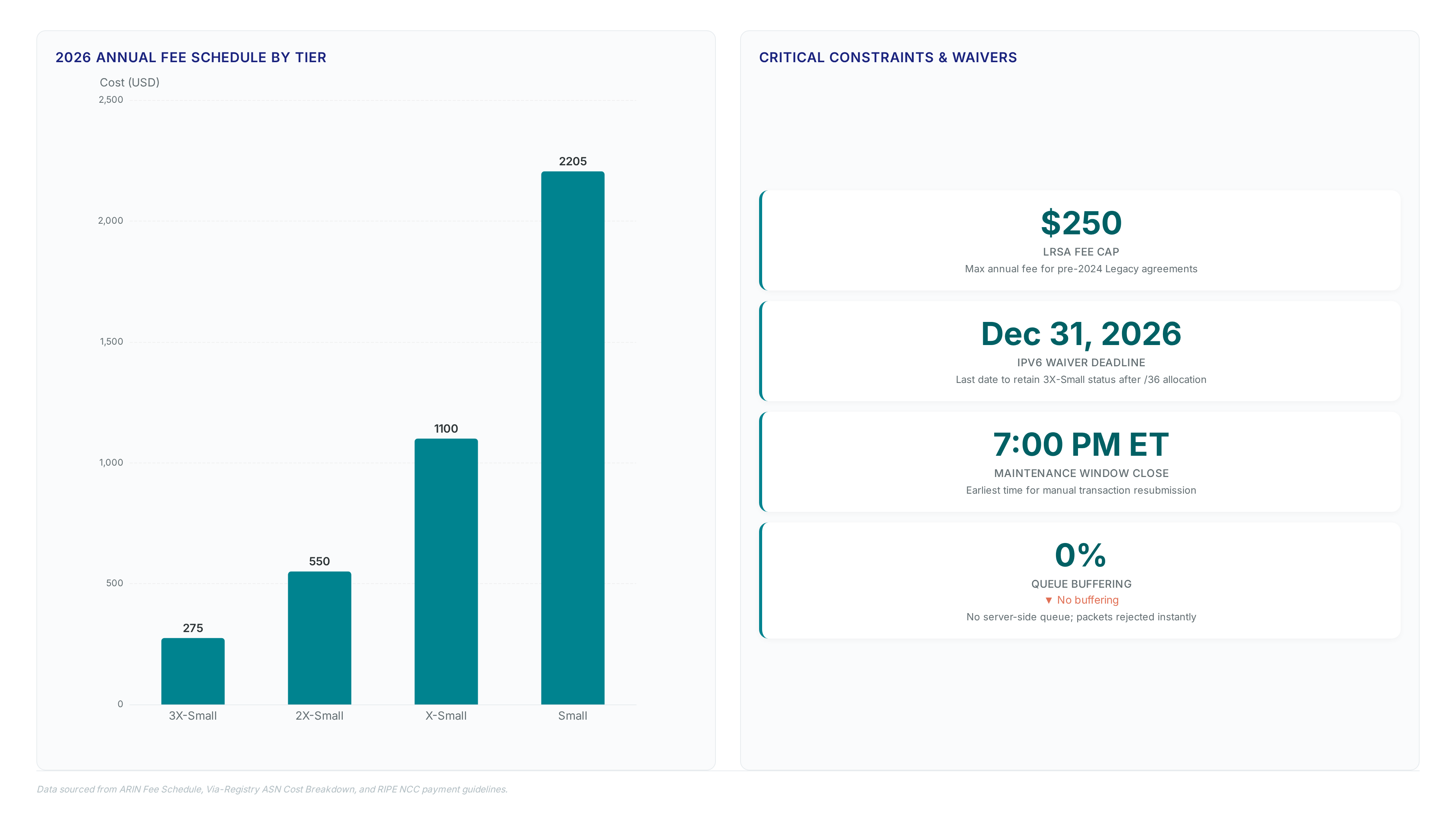
ARIN's 12-hour outage on March 28 discards RPKI updates instead of queuing them. Learn why waiting until 7:00 PM ET is your only safe option.
See how Jakarta turned 1% adoption into near-total coverage. Learn why 84% of networks still skip RPKI enforcement despite clear ROI.
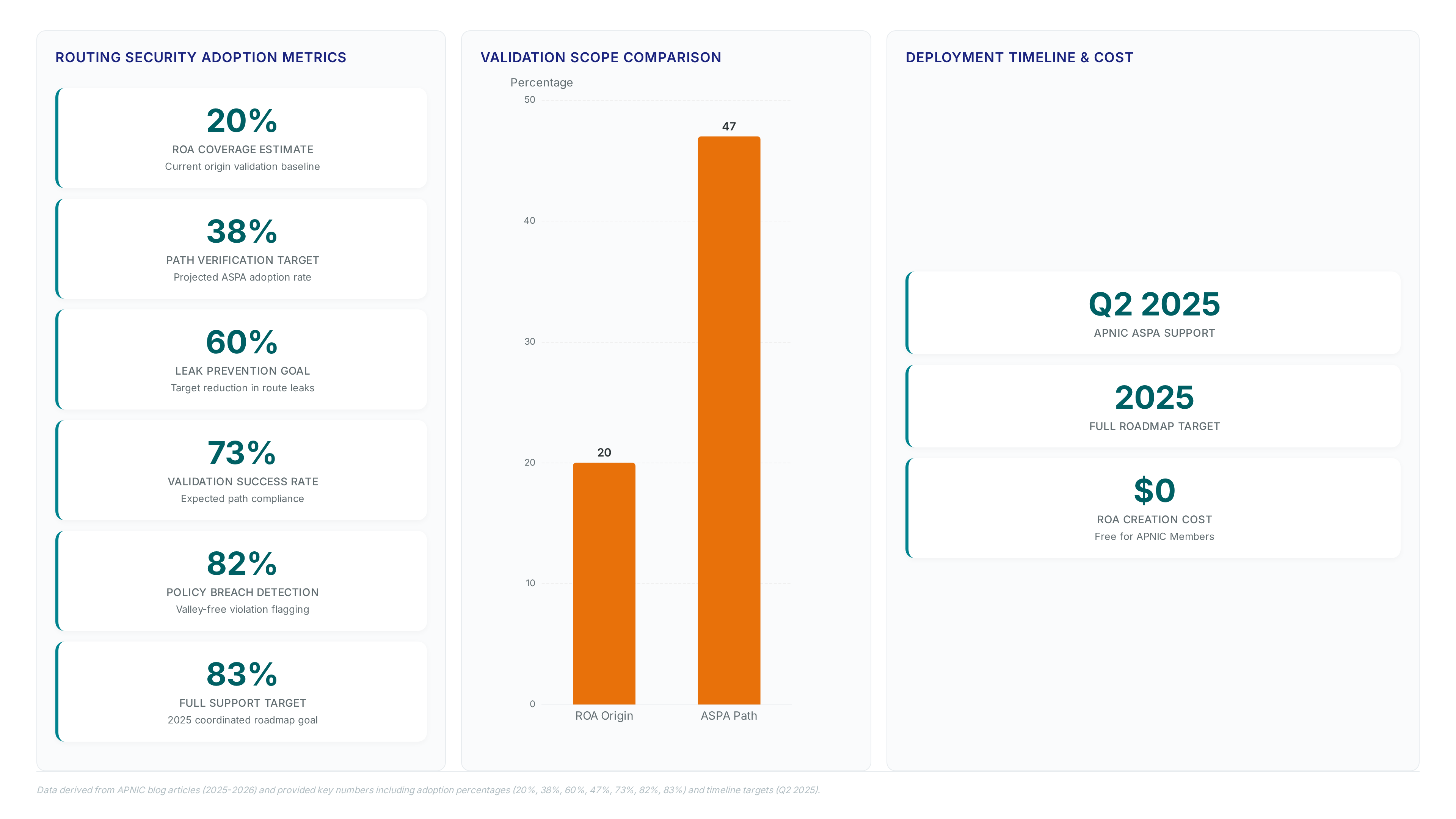
With ASPA Customer ASIDs up 539%, we see a real shift from origin checks to path security, though fragmented signing strains the system.
MyAPNIC now supports RFC 9323, replacing fragile email chains with automated trust. Say goodbye to manual PDF reviews for good.