Governance document shifts: What May 2026 means
ARIN's May 8, 2026 status update confirms the NRO NC is locking down the RIR Governance Document. This isn't a routine patch; it's a structural recalibration of how the Number Resource Organization manages global internet number resources under ICANN oversight. The draft shifts heavily toward transparency, directly addressing friction points flagged during the Montevideo workshop in late 2025.
The Q1 Status Report now catalogs open issues and records specific NRO NC decisions derived from five distinct RIR mailing lists and public comment periods. We are looking at the final hurdles before the text advances to RIRs for approval.
The path to ratification often feels opaque, but the markers are there if you look for drafting activity versus stalled items. Network operators reliant on stable number resource allocation can no longer afford to ignore these shifts. Understanding the mechanics of the policy development lifecycle is now a operational requirement, not optional reading.
The Role of the RIR Governance Document in Global Internet Infrastructure
Defining the RIR Administration Document Version 2.0
Think of the RIR Stewardship Document Version 2 as the operational charter defining the lifecycle of Regional Internet Registries from establishment to potential derecognition. The text explicitly aligns "Global Policy" with Article 6 of the ASO MoU and identifies the "Governing Body" as the functional equivalent of a board of directors lifecycle. The Number Resource Organization Number Council published the initial draft on 14 April 2025, kicking off a review period that ran through late May 2025 draft.
The NRO NC, operating as the Address Supporting Organization Address Council within ICANN, updated the Q1 Status Report to reflect community feedback gathered during that window. This update tracks drafting progress while highlighting open issues requiring resolution before the five RIRs can adopt the final text.
Speed versus consensus creates the friction here. Rapid policy iteration clashes with the need for exhaustive community agreement across diverse geographic regions. If specific objections regarding derecognition criteria linger, they stall the entire framework. The global routing system cannot afford to operate without updated governance protocols while infrastructure strain increases. Operators must watch these open issues; the final document dictates the stability of future number resource allocations.
The NRO NC synthesizes global input from five distinct RIR mailing lists and online sessions to refine the RIR Supervision Document. This isn't automated. Humans aggregate technical objections and policy suggestions submitted during the ICANN Public Comment period. Operators submitted specific language regarding the definition of a "Governing Body" through these channels, and the council reviews every comment against the existing ASO MoU framework.
We saw the tangible output of this synthesis following the workshop held from 12 to 14 November 2025 in Montevideo, where drafters resolved conflicting regional requirements. The resulting status report explicitly maps open issues to their corresponding community feedback threads.
| Input Source | Review Mechanism | Outcome Visibility |
|---|---|---|
| Five Mailing Lists | Thread Summary | Status Report |
| Webinars | Transcript Analysis | Draft Changelog |
| Public Comment | The Response | Final Text |
Qualitative data volume slows finalization compared to automated consensus models. The NRO NC must manually reconcile contradictory positions from different geographic regions without algorithmic assistance. This human-centric bottleneck ensures deep scrutiny but delays the publication of the final draft intended for ICANN approval. Thorough review sacrifices speed for legitimacy. That is the trade-off.
The initial community consultation spanned 44 days from 14 April 2025 to 27 May 2025. Operators validating the RIR Oversight Document process must confirm that all objections filed within this ICANN Public Comment window were logged. The timeline dictates strict adherence to publication deadlines; missing the cutoff invalidates subsequent policy ratification steps.
| Phase | Start Date | End Date | Validation Requirement |
|---|---|---|---|
| Draft Publication | 14 April 2025 | 14 April 2025 | Verify version 2.0 hash |
| Consultation | 14 April 2025 | 27 May 2025 | Log all mailing list threads |
| Petition Deadline | 01 June 2026 | 01 June 2026 | Confirm rejection filing status |
Geopolitical friction intensifies as infrastructure shifts toward a dual-use asset model vulnerable to hybrid warfare. Late filings during the comment period now face higher scrutiny regarding national data sovereignty claims. Failure to document participation now precludes any future appeals against the final charter. Silence costs you: it means total acceptance of terms that may constrain future number resource allocation.
NRO NC Operations and the Policy Development Lifecycle
NRO NC Dual Identity as the ASO Address Council
The NRO NC executes global number resource policy through a structural duality separating regional administration from ICANN advisement.
This single body of 15 volunteers operates under two distinct charters depending on the governance venue. Within the IANA framework, the council functions as the ASO Address Council, tasked specifically with advising the ICANN Board on address management issues. Composition remains fixed at 3 members per region to ensure balanced geographic representation across the five registries. In each region, the selection process splits authority: the community elects two representatives, while the RIR appoints the third. This split design prevents any single stakeholder group from dominating the global policy pipeline.
| Function | Operational Scope | Governance Anchor |
|---|---|---|
| Regional Role | Manages local number distribution | RIR Bylaws |
| Global Role | Advises ICANN Board | ASO MoU |
Regional election cycles often desynchronize with global policy deadlines, creating operational tension. If a region delays its community election, the global council loses voting quorum for that sector. A single regional administrative bottleneck can stall worldwide policy development regardless of urgency elsewhere. Operators tracking these timelines must monitor regional election calendars, not just global workshop schedules. Delays here cascade directly into the ratification window for critical infrastructure updates. The system relies on perfect synchronization between independent regional bodies to maintain global functionality.
The Q1 Status Report published 08 May 2026 formally encodes decisions made during the November 2025 Montevideo workshop. This document translates raw community feedback into actionable policy directives for the RIR Administration Document. The NRO NC aggregates input from five regional mailing lists and webinar sessions to resolve open issues. Operators reviewing the text will find specific language changes addressing the definition of a "Governing Body." These updates reflect a shift from abstract principles to operational constraints found in modern registry lifecycles.
The translation process follows a strict validation sequence:
- Collect objections from the initial ICANN Public Comment.
- Debate technical merit during in-person sessions at ICANN 85.
- Aggregate feedback from five distinct RIR mailing lists to generate the raw data required to populate the Status Report.
This mechanical synthesis converts disparate community objections into a unified record of open issues. The NRO NC reviews every submission against the existing ASO MoU framework before accepting changes. Thorough input gathering introduces latency via manual reconciliation across regions. High-volume discussion threads often delay the finalization of specific drafting instructions.
The workflow prioritizes topics attracting significant comment volume for immediate council review.
| Input Channel | Review Frequency | Output Destination |
|---|---|---|
| Regional Mailing Lists | Daily | Status Report Draft |
| ICANN Public Comment | Weekly | Workshop Agenda |
| Community Fora | Monthly | Policy Directives |
Publication of the community feedback summary occurred on 02 February 2026, marking a key milestone. This date confirms that the initial community consultation closed. The Status Report now serves as the single source of truth for unresolved policy conflicts. Failure to address these open items before the final draft could invalidate subsequent ratification steps.
Participating in the NRO NC Feedback and Consultation Process
Defining the ICANN Public Comment Process for NRO NC Input

The ICANN Public Comment process functions as the sole channel for submitting binding feedback on the RIR Stewardship Document Version 2. Unlike informal mailing list debates, this mechanism triggers mandatory review cycles where the NRO NC must record decisions on every submission. Operators seeking to influence policy must navigate specific windows, such as the initial 44-day consultation that concluded in May 2025. Participation requires submitting technical objections through the ICANN Public Comment portal.
Proven engagement follows a strict sequence:
- Monitor the NRO NC announcement channels for open comment periods.
- Draft comments referencing specific sections of the draft governance text.
- Submit responses via the official web form before the deadline expires.
- Track the resulting Status Report for acknowledgment of the input.
Latency between submission and the publication of the Q1 Status Report creates a significant limitation, leaving operators waiting months for validation. While the ICANN FY26-30 Strategic Plan sets broad goals, it does not accelerate this specific feedback loop.
Operators must align submissions with the standard 44-day consultation window to guarantee NRO NC review of technical objections.
- Target the specific deadline for Fundamental Bylaws Amendments comments on 09 June 2026.
- Submit the text exclusively through the ICANN Public Comment portal rather than regional mailing lists to trigger mandatory response protocols.
- Reference the summary of community feedback published earlier in the year to avoid duplicating resolved arguments.
Timing creates a hard dependency between community consensus and final document adoption. Late entries miss the initial community consultation. The cost of missing this window is total exclusion from the current version's governance framework.
Validating Submission Status Against Q1 and May 2026 Reports
Operators must cross-reference submitted text against the Status Report May 2026 to verify inclusion in the current drafting cycle. This validation step prevents duplicate efforts on issues the NRO NC has already resolved or marked as closed. The process requires matching original comment IDs with the recorded decisions found in the latest official documentation.
- Retrieve the community feedback summary published in February to locate your initial submission ID.
- Compare your recorded objection against the open issues list in the Q1 Status Report to check for pending status.
- Confirm that any accepted language changes appear in the May update rather than remaining in the "under discussion" column.
Submissions missing specific technical references often get categorized as general feedback, effectively stripping them of binding weight.
| Feature | Q1 Report | May Report |
|---|---|---|
| Focus | Initial aggregation | Decision tracking |
| Input Source | Montevideo workshop | ICANN 85 meetings |
| Utility | Scope definition | Progress validation |
Stakeholders relying solely on mailing list archives risk missing these status shifts. Failure to validate status leaves operators unaware if their technical constraints were actually adopted.
Strategic Impact of Community-Driven Governance on Internet Stability
NRO NC Governance Scope Beyond IP Number Coordination
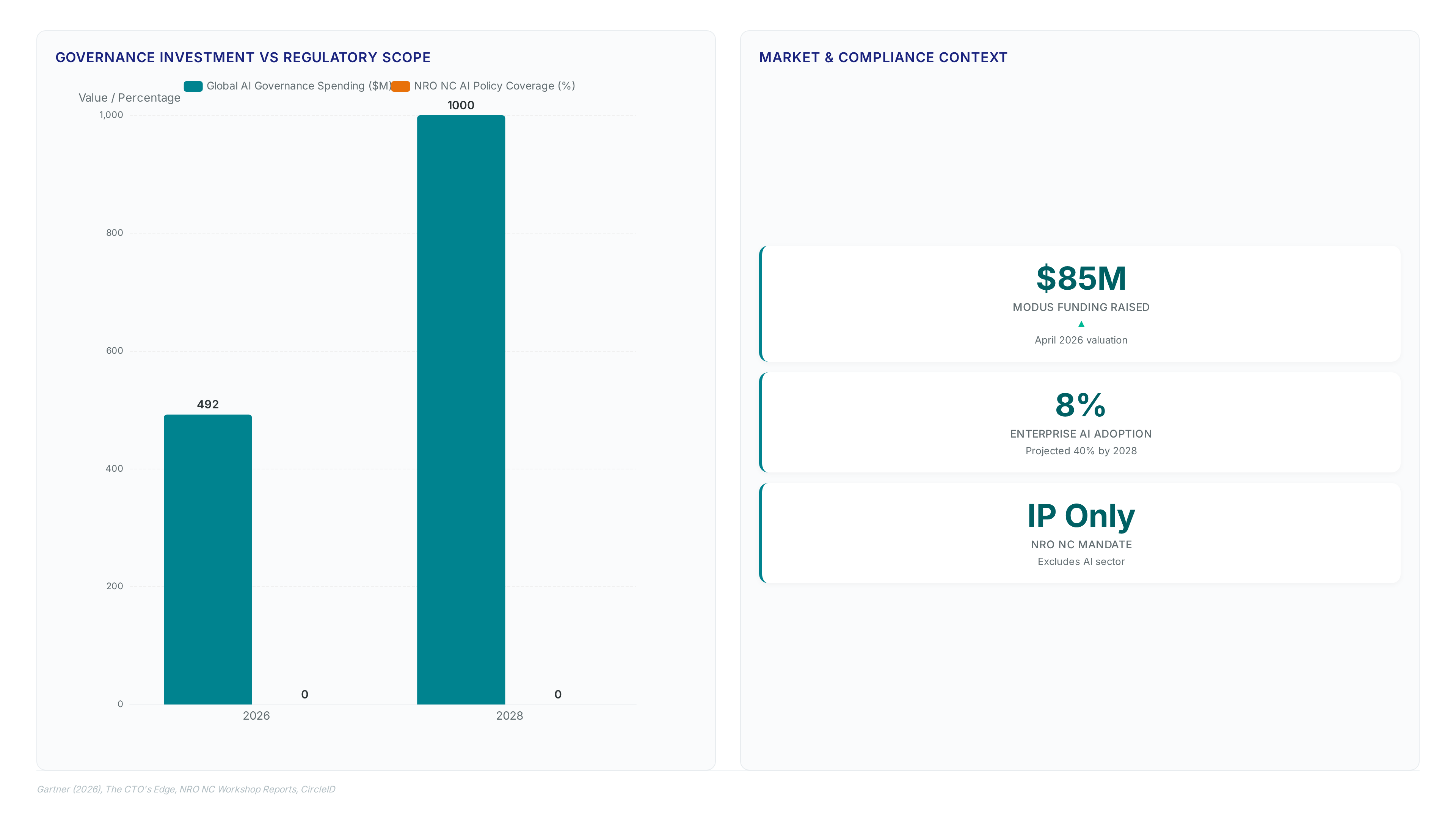
Global intelligence governance spending is surging, consuming $492 million in 2026. Yet the NRO NC mandate remains strictly limited to IP number resources, excluding the emergent Artificial Intelligence sector entirely. Global connectivity reaches a significant majority of the population, yet the council avoids regulatory overreach into algorithmic policy. Focus stays on the RIR Supervision Document lifecycle set by the first draft. Community input shapes this narrow scope through structured channels like the ICANN Public Comment. Technical stability takes precedence over broad societal regulation.
Operators must recognize that NRO NC deliberations will not address AI compliance, even as market pressures mount. This distinction prevents mission creep that could destabilize the core address distribution system. Precise boundary definitions exist at nro. Separation ensures that while AI governance evolves rapidly, the core internet numbering plan retains its established, community-driven consistency without external regulatory interference.
Application: Translating Montevideo Workshop Outcomes into Q1 2026 Status Reports
Raw community feedback collected during the NRO NC workshop held in Montevideo converted directly into the structured decisions found in the May 2026 report. This mechanism requires operators to map subjective concerns from five area-based mailing lists onto specific drafting actions within the governance document. The process reviews input from webinars and public comment periods to isolate technical objections from policy preferences.
A bottleneck emerges where only issues with explicit technical consensus advance to the final draft stage due to the sheer volume of submissions. Network engineers must recognize that general support for stability does not equate to actionable protocol changes without specific text proposals.
RIR Consensus Drivers Versus AI Regulatory Pressure Models
RIR policy evolves through technical necessity for unique addressing, whereas AI governance reacts to external regulatory mandates from the EU and China. Early 2026 shows strong platform investment yet incomplete governance, where rapid Model Context Protocol adoption outpaces security configurations. Enterprise SaaS firms now deploy Graph Neural Networks to model service topologies, a complexity absent in IP resource management.
Adoption Drivers differ sharply. IP addressing requires global uniqueness to function. AI scales under legal pressure. The limitation of the AI approach is its reliance on expensive, reactive tooling rather than organic consensus. Challenges include high false-positive rates when algorithms enforce policy without human context. Operators face a tangible risk where automated compliance tools generate noise that masks genuine routing anomalies. InterLIR advises network engineers to prioritize the stable, community-verified RIR framework over volatile, vendor-locked AI governance suites. The cost of ignoring this distinction is measurable operational fragility during regulatory shifts. Ficial Intelligence Regulatory Pressure a substantial amount projected Operators must recogn ding.
About
Alexander Timokhin, CEO of InterLIR, brings necessary industry perspective to the evolving environment of RIR governance. As the leader of a specialized IPv4 marketplace founded in Berlin, Timokhin manages daily operations centered on the redistribution of unused IP resources and strict adherence to regional registry policies. His direct involvement in securing clean BGP routes and navigating complex IP reputation challenges ensures a practical understanding of how NRO NC decisions impact global network availability. The recent updates to the Q1 Status Report by ARIN and the NRO NC directly influence the regulatory framework within which InterLIR operates. Timokhin's expertise in corporate governance and international relations allows him to analyze these policy shifts critically, connecting high-level ICANN discussions to the real-world efficiency and transparency required by businesses seeking critical network resources.
Conclusion
Scaling automated compliance without human context creates a fracture point where false positives obscure genuine routing anomalies. The operational cost of relying on volatile, vendor-locked AI suites manifests as measurable fragility during sudden regulatory shifts, unlike the organic stability found in community-verified frameworks. While global connectivity expands, the disconnect between reactive algorithmic enforcement and technical necessity widens, forcing operators to pay a premium for tools that lack consensus-based legitimacy.
Organizations must prioritize the stable RIR framework over experimental AI governance models until false-positive rates drop below a negligible threshold in production environments. This shift is critical before the next substantial policy cycle begins in late 2026, as waiting for vendor maturity will leave networks exposed to compliance noise. The path forward requires distinguishing between technical uniqueness requirements and external legal mandates, rejecting the notion that expensive automation equals security.
Start by auditing your current policy enforcement logs this week to identify how many alerts stem from algorithmic assumptions versus actual routing violations. Isolate these false positives immediately to prevent them from masking real threats. This concrete data will justify the resource allocation needed to maintain human-in-the-loop verification processes.
Frequently Asked Questions
The initial community consultation spanned exactly 44 days from April 14 to May 27, 2025. This specific window allowed the NRO NC to gather essential feedback before drafting the Q1 Status Report updates.
The council synthesized input from five distinct RIR mailing lists to refine the governance document. This comprehensive review process ensured that technical objections from all regional communities were considered during the drafting phase.
The report built on outcomes from the Montevideo workshop held from November 12 to 14, 2025. These meetings helped resolve conflicting regional requirements before the document advanced to final drafting stages.
Unresolved objections regarding derecognition criteria could stall the entire framework adoption process. This delay would leave the global routing system without updated governance protocols during a period of increasing infrastructure strain.
Operators should review the Q1 Status Report, which explicitly maps open issues to feedback threads. This document tracks progress on drafting while highlighting topics that remain in progress for final approval.