IPv4 leasing strategy avoids stranded asset risk
Small IPv4 blocks currently trade around $33 per address, making the buy-versus-lease decision a critical financial calculation for infrastructure leaders. Leasing IPv4 addresses offers immediate capital preservation while shifting the burden of market volatility to the lessor. The math hinges on lease term length: IPv4 Global data shows significant discounts for two, five, or ten-year commitments, a direct premium paid to mitigate lessor risk. Operational continuity relies on geolocation updates via geofeeds.txt files, allowing service stability without permanent ownership. Finally, automated renumbering tools cut the technical debt usually associated with returning address blocks at contract end.
Lee Howard notes that sales prices have hit a three-year low, yet the recurring cost of $0.35 to $0.45 per month for leasing often outweighs the risks of holding depreciating inventory. Understanding these pricing dynamics helps network architects avoid purchasing assets that may become stranded as IPv6 adoption accelerates. Treat IP space as a flexible utility, not a static commodity.
The Strategic Role of IPv4 Leasing in Modern Network Infrastructure
IPv4 Leasing Mechanics and DDI Integration
IPv4 leasing grants temporary address rights through DDI systems while leaving RIR registration ownership untouched. This separation of utility from asset possession lets organizations skip the capital expenditure of buying blocks at $33 per address or roughly $8,500 for a /24. Instead, operators pay recurring rates between $0.35 and $0.45 monthly, optimizing cash flow for transient projects. The mechanism depends on Network Address Translation (NAT) to map internal devices to the leased external pool, effectively compressing thousands of endpoints into limited public space. Integration with DDI platforms automates the complex lifecycle management required when leases expire or rotate.
Market dynamics complicate decisions; the available pool contracted nearly 60% from 44.8 million in 2015 to 18.6 million by mid-2024, making large contiguous blocks scarce. Purchasing offers permanence, yes. However, financial analysis indicates leasing remains mathematically superior for horizons spanning one to four years. Strong automation helps mitigate renumbering shocks inherent in this flexible approach.
Applying Geolocation and Term Length to Lease Pricing
Optimizing lease cost structures demands precise management of geolocation data and strategic commitment to extended contract durations. Using a geofeeds.txt file or updating substantial geolocation services assists with location discrepancies, creating additional flexibility. This technical adjustment removes a primary barrier to flexible deployment, allowing organizations to use address blocks regardless of their original registry origin.
Lessors fear three-month agreements invite spamming or proxying activities that blacklist IP ranges, rendering them useless for future revenue generation. Consequently, the market offers significant discounts for commitments spanning two, five, or ten years to incentivize stability and eliminate non-revenue vacancies. Financial analysis confirms that leasing remains the superior option for operational horizons between one and four years, avoiding the depreciation risks inherent in asset ownership.
| Term | Risk Profile | Pricing Impact |
|---|---|---|
| 3 Months | High | Premium Rates |
| 2 Years | Medium | Moderate Discount |
| 5-10 Years | Low | Maximum Savings |
Aligning lease durations with project lifecycles allows organizations to capitalize on these structural savings. Ignoring term-length use results in unnecessary capital erosion over the life of a network deployment.
Buy vs Lease IPv4: Capital Expenditure Against Reputation Risk
Operational expenditure models outperform capital purchase for network horizons under four years by preserving liquidity. Small blocks trade near historical lows. Market data suggests that for time horizons of 1 to 4 years, the leasing model remains the dominant strategic choice. This approach converts a massive upfront liability into a predictable utility cost, avoiding the depreciation risks inherent in owning static assets.
Lessors frequently hesitate to approve three-month tenants because such short durations attract actors seeking addresses for spamming or proxying. This behavior creates a bad reputation that renders the block unusable for legitimate business, forcing operators to manage complex renumbering events sooner than anticipated. Financial analysis confirms that leasing a standard /24 typically costs between $128 and $384 monthly. For businesses with an operational horizon of 1 to 4 years, leasing is the financially superior option, challenging the traditional preference for asset ownership in networking. Organizations ignoring this calculus risk locking capital into depreciating inventory while facing the operational burden of maintaining clean IP reputation scores. Using flexible lease terms allows infrastructure spend to align directly with revenue-generating project timelines rather than speculative asset accumulation.
Inside the Mechanics of IP Address Reassignment and Geolocation Updates
DHCP Reservations and Flexible DNS in Renumbering
Network operators deploy DHCP reservations and flexible DNS to automate address shifts without manual server reconfiguration. Hard-coding static IPs creates fragility; assigning fixed leases based on MAC addresses ensures devices keep consistent identity despite backend subnet changes. A reliable DDI platform synchronizes these reservations with DNS records instantly, removing propagation delays found in manual updates. Firewalls and routing policies update twice: first to enable new addresses, then to remove legacy ones. Tools like ansible treat configuration repositories as databases, cutting human error during transitions.
Dependence on automation creates a single point of failure; if the DDI system crashes during lease expiration, service continuity breaks immediately. Teams must validate that their IPAM solution supports atomic updates to prevent split-brain scenarios where DNS points to unallocated space. Buying blocks offers permanence. Market volatility where prices range from $32 to $36 per address makes leasing attractive for temporary capacity. Renumbering risk persists if leases expire during high-demand periods. Proper configuration turns a disruptive network event into a routine database update.
Updating Firewalls and Routers for Address Continuity
Firewalls and routers need a strict dual-update workflow to maintain security posture during address transitions. This process involves enabling new IPv4 addresses in routing tables while simultaneously retaining legacy rules to prevent traffic blackholing. Operators execute these changes in two distinct phases: first to activate the new block, second to purge old addresses once propagation confirms stability. Automation tools like ansible change configuration repositories into flexible databases, letting engineers push dual-state updates across hundreds of devices instantly. Manual updates introduce latency that disrupts service continuity without such orchestration.
Financial pressure to optimize is real, especially as purchasing a standard /24 block now demands between $9,000 and $11,500 in upfront capital estimated cost. Leasing offers a flexible alternative, yet it necessitates rigorous renumbering protocols at term expiration. Rushing removal of old addresses risks dropping active sessions. Delaying cleanup creates security gaps where deprecated IP space remains accessible. Network teams failing to script these transitions face unnecessary downtime when market conditions force a block return. Optimizing existing resources through precise configuration management is the only path to reliable scalability. Contact InterLIR to simplify your IPv4 asset management today.
Lease Termination Risks and IP Reputation Damage
Short-term lessees face immediate renumbering mandates and potential exposure to legacy abuse signals upon contract expiration. Lessors frequently reject three-month commitments because transient tenants often apply blocks for spamming or proxying, permanently degrading the IP reputation of the address space. This risk creates tangible financial tension. Purchase prices fluctuate between $18 and $45 per unit. Stable lease rates near $0.40 offer predictability only if the tenant avoids reputation blacklists that render addresses unusable. Inheriting a block previously used for malicious activity requires immediate remediation to prevent delivery failures. InterLIR monitors leased blocks continuously to prevent clients from inheriting damaged inventory, a service critical for maintaining operational continuity. Organizations risk sudden connectivity loss when upstream providers filter tainted prefixes without such oversight. The market flexible forces a choice: accept the volatility of short-term renewals or commit to longer terms that incentivize lessors to maintain cleaner blocks. Automation remains the primary defense against the operational shock of sudden address changes. Treating configuration repositories as databases lets network teams swap prefixes rapidly when market conditions or reputation scores demand immediate action.
Measuring Operational ROI Through Automated Renumbering and Risk Mitigation
Ansible converts static configuration files into authoritative databases for IP management. Centralizing address definitions allows operators to replace manual server updates with automated propagation across the entire network fabric. This mechanism treats the configuration repository as the single source of truth, pushing changes to firewalls and routers simultaneously to minimize human error during renumbering events. The initial complexity of defining these repositories outweighs the recurring risk of manual drift during lease expirations. Automation manages the dual-update cycle for security policies required when enabling new addresses and removing old ones. Integrating these tools assists in managing the available address pool effectively.
| Feature | Manual Update | Ansible Automation |
|---|---|---|
| Update Scope | Per-device | Fleet-wide |
| Error Rate | High | Negligible |
| Execution Time | Hours | Minutes |
Network teams face compounded risks when market conditions force rapid block replacement. The inability to script DHCP reservations dynamically complicates migration timelines. Adopting these practices helps navigate the constraints of the current IPv4 market successfully.
Executing Dual-Policy Firewall Updates During Address Switchover
Firewalls and routers require two distinct policy updates to maintain connectivity during an IPv4 address switchover. Operators must first enable the new address block while the legacy range remains active, then execute a second pass to remove the old addresses entirely. Maintaining strict security postures while ensuring zero-downtime migration for critical services creates operational tension. Automation tools like ansible resolve this by treating the configuration repository as a flexible database, pushing synchronized updates to edge devices. This approach eliminates the window where human error could leave orphaned rules or premature deletions. A structured comparison clarifies the operational phases involved in this transition.
Market Volatility Risks When Acquiring Replacement IPv4 Addresses
Replacement IPv4 acquisition at lease expiration exposes tenants to capital volatility where transfer market prices have expanded notably. In 2026, the transfer market price for buying IPv4 addresses expanded notably, with costs ranging from $40 to $60 per individual address depending on the block size and provider. Market data indicates that while short-term flexibility is valuable, the lack of long-term commitment leaves operators vulnerable to these valuation spikes. Integrating flexible inventory management helps mitigate the shock of sudden price increases. By preparing for rapid address substitution, network teams can navigate market turbulence without service degradation. Secure your infrastructure against future price shocks by optimizing your current IPv4 resource allocation today.
Executing a Dual-Stack Migration Strategy to Reduce IPv4 Dependency
Dual-Stack Mode and NAT Compression Mechanics
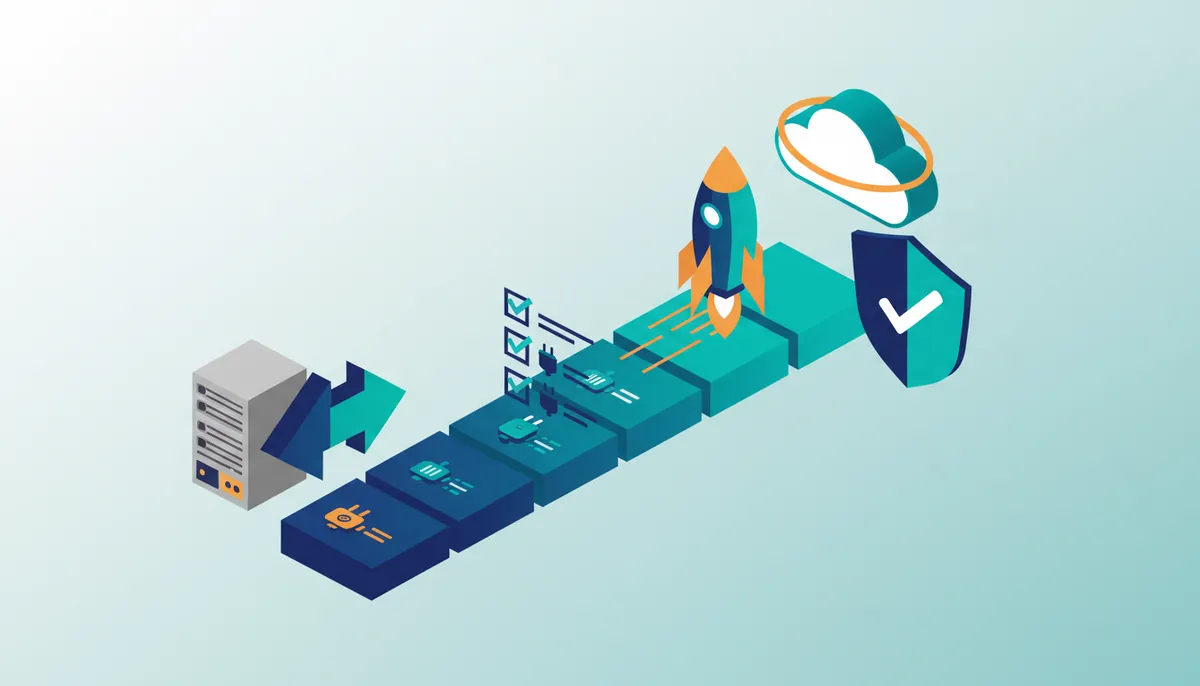
Dual-stack configuration enables network devices to process IPv4 and IPv6 protocols simultaneously, forming the operational baseline for hybrid infrastructures. Operators deploy Network Address Translation (NAT) to compress thousands of internal endpoints into a minimal pool of public IPv4 addresses, a tactic that becomes increasingly effective as native IPv6 adoption rises. When half or more of the connectivity shifts to IPv6, the pressure on the remaining IPv4 inventory drops precipitously. This scarcity forces reliance on secondary markets where leasing rates now range from $0.50 to $1.50 per IP monthly. The primary trade-off involves the complexity of maintaining two parallel protocol stacks, which demands rigorous DDI management to prevent routing conflicts.
- Enable IPv6 forwarding on the core router interface.
- Configure NAT46 translation rules for legacy IPv4-only hosts.
- Verify AS path integrity for both protocol families.
Timing IPv6 Migration to Reduce IPv4 Lease Needs
Initiating dual-stack deployment before an IPv4 lease expires allows operators to compress remaining legacy traffic through NAT, drastically cutting the address count required for renewal. A migration plan to IPv6 reduces the need for new IPv4 addresses at the end of a lease by shifting the majority of connections to the newer protocol. When half or more of the network connections use IPv6, Network Address Translation can compress thousands of devices into just a few public IPv4 addresses.
- Audit current traffic logs to identify hosts capable of immediate IPv6 enablement.
- Configure edge routers for dual-stack operation while maintaining existing IPv4 policies.
- Implement automation tools to manage the shrinking pool of legacy addresses dynamically.
The primary limitation involves the initial configuration overhead, yet this cost is negligible compared to the capital preservation achieved by avoiding large-scale IPv4 acquisitions. By reducing the dependency on scarce IPv4 resources, organizations avoid the renumbering risks associated with acquiring replacement addresses under duress. Proper planning ensures that leasing remains a flexible, cost-effective solution rather than a financial trap.
Validating Cost Savings in Short and long-term Leasing
Organizations validate leasing economics by comparing monthly operational expenditures against volatile capital outlays for permanent blocks.
- Calculate the break-even horizon where cumulative lease payments exceed the one-time acquisition price for a /24.2. Model the renumbering risk by assessing automation readiness before the contract term expires.
- Align the lease duration with the dual-stack migration schedule to ensure IPv6 adoption reduces legacy dependency.
The strategic trend for 2026 favors short-to-medium term horizons, explicitly identifying leasing as more cost-effective than buying for non-core infrastructure. However, the limitation is measurable: tenants face re-acquisition at new market conditions if the migration plan fails. InterLIR recommends automating these transitions to mitigate the financial shock of market fluctuations.
About
Alexander Timokhin, CEO of InterLIR, brings extensive expertise in IT infrastructure and IP address management to the critical discussion on buying versus leasing IPv4 addresses. As the leader of a specialized IPv4 marketplace founded in Berlin, Timokhin oversees daily operations involving the redistribution of unused network resources across global markets. His direct experience managing automated leasing processes and verifying IP reputation provides unique insight into current pricing trends, such as the recent dip in sales prices versus stable leasing rates.
At InterLIR, his team enables transparent transactions for diverse sectors, from hosting to cybersecurity, ensuring clients navigate geolocation factors and block sizes effectively. This hands-on role in stabilizing the IPv4 market allows Timokhin to offer factual guidance on whether organizations should commit capital to purchasing blocks or opt for flexible leasing arrangements. His strategic oversight of clean BGP routes and regulatory compliance ensures that every recommendation reflects real-world operational realities rather than theoretical speculation.
Conclusion
Relying solely on leasing creates compounding operational debt if the underlying architecture remains static. The breaking point occurs when lease terms expire without a corresponding reduction in legacy dependency, forcing tenants to renegotiate at potentially volatile market rates rather than owning their infrastructure destiny.
Treat IPv4 leasing as a temporary bridge, not a permanent destination. Commit to leases of three months to two years only when paired with an aggressive dual-stack migration schedule. Any strategy extending beyond this window without measurable IPv6 adoption targets exposes the business to unnecessary renumbering risks and inflated renewal costs. Use the flexibility of leasing to fund the transition, not to subsidize inertia.
Start this week by auditing your current traffic logs to isolate non-critical hosts ready for immediate IPv6 enablement. This specific action reduces the count of addresses requiring expensive legacy coverage and establishes the baseline data needed to negotiate smarter, shorter lease terms. By shrinking the footprint of required IPv4 space through protocol modernization, you convert a recurring liability into a managed transition cost.
Frequently Asked Questions
Leasing rates typically fall between $0.35 and $0.45 monthly per address. This recurring expense preserves capital compared to buying blocks at $33 per address, allowing operators to optimize cash flow for transient projects while avoiding large upfront liabilities.
Purchasing a /24 block requires roughly $8,500 in immediate capital expenditure. In contrast, leasing avoids this heavy upfront cost by converting it into predictable operational expenses, which helps organizations preserve liquidity for other critical infrastructure investments needs.
Lessors provide discounts for two, five, or ten-year terms to avoid non-revenue vacancies. Short three-month agreements carry high risk because bad actors might use addresses for spamming, creating a bad reputation that renders the block unusable for future legitimate business revenue.
The available pool contracted nearly 60% from 44.8 million in 2015 to 18.6 million by mid-2024. This scarcity makes large contiguous blocks difficult to acquire, forcing network architects to treat IP space as a flexible utility rather than a static commodity asset.
Automated renumbering tools reduce the technical debt associated with returning address blocks at contract end. By using configuration management databases, organizations can update firewalls and routers twice efficiently, minimizing customer impact when replacing addresses under new market conditions.
References
- IPv4 Leasing vs. Buying: Cost Comparison Guide | ServerMania
- Best IPv4 Leasing Providers in 2026: Top 7 Companies
- Buy or Lease IPv4 Addresses: What's the Best Option?
- IPv4 Lease Price Guide 2026: /24, /23, /22 &
- Advantages of Leasing IPv4 and IPv6 Addresses Explained: Leasing’s
- Leasing vs. Buying IPv4 Addresses: Buying IPv4 addresses is