IPv4 Transfer Rules: ARIN's 24-Month Need Test
A compliant IPv4 address block transfer hinges on a single, unforgiving metric: proving 50% usage over two years. This is the gatekeeper for ARIN and APNIC pre-approval mandates. Below, we dissect how these registries validate ownership, the gritty mechanics of cross-regional verification, and the exact sequence required to execute a transfer without triggering a regulatory rejection.
Price negotiations mean nothing if the paperwork fails. Under ARIN jurisdiction, the minimum transfer size is a /24 block, representing 256 individual addresses. Yet, acquiring even this sliver of space demands satisfying a labyrinth of documentation requirements. ARIN Transfer Process guidelines indicate that buyers must often demonstrate 80% utilization across current assignments to qualify for new space. Miss these thresholds, and the application dies immediately. Market availability and seller intent become irrelevant the moment utilization data falls short.
Verification goes deeper than a simple registry lookup. A compliant transfer demands that the IPv4 Address Block is scrubbed from over 100 global IP blacklists and stripped from active DNS entries prior to sale. This article details how InterLIR navigates these verification hurdles, ensuring that every address block meets the stringent criteria set by RIPE, APNIC, and ARIN. We examine the specific pitfalls of cross-regional deals and provide a roadmap for securing pre-approval, turning a stalled bureaucratic process into a finalized asset acquisition.
The Role of Regional Internet Registries in IPv4 Ownership
Regional Internet Registries and IPv4 Transfer Mechanics
ARIN, RIPE, and APNIC act as the governing bodies verifying seller information and reviewing buyer pre-approval to ensure a valid business case for acquiring addresses. These Territorial Internet Registries validate ownership and authorize the legal movement of IPv4 assets between entities. The market has definitively shifted from allocation to transfer; these registries no longer have addresses to distribute freely, making the secondary market the primary source for IPv4 space. ARIN distinguishes itself with a strict minimum transfer size of a /24 block, which equates to 256 individual IP addresses, and enforces rigorous need justification policies while explicitly excluding reserved pool addresses from transfers.
A transfer facilitator manages the complex documentation and verification steps required by these regional bodies to ensure compliance. IPv4 Connect is identified as a leading marketplace for IPv4 transactions in 2026, backed by nearly two decades of expertise, operating a global platform to buy and sell addresses while handling complex RIR support duties. Recipients must often justify operational need for up to two years, a hurdle that managed services help navigate efficiently.
| Feature | Registry Role | Facilitator Role |
|---|---|---|
| Authority | Validates legal rights | Guides documentation |
| Supply | No new allocations | Sources existing blocks |
| Process | Reviews technical cases | Manages negotiation |
Policy strictness directly impacts liquidity, creating a tangible delay between market agreement and registry approval. Valid contracts stall indefinitely without strict adherence to regional rules.
Executing Fully Managed IPv4 Transfers via IPv4 Connect
Facilitated transfers delegate complex RIR compliance tasks to experts, reducing administrative overhead for buyers and sellers. Unlike direct transfers where parties navigate ARIN, RIPE, or APNIC portals alone, this approach manages every detail to ensure secure asset movement. The process reportedly completes in 2 to 3 weeks, notably quicker than unassisted attempts that often stall on documentation errors.
Buyer pre-approval starts the workflow, where facilitators verify business justification before any negotiation occurs. Sellers benefit from rigorous IPv4 Address Block Verification, which includes cleaning addresses from over 100 global blacklists and removing stale DNS entries. This preparation prevents routing incidents post-transfer, a common pitfall in direct deals where hygiene steps are skipped.
| Feature | Direct Transfer | Managed Transfer |
|---|---|---|
| RIR Documentation | Self-service | Handled by facilitator |
| Blacklist Cleaning | Manual/Optional | Included |
| Timeline | Variable/Delayed | 2 to 3 weeks |
External management requires trusting a third-party with sensitive corporate data during the transaction. Organizations must weigh this dependency against the risk of failed audits or rejected filings. The market now functions as the sole source for new allocations, making accurate execution critical for network expansion. Proper validation ensures buyers can demonstrate the required usage levels, such as 50% usage over two years and 80% utilization across current assignments, to satisfy regional justification policies.
Navigating Verification Risks in New IPv4 Markets
Ambiguity in this emerging IPv4 transfer market creates significant safety challenges for buyers seeking legitimate assets. Confusion often surrounds safe and legal methods for moving IP resources between organizations because the concept of transferring ownership is relatively new. The market has definitively shifted from allocation to transfer, as Area-based Internet Registries no longer have addresses to distribute, making the secondary market the only source for space. Operators must verify ownership rigorously before buying an IPv4 block to avoid acquiring tainted infrastructure. A strong verification process guides every potential seller through their Regional Internet Registry to confirm full title prior to market entry. This step includes checking and cleaning the address block from over 100 global IP blacklists to ensure reputation safety. InterLIR mitigates these verification risks by managing the entire validation workflow for clients. The team ensures every IPv4 Address Block meets strict legitimacy standards before transactions proceed. This approach removes the burden of complex registry interactions from network operators. Secure acquisition requires eliminating ambiguity through professional facilitation and strict adherence to ownership proofs.
Inside the Mechanics of Cross-Regional IPv4 Verification
Removing a specific block from all active BGP announcements starts the verification workflow. This technical isolation prevents route leaks while ownership changes hands. Operators also strip all associated DNS entries to eliminate resolution dependencies before market entry. Proving full authority to sell demands that the registered entity explicitly consents to the release. InterLIR guides every potential seller through their specific Regional Internet Registry to confirm complete ownership status prior to listing. Cleaning the address space against global IP blacklists guarantees reputation integrity.
The inter-RIR protocol mandates a strict sequence where the source organization submits requests to their home registry first. Data consistency across global databases relies on this chronological dependency before the recipient's registry processes the inbound transfer. Buyers in specific regions must demonstrate business justification by showing usage of current space over a set period. They further validate need by proving utilization across all existing assignments and allocations.
| Verification Step | Technical Action |
|---|---|
| Announcement Check | Withdraw prefixes from global routing table |
| DNS Cleanup | Remove all forward and reverse mapping records |
| Ownership Audit | Confirm rights via legitimate holder status |
| Reputation Scan | Clean block from global blacklists |
Pre-approval serves as a critical evaluation where registries review the buyer's business case to acquire IPv4 addresses. Compliance with regional policies happens during this administrative step before the transaction proceeds. InterLIR manages these complex validations to accelerate secure transaction completion for network operators.
Applying RIR-Specific Transfer Protocols in ARIN and APNIC
ARIN enforces rigid operational need rules, whereas APNIC offers a distinct pre-approval mechanism for recipients. This divergence dictates how network operators structure their acquisition timelines and documentation workflows. ARIN requires buyers to demonstrate specific utilization thresholds, justifying need for up to 24 months. APNIC distinguishes itself with a pre-approval mechanism, allowing recipients to validate their eligibility and needs assessment before identifying a seller. This proactive step notably reduces transaction friction in the Asia-Pacific region. Market maturity highlights secure IP address transfers as a primary differentiator for brokers navigating these complex policies. InterLIR enables these divergent paths by managing the strict business justification required by ARIN while using APNIC's flexible validation windows.
| Feature | ARIN Protocol | APNIC Protocol |
|---|---|---|
| Timing | Post-identification validation | Pre-identification validation |
| Constraint | Strict 24-month need projection | Eligibility verification first |
| Risk | Deal failure if need denied | Delayed seller search |
Accuracy matters when registries verify the buyer's business case to acquire IPv4 addresses. The APNIC model allows buyers to validate eligibility before finding a seller, though this pre-approval focuses on needs assessment rather than reserving specific address space. InterLIR mitigates potential delays by aligning transfer tickets with verified policy windows, ensuring compliant and accelerated transaction completion across both regions. 🌐
Checklist for Resolving Documentation Errors and Ownership Ambiguity
Resolve transfer rejections by validating legitimate holder status before submitting registry tickets. Confirming the source entity actually holds rights to the resources being transferred prevents fraud or hijacking attempts during the transaction.
- Remove the IPv4 Address Block from all active BGP announcements.
- Strip the IPv4 Address Block from existing DNS entries completely.
- Verify the team has full authority to represent and sell the block.
InterLIR guides sellers through these steps to ensure clean market entry. Cross-regional deals add complexity since the source must submit to their RIR first, creating a logistical dependency that delays final approval if skipped.
| Error Type | Resolution Step |
|---|---|
| Ownership Dispute | Verify legitimate holder records |
| Active Routing | Remove block from announcements |
| DNS Dependency | Delete all zone file entries |
Ambiguous ownership history often causes documentation errors more than simple typos do. Inaccurate filings cause measurable delay because registries pause reviews until ambiguity clears. Buyers face rejected applications if seller records lack clear authority chains. This verification gap remains the primary bottleneck in secondary market liquidity today. 🛑
Executing a Compliant IPv4 Transfer Through Pre-Approval
Defining Pre-Approval and Business Justification Criteria
Pre-approval acts as a forward-looking validation where registries assess an organization's future IPv4 requirements before a specific source is identified. In the ARIN region, policy mandates a strict 24-month need justification, requiring applicants to prove they will apply the requested space within two years. Meanwhile, APNIC allows potential recipients to request an evaluation of their needs upfront to avoid unexpected delays during the actual transaction.
Applicants must satisfy rigorous utilization thresholds to demonstrate genuine business justification.
- Demonstrate usage of existing IPv4 addresses over the previous period.
- Demonstrate utilization across all current assignments and allocations.
InterLIR assists buyers in compiling the precise documentation required to meet these utilization criteria efficiently.
- Calculate current network usage rates against total assigned blocks.
- Prepare growth projections covering the mandatory 24-month period.
- Submit the pre-approval request to the Regional Internet Registry.
A critical limitation exists for organizations currently relying on carrier-assigned space, as they often lack the independent data history needed to prove usage rates. InterLIR recommends securing pre-approval status early to accelerate the final transfer timeline once a seller is found.
Step-by-Step IPv4 Transfer Timeline from Examination to Registry Review
A managed IPv4 transfer completes in 2, 3 weeks through structured coordination between buyer, seller, and registry. InterLIR orchestrates this timeline to minimize friction while satisfying strict Territorial Internet Registry compliance rules.
- Block Examination: The buyer reviews the IPv4 Address Block for reputation and cleanliness before any financial commitment.
- Purchase Agreement: Parties sign the order form, typically finalizing terms within 1, 4 Days.
- Secure Payment: Funds move to a assigned client account via wire or escrow services, securing the asset for the buyer.
- Ticket Submission: The seller submits transfer requests to the regional portal, a process taking 1, 3 Days.
- Registry Review: The registry verifies ownership rights and buyer pre-approval status over 5, 10 Days.
- WHOIS Update: Records reflect the new organization within 1 Day of approval.
- Fund Release: Funds are released to the seller 1, 4 days after the transfer completes.
Inter-RIR moves add complexity due to required coordination between different regions.
| Phase | Duration | Critical Action |
|---|---|---|
| Examination | 1 Day | Verify blacklist status |
| Payment | 1, 5 Days | Fund escrow account |
| Registry Review | 5, 10 Days | Validate business case |
| Completion | 1 Day | Update WHOIS record |
Operators often underestimate the registry review duration, assuming technical validation is the only hurdle. However, the administrative verification of buyer need is a required step that ensures market stability but requires buyers to plan acquisitions well ahead of immediate deployment deadlines. Relying on a facilitator like InterLIR ensures all documentation aligns perfectly before submission, preventing avoidable stalls during this critical window.
Regional Account Registration Checklist for ARIN, RIPE, and APNIC
Validating registry credentials starts before any asset negotiation begins. Operators often stall because account creation triggers complex verification loops across different regions, as creating accounts and safely transferring IPs in ARIN, RIPE or APNIC can be difficult.
- ARIN: Prepare documentation proving a 24-month operational need before initiating registration.
- RIPE: Confirm Legitimate Holder status to satisfy strict ownership validation rules.
- APNIC: Submit pre-approval evaluation requests to simplify future inter-RIR transfers.
Creating accounts in these environments involves distinct procedural hurdles that delay transactions. InterLIR provides specialized guides to navigate these specific regional policies efficiently.
The market maturity in 2026 favors entities using managed facilitators to bypass common administrative friction. Proper account setup ensures your organization clears the initial compliance gate instantly.
Strategic Advantages of Managed IPv4 Acquisition
Defining the Managed IPv4 Facilitator Role
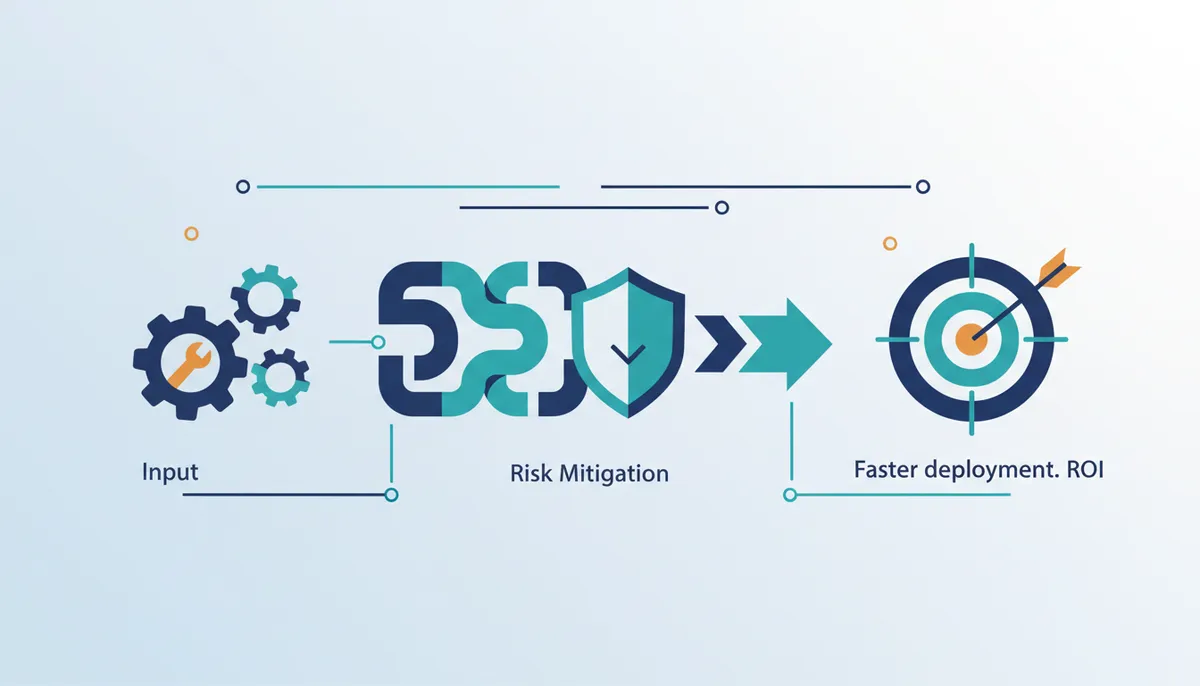
A managed facilitator navigates complex Area-based Internet Registry policies to execute compliant transfers across ARIN, RIPE, and APNIC regions. Unlike direct peer-to-peer attempts that often stall on documentation, this role provides a commercial layer atop regulatory frameworks to secure transactions. IPv4 Connect operates as an official facilitator for North America, Europe, Latin America, and Asia Pacific, serving over 2500 clients globally. The primary function involves bridging the gap between rigid RIR eligibility rules and flexible market needs. A facilitator manages this pre-approval verification while the registry reviews ownership rights. This approach contrasts with unassisted transfers where buyers risk rejection due to minor administrative errors. Managed services help mitigate the risk of failed transactions and ensure asset liquidity. Operators gain speed and certainty by delegating the transfer tickets and escrow coordination to experts. This strategy transforms a potentially months-long ordeal into a simplified acquisition process. 🌐
Real-World ROI of the 2, 3 Week Transfer Timeline
Accelerating acquisition to a 2, 3 weeks window converts potential revenue loss into immediate network capacity. Delays in securing IPv4 address blocks often force operators to lease expensive stopgap solutions or delay service launches entirely.
The managed workflow compresses traditional timelines through parallel processing of administrative and technical tasks. Buyers begin with a 1 Day examination period to inspect the asset before signing purchase agreements. This contrasts with inter-regional moves where coordination between registries can incur higher administrative costs due to complex submission requirements inter-RIR transfers.
| Phase | Duration | Activity |
|---|---|---|
| Examination | 1 Day | Buyer reviews block integrity |
| Registry Review | 5, 10 Days | RIR validates ownership and need |
| Completion | 1 Day | WHOIS record update |
Operators questioning when to buy should note that pre-approval steps often precede finding a specific source, creating an initial phase dedicated to needs assessment pre-approval. Should you use a transfer facilitator? The answer lies in risk mitigation; professional management ensures secure payment via escrow and handles the rigid documentation ARIN, RIPE, or APNIC requires.
Structured approaches help avoid the pitfalls of unverified peer-to-peer deals. The trade-off is a reliance on expert coordination, yet the cost of delayed deployment often far exceeds facilitation fees. Rapid finality allows businesses to activate services while competitors remain stuck in bureaucratic limbo.
Mitigating Policy Pitfalls via Escrow and Pre-Approval
APNIC pre-approval services allow buyers to verify eligibility before financial commitment, preventing wasted effort on non-compliant deals. Buyers can make secure payments to assigned client funds accounts via wire transfer or escrow.com, ensuring funds are released to the seller only same-day the IPv4 transfer completes.
Managed facilitation introduces a secure payment layer where buyers deposit funds into a assigned account via wire or escrow.com. This mechanism ensures sellers receive payment only after the internet registry confirms the IPv4 transfer. The alternative involves unsecured peer-to-peer transactions where trust alone governs the exchange of valuable digital assets.
Brokered markets provide the necessary infrastructure to navigate these complex regulatory frameworks safely. Unlike raw marketplaces, IPv4 Connect uses decades of expertise to manage documentation and vet ownership rights prior to listing. This approach eliminates ambiguity regarding legal title and ensures the IPv4 Address Block is clean from global blacklists.
Managed services help guarantee that pre-approval status matches the specific RIR requirements before any money moves. This strategy transforms a potentially fatal policy error into a routine administrative checkpoint. 🛡️
About
Georgy Masterov, a Customer Support Specialist at InterLIR, brings direct operational expertise to the complex world of IPv4 address block transfers. Currently studying Computational Business Analytics, Georgy combines academic rigor in finance and IT with daily hands-on experience managing IP resource transactions. At InterLIR, a Berlin-based marketplace specializing in the redistribution of unused IPv4 resources, he assists clients through every stage of the acquisition process, from initial negotiation to final RIR documentation. This practical involvement ensures a deep understanding of the regulatory nuances within ARIN, RIPE, and APNIC regions. His work focuses on delivering transparent and efficient solutions for businesses facing critical network availability challenges. By using InterLIR's automated processes and strict quality controls, Georgy helps organizations secure clean, reputable IP blocks without hidden fees. His unique blend of technical knowledge and customer-focused support makes him uniquely qualified to guide readers through the intricacies of modern IPv4 market dynamics.
Conclusion
The shift to a pure transfer market means operational continuity now depends entirely on acquiring clean, compliant assets rather than waiting for allocations that will never arrive. At scale, the cost of a single tainted block or failed policy check dwarfs any facilitation fee, creating a scenario where speed without rigorous validation becomes a critical liability. Organizations must treat IPv4 acquisition as a high-stakes compliance exercise where proving future need is just as vital as securing funding.
Buyers should mandate a pre-approval verification step with their target registry before initiating any financial transaction or technical integration. This specific condition eliminates the risk of purchasing infrastructure that cannot be legally transferred due to unresolved utilization thresholds or ownership disputes. Relying on unverified peer-to-peer deals invites catastrophic delays that stall product launches and fracture network planning.
Start this week by auditing your current IPv4 Address Block utilization reports against the strict 24-month projection models required for approval. This concrete action ensures your business case aligns with current eligibility standards before you engage sellers or brokers. By validating your internal data first, you secure a stronger position to negotiate and execute transfers that survive regulatory scrutiny. InterLIR specializes in navigating these complex validation frameworks to ensure your infrastructure investments remain secure and compliant.
Frequently Asked Questions
Buyers must demonstrate 50% usage over two years to satisfy registry mandates. This threshold proves operational necessity before any asset transfer can proceed legally.
Organizations need 80% utilization across current assignments to justify new space. Failing this specific metric causes immediate application denial regardless of market availability.
ARIN enforces a strict minimum transfer size of a /24 block. This unit represents the smallest divisible asset buyers can legally acquire in this jurisdiction.
Applications fail when buyers cannot justify need for up to 24 months. Registries reject cases lacking this long-term projection to prevent speculative hoarding of scarce resources.
Fully managed transfers typically complete within 2 to 3 weeks. This timeline avoids the delays caused by documentation errors common in unassisted direct transfer attempts.
References