RIPE644 Policy: Unifying Global IPv4 Markets
RIPE644 unites ARIN, RIPE, and APNIC markets, requiring 50% utilization within five years to secure global IPv4 assets efficiently.

ARIN requires proving operational need for 24 months. InterLIR verifies blocks against 100+ blacklists to ensure your transfer clears RIR scrutiny.
Moving IPv4 blocks from ARIN to RIPE NCC regions isn't a simple swap; it is a collision of two opposing regulatory philosophies.
With the global IPv4 transfer pool shrinking nearly 60% since 2015, leasing has become the only scalable strategy for modern network expansion.
Securing an ASN requires verified contracts with two ISPs and a $500 fee. InterLIR helps optimize your IPv4 holdings for these architectures.
ARIN enforces a 24-month need justification for transfers. InterLIR verifies seller authority and routing hygiene to secure your /24 block safely.
Prop095v003 restricts APNIC transfers to just 3 regions. InterLIR ensures your IPv4 moves comply with these strict bilateral mandates.
With only 3.9 million unallocated addresses remaining globally, the era of free IPv4 expansion is dead.
Only four RIRs currently support moving IP addresses and ASNs across regional boundaries. Inter-RIR transfers enable the specific movement of IP...
ARIN requires a /24 block minimum for end-users with two ASNs. Learn why strict technical justification and legal entity status are now mandatory.
With IPv4 still handling the majority of traffic, your vote matters. Learn how 3 open Board seats shape policy before the June 22 deadline.
The ARIN service area covers exactly 29 listed countries and territories, not just the US and Canada.
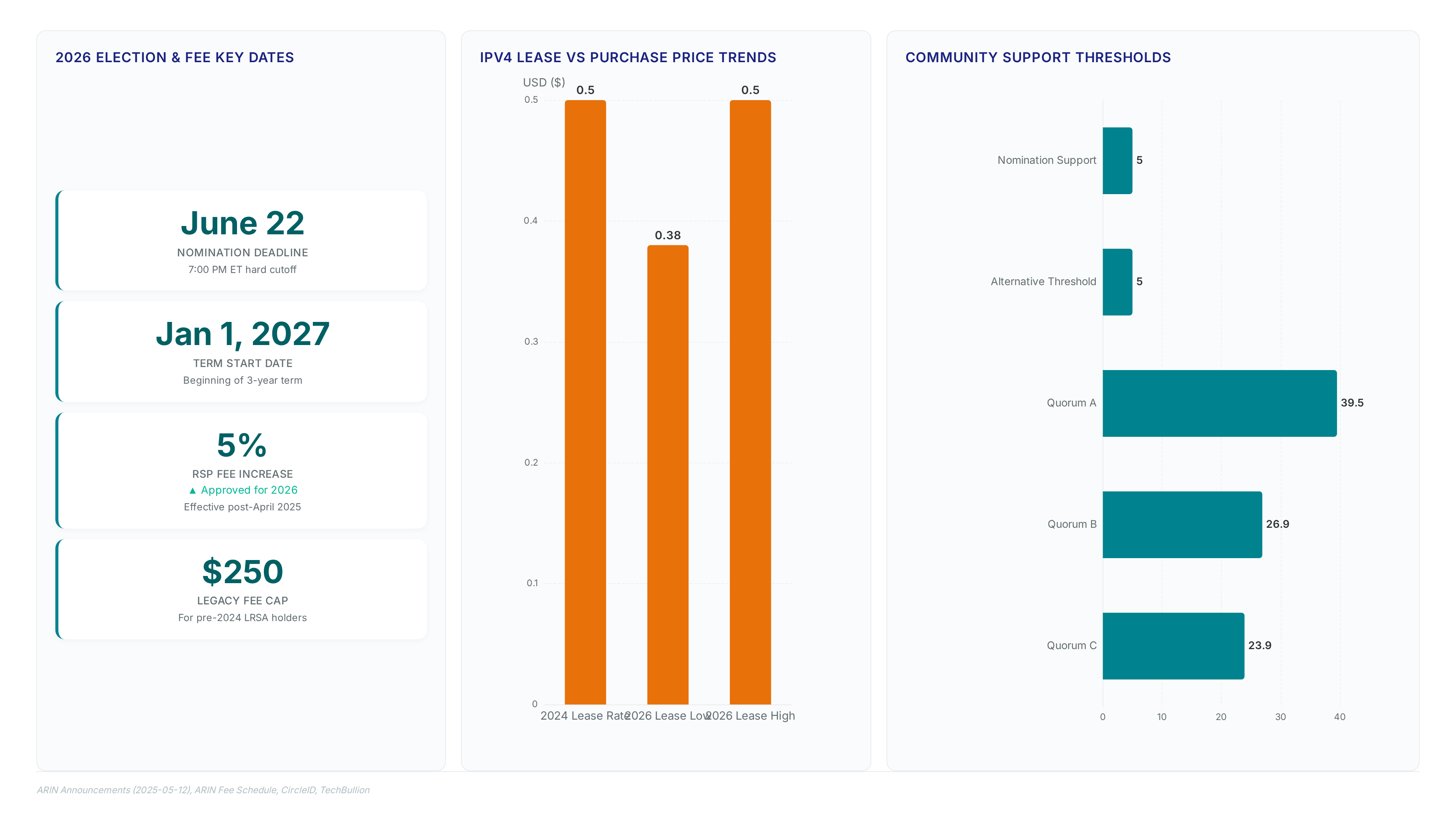
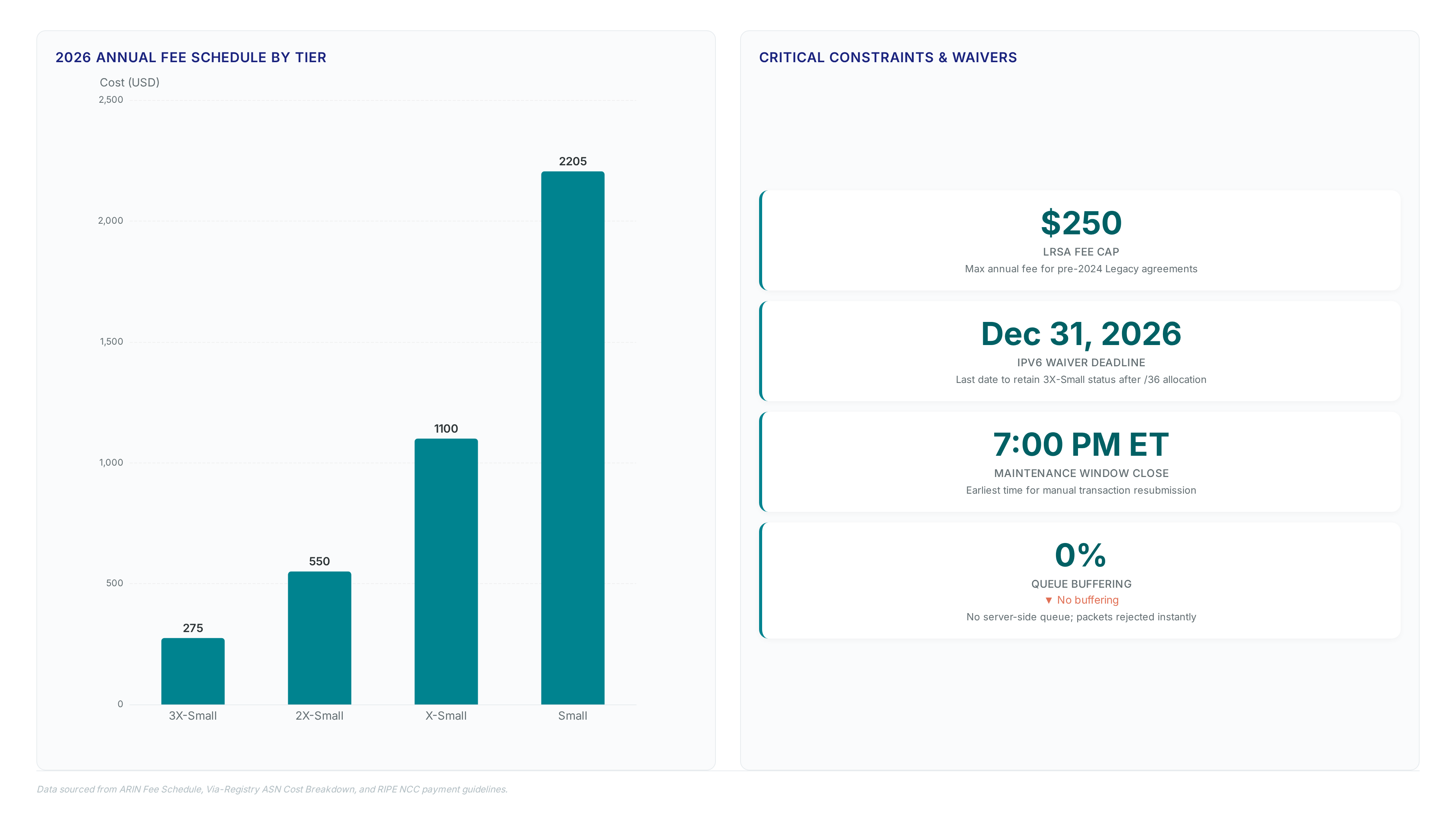
ARIN 2026 elections: self-nominations close 7:00 PM ET 22 June. Which body sets your fee and transfer rules, and how a holder should read the slate.
Leasing IPv4 blocks grants access to inventory but confers zero permanent registration rights or network autonomy.
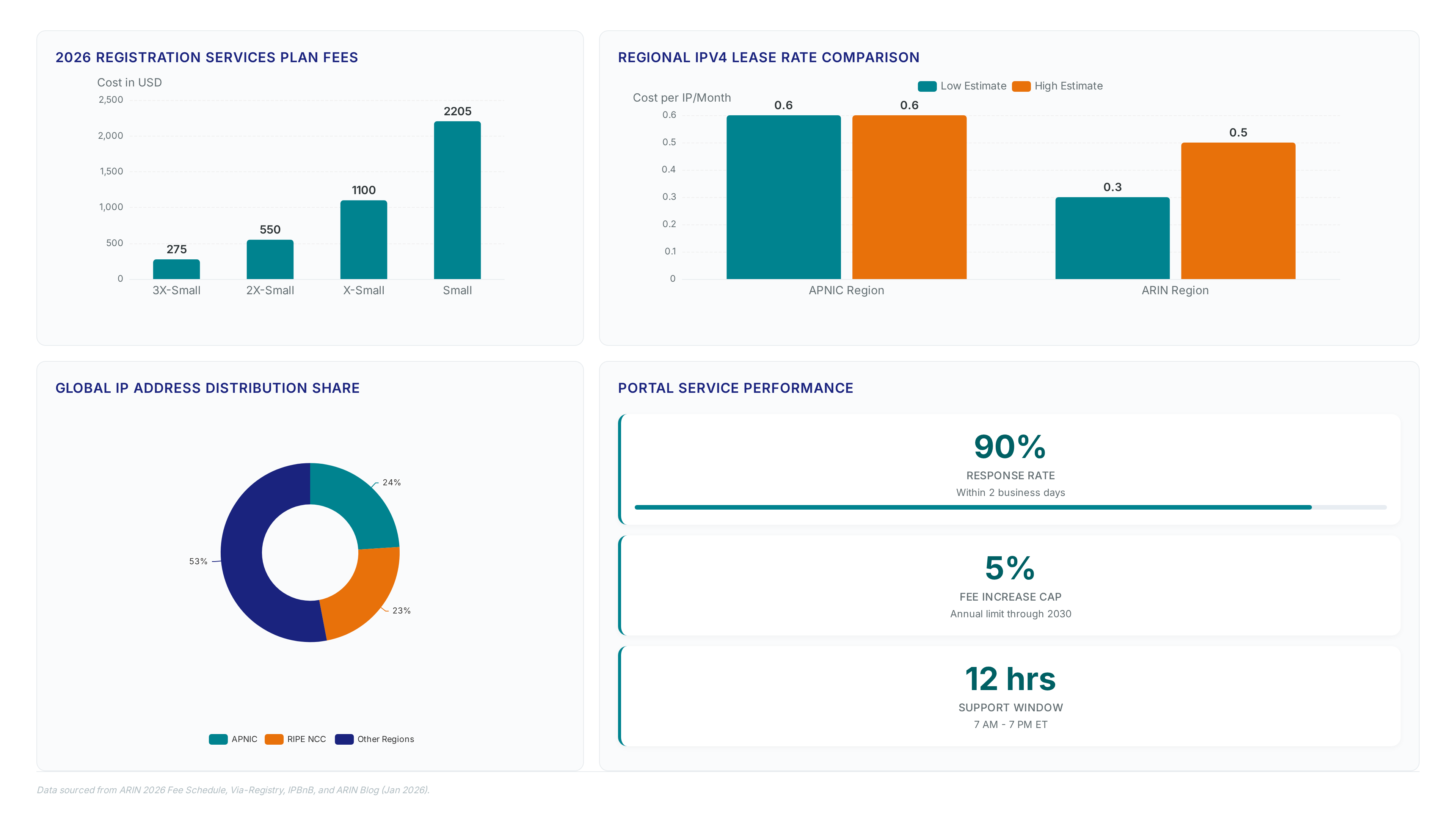
Renting IPv4 addresses starts at just $0.42 per IP monthly via InterLIR, bypassing the capital exhaustion of permanent acquisition.
ARIN's IPv4 Free Pool officially depleted on 24 September 2015. The registry still processes limited requests, but the rules have changed...
ARIN proposal ARIN-prop-339, published 8 Jan 2025, closes a logical gap in NRPM Section 2.4 by finally defining the Internet Service Provider.
ARIN charges a fixed $500 annual fee while peers use cost recovery. See how five distinct registries create conflicting rules for your IP assets.
The ARIN Grant Selection Committee enters year eight having funded over 25 projects. See how strict criteria drive technical improvements and outreach.
Navigate the fixed $500 ARIN processing fee and strict RIPE rules. InterLIR manages complex documentation to prevent costly cross-regional transfer rejections.
Four regions allow InterRIR transfers, but ARIN enforces a strict /24 minimum. Learn how to navigate these specific policy gaps without rejection.
ARIN requires 2,000 IPv6 addresses in 12 months for end-user justification. Learn how entity classification dictates your allocation path.
ARIN billing maintenance runs 8PM ET 1 May to 4PM ET 2 May 2026. What breaks, what keeps running, and how to verify the notice isn't a phishing copy.
The ARIN 57 Meeting Report is an archive, not a to-do list. An IPv4 support specialist reads it for the four dated deadlines that actually touch your address bu
ARIN 57 fee schedule for IPv4 holders: the $275 vs $250 gap, the IPv6 waiver deadline, transfer costs, and the Sept voting cutoff to act on.
RIPE's new reg-nr attribute publishes verified company registration numbers, but it's partial by design. How to read the reg-nr field without over-trusting regi
ARIN retired email recovery and added passkeys in May 2026. Why a single-admin ARIN Online account is now an operational liability, and the fix.
The 2026 ARIN Community Grant funds noncommercial registry and IPv6 work, $1,000–$20,000, deadline 14 June 2026. Which projects actually win, and which category
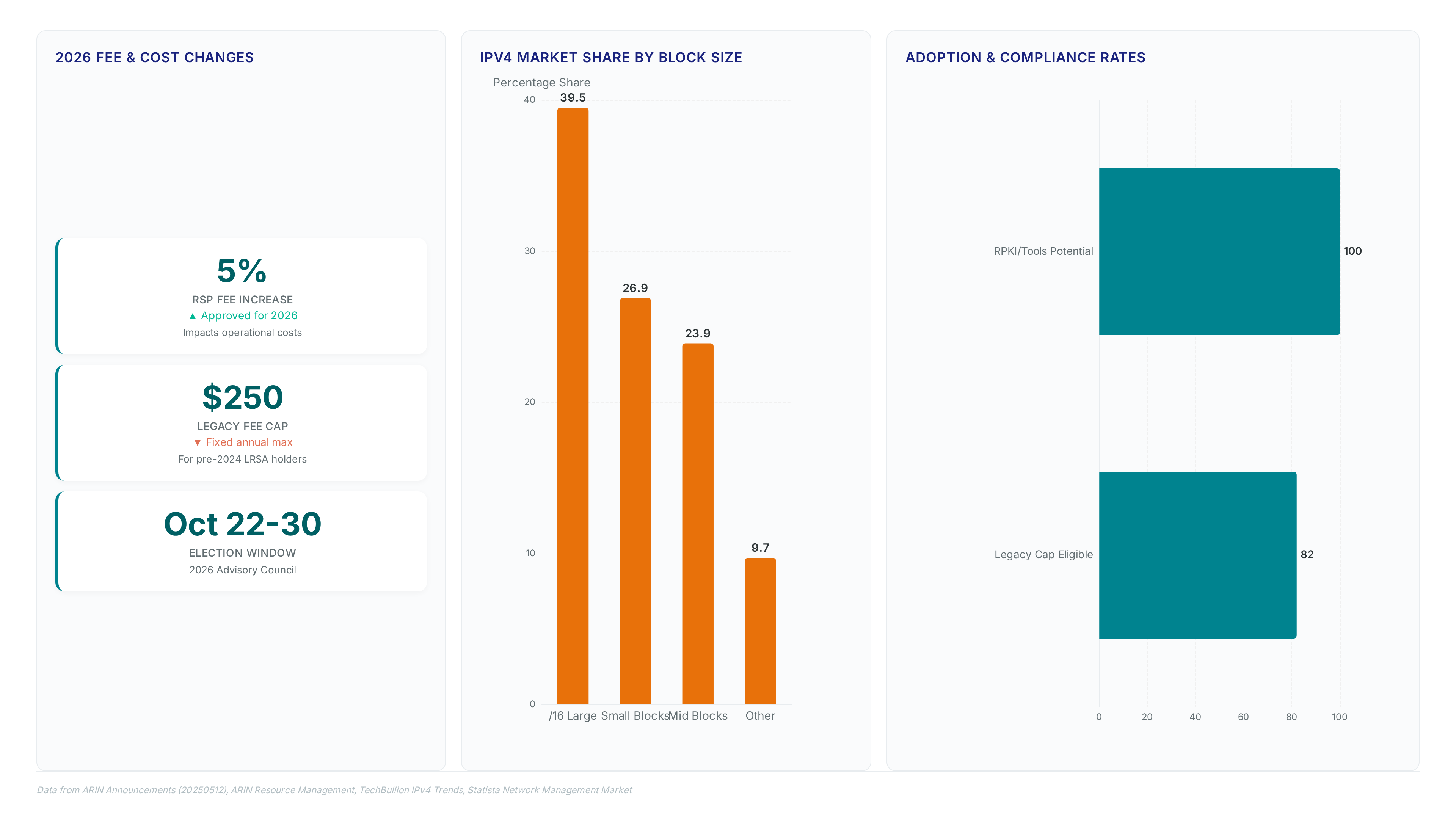
See how the 2026 NomCom vets candidates for three board seats managing 39.5% of global IPv4. A clear look at ARIN's election mechanics.
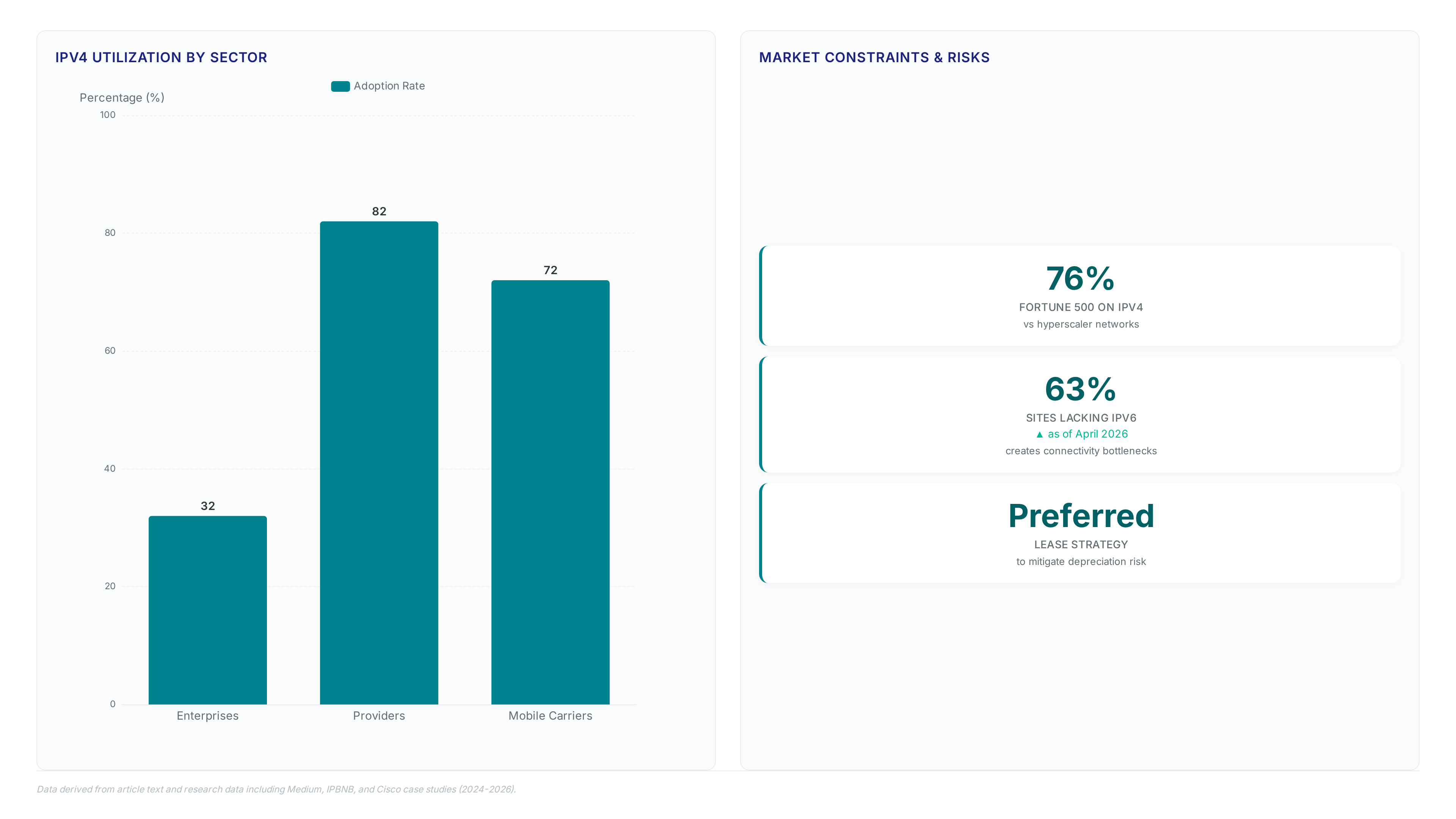
Real enterprise IPv6 sits at 12%. With IPv4 leasing at $0.38, the 2045 sunset date makes economic sense for now.
ARIN needs three volunteers by April 28 to guide policy. With IPv6 overtaking IPv4 by 2026, your governance role impacts costs.
Nikita breaks down ARIN's 8M records to show how 15 elected members shaped 2025 policy without the corporate spin.
ARIN filled 67 waiting list requests in April using 40 cleared blocks. Learn why verifying IP reputation is critical before you deploy.
Six volunteers decide ARIN's 2026 funding. Learn how this panel reviews 8M records to ensure technical merit wins over political favors.
ARIN's new 365-day ROA log targets routing hijacks. With 32% of global IPv4 here, secure your reassignments before reputation risks rise.
ARIN's 12-hour outage on March 28 discards RPKI updates instead of queuing them. Learn why waiting until 7:00 PM ET is your only safe option.
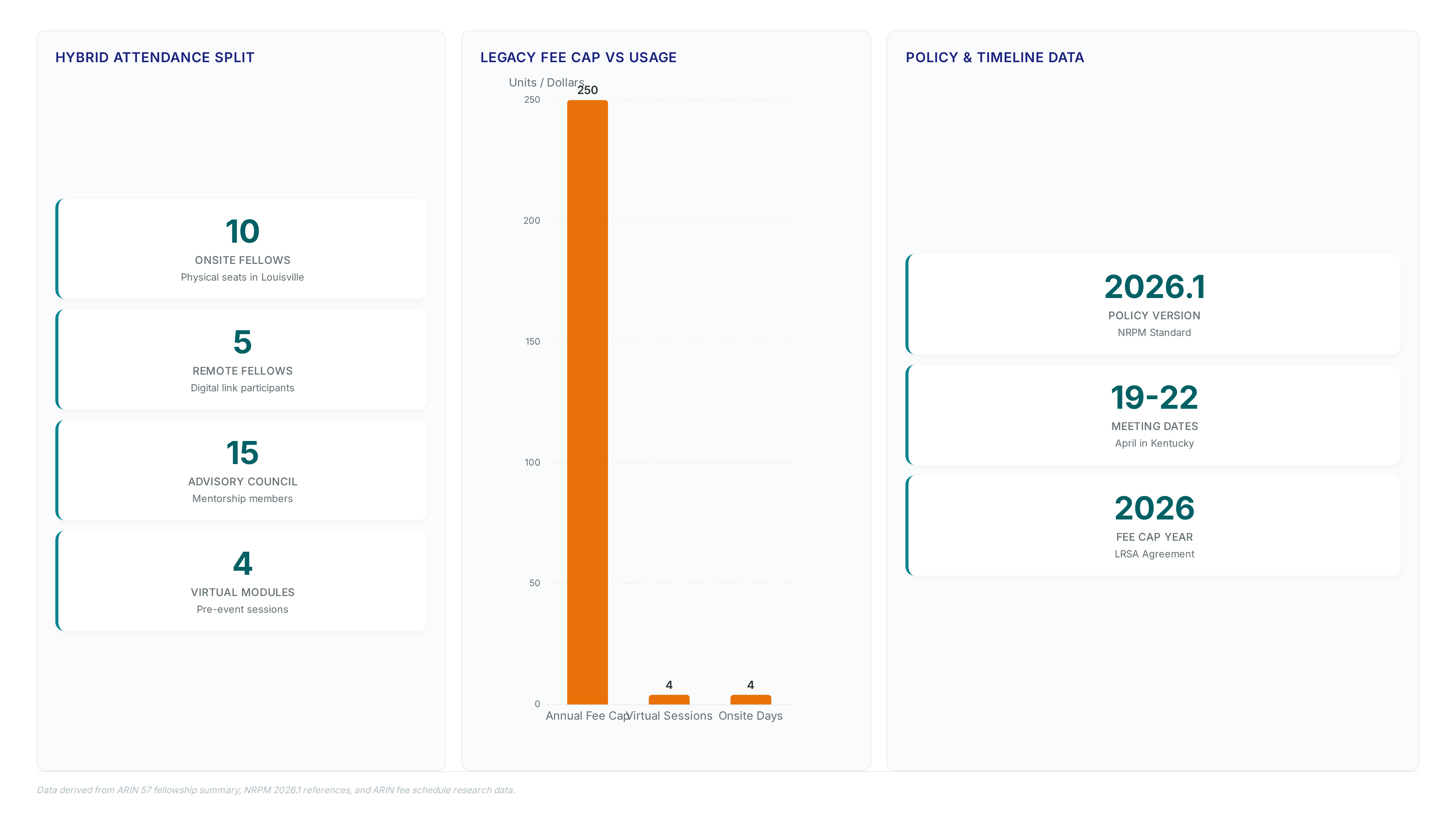
With IPv4 still carrying 60% of global traffic, the ARIN Fellowship trains 15 experts yearly to manage critical number resources.
NRPM 2026.1 went live on March 3, replacing the 2025 edition. Learn why section 8.5.1 changes mean strict new fees for your IP blocks.
Don't miss the March 17 deadline for ARIN 57. The $199 Galt House rate expires then, risking your spot in critical IPv4 policy debates.
North America holds 39.5% of global IPv4. I break down ARIN 57 sponsorship tiers to show where your budget actually buys policy influence.
With 8M records at stake, the 15-member ARIN Council needs your voice before the 2026.1 manual locks in new rules.
ARIN 57 meets in Louisville this April. With 74% of traffic now RPKI-secured, we analyze the gap between route counts and real safety.
ARIN cleared 149 requests in Jan 2026. I explain why the 388-day queue beats paying $90 per IP on the volatile private market.
Only 10 individuals join the 2026 ARIN Fellowship. I break down the Jan 26 deadline and why generic applications fail every time.
Five individuals, including two former Fellows, now shape ARIN policy. Learn how the Jan 7 selection impacts your 2026 governance strategy.