ASN Registration: Navigating the 5 RIR Rules
Secure your network identity by aligning with one of the 5 regional registries. InterLIR optimizes IPv4 redistribution within these strict mandates.

IPv4 transfer markets, BGP routing security, RPKI adoption, and ASN governance — analysis for network operators.
Secure your network identity by aligning with one of the 5 regional registries. InterLIR optimizes IPv4 redistribution within these strict mandates.
Over 105,000 ASNs now route traffic globally, a far cry from the 1989 sketch on "three ketchup-stained napkins" that started it all.
Map IP addresses to owners using 32-bit ASN data. Process bulk queries for up to 20,000 IPs to fix threat attribution gaps instantly.
Reveal network ownership and routing data instantly. Learn how AS15169 identifies entities for precise traffic management and cybersecurity analysis.
ARIN requires a /24 block minimum for end-users with two ASNs. Learn why strict technical justification and legal entity status are now mandatory.
Two ARIN Grant Selection Committee seats are open with the deadline extended to 1 May 2026. What the role demands and whether you should apply.
With IPv4 still handling the majority of traffic, your vote matters. Learn how 3 open Board seats shape policy before the June 22 deadline.
The ARIN service area covers exactly 29 listed countries and territories, not just the US and Canada.
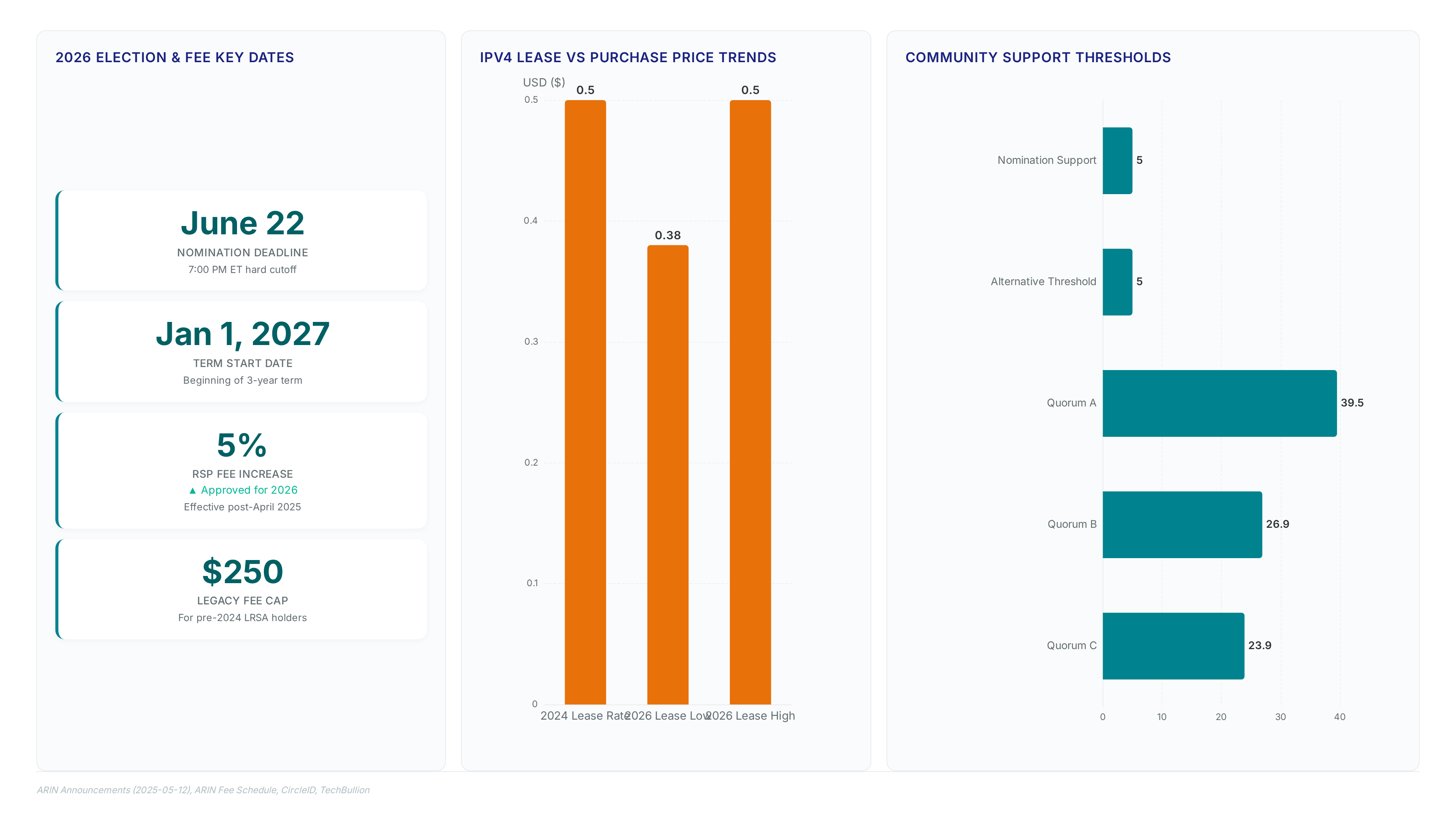
ARIN 2026 elections: self-nominations close 7:00 PM ET 22 June. Which body sets your fee and transfer rules, and how a holder should read the slate.
Transfers of 103/8 free pool addresses face a mandatory five year lockout period according to APNIC transfer conditions.
APNIC enforces a mandatory five-year holding period before IPv4 addresses from the 103/8 free pool can be transferred due to merger or acquisition.
APNIC publishes only preapproved IPv4 requirements, creating a verified list rather than an open market for specific address needs.