RPKI Certificates: How Five RIRs Secure Routing
RPKI replaces blind faith with cryptographic proof across five regional roots. Learn how this 2011 shift secures global IP allocation chains today.

Stop duplicate ROAs that break validation. Learn how cryptographically signed objects bind a prefix to one Origin AS for secure routing.
The €1,800 RIPE fee often masks hidden admin costs. Discover why smart operators choose flexible leasing over rigid direct membership today.
Since APNIC launched RPKI in 2010, five registries now enforce cryptographic certainty, replacing hope-based filtering with valid, invalid, or unknown states.
Ann Yong's 2026 analysis shows how resource gaps halt revenue. InterLIR secures your IP assets against policy shifts and registry failures.
IP scarcity drives the shift toward IP resource automation as businesses seek to monetize unused assets.
Resource Public Key Infrastructure (RPKI) stops BGP routing from guessing. It lets IP block holders cryptographically authorize specific AS numbers to...
Learn how RFC6480 defines the architecture to secure BGP routing. InterLIR provides verified IPv4 blocks that integrate smoothly into these validated...
RPKI replaces blind trust with cryptographic proof to stop route spoofing dead. Learn how operators validate BGP announcements against trusted ledgers.
An IP resource audit aligns records within the strict 24-month window to prevent asset forfeiture and ensure network continuity for operators.
A $200 non-refundable deposit starts the clock on IPv4 address transfers in the LACNIC region. This isn't just a fee; it's a filter.
APNIC draws a hard line for moving IPv4 addresses and AS numbers no longer under active management.
Start your LIR registration for €350.00 to own a /22 IPv4 block. Eliminate third-party dependency and manage your IP resources with full autonomy.
Over 375,000 Route Origin Authorizations exist, yet zero valid router certificates were published by June 2026, leaving BGP security incomplete.
Manage your global IP assets through the LIR Portal. Learn how a single mismatched attribute can stall an allocation and how to fix it.
Only four RIRs currently support moving IP addresses and ASNs across regional boundaries. Inter-RIR transfers enable the specific movement of IP...
ARIN requires a /24 block minimum for end-users with two ASNs. Learn why strict technical justification and legal entity status are now mandatory.
Transfers of 103/8 free pool addresses face a mandatory five year lockout period according to APNIC transfer conditions.
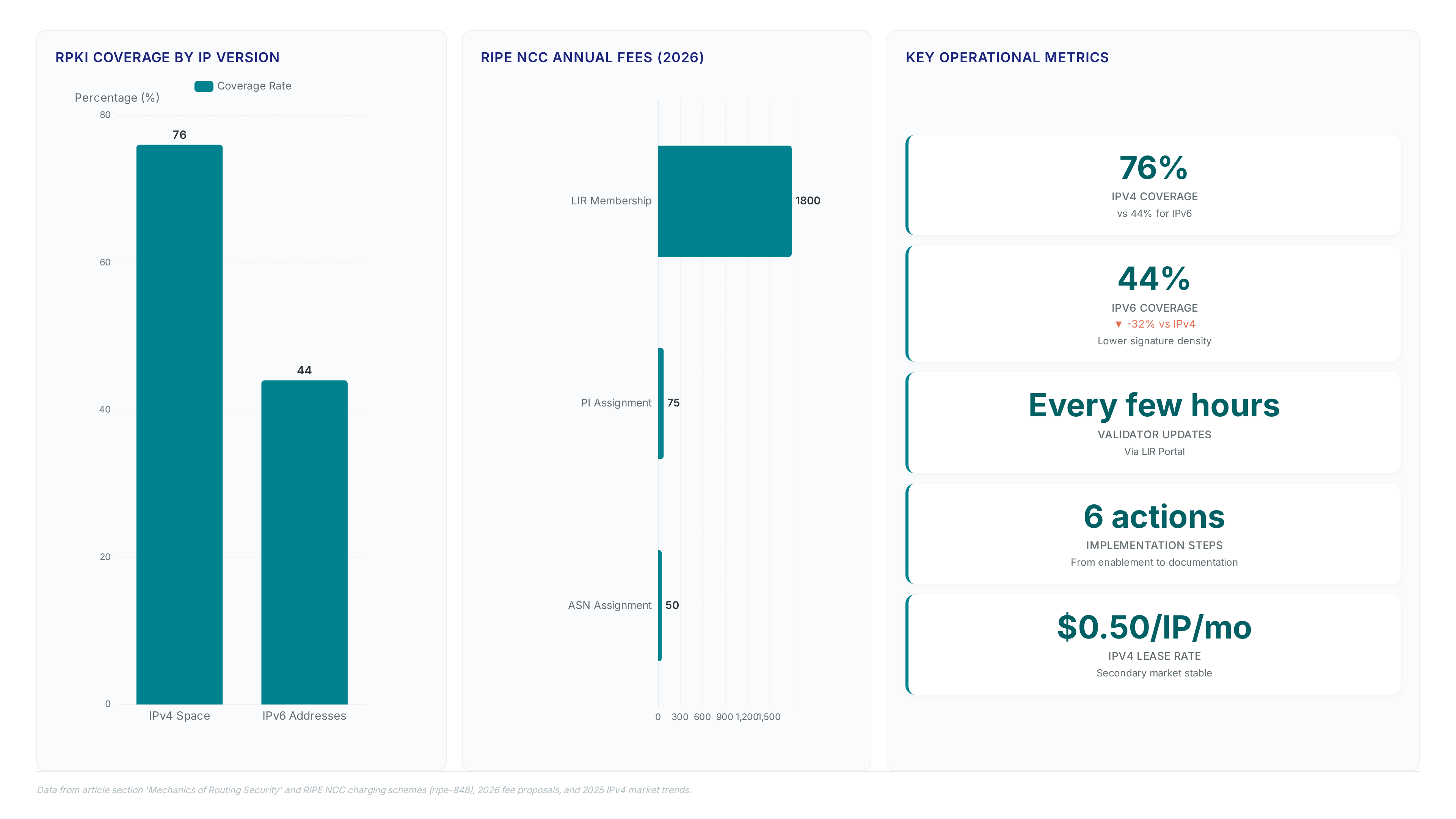
RIPE's May 2026 update shows 841 LIRs waiting 536 days and IPv6 ROA coverage at 44%. Why the waiting list is a supply signal, not a queue, and what to do instea
Discover the fixed €1,800 annual fee and €1,000 signup cost for RIPE NCC membership. Learn why direct ownership beats upstream dependency today.
Ann Yong's 2026 analysis shows how resource gaps halt revenue. InterLIR secures your IP assets against policy shifts and registry failures.
Learn how new condition keys restrict access by VPC ID and firewall priority to prevent teams from breaking DNS configurations.
AI cuts manual routing errors and speeds response by validating ownership against RIPE data before forwarding abuse reports to owners.
Stop paying $0.045 per GB for NAT data processing. Learn how resource gateways resolve overlapping IPs without extra load balancers.
With global IP prefix coverage reaching a tipping point, operators must move beyond tools to master X.509 certificate management for true routing security.
The May 8, 2026 update locks down the RIR Governance Document. I break down the 5 distinct mailing lists shaping these critical global policy shifts.
AFRINIC is the last RIR with free IPv4, and an institution in legal crisis. Why operators must price registry risk before sourcing from Barrett's pool.
ARIN 57 fee schedule for IPv4 holders: the $275 vs $250 gap, the IPv6 waiver deadline, transfer costs, and the Sept voting cutoff to act on.
I break down the RIPE 2026 proposal where the base fee stays at €1,800 but independent assignments rise to €75. See how Option A affects your LIR.
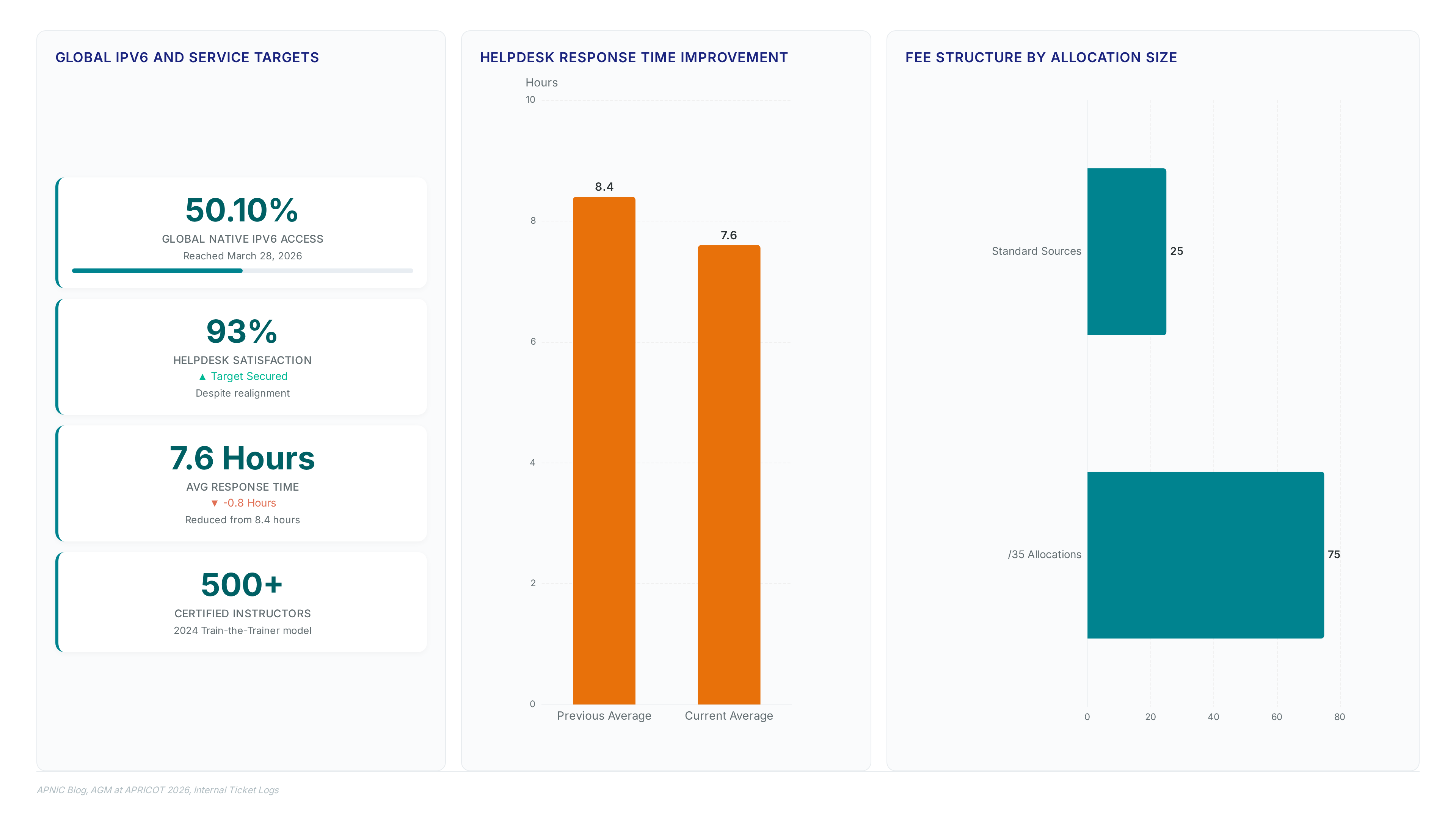
APNIC growth hit just 1.6% in 2025. I analyze how new security pillars and 7.6-hour support times impact your IPv4 strategy today.
NRPM 2026.1 went live on March 3, replacing the 2025 edition. Learn why section 8.5.1 changes mean strict new fees for your IP blocks.
Cut MTTR by 75% using service-managed gateways. Connect your AWS DevOps agent to private VPC resources without public IPs or extra encryption.
With mobile traffic hitting 64%, rigid global governance frameworks are essential. I break down how new policies protect our shared resources.
With 8M records at stake, the 15-member ARIN Council needs your voice before the 2026.1 manual locks in new rules.
MyAPNIC now supports RFC 9323, replacing fragile email chains with automated trust. Say goodbye to manual PDF reviews for good.
The November 2025 update lets you share VPC origins across accounts. I show how to keep security tight while cutting management overhead.