Route origin rules: enforce crypto route checks
RFC 6483 defines 3 validation states to filter bad routes. InterLIR ensures clean BGP objects for secure IPv4 infrastructure.

BGP routes propagate globally within minutes, leaving little time for manual fixes. Learn why automated RPKI validation is now mandatory for stability.
Recent studies confirm ROA objects are rapidly increasing as operators prioritize BGP security to stop hijacks before traffic drops.
NIST SP 800-189 Rev. 1 cuts through the noise: prefix hijacking and route leaks are the primary engines of denial of service.
Pavel Odintsov notes engineers fragment workflows across multiple public tools. Self-hosted platforms consolidate live routing data, RPKI validation
A significant majority of global IP prefixes now possess cryptographic attestation, proving that ROA adoption has reached a critical majority.
Over 400 registrants attended ThaiNOG 8, proving local engagement drives routing security adoption better than distant mandates for networks.
RPKI uses cryptographic certificates to bind IP prefixes, stopping hijacks before they spread across global networks in 2026.
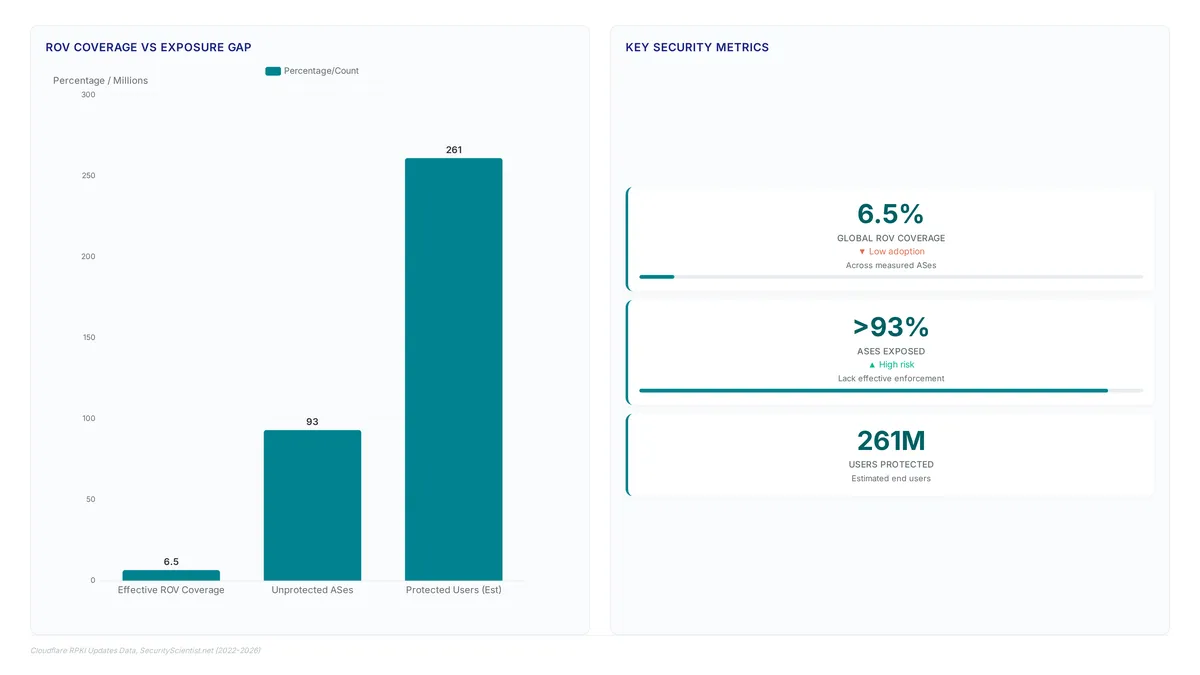
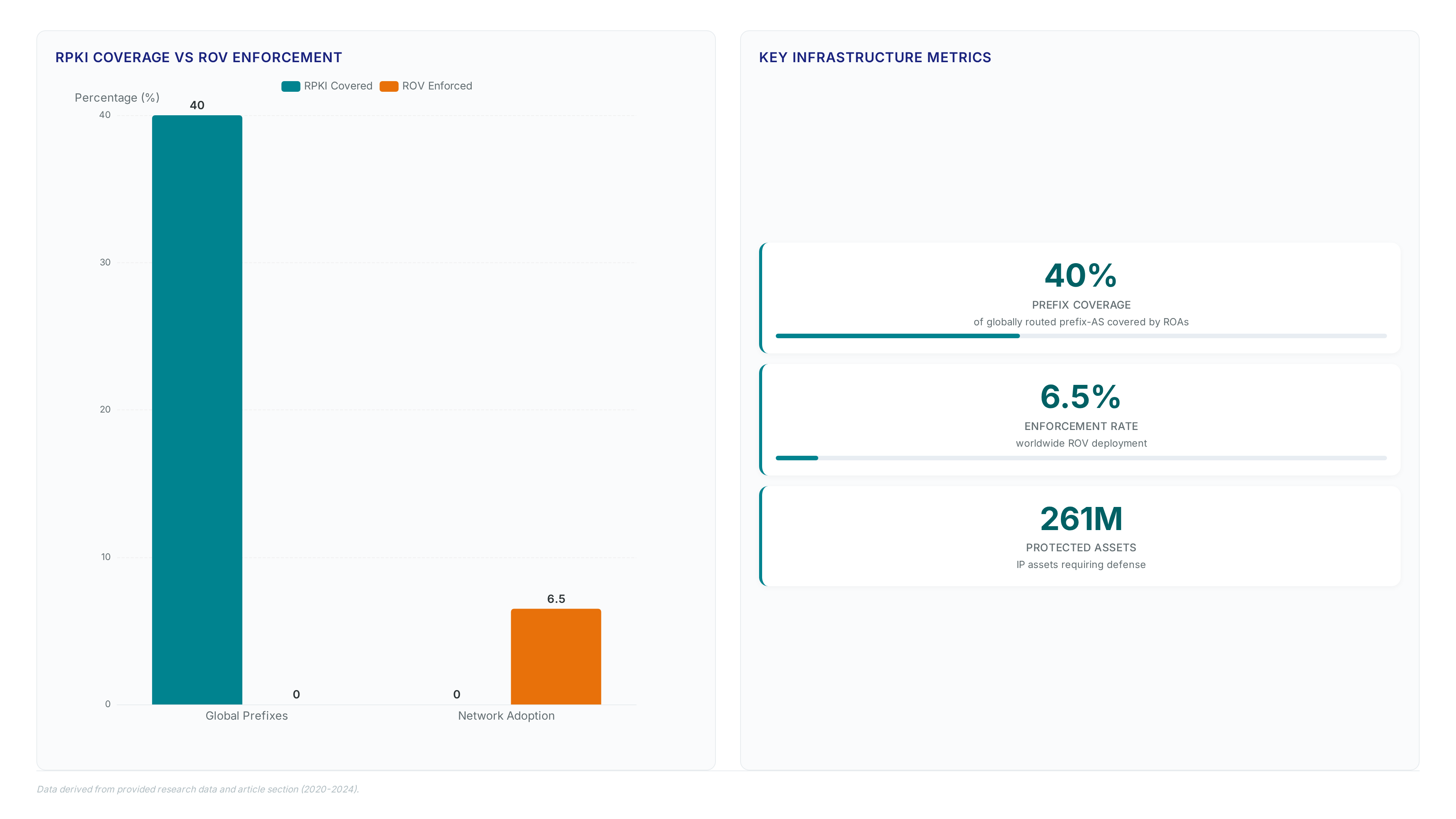
With only 6.5% of users protected, learn to validate origins and block invalid routes before a hijack compromises your clean IPv4 reputation.
Resource Public Key Infrastructure (RPKI) stops BGP routing from guessing. It lets IP block holders cryptographically authorize specific AS numbers to...
Stop route leaks by validating origin against five regional registries. Secure your specific IP prefixes with cryptographic proof today.
With only 34% of networks using ROAs, max length errors cause invalid routes. InterLIR audits your IP resources to prevent these costly BGP outages.
Stop burning cash on bad IP blocks. Validate geolocation and routing before signing any lease to avoid the 2019 RIPE NCC scarcity risks.
Thousands of routes remain RPKI invalid as of May 2026, proving legacy trust models cannot secure global BGP against hijacking.
Over 60% of IPv4 routes now use RPKI. Learn to configure Junos OS routers to validate prefixes and block accidental leaks today.
With 60% of routes covered, the remaining 40% face accidental misorigination risks. Learn how strict ROA policies enforce cryptographic validity.
Stop blind acceptance of ASNs. Learn to enforce RFC 6480 standards and filter invalid routes using cryptographic signed objects in minutes.
RPKI deployment scrutiny intensified in September 2024 as the industry evaluates adoption rates against persistent BGP vulnerabilities.
With 56% of RPKI validators flawed, blind trust in routing defense is risky. InterLIR ensures clean BGP and secure IPv4 resources for your network.
Over 68 million BGP announcements lack validation. Learn how RPKI ROV filters unknown routes to prevent hijacks and secure global routing tables today.
Learn how RPKI validation prevents the type of routing errors that caused the 2019 Cloudflare outage affecting millions of users globally.
As of June 2026, the global count of valid router certificates for BGPsec sits at exactly zero. Path validation remains theoretical.
With only one-third of routes signed globally, technical fixes like RPKI stall without addressing organizational inertia and skills gaps.
Stop static filtering failures. Learn how RPKI validation secures the route chain against hijacks, referencing the June 17, 2026 outage.
With global IP prefix coverage reaching a tipping point, operators must move beyond tools to master X.509 certificate management for true routing security.
With 393,344 IPv4 ROA objects published, route origin validation replaces blind trust with cryptographic proof to stop prefix hijacks effectively.
APNIC's Hangzhou RPKI mirror with NNIX cuts validation latency for Chinese operators, but a faster fetch of a 'not found' verdict protects nothing until ROAs ar
With RPKI valid traffic at 62.5%, legacy IRR fails. Learn how active path verification stops middle ASNs from causing global outages.
With only 40% of networks holding valid ROAs, your routing is exposed. Learn how cryptographic validation stops multimillion-dollar breaches now.
With IPv4 validity at 65.5%, ignoring RPKI risks traffic rejection. Learn how to deploy ROA and ASPA objects before enforcement deadlines hit.
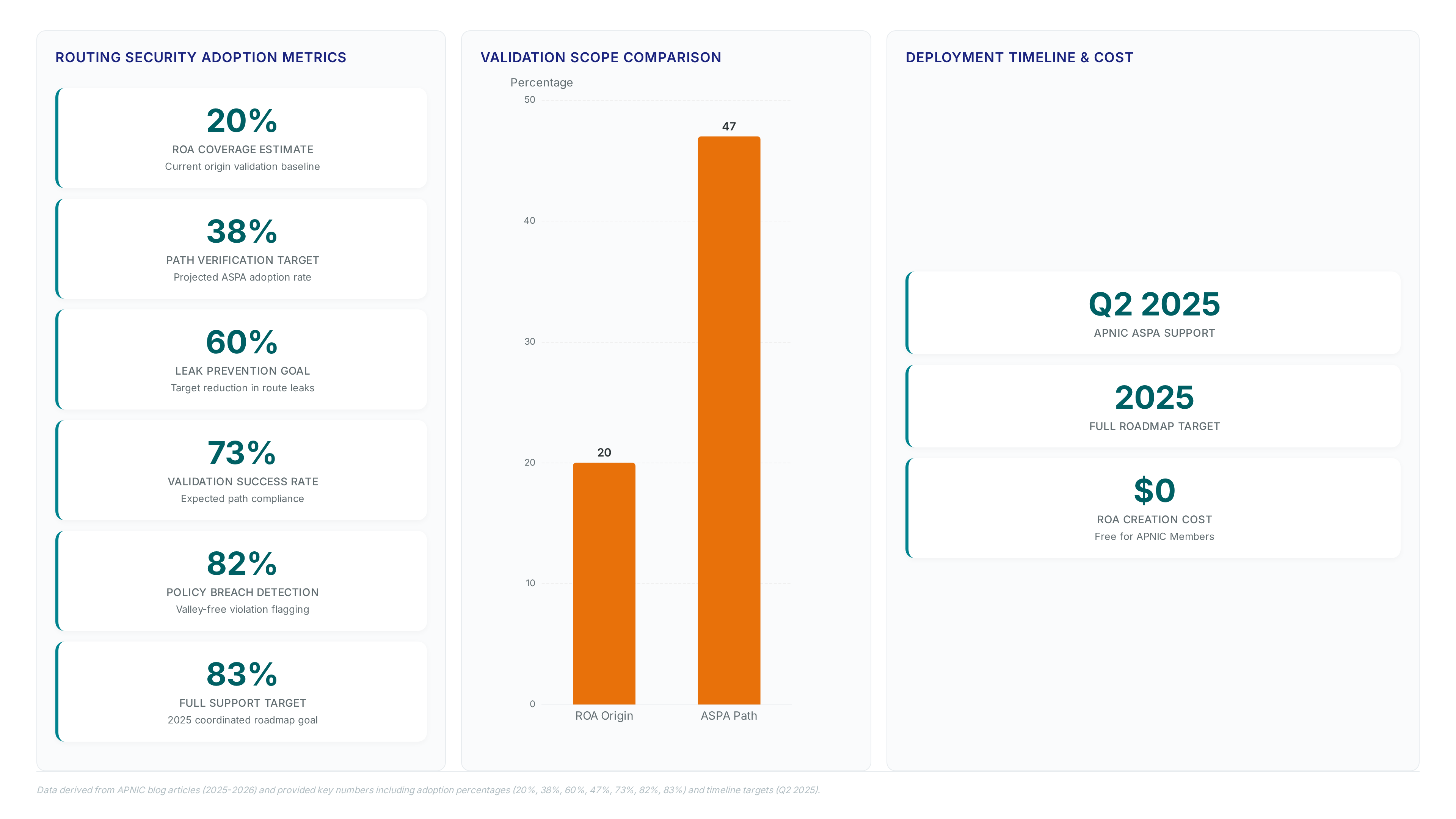
In 2025, forged documents bypassed crypto checks. With only 38% of IPv4 prefixes enforcing validation, identity fraud now drives route hijacking.
RPKI validation stops 820k daily IoT attacks by 2027. Learn why three security invariants prevent 65% of routing breaches today.
Cloudflare's ASPA rollout targets the gap where 53% of IPv4 prefixes remain unchecked, securing paths beyond origin validation.
See how Jakarta turned 1% adoption into near-total coverage. Learn why 84% of networks still skip RPKI enforcement despite clear ROI.
Sparkle enforced active path validation on Feb 3, 2026. Stop relying on unsigned IRR lists for your blackhole requests today.
With 74% of traffic on RPKI routes, skipping BLACKHOLE tags creates critical risks. Learn why strict validation stops more-specific hijacks today.
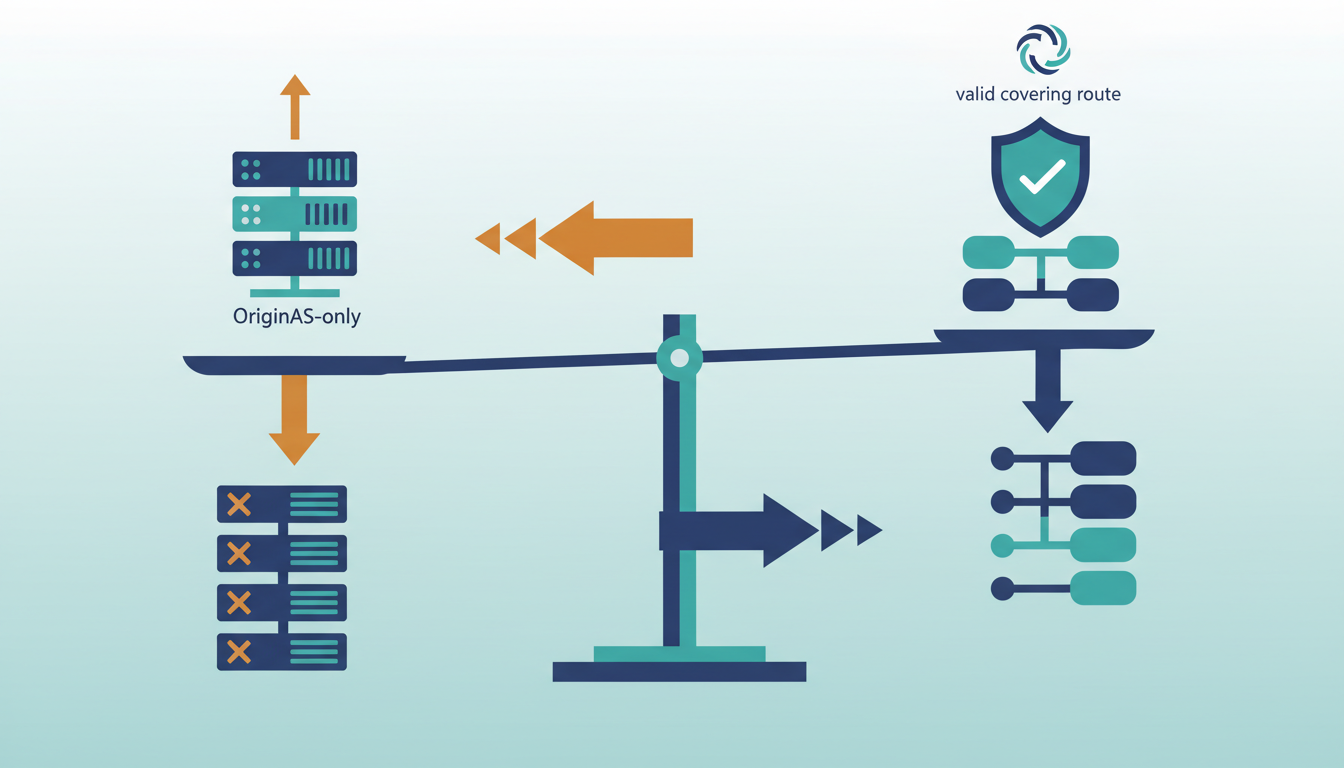
Secure your routes with strict originASonly checks. PAM 2024 research shows IXP servers stay vulnerable without proper ROV ordering.
With ASPA Customer ASIDs up 539%, we see a real shift from origin checks to path security, though fragmented signing strains the system.
ASPA records surged 539% in 2025, yet route coverage lags. Learn why fragmenting ROAs slows validation and hurts your network security today.
ARIN 57 meets in Louisville this April. With 74% of traffic now RPKI-secured, we analyze the gap between route counts and real safety.