IPv4 Blocks: Why Leased Addresses Break Mail
Most VPS admins ignore routing until email breaks. Learn why leased 32bit IPv4 blocks demand precise A records and PTR settings to stay deliverable.
Cloudflare's 1.1.1.1 ranks as the fastest DNS globally, yet it only secures queries. Learn why full traffic encryption requires more than just changing IP...
RIPE NCC allocates €5 million to exit US hyperscalers, prioritizing data sovereignty over public cloud convenience amid rising geopolitical risks.

Without a public ASN, ISPs strip private numbers, erasing your path. Learn how 4-byte ASNs up to 4,294,967,294 secure global routing.
The global IPv4 secondary market now exceeds billions of dollars annually. Address space functions as critical capital, not a mere utility.
Engineers fragment workflows across multiple public tools. Self-hosted platforms consolidate live routing data, RPKI validation and AI querying on-premises.
RIPE NCC caps initial IPv4 allocations at exactly 1,024 addresses. InterLIR helps you manage these finite assets without bureaucratic rejection.
Explore the 16-bit range limits where 64,512 marks private use. Learn how EBGP splithorizon prevents loops in global routing tables.
Leasing a /24 block costs between $128 and $384 monthly, making IPv4 address access an operational expense rather than a capital asset.
With 80,000 active systems globally, choosing the right autonomous system number matters. See how private and public formats define your routing boundaries.
RPKI uses cryptographic certificates to bind IP prefixes, stopping hijacks before they spread across global networks in 2026.
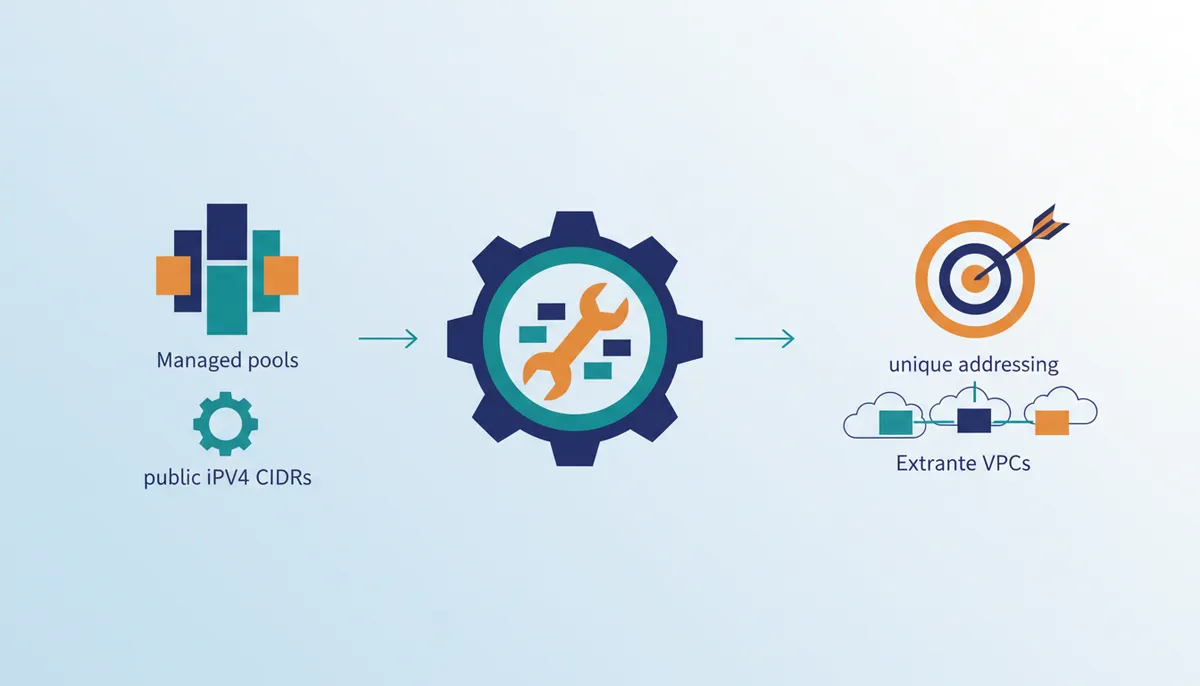
Overlapping RFC 1918 spaces break routing. Use public IPv4 blocks to bypass NAT limits and secure partner access without renumbering networks.
Africa holds just 2.2% of global ASNs, forcing banks to rely on upstream operators. InterLIR helps enterprises secure direct routing identity.
With roughly 80,000 ASNs globally, learn when your network needs a unique ID for BGP. InterLIR provides clean IP resources and expert LIR support.
With over 4 billion identifiers now active, precise ASN management prevents routing leaks. InterLIR ensures your network traffic reaches its destination.
Over 105,000 ASNs now route traffic globally, a far cry from the 1989 sketch on "three ketchup-stained napkins" that started it all.
Ann Yong's 2026 analysis shows how resource gaps halt revenue. InterLIR secures your IP assets against policy shifts and registry failures.
Akamai leads with 79.0 Tbps of deployed capacity, proving public peering remains vital for regional traffic distribution and cache efficiency today.
AWS charges $0.005 per hour, making an idle IP cost exactly $43.80 annually. Discover why treating addresses as infinite resources is over.
By Q4 2026, general availability brings private origin services, allowing WAF rules on internal APIs without inbound firewall exceptions.
With only 4,294,967,296 unique IPv4 addresses, treating them as mere utilities ignores critical market scarcity and economic reality.
AWS bills public IPv4 by the hour. I show how VPC Block Public Access secures your 5 IPv6 CIDR blocks without extra fees.
FIS consolidated 13,000 endpoints to stop public internet traversal. Learn how this shift secures traffic and reclaims scarce RFC 1918 address space.
Build a compliant VPC with private subnets in 3 zones. Keep data off the public internet while integrating private sources securely.
The 2025 IANA report reveals how 15 community reps fight skills gaps before they break global numbering stability.
Cut MTTR by 75% using service-managed gateways. Connect your AWS DevOps agent to private VPC resources without public IPs or extra encryption.
Cut public IP exposure with zero added cost. By 2026, private origins become mandatory for zero-trust security architectures.