IPv4 Transfer Rules: Navigating InterRIR Policy Gaps
InterRIR transfers demand strict policy compliance from both source and recipient registries to remain valid and avoid voided operations.

ARIN requires proving operational need for 24 months. InterLIR verifies blocks against 100+ blacklists to ensure your transfer clears RIR scrutiny.
Since 2018, brokers have defined the IPv4 market. Learn how leasing replaces ownership to meet immediate cloud demands without RIR delays.
Secure IPv4 transfers in 2026 require strict due diligence to avoid contested space. Learn how InterLIR ensures legal compliance and clean title.
Selling IPv4 addresses requires navigating complex RIR transfer processes to ensure legal ownership changes and maximum asset recovery.
APNIC enforces a strict 30-day window for IPv4 transfers. Learn how InterLIR's automated brokerage prevents request voids and ensures policy compliance.
Convert dormant IPv4 blocks into capital while navigating RIR transfer rules. InterLIR ensures secure, compliant sales for your unused network assets.
In 2026, blind trust in market availability is a liability. The operational reality for network infrastructure demands rigorous validation of IPv4...
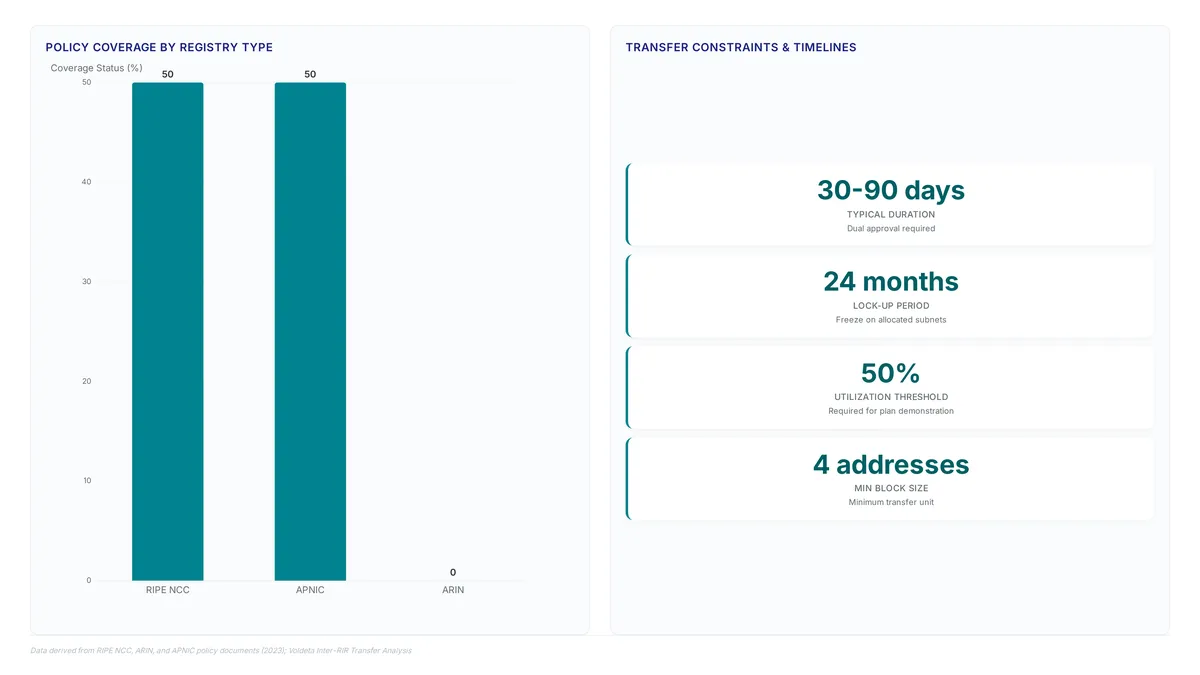
APNIC recipients must detail a 24-month usage plan for transferred historical IPv4 space to avoid compliance issues in legacy frameworks.
Moving IPv4 blocks from ARIN to RIPE NCC regions isn't a simple swap; it is a collision of two opposing regulatory philosophies.
The IPv4 address market has shifted from bidding wars exceeding $50 per unit to a moderated system in 2026.
Prices above a nominal threshold per address set the IPv4 market during past bidding wars, but that era has ended.
Organizations can acquire IPv4 addresses starting at a competitive rate per IP through InterLIR's marketplace, a baseline that defines current entry...
Legacy blocks from the 2003 ERX project need specific validation. Learn why standard APNIC workflows fail for these historical internet resources.
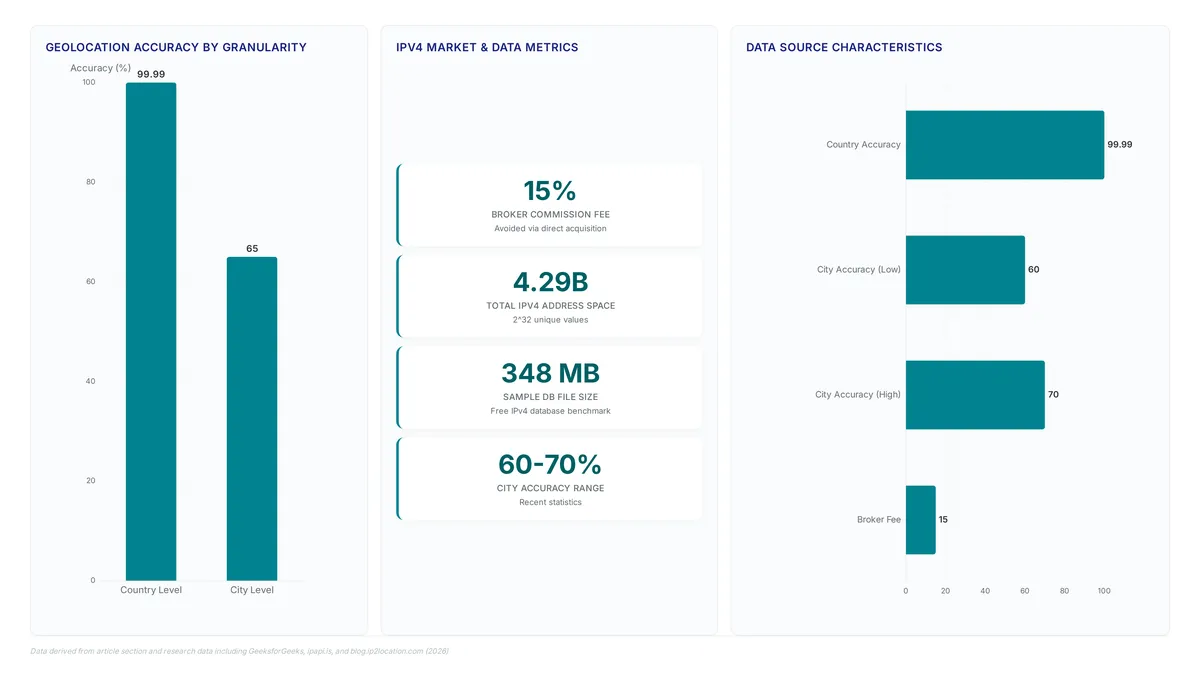
With 4,294,967,296 total addresses fixed, learn how APNIC transfers and leasing models help organizations secure IPv4 space legally.
AFRINIC charges a one-time allocation fee based on IPv4 block size, unlike flat-rate regions. Learn how this variable structure impacts your budget.
ARIN enforces a 24-month need justification for transfers. InterLIR verifies seller authority and routing hygiene to secure your /24 block safely.
The 2022 IPv4 market saw block transactions drop 28% while total addresses transferred surged 35%, per IPv4.Global data.
APNIC draws a hard line for moving IPv4 addresses and AS numbers no longer under active management.
Prop095v003 restricts APNIC transfers to just 3 regions. InterLIR ensures your IPv4 moves comply with these strict bilateral mandates.
IPv4 transfers demand strict eligibility checks and RIR approval to legally move addresses between parties.
Secure valid ownership by following RIR protocols for your /24 transfer. Learn to verify IP reputation and avoid blacklisting risks today.
InterLIR manages dual-policy compliance checks for both RIRs, eliminating the rejection risks found in standard forms during complex transfers.
IPv4 addresses drawn from the 103/8 free pool carry a mandatory five-year transfer restriction following delegation, according to APNIC data.
IRINN imposes fees on transferred IPv4 resources, while APNIC routes InterRIR requests across 56 economies. Learn the specific costs.
APNIC transfers fail without recipient acknowledgment within 30 days. Learn how preapproval validates needs for 24 months to prevent expiration.
LACNIC charges exactly USD 200.00 for its one-year IPv4 listing. Learn how Policy 2.3.2.18 separates admin validation from commercial deals.
Cut IPv4 transfer time to under 24 hours while maintaining strict registry compliance and preventing hijacking with verified ASN context.
Extreme scarcity defines the current IPv4 market. Learn how block sizes from /24 to /17 impact your acquisition strategy and final costs.
Navigate the 2026 IPv4 market with a strict 5-step workflow. InterLIR ensures clean blocks and full RIR compliance for secure transfers.
APNIC mandates a 5-year hold on 103/8 pool addresses before transfer. Learn how this rule blocks speculation and shapes current market liquidity.
Exactly four registries support global IPv4 moves. Learn the specific fee structures and documentation needed to prevent transaction stalls.
Year-to-date figures for 2026 show 2,807,296 inbound IPv4 addresses moving into the RIPE NCC region.
InterRIR IPv4 transfers require dual registry consent, creating a mandatory 4 to 8 week window that internal moves simply do not face.
In 2026, RIPE saw 279 inbound vs 22 outbound transfers. Learn the dual-compliance rules needed to secure global IPv4 space today.
Transfers of 103/8 free pool addresses face a mandatory five year lockout period according to APNIC transfer conditions.
APNIC enforces a mandatory five-year holding period before IPv4 addresses from the 103/8 free pool can be transferred due to merger or acquisition.
Discover why 2026 buyers prefer fixed-price IPv4 deals over volatile auctions. Learn ARIN and RIPE validation steps for secure, clean block transfers.
Move IPv4 addresses across the five regional registries. Learn the strict LIR rules and justified need required for a legal InterRIR transfer today.
APNIC identified 54 million unadvertised addresses. Learn why preapproval is vital before seeking an IPv4 source to avoid deal cancellation.
With 2026 lease prices adjusting due to rising supply, recurring revenue models now outperform one-time IPv4 liquidation strategies.
The 2026 IPv4 market favors calculated private negotiation over auction frenzy. Learn how escrow services and RIR protocols secure your block transfer today.
Bidding wars are out. IPv4 operators now demand fixed-price models to lock in procurement costs and kill speculation.
Over 33 million IPv4 addresses moved via leasing recently. Discover how automated platforms convert dormant blocks into recurring revenue streams.
Policy LAC-2019-01 broke the mold. Before 2019, moving IPv4 address blocks across regional borders usually required a corporate merger or acquisition.
Buying an IPv4 address in 2026 costs between $18 and $45 per IP, while leasing runs $0.30 to $0.50 monthly.
ARIN manages about 100 /8s, yet cross-border deals stall on policy. Learn how strict chain of custody rules shape the global IPv4 market today.
A clean /24 IPv4 block costs between $9,000 and $15,000 in 2026. This pricing reality confirms that IPv4 ownership has shifted from a technical...
Inter-RIR transfers take between 4 weeks and 10 months to complete depending on the registries involved.
Stop paying inflated broker fees for IPv4 blocks. With only 4,294,967,296 addresses total, InterLIR ensures clean title history and direct seller access.
Four regions allow InterRIR transfers, but ARIN enforces a strict /24 minimum. Learn how to navigate these specific policy gaps without rejection.
APNIC imposes a mandatory 5-year lockup on IPv4 transfers from the free pool, trapping capital and favoring legacy holders over new market entrants.
Over 56,000 transactions prove the market works, but missing Deed of Covenant details causes immediate rejection. Learn the exact steps to validate.
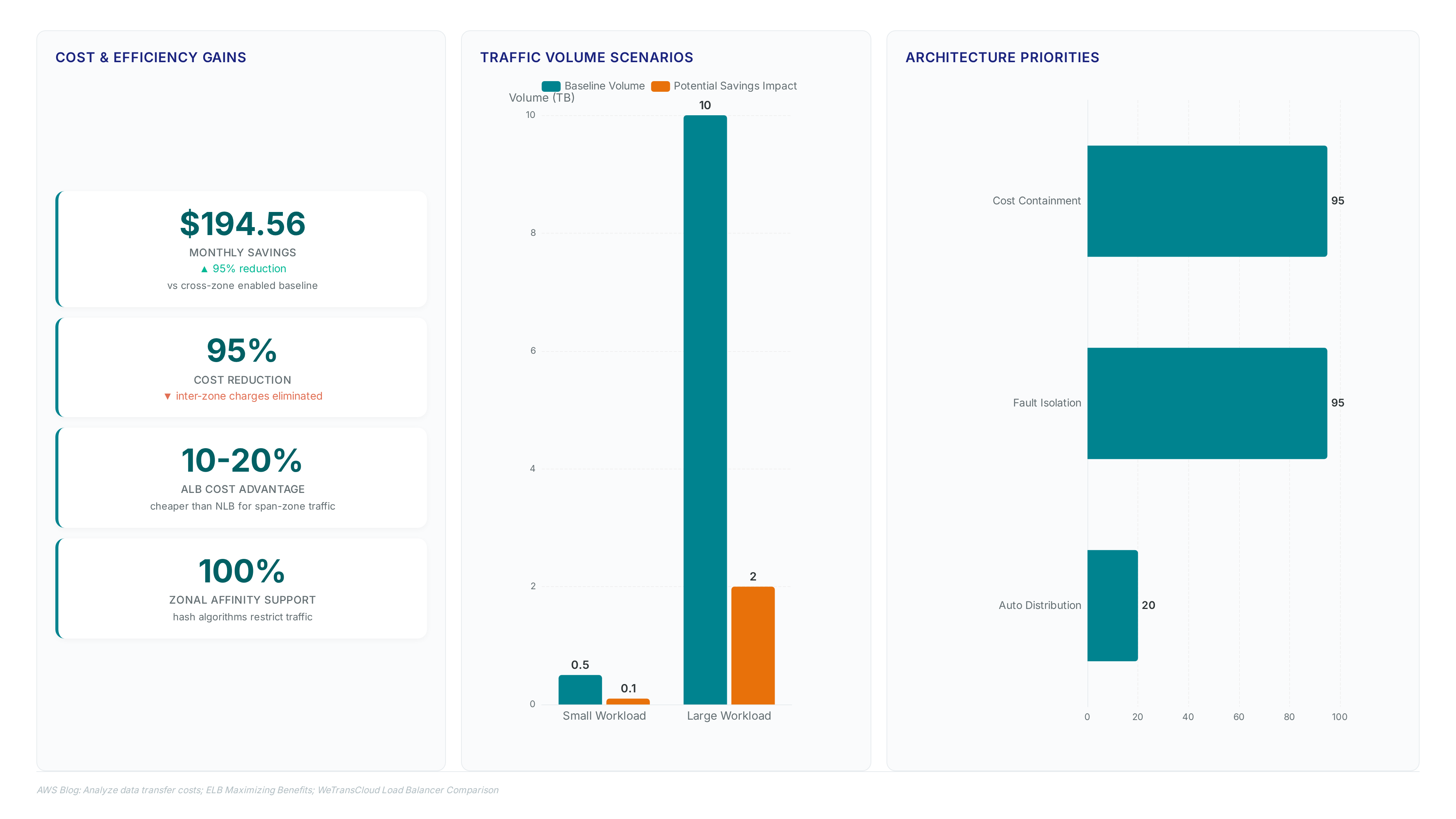
Cross-zone traffic hits $0.04 per GB. Learn how zonal affinity cuts your AWS NLB bill by 95% today.