Route Server Logic: Cutting BGP Sessions to Two
Dammam IX cuts BGP sessions to just two per router, eliminating mesh chaos while enforcing strict routing hygiene through centralized policy control.

RFC 6483 defines 3 validation states to filter bad routes. InterLIR ensures clean BGP objects for secure IPv4 infrastructure.
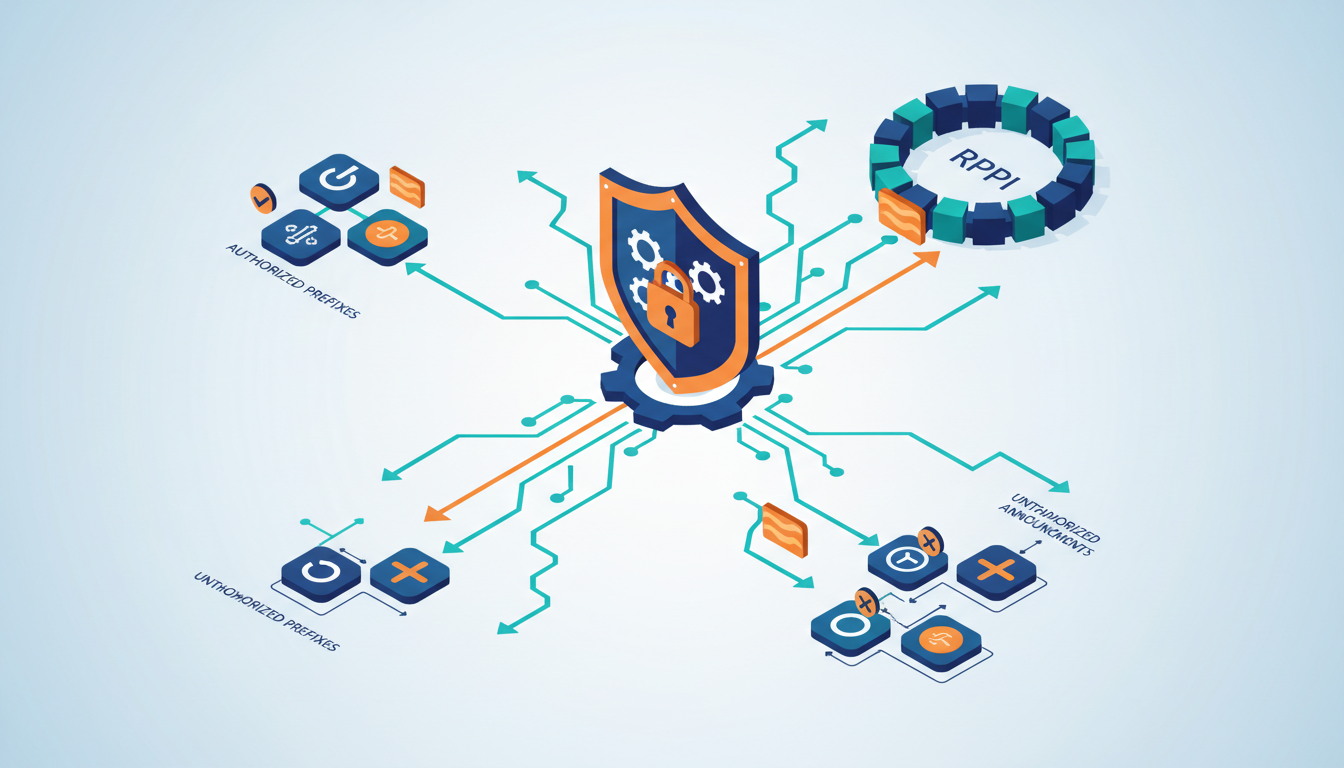
RPKI converts internet routing from a trust-based model into a validated security architecture using cryptographic attestations.
Comcast integrated RPKI in early 2022, ending fragile manual trust. Learn how cryptographic validation secures route origins against hijacks.
BGP routes propagate globally within minutes, leaving little time for manual fixes. Learn why automated RPKI validation is now mandatory for stability.
Recent studies confirm ROA objects are rapidly increasing as operators prioritize BGP security to stop hijacks before traffic drops.
NIST SP 800-189 Rev. 1 cuts through the noise: prefix hijacking and route leaks are the primary engines of denial of service.
Stop duplicate ROAs that break validation. Learn how cryptographically signed objects bind a prefix to one Origin AS for secure routing.
Stop manual crypto renewals by using the RIPE NCC web interface to secure your BGP route origins without local software deployment.
BGP routes propagate globally in minutes, enabling massive disruption. InterLIR provides verified IPv4 blocks to secure your network infrastructure.
A significant majority of global IP prefixes now possess cryptographic attestation, proving that ROA adoption has reached a critical majority.
Encrypted DNS flows remain 77, 86% identifiable despite payload encryption. Yet AWS Cloud WAN operators face architectural mandates that demand...
RPKI uses cryptographic certificates to bind IP prefixes, stopping hijacks before they spread across global networks in 2026.
Over 70,000 networks rely on a 1989 trust model. Learn how prefix specificity exploits this to hijack traffic without breaking encryption.
Rising ROA adoption still causes outages. Learn how 90-day autorenewal windows eliminate validity gaps and secure BGP routing for operators.
The Border Gateway Protocol functions as an unauthenticated inter-Autonomous System routing protocol where neither destination nor route is verified...
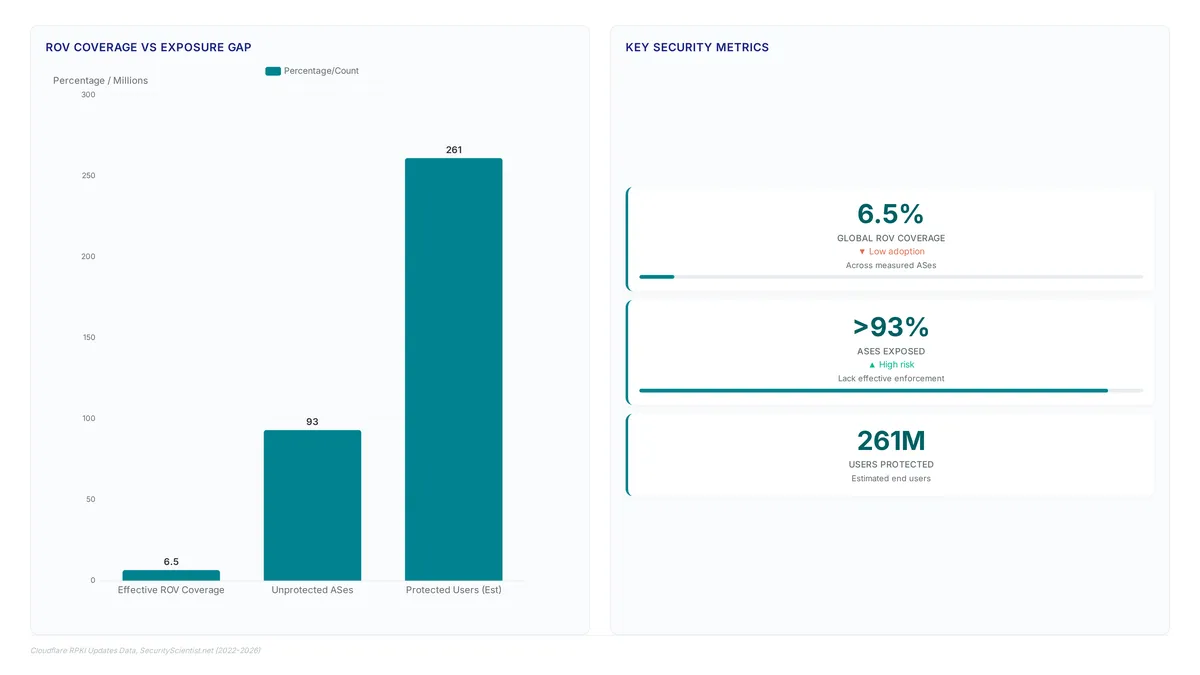
With only 6.5% of users protected, learn to validate origins and block invalid routes before a hijack compromises your clean IPv4 reputation.
Resource Public Key Infrastructure (RPKI) stops BGP routing from guessing. It lets IP block holders cryptographically authorize specific AS numbers to...
Learn how RFC6480 defines the architecture to secure BGP routing. InterLIR provides verified IPv4 blocks that integrate smoothly into these validated...
Stop route leaks by validating origin against five regional registries. Secure your specific IP prefixes with cryptographic proof today.
Stop route leaks by implementing the RFC6480 framework. Learn how X.509 certificates create a binary validity state to secure your BGP announcements.
RPKI checks launched on Internet.nl in October 2022 to stop false BGP route injections. You will examine the specific architecture of RPKI compared to...
Misconfigured ROA maxLength values create severe vulnerabilities when specific prefixes lack BGP announcements, inviting subprefix hijacks.
With only 34% of networks using ROAs, max length errors cause invalid routes. InterLIR audits your IP resources to prevent these costly BGP outages.
Over 1,300 Route Origin Authorizations mark the shift to independent servers. InterLIR helps you host your own RPKI infrastructure for full control.
BGP lacks native transport layers, exposing TCP sessions. Learn to enforce prefix limits and secure IPv4 blocks against RFC 1163 flaws.
BGP hijacking exploits trust to redirect traffic; one attack stole $150,000 in Ethereum by announcing false prefixes to cloud providers.
Over 375,000 valid ROA objects now secure the global routing table, replacing fragile honor systems with cryptographic proof for every prefix.
Over 375,000 Route Origin Authorizations exist, yet zero valid router certificates were published by June 2026, leaving BGP security incomplete.
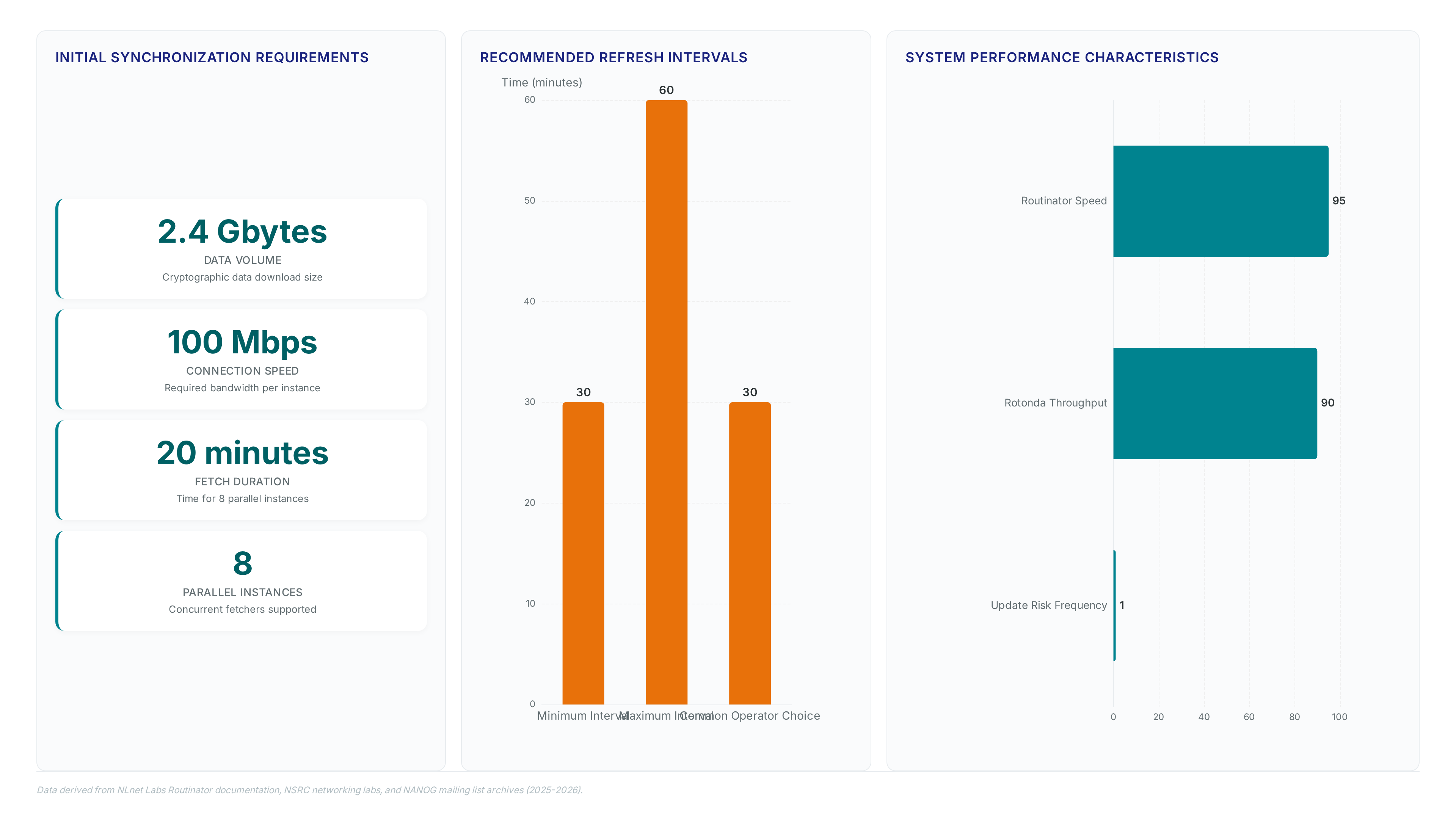
RPKI syncs every 10 minutes to validate BGP origins against signed records, yet single unsecured paths remain vulnerable to hijacking risks.
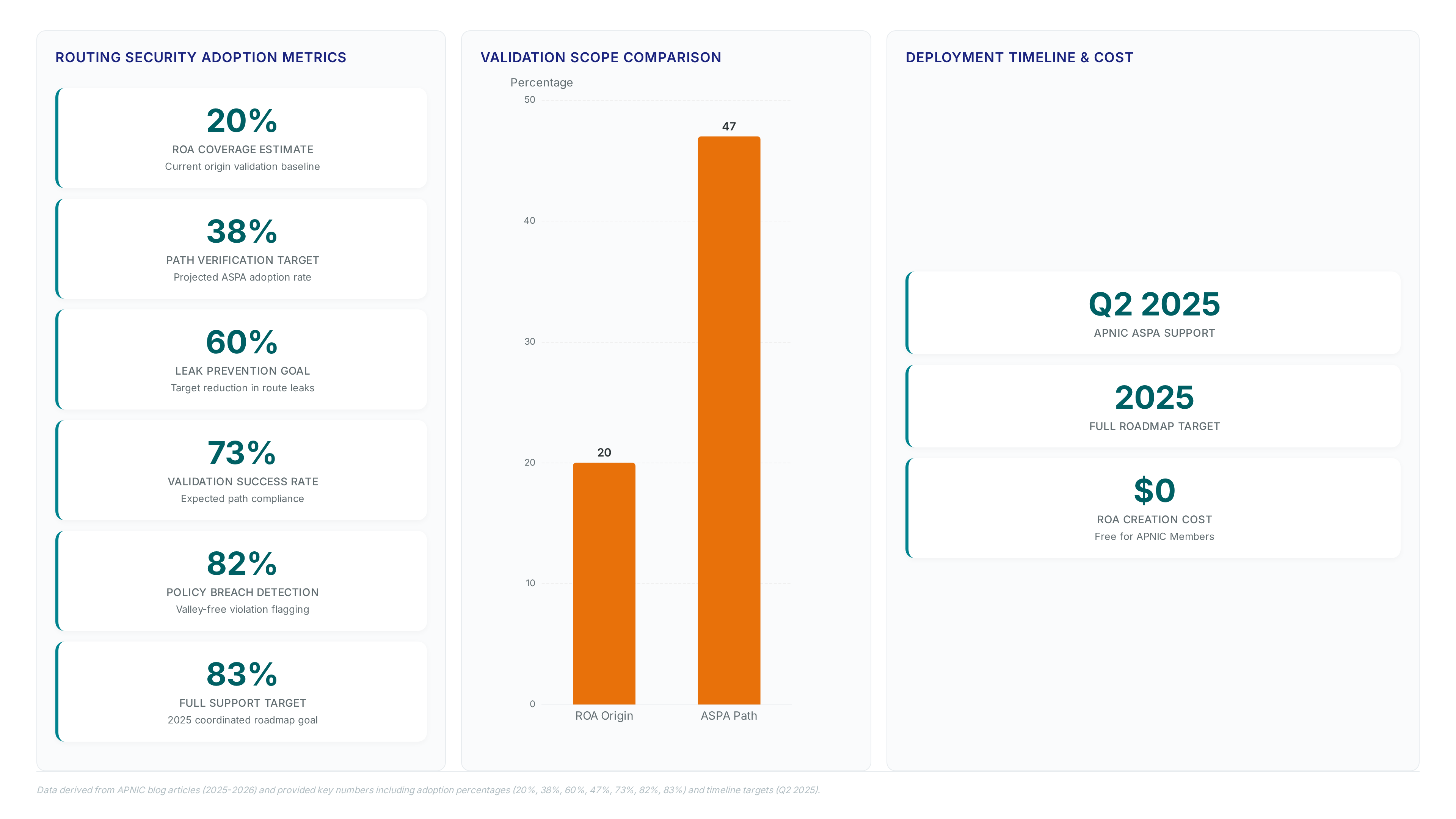
Over 60% of IPv4 routes now use RPKI. Learn to configure Junos OS routers to validate prefixes and block accidental leaks today.
X.509 certificates anchor RFC 6480 to prove IP ownership. Learn how strict validation stops origin spoofing without causing outages.
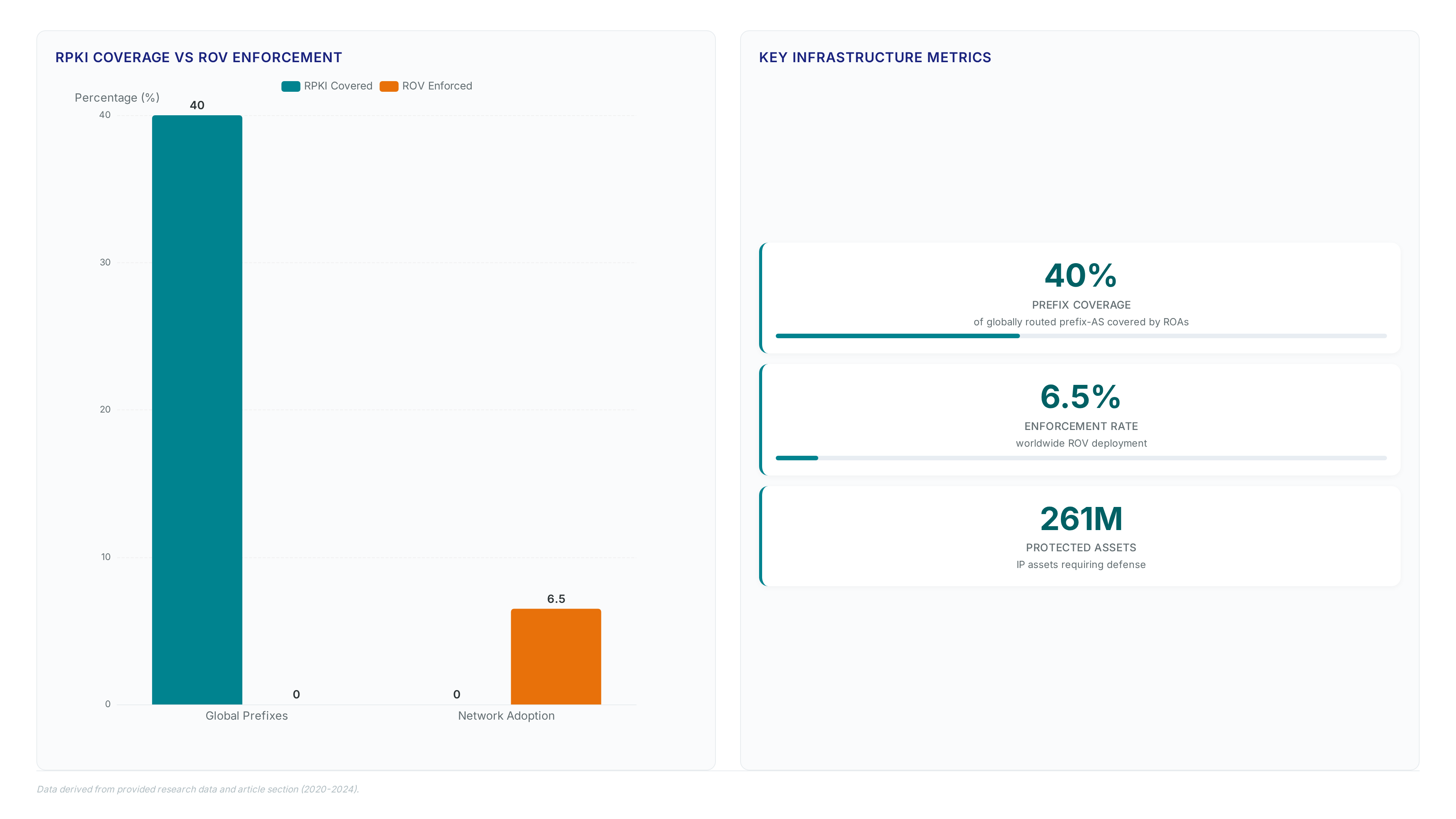
With 60% of routes covered, the remaining 40% face accidental misorigination risks. Learn how strict ROA policies enforce cryptographic validity.
Stop blind acceptance of ASNs. Learn to enforce RFC 6480 standards and filter invalid routes using cryptographic signed objects in minutes.
Q1 2026 delivered a stark reminder: Qrator logged exactly 1 confirmed BGP hijack and 7 route leaks.
On June 16, 2026, a misconfiguration by Reliance Communications disrupted global Telegram access. InterLIR audits IP resources to prevent such routing failures.
RPKI deployment scrutiny intensified in September 2024 as the industry evaluates adoption rates against persistent BGP vulnerabilities.
With 56% of RPKI validators flawed, blind trust in routing defense is risky. InterLIR ensures clean BGP and secure IPv4 resources for your network.
Learn how new condition keys restrict access by VPC ID and firewall priority to prevent teams from breaking DNS configurations.
A single Zayo misconfiguration triggered 50,000 reports in 30 minutes, proving global internet stability relies on precise BGP routing tables.
With zero valid BGPsec router certificates as of June 2026, RPKI route origin validation remains the critical defense against hijacking.
Cloudflare activated RPKI filtering on 19 Sep 2018 to block invalid BGP announcements. Learn how ROAs bind prefixes to ASNs for safer routing.
Learn how RPKI validation prevents the type of routing errors that caused the 2019 Cloudflare outage affecting millions of users globally.
As of June 2026, the global count of valid router certificates for BGPsec sits at exactly zero. Path validation remains theoretical.
Over 375,000 ROAs exist with zero enforcement. Learn to configure routers to drop Invalid routes and secure BGP announcements today.
With only one-third of routes signed globally, technical fixes like RPKI stall without addressing organizational inertia and skills gaps.
Stop static filtering failures. Learn how RPKI validation secures the route chain against hijacks, referencing the June 17, 2026 outage.
With global IP prefix coverage reaching a tipping point, operators must move beyond tools to master X.509 certificate management for true routing security.
With 393,344 IPv4 ROA objects published, route origin validation replaces blind trust with cryptographic proof to stop prefix hijacks effectively.
I analyze how stuck routes persist 90 minutes after withdrawal, blinding networks to real topology changes and risking traffic loss.
APNIC's Hangzhou RPKI mirror with NNIX cuts validation latency for Chinese operators, but a faster fetch of a 'not found' verdict protects nothing until ROAs ar
See how 11 route leaks since December caused a 12-hour outage. Learn why weak export policies, not spies, break BGP stability today.
Stop manual tunnel management. Flexible BGP supports 140,000 packets per second and automatic failover for resilient AWS networks.
Shorter paths do not equal safer paths. Learn why 75% of enterprises risk security by trusting hop counts over cryptographic proofs.
The 2018 MyEtherWallet hack stole $150,000 due to missing route checks. Learn why Pacific operators must deploy RPKI filtering immediately.
With only 40% of networks holding valid ROAs, your routing is exposed. Learn how cryptographic validation stops multimillion-dollar breaches now.
63.8% of networks lack strict validation. See how route servers miss hijacks when ASSET lists override cryptographic proof.
With IPv4 validity at 65.5%, ignoring RPKI risks traffic rejection. Learn how to deploy ROA and ASPA objects before enforcement deadlines hit.
In 2025, forged documents bypassed crypto checks. With only 38% of IPv4 prefixes enforcing validation, identity fraud now drives route hijacking.
East Asia IPv4 valid routes hit only 31.0%. I analyze why regional averages mask critical security failures and ASN mismatches.
Shift to Amazon EVS for 46% savings, but master BGP peering first. I break down the underlay risks you cannot ignore in production.
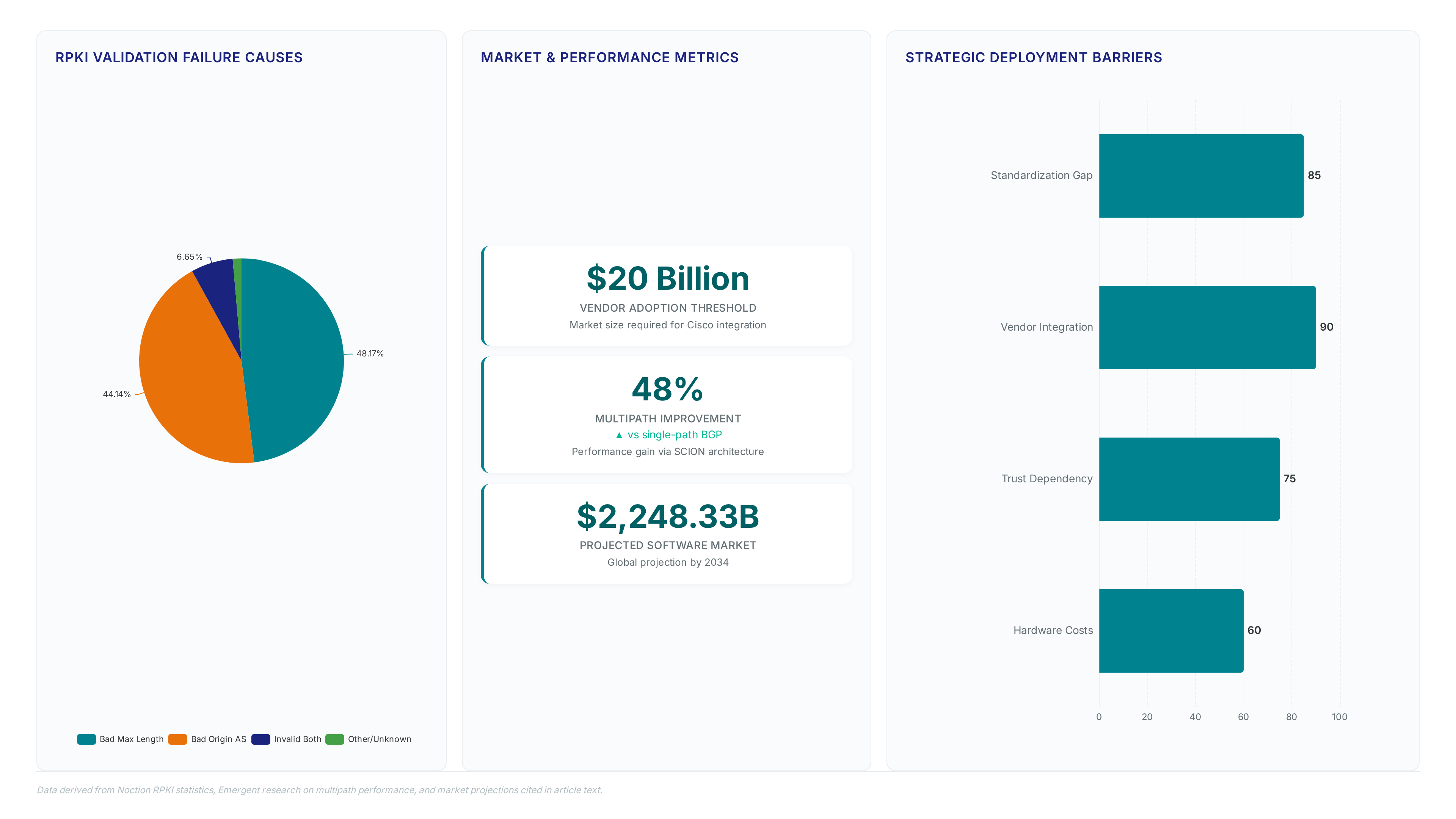
With 48.18% of invalid prefixes failing length checks, SCION routing replaces broken trust with cryptographic path validation for real security.
Cloudflare's ASPA rollout targets the gap where 53% of IPv4 prefixes remain unchecked, securing paths beyond origin validation.
Running 20,000 eBGP sessions with legacy IRR filters creates blind spots. See why ASsets fail at scale and how RPKI fixes route leaks.
95% of orgs lack visibility. Active path verification stops local fixes from causing global blackhole outages today.
Secure your routes with strict originASonly checks. PAM 2024 research shows IXP servers stay vulnerable without proper ROV ordering.
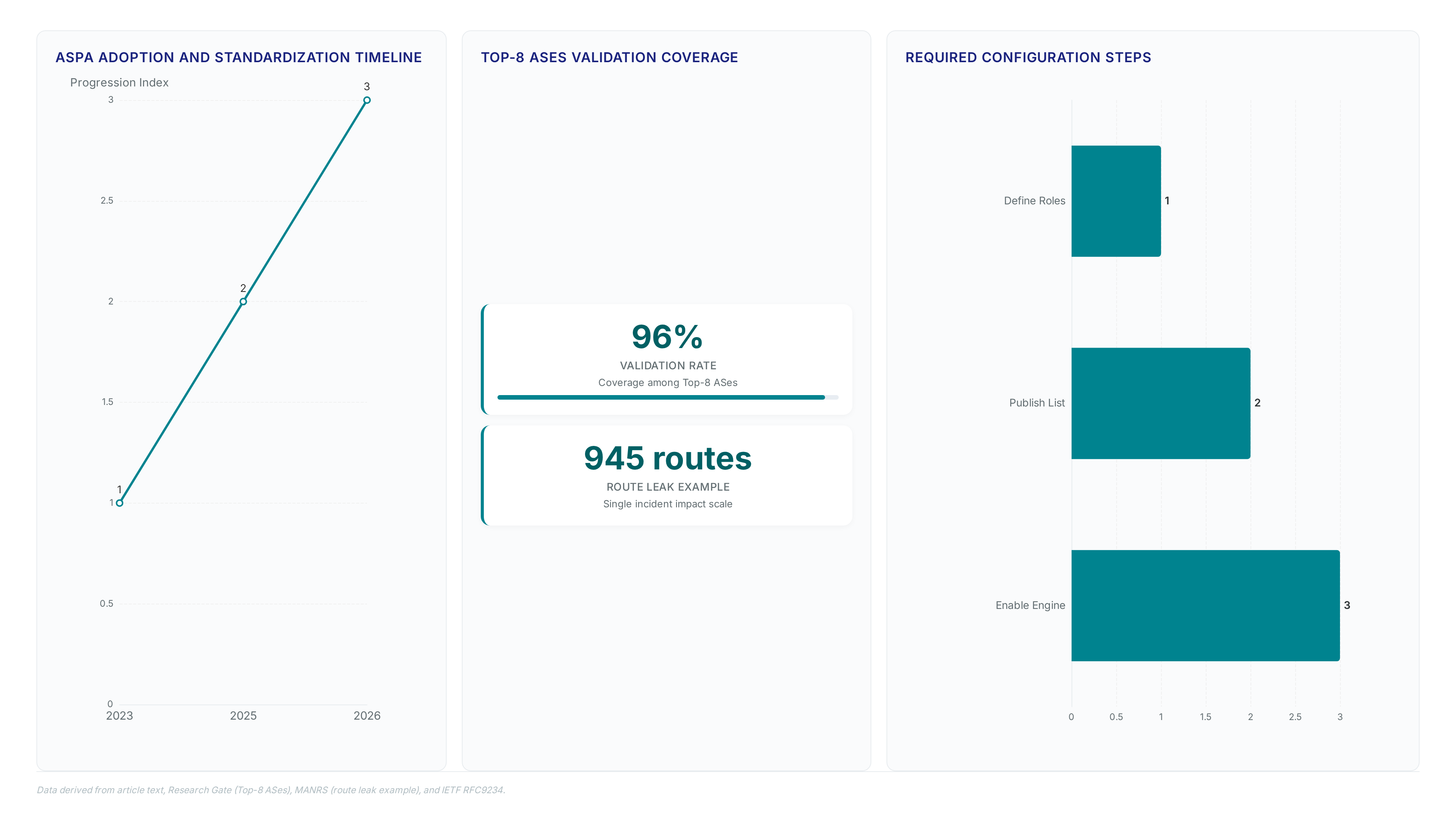
Securing just the top eight ASes with ASPA records stops 96% of route leak victims. Learn how to verify your transit path today.
Third-party breaches drive a massive share of incidents. Unauthenticated BGP routing remains a critical, undermanaged vulnerability you must fix.
ASPA records surged 539% in 2025, yet route coverage lags. Learn why fragmenting ROAs slows validation and hurts your network security today.
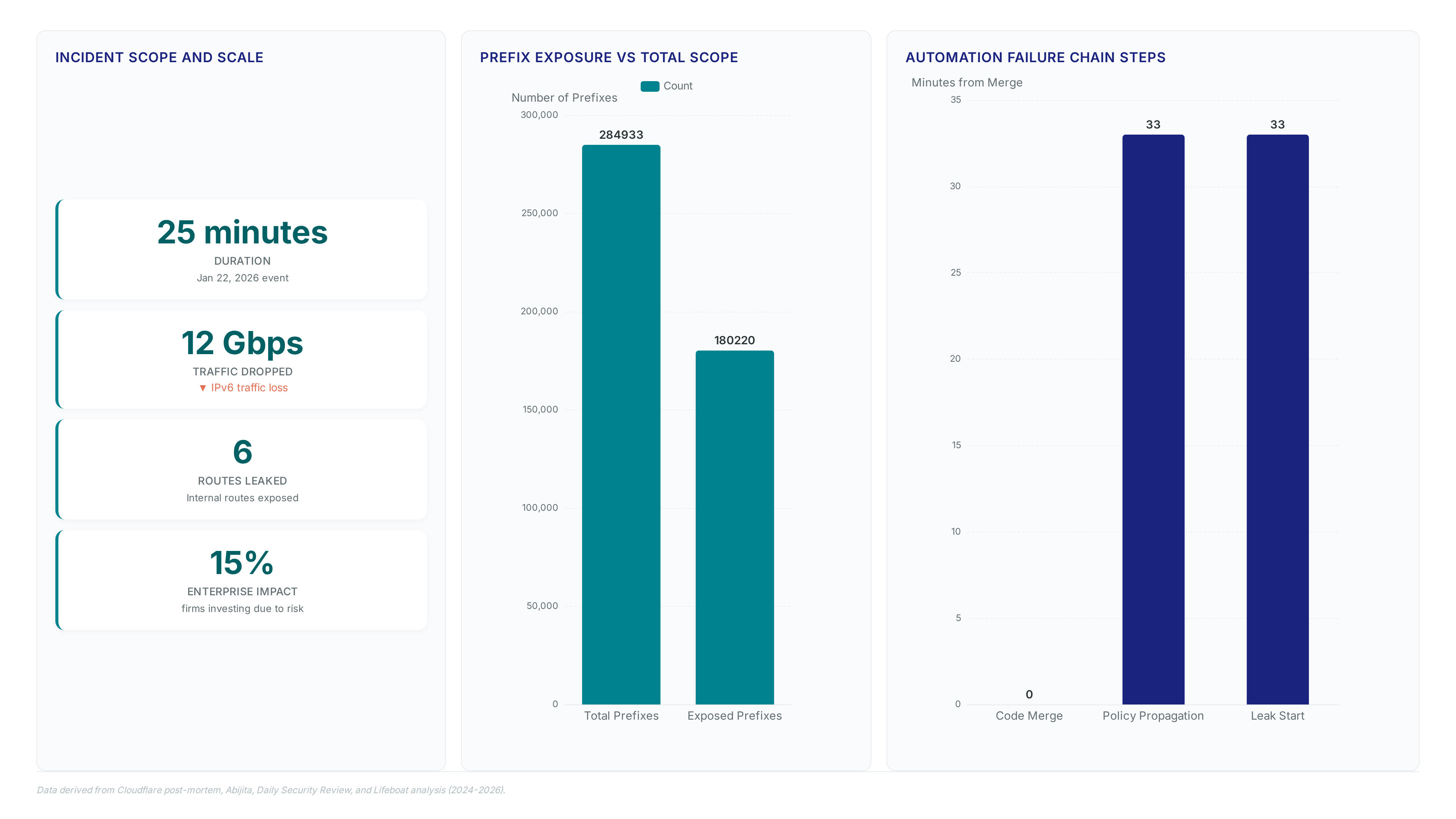
Cloudflare's 25-minute outage shows how automation errors cause route leaks. I break down the RFC7908 violation and how to fix it.
Share DNS configs across 10,000 accounts instantly. Route 53 Profiles eliminate manual gaps and ensure consistent audit trails for every VPC.