Local registry fees: what the admin cost really means
Becoming an LIR involves an administrative fee and a rigid four-step process. Learn if direct RIPE NCC membership fits your BGP4 needs.

LIRs manage finite IPv4 space with strict /21 minimums. InterLIR optimizes your existing resources without immediate direct RIR membership needs.
New LIRs face a €1,000 signup fee plus annual dues. Learn why exact references matter to avoid locked resources and operational delays.
Secure your own /22 block and avoid third-party markups. Learn why the €1,800 annual fee grants full control over your IP resources today.
Leasing a /24 subnet from $300 delivers immediate scale without the capital drag of permanent acquisition.
The €1,800 RIPE fee often masks hidden admin costs. Discover why smart operators choose flexible leasing over rigid direct membership today.
The $60 per IP ceiling reached in 2021 proves that waiting for free allocations is a financial liability.
Malaysia's June 2026 consultation targets a ghost. The proposal seeks to revive the National Internet Registry (NIR) model, ignoring that APNIC...
APNIC enforces a strict 30-day window for IPv4 transfers. Learn how InterLIR's automated brokerage prevents request voids and ensures policy compliance.
Avoid returning Provider Independent addresses when contracts lapse. Learn how sponsorship retains ownership while stabilizing costs at 240€ yearly.
Five Regional Internet Registries sit between IANA and your network. That gap is where Local Internet Registries (LIRs) operate.
A Local Internet Registry (LIR) is the entity that holds the keys. Typically an ISP or a large enterprise, it receives IP allocations directly from a...
Skip the wait for a /22 block. InterLIR provides immediate IPv4 access without the administrative overhead of direct RIPE NCC membership.
Secure Provider Independent space in as fast as 2 business days. InterLIR handles RIPE compliance, ROA creation, and rDNS so you focus on stability.
One LIR held 21 allocations by manipulating accounts, proving RIPE proposal 2010-02 failed to ensure fair competition.
Only three regions authorize InterRIR transfers. Learn why the recipient must initiate the pull and how exact template data prevents rejection.
Analyze how a Romanian hosting account uses LIR status and AS19624 to secure IP ownership, distinct from generic cloud rentals.
Direct RIPE NCC membership demands a substantial fee. InterLIR's sponsoring LIR services bypass this cost while ensuring full BGP routing compliance.
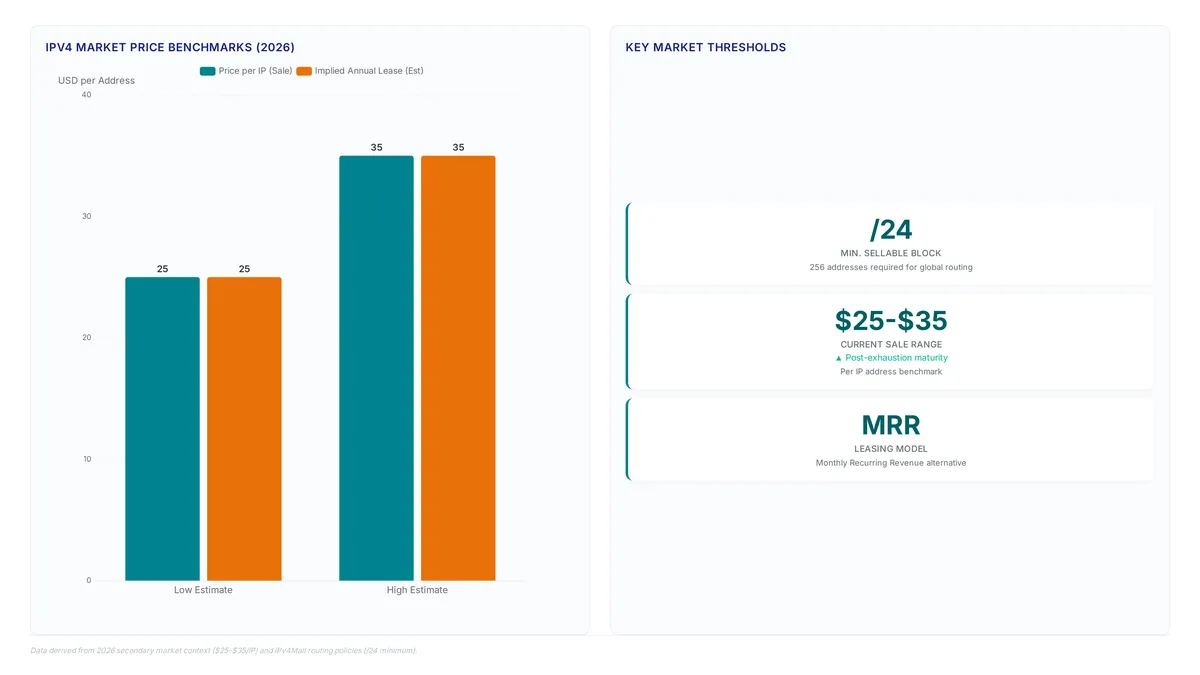
RIPE mandates LIR status for transfers as free pools dried up. Learn why a /24 block is the smallest global routing unit today.
A RIPE NCC block triggers a mandatory 3-month deal. InterLIR prevents resource forfeiture by managing your LIR status and AS6723 coordination effectively.
Five Regional Internet Registries manage global IP allocation. Direct registry data offers the only verifiable path for accurate security analysis.
Five Regional Internet Registries currently manage the world's IP addresses, a structure solidified since the first entity launched in 1992.
Manage your global IP assets through the LIR Portal. Learn how a single mismatched attribute can stall an allocation and how to fix it.
See how the 2021 Cloud Innovation case shows custody mutating into ownership without explicit legal transfer or clear policy boundaries.
Institutions get a /48 network but must prove need for more. Discover how local registry policies link address access to active network participation.
Learn why hourly cloud providers cannot serve as upstream references and how the €60 annual fee impacts your ASN strategy in Europe.
Bakker IT charges a modest €75 annual fee for ASN services, offering a streamlined local registry path without direct RIPE NCC membership overhead.
An LIR receives allocations directly from a Regional Internet Registry to sub-assign assets, ensuring routing independence for your network infrastructure.
LACNIC charges exactly USD 200.00 for its one-year IPv4 listing. Learn how Policy 2.3.2.18 separates admin validation from commercial deals.
Recovered blocks enter a single queue; by July 7, 2023, the registry distributed 5,572 blocks to eligible members via this strict process.
With only 3.9 million unallocated addresses remaining globally, the era of free IPv4 expansion is dead.
Learn how identity verification drives setup across five global RIRs and why moving from hosted models demands strict XML file management.
Skip the €1,000 signup fee for direct LIR status. InterLIR simplifies ASN sponsorship, handling Idenfy validation and RIPE compliance for you.
The ARIN service area covers exactly 29 listed countries and territories, not just the US and Canada.
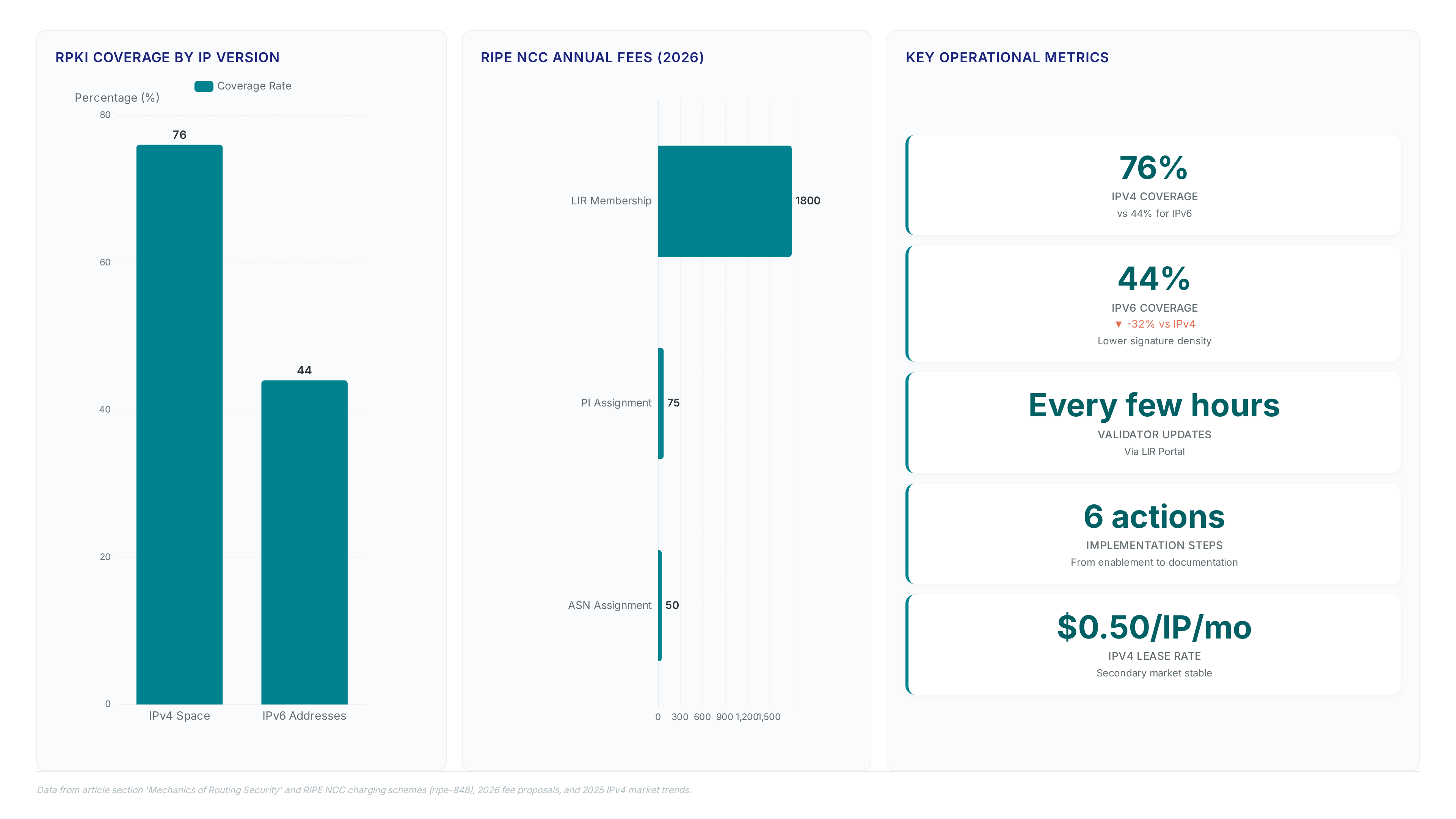
RIPE's May 2026 update shows 841 LIRs waiting 536 days and IPv6 ROA coverage at 44%. Why the waiting list is a supply signal, not a queue, and what to do instea
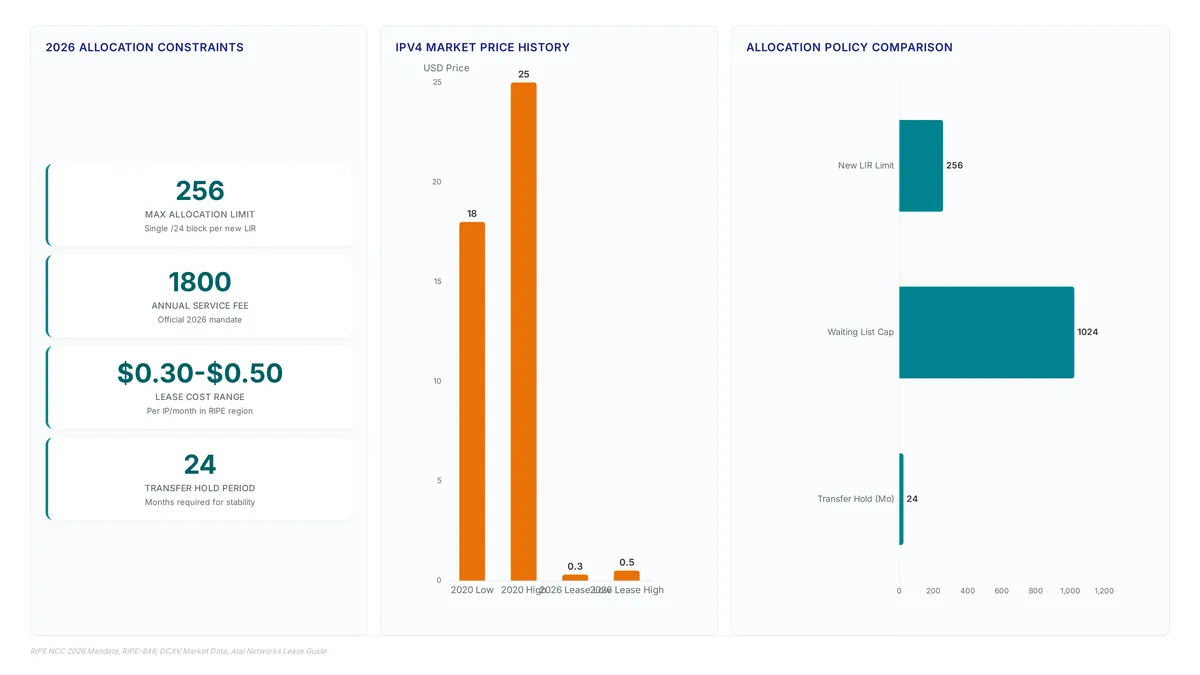
With RIPE NCC fees hitting EUR 1,800 in 2026 and only a /24 available, InterLIR offers immediate IPv4 access without the wait.
MCMC seeks feedback on CMA amendments by 10 July 2026 to centralize IP control under a new National Internet Registry framework.
APNIC Foundation allocated $12M across 34 economies. This MoU clarifies roles between the registry and charity to boost capacity building.
Avoid the RIPE NCC waitlist with a Managed LIR service. For 600,00 CHF monthly, bypass complex policies and secure IPv4 allocations immediately.
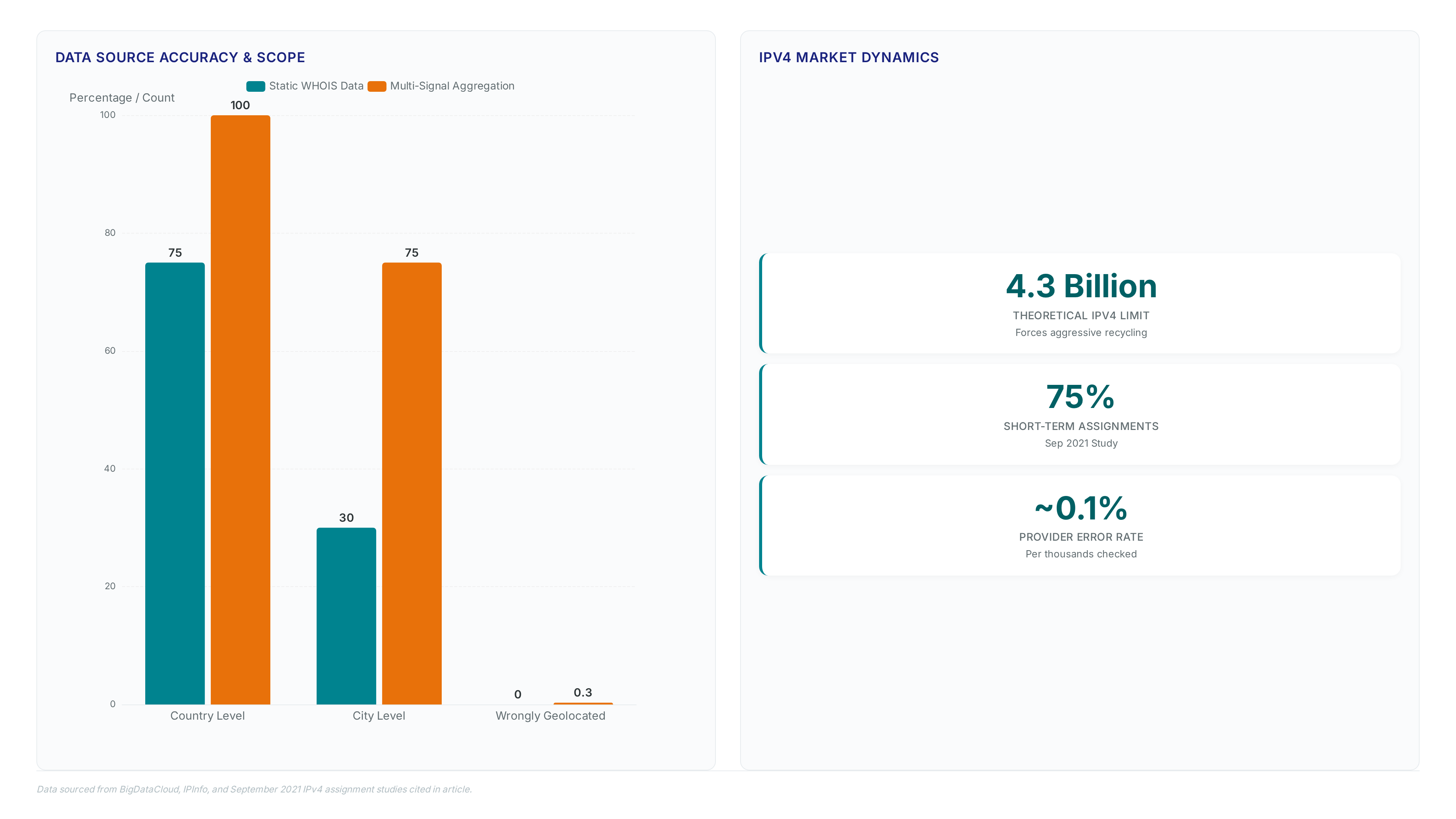
The total theoretical capacity of IPv4 is exactly 4,294,967,296 addresses, a hard limit the RIPE NCC region has already hit.
Since September 14, 2012, RIPE enforces a strict 1,024 address limit per LIR. Navigate this regulatory cap to secure essential IPv4 resources today.
ARIN charges a fixed $500 annual fee while peers use cost recovery. See how five distinct registries create conflicting rules for your IP assets.
The global IPv4 transfer pool shrank nearly 60% from 2015 to mid-2024, forcing ISPs to adopt leased address blocks.
Outdated registry data causes 30% of geolocation errors by listing old owners instead of actual server locations, creating blind spots for security teams.
RIPE NCC's April 2026 update: 841 LIRs queued, 503-day waits, 1.79M IPv4 transferred. Why an LIR account is now a standing cost, not a resource tap, and how to
Over 20,000 organizations now operate as Local Internet Registries. Learn if your network needs direct RIPE NCC ownership today.
APNIC imposes a mandatory 5-year lockup on IPv4 transfers from the free pool, trapping capital and favoring legacy holders over new market entrants.
City-level accuracy for mobile IPs drops to 65%. We confuse registered economy data with physical deployment, creating critical mapping errors.
Facing a 503-day wait for IPv4? Our market analysis shows how leasing bypasses the queue while securing clean routing integrity.
With 88% expecting cost surges, RIPE offers payment extensions to keep Middle East operators online during active conflict and cash flow issues.
RIPE's Q2 2026 plan targets nine domains as power demand triples by 2030. Learn how to validate routes before the grid constrains growth.
With fewer than 5 LIRs left and a 477-day wait, direct allocation is gone. I explain why transfers are your only real option now.
Litigation has frozen resource allocation for years. With only 30 million addresses, AFRINIC's legal crisis hurts 56 African nations.
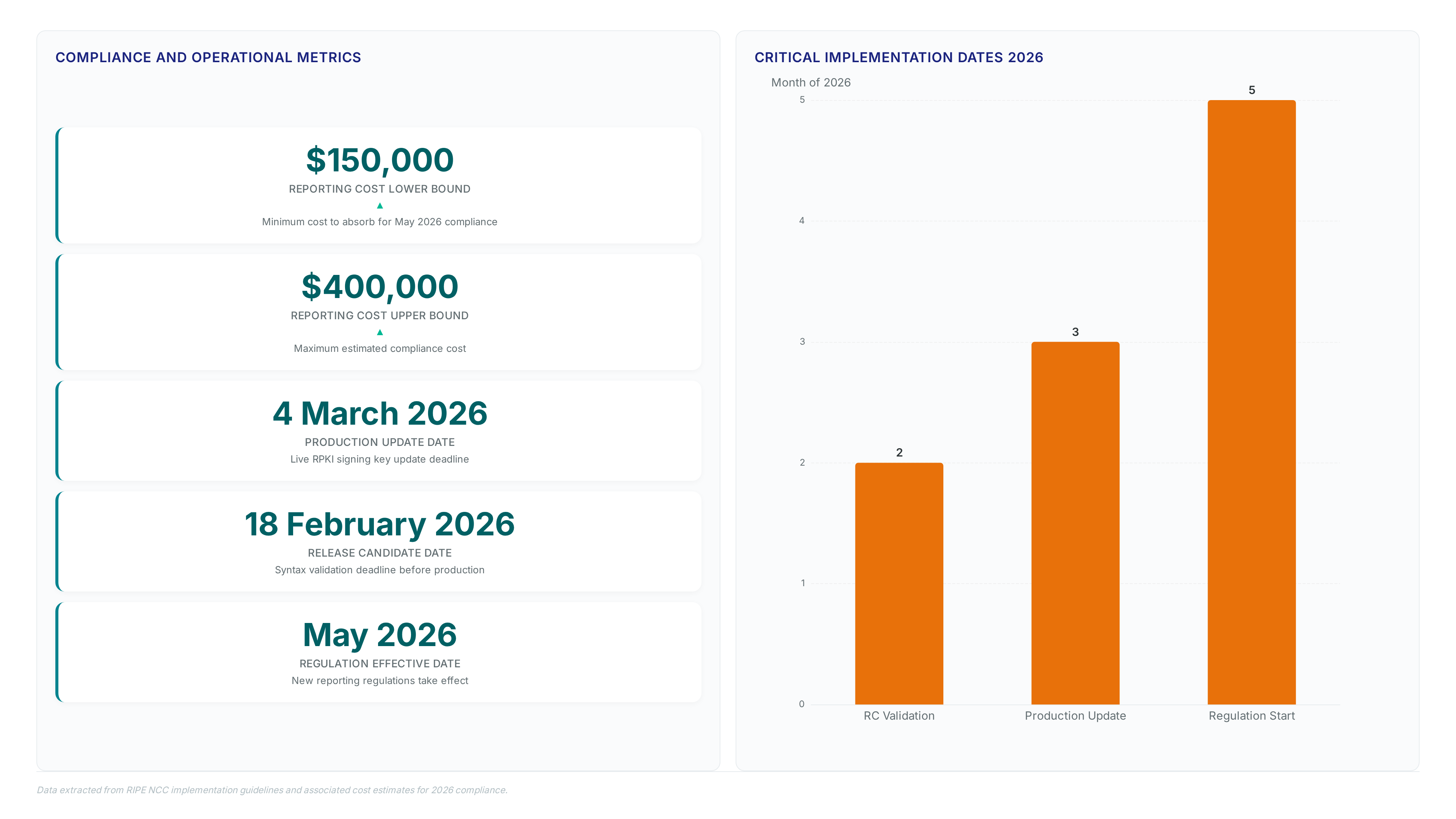
Nominations close April 29, 2026. We analyze how the fixed EUR 1,800 fee impacts strategic direction for the registry.