IPv8 routing risks: Why 3B addresses strain BGP
Jamie Thain's IPv8 draft targets 18 quintillion addresses, but critics warn it demands massive CPU upgrades like the AMD EPYC 9965.

IPv4 transfer markets, BGP routing security, RPKI adoption, and ASN governance — analysis for network operators.
Jamie Thain's IPv8 draft targets 18 quintillion addresses, but critics warn it demands massive CPU upgrades like the AMD EPYC 9965.
Thain's IPv8 draft merges 8 functions into one Zone Server, creating a single point of failure that ignores how 50.10% of users now access IPv6.
Ryan Hamel ended the IPv8 debate on May 4, 2026. We analyze why doubling BGP state tables creates unsustainable overhead for modern networks.
IPv8 breaks legacy silicon, forcing upgrades that current multi-billion-dollar SONiC deployments cannot support without major risk.
IPv8 collapses seven network layers into one dependency. My review shows how a single auth timeout triggers total failure, not graceful degradation.
With IPv6 traffic hitting 50.10%, the IPv8 proposal is an architectural dead end. We must optimize existing stacks, not chase vaporware.
With IPv6 growth at just 5%, I explain why IPv8's telemetry claims don't yet justify leaving our stable IPv4 infrastructure behind.
Global internet hit 74% penetration. Adding IPv8 now means replacing billions in legacy hardware that vendors abandoned years ago.
The IPv8 draft proposes 18.4 quintillion addresses, but its centralized Zone Server creates a single failure point operators can't ignore.
IPv8 routing requires 192 cores to handle packet rates. Learn why this control-plane indirection adds latency instead of solving scarcity.
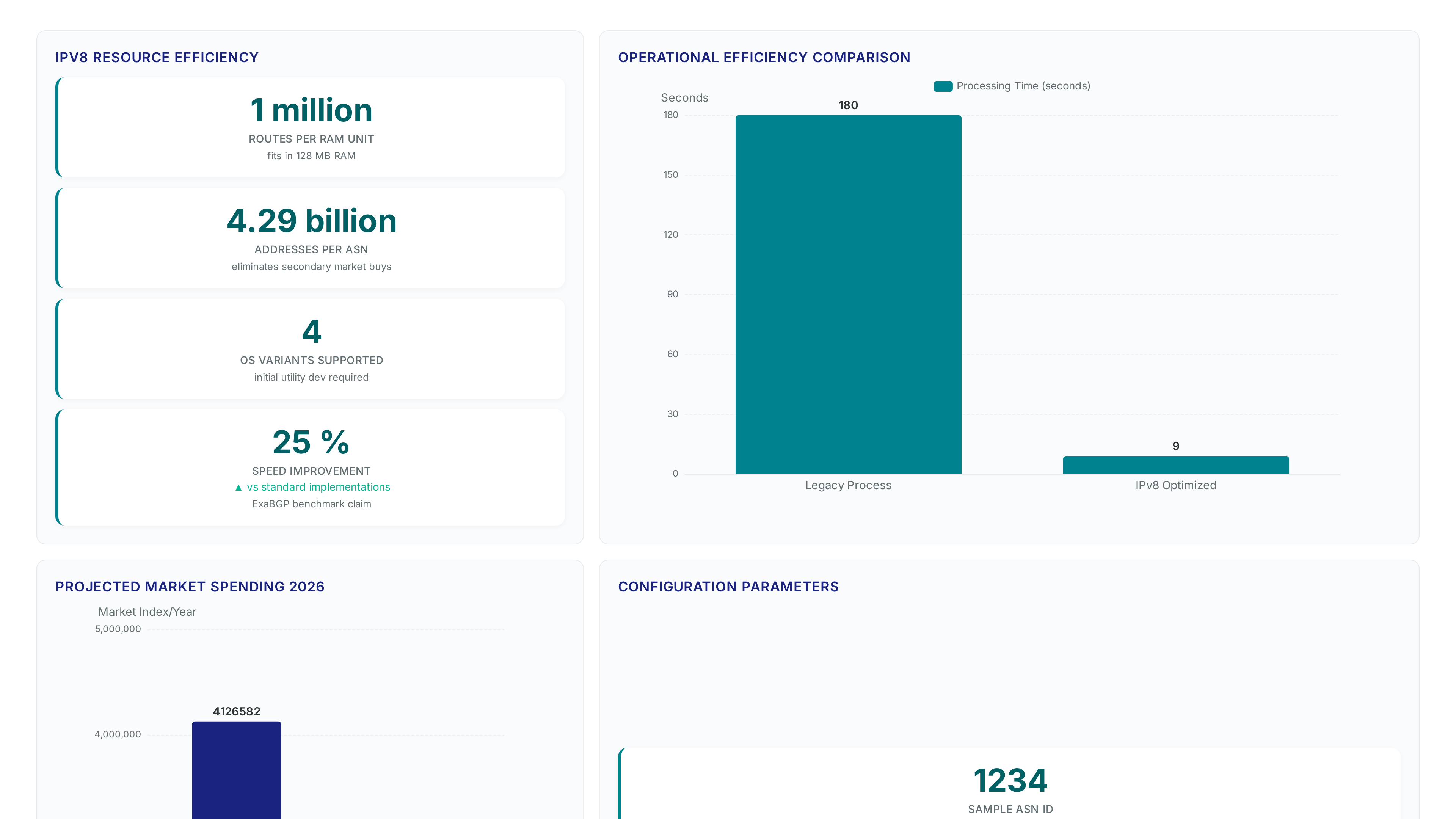
Jamie Thain's IPv8 promises 3 billion addresses per ASN, but zero working implementations exist on off-the-shelf hardware today.
Don't trust IPv8 hype. Data from 2026 proves IPv6 handles mergers better, avoiding the 10x collision risks seen in fragmented legacy networks.