Direct AS Number Sponsorship: Cut Setup to 12 Days
Secure your unique network identity with InterLIR sponsorship. Bypass inflated market rates and launch your autonomous system in just 12 days.
Customer Service Specialist
Customer Service Specialist at InterLIR. Direct experience supporting LIR onboarding, abuse contact processes, and operational compliance for new network operators.
External Profile
Secure your unique network identity with InterLIR sponsorship. Bypass inflated market rates and launch your autonomous system in just 12 days.
Leasing a /24 subnet from $300 delivers immediate scale without the capital drag of permanent acquisition.
Managing over 50,000 IP addresses makes manual subnet math an obsolete liability. Discover how automated precision prevents configuration drift in large...
InterRIR transfers demand strict policy compliance from both source and recipient registries to remain valid and avoid voided operations.
Secure IPv4 transfers in 2026 require strict due diligence to avoid contested space. Learn how InterLIR ensures legal compliance and clean title.
APNIC enforces a strict 30-day window for IPv4 transfers. Learn how InterLIR's automated brokerage prevents request voids and ensures policy compliance.
Achieve 99.998% uptime by owning your ASN. InterLIR supplies the clean IPv4 blocks needed to build redundant, sovereign network paths.
Learn how accredited brokers use escrow mechanics to protect capital during complex IPv4 transfers and ensure legal title without revocation risks.
A Local Internet Registry (LIR) is the entity that holds the keys. Typically an ISP or a large enterprise, it receives IP allocations directly from a...
Leasing a /24 block costs between $128 and $384 monthly, while specific providers like Host-telecom.com quote quarterly rates starting at 600.00 € for...
Leasing a /24 block can start as low as $150 per month. That single figure dismantles the old instinct to hoard IP space.
Rising ROA adoption still causes outages. Learn how 90-day autorenewal windows eliminate validity gaps and secure BGP routing for operators.
Five RIRs manage global resources, yet fragmented records create risk. Learn to audit your IPv4 and IPv6 assets for true governance.
Only 6.5% of users have Route Origin Validation. InterLIR helps secure your IPv4 assets against hijacks by optimizing prefix ownership and routing policies.
A single error in bulk updates can rewrite hundreds of PTR records, causing immediate reputation damage. Learn why controlled workflows matter.
APNIC transfers surged from 131 in May to 1,478 in June, defining the liquidity shock of the 2026 IPv4 market.
Stop burning cash on bad IP blocks. Validate geolocation and routing before signing any lease to avoid the 2019 RIPE NCC scarcity risks.
The 2022 IPv4 market saw block transactions drop 28% while total addresses transferred surged 35%, per IPv4.Global data.
Start your LIR registration for €350.00 to own a /22 IPv4 block. Eliminate third-party dependency and manage your IP resources with full autonomy.
BGP hijacking exploits trust to redirect traffic; one attack stole $150,000 in Ethereum by announcing false prefixes to cloud providers.
With IPv4 Connect reporting that 3,000+ companies now trust their marketplace, acquiring RIPE IPv4 addresses has shifted from a bureaucratic hurdle to...
Manage your global IP assets through the LIR Portal. Learn how a single mismatched attribute can stall an allocation and how to fix it.
Access all five Regional Internet Registries via one interface. Managed LIR services let you lease blocks without direct RIR membership fees.
Bakker IT charges a modest €75 annual fee for ASN services, offering a streamlined local registry path without direct RIPE NCC membership overhead.
Prevent unauthorized transfers with a valid Letter of Authorization. Learn why carriers act within days despite holding a 60-day window to submit exchanges.
Leasing a single /24 IPv4 subnet starts around $150 monthly, a fraction of the capital required for permanent ownership.
Cut IPv4 transfer time to under 24 hours while maintaining strict registry compliance and preventing hijacking with verified ASN context.
Navigate the 2026 IPv4 market with a strict 5-step workflow. InterLIR ensures clean blocks and full RIR compliance for secure transfers.
Only four RIRs currently support moving IP addresses and ASNs across regional boundaries. Inter-RIR transfers enable the specific movement of IP...
InterRIR IPv4 transfers require dual registry consent, creating a mandatory 4 to 8 week window that internal moves simply do not face.
ICANN passed three resolutions on May 3, 2026. These changes shift governance details to charters, fixing delays in the five-year review cycle.
Obtaining a RIPE LIR account requires a fixed annual fee per the 2026 Charging Scheme. Think of LIR Services not as a luxury, but as a necessary...
With 60% of addresses blacklisted, buying verified clean IPv4 blocks prevents delivery failures and protects your network reputation globally.
With IPv4 still handling the majority of traffic, your vote matters. Learn how 3 open Board seats shape policy before the June 22 deadline.
RIPE's May 2026 update shows 841 LIRs waiting 536 days and IPv6 ROA coverage at 44%. Why the waiting list is a supply signal, not a queue, and what to do instea
A 502 error on an AWS Application Load Balancer often persists even when Amazon EC2 instances pass status checks.
Unused IPv4 blocks generate zero revenue. Learn how the 24-month RIPE NCC hold impacts your strategy and how InterLIR secures payouts.
With 56% of RPKI validators flawed, blind trust in routing defense is risky. InterLIR ensures clean BGP and secure IPv4 resources for your network.
Move IPv4 addresses across the five regional registries. Learn the strict LIR rules and justified need required for a legal InterRIR transfer today.
Recent data shows a weighted average of $19.56 per IP. Discover how to execute valid secondary market transfers and avoid costly routing failures now.
Since RIPE limits new allocations to a /22 block, many firms buy IPv4 space on the secondary market. Learn how verified brokers secure legal transfers.
With 2026 lease prices adjusting due to rising supply, recurring revenue models now outperform one-time IPv4 liquidation strategies.
With human traffic under 10%, machines now drive the critical exhaustion of IPv4 addresses.
Learn how new condition keys restrict access by VPC ID and firewall priority to prevent teams from breaking DNS configurations.
A single Zayo misconfiguration triggered 50,000 reports in 30 minutes, proving global internet stability relies on precise BGP routing tables.
With roughly 80,000 Autonomous System Numbers globally, learn why a distinct routing policy matters more than capacity for your network.
With zero valid BGPsec router certificates as of June 2026, RPKI route origin validation remains the critical defense against hijacking.
Data shows a 57% duplicate query rate in some regions. Learn why aggressive resolver retries waste server resources and how to reduce the strain.
ARIN proposal ARIN-prop-339, published 8 Jan 2025, closes a logical gap in NRPM Section 2.4 by finally defining the Internet Service Provider.
With only 0.1811 /8s remaining in the pool as of June 2026, direct allocation from APNIC is effectively dead for most enterprises.
The global IPv4 transfer pool shrank nearly 60% from 2015 to mid-2024, forcing ISPs to adopt leased address blocks.
AI cuts manual routing errors and speeds response by validating ownership against RIPE data before forwarding abuse reports to owners.
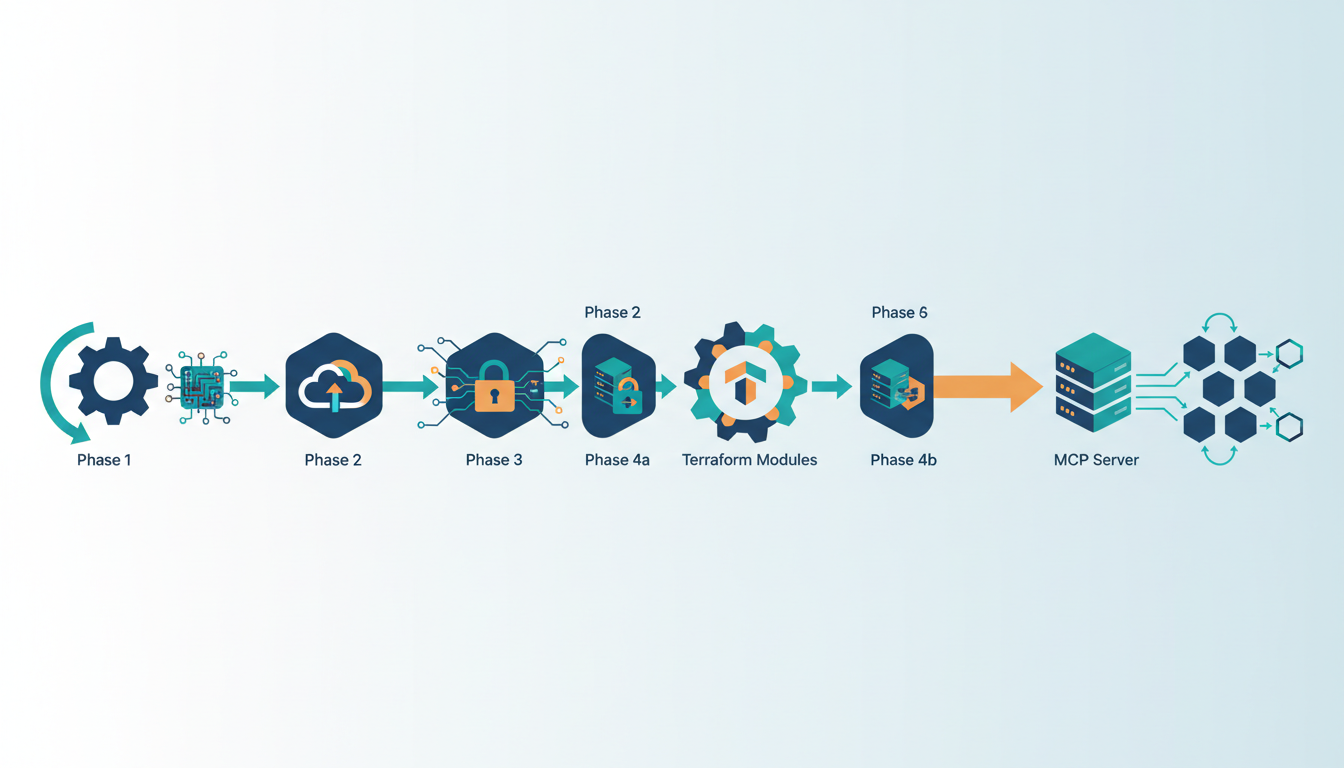
Execute a six-phase migration to AWS Cloud WAN using Terraform. This guide details how to unify global networks without disrupting production traffic.
Iran's internet traffic fell to 1% of normal levels, revealing how partial restoration mechanics leave rural areas disconnected while favoring Tehran.
On May 5, 2026, a DNSSEC signature error at DENIC caused mass SERVFAIL outages, proving how fragile validation chains can be.
With only 4.3 billion unique addresses total, the IPv4 market demands agility. Leasing offers a flexible path around permanent scarcity.
APNIC requires a detailed 24-month usage plan for new recipients. Learn the four specific transfer scenarios and how to validate legacy data correctly.
AFRINIC is the last RIR with free IPv4, and an institution in legal crisis. Why operators must price registry risk before sourcing from Barrett's pool.
The ARIN 57 Meeting Report is an archive, not a to-do list. An IPv4 support specialist reads it for the four dated deadlines that actually touch your address bu
ARIN retired email recovery and added passkeys in May 2026. Why a single-admin ARIN Online account is now an operational liability, and the fix.
Static checks fail. See how 81% of orgs use live signals like impossible travel to block threats before data leaves your network.
See how SCION connects every Swiss franc bank by early 2026, replacing fragile BGP with cryptographic trust for deterministic financial routing.
See how Jakarta turned 1% adoption into near-total coverage. Learn why 84% of networks still skip RPKI enforcement despite clear ROI.
With 55% of carriers validating routes, RIPE's SOC 2 report proves RPKI security is enterprise-grade. Learn why trust is now mandatory.
Third-party breaches drive a massive share of incidents. Unauthenticated BGP routing remains a critical, undermanaged vulnerability you must fix.
63.8% of networks lack strict validation. See how route servers miss hijacks when ASSET lists override cryptographic proof.
On March 16, 2026, RIPE replaces the old switcher with a single interface. Learn how this affects your six critical tools and LIR Portal access.
I break down the RIPE 2026 proposal where the base fee stays at €1,800 but independent assignments rise to €75. See how Option A affects your LIR.
Proton honored 8,313 legal requests in 2025. See how US infrastructure undermines Swiss privacy claims for millions of users today.
Branden Palacio found 78% of firms ignore PDNS curation. See why static blocklists fail schools with massive query volumes.
Over 180 global disruptions hit in 2025. Learn why physical fiber cuts now cause more internet loss than political actions.
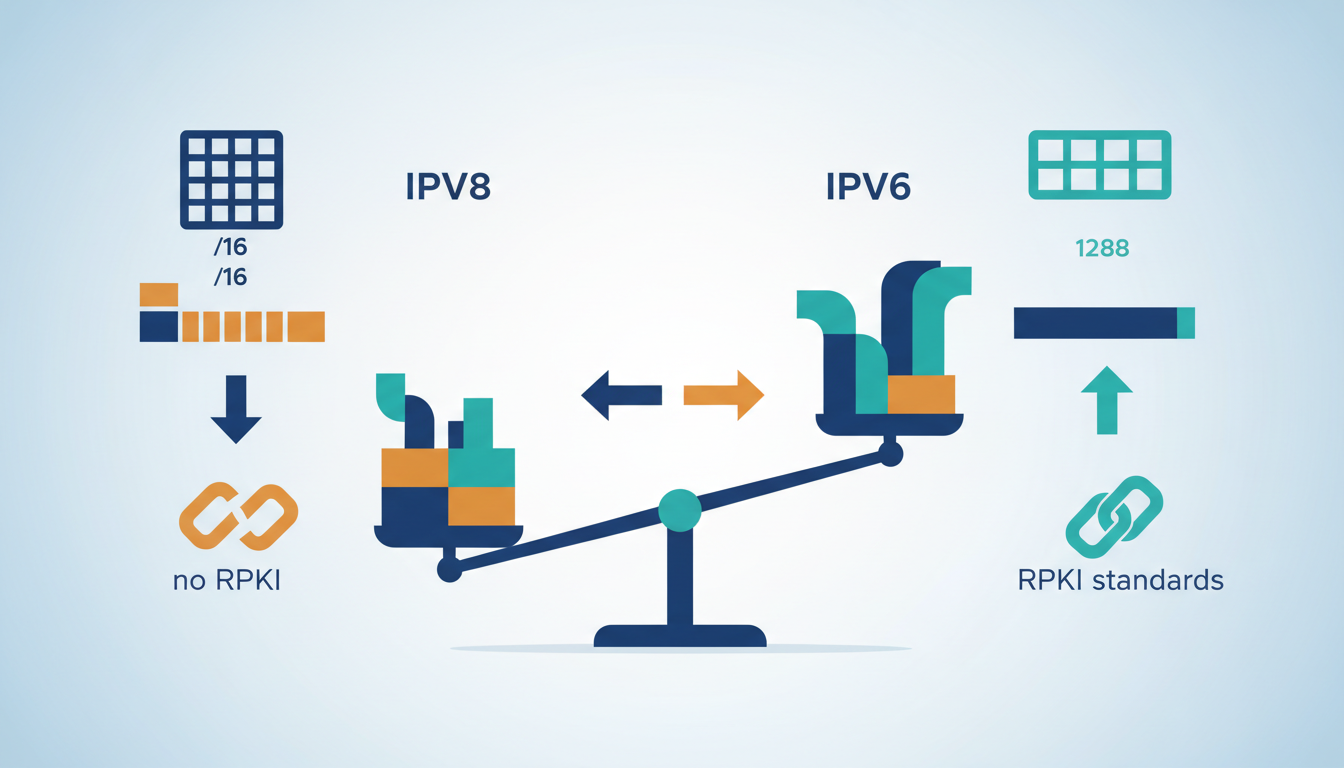
Thain's IPv8 draft merges 8 functions into one Zone Server, creating a single point of failure that ignores how 50.10% of users now access IPv6.
IPv8 collapses seven network layers into one dependency. My review shows how a single auth timeout triggers total failure, not graceful degradation.
IPv8 routing requires 192 cores to handle packet rates. Learn why this control-plane indirection adds latency instead of solving scarcity.
APNIC replaced cloud models with physical sites to cut egress fees, helping teams master native IPv6 before the 2027 modernization rush.
AWS Interconnect last mile launches April 15, 2026, turning weeks of manual coordination into instant clicks for your enterprise network.
The 2025 IANA report reveals how 15 community reps fight skills gaps before they break global numbering stability.
RIPE's new draft replaces ICP2 to manage 6 billion users. See how 15 volunteers refined global IPv4 governance standards in 2026.
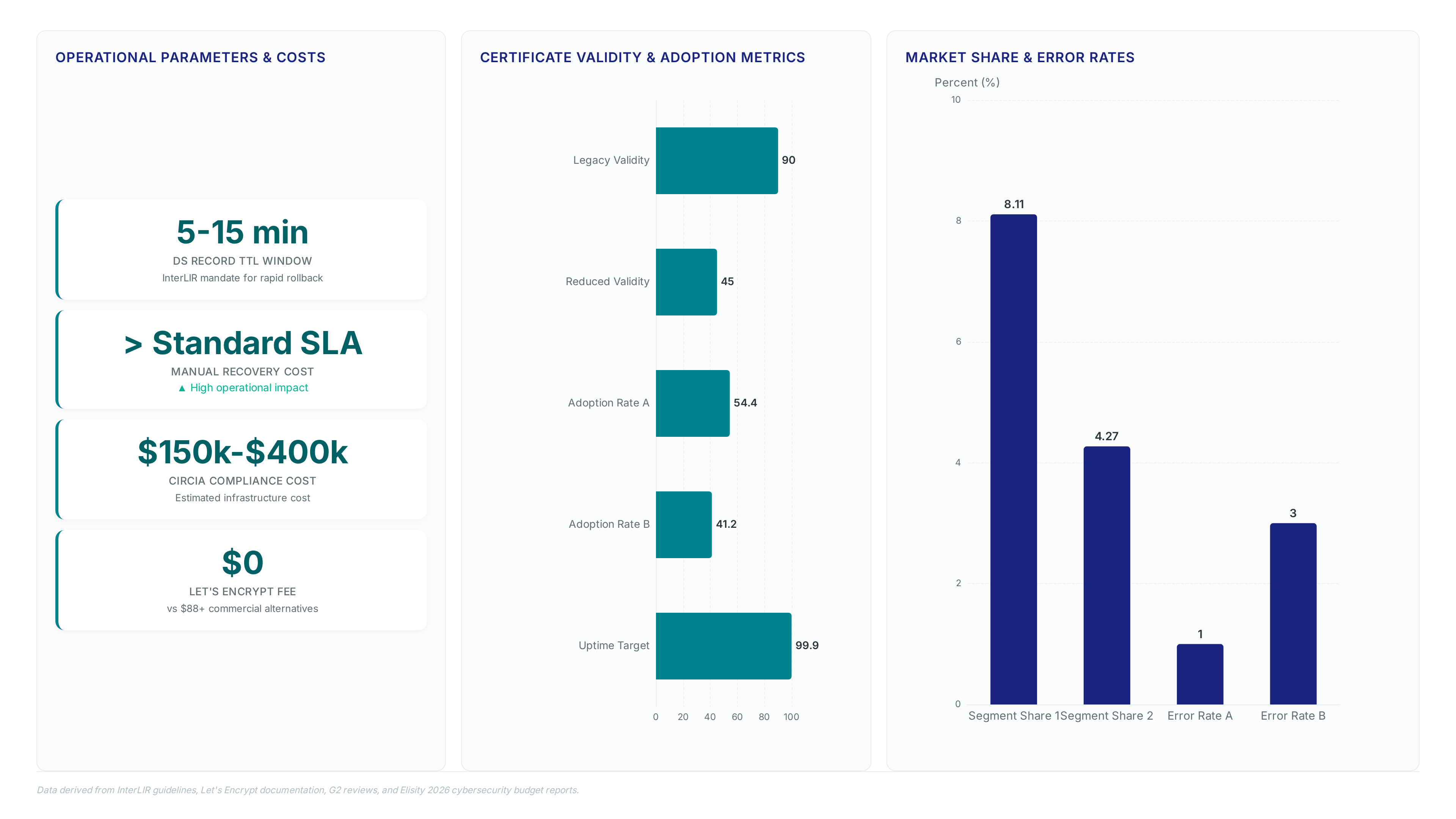
Manual processes caused only 4.27% of domains to sign zones. Learn how CDS records automate delegation and remove human error today.
The November 2025 update lets you share VPC origins across accounts. I show how to keep security tight while cutting management overhead.
The March 3, 2026 update lets admins revoke public links with one click, ending passive detection for good.
Cloudflare now leads 60% of top networks by focusing on connection time, not just raw download speed or theoretical throughput limits.
Classful addressing wasted over 60,000 IPs per block. See how classless routing stops BGP bloat before edge complexity breaks your network.
ARIN's new 365-day ROA log targets routing hijacks. With 32% of global IPv4 here, secure your reassignments before reputation risks rise.
ARIN 57 meets in Louisville this April. With 74% of traffic now RPKI-secured, we analyze the gap between route counts and real safety.
Only 10 individuals join the 2026 ARIN Fellowship. I break down the Jan 26 deadline and why generic applications fail every time.
Nikita breaks down ARIN's 8M records to show how 15 elected members shaped 2025 policy without the corporate spin.
See how the 2026 NomCom vets candidates for three board seats managing 39.5% of global IPv4. A clear look at ARIN's election mechanics.
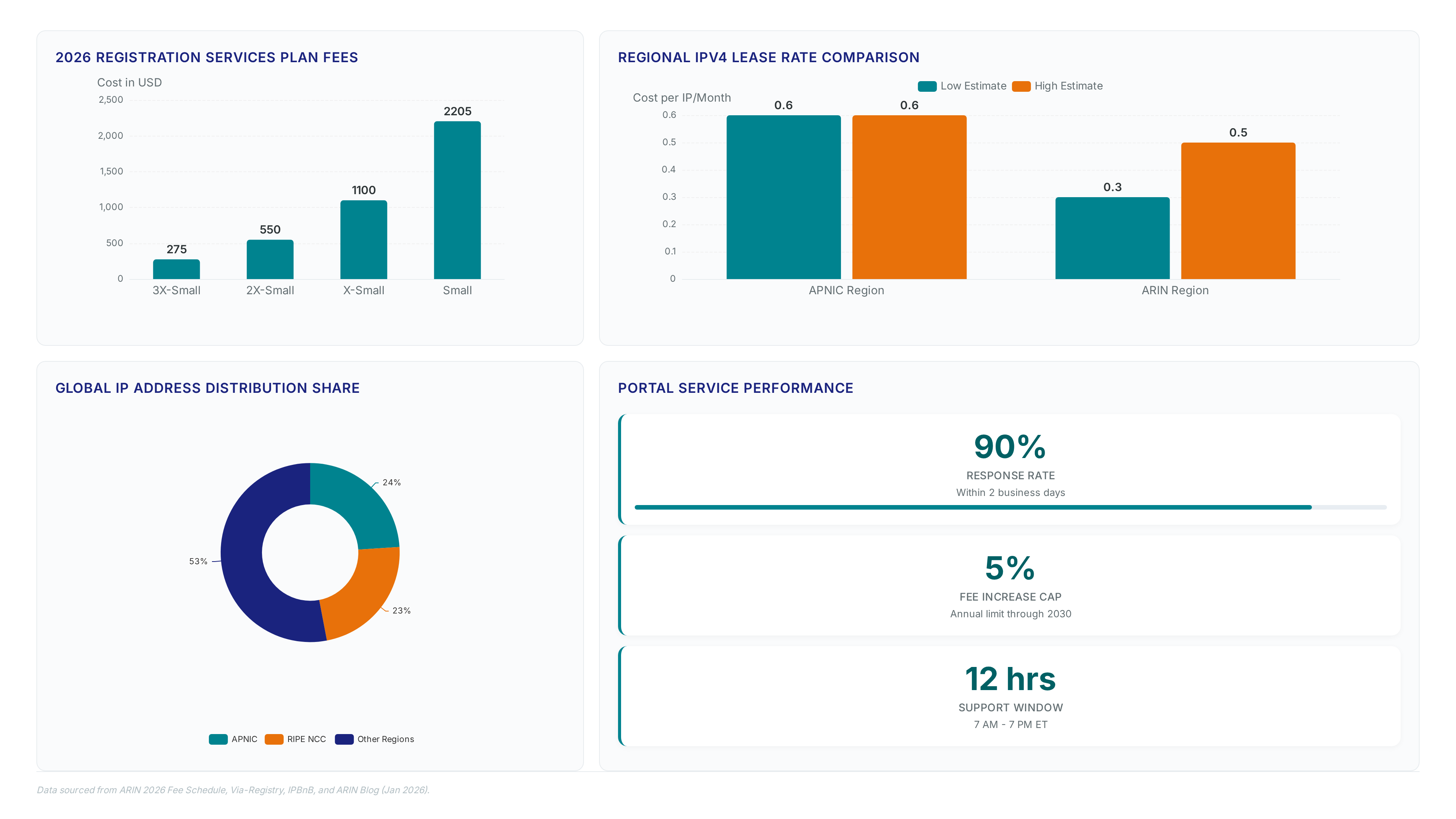
I analyzed how ARIN allocated resources to 587 organizations in 2025 while capping fee hikes at 5% through 2030 for stability.
See how Shaila Sharmin guides policy for 56 Asia-Pacific economies through community consensus, not distant bureaucratic mandates.
I'm joining the APNIC 2026 Fellowship selection. Volunteers dedicate up to five hours to assess candidates for Mumbai.
Stop flying blind with 80% native IPv6 traffic. Akvorado delivers enterprise visibility using just 8GB RAM, no expensive licenses needed.
Move from experiment to production: learn why only 6% of firms scale AI and how new protocols solve payment and token gaps.
Proton honored 8,313 legal requests in 2025. See how US infrastructure undermines Swiss privacy claims for millions of users today.
See how SCION connects every Swiss franc bank by early 2026, replacing fragile BGP with cryptographic trust for deterministic financial routing.
See how the 2026 NomCom vets candidates for three board seats managing 39.5% of global IPv4. A clear look at ARIN's election mechanics.
IPv8 routing requires 192 cores to handle packet rates. Learn why this control-plane indirection adds latency instead of solving scarcity.
AWS Interconnect last mile launches April 15, 2026, turning weeks of manual coordination into instant clicks for your enterprise network.
The March 3, 2026 update lets admins revoke public links with one click, ending passive detection for good.
Move from experiment to production: learn why only 6% of firms scale AI and how new protocols solve payment and token gaps.
IPv8 collapses seven network layers into one dependency. My review shows how a single auth timeout triggers total failure, not graceful degradation.
I break down the RIPE 2026 proposal where the base fee stays at €1,800 but independent assignments rise to €75. See how Option A affects your LIR.
Stop flying blind with 80% native IPv6 traffic. Akvorado delivers enterprise visibility using just 8GB RAM, no expensive licenses needed.
Static checks fail. See how 81% of orgs use live signals like impossible travel to block threats before data leaves your network.
On March 16, 2026, RIPE replaces the old switcher with a single interface. Learn how this affects your six critical tools and LIR Portal access.
Nikita breaks down ARIN's 8M records to show how 15 elected members shaped 2025 policy without the corporate spin.
Thain's IPv8 draft merges 8 functions into one Zone Server, creating a single point of failure that ignores how 50.10% of users now access IPv6.
The 2025 IANA report reveals how 15 community reps fight skills gaps before they break global numbering stability.
ARIN's new 365-day ROA log targets routing hijacks. With 32% of global IPv4 here, secure your reassignments before reputation risks rise.
Classful addressing wasted over 60,000 IPs per block. See how classless routing stops BGP bloat before edge complexity breaks your network.
See how Shaila Sharmin guides policy for 56 Asia-Pacific economies through community consensus, not distant bureaucratic mandates.
APNIC replaced cloud models with physical sites to cut egress fees, helping teams master native IPv6 before the 2027 modernization rush.
See how Jakarta turned 1% adoption into near-total coverage. Learn why 84% of networks still skip RPKI enforcement despite clear ROI.
I'm joining the APNIC 2026 Fellowship selection. Volunteers dedicate up to five hours to assess candidates for Mumbai.
Branden Palacio found 78% of firms ignore PDNS curation. See why static blocklists fail schools with massive query volumes.
Third-party breaches drive a massive share of incidents. Unauthenticated BGP routing remains a critical, undermanaged vulnerability you must fix.
Manual processes caused only 4.27% of domains to sign zones. Learn how CDS records automate delegation and remove human error today.
ARIN 57 meets in Louisville this April. With 74% of traffic now RPKI-secured, we analyze the gap between route counts and real safety.
Only 10 individuals join the 2026 ARIN Fellowship. I break down the Jan 26 deadline and why generic applications fail every time.
Over 180 global disruptions hit in 2025. Learn why physical fiber cuts now cause more internet loss than political actions.
Cloudflare now leads 60% of top networks by focusing on connection time, not just raw download speed or theoretical throughput limits.
The November 2025 update lets you share VPC origins across accounts. I show how to keep security tight while cutting management overhead.