IPv6 Address Reality: Why 128-Bit Matters Now
IPv6 delivers 3.4×10^38 unique addresses to solve exhaustion. Learn how dual-stack bridges the gap while InterLIR optimizes your current IPv4 assets.
IPv4 addresses now trade at the price of gold. This market reality forces an immediate shift to dual-stack architecture.
With IPv4 values hitting $15 per IP in 2026, missing RPKI records risks your entire investment. Learn how strict filtering impacts your network.
Secure IPv4 transfers across 70+ countries using escrow protection. Avoid direct deal risks with verified broker mediation for safe asset acquisition.
RIPE644 unites ARIN, RIPE, and APNIC markets, requiring 50% utilization within five years to secure global IPv4 assets efficiently.
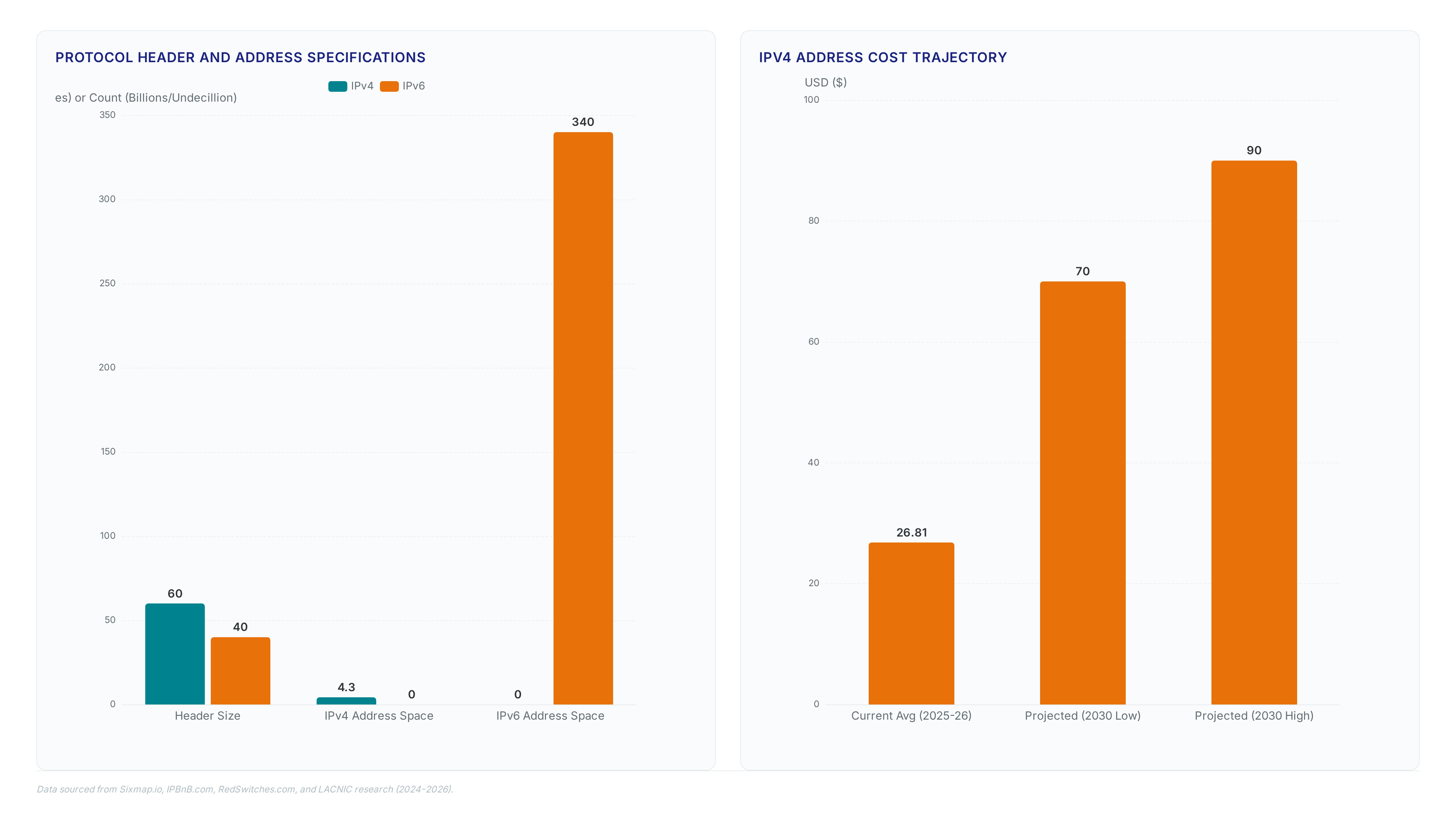
IPv6 delivers 340 undecillion addresses to solve the exhaustion of IPv4's 4 billion slots. This protocol serves as the mandatory evolution for global...
Over 3.36 million IPv4 addresses changed hands in Q1 2026 alone, proving the secondary market is the only viable supply chain left.
Leasing a /24 subnet from $300 delivers immediate scale without the capital drag of permanent acquisition.
The global IPv4 secondary market now exceeds billions of dollars annually. Address space functions as critical capital, not a mere utility.
InterRIR transfers demand strict policy compliance from both source and recipient registries to remain valid and avoid voided operations.
ARIN requires proving operational need for 24 months. InterLIR verifies blocks against 100+ blacklists to ensure your transfer clears RIR scrutiny.
IPv4 prices now range from €28 per address to €99 for blocks as supply exhaustion drives costs higher.
No specific market figures exist in the provided source data to quantify current leasing volume, so organizations must rely on structural ownership...
Lease rates hold at $0.40 per IP while purchase values for large blocks correct downward in 2026.
The weighted average price for IPv4 addresses reached $19.56 per IP in April 2026 based on 110 transactions.
Leasing IPv4 addresses in 2026 costs between $0.50 and $1.50 per IP monthly, a rate that defines current infrastructure budgeting.
With available IPv4 supply shrinking from 44.8M to 18.6M, leasing offers the only viable path for expansion without heavy capital costs.
Since 2018, brokers have defined the IPv4 market. Learn how leasing replaces ownership to meet immediate cloud demands without RIR delays.
Falling 2026 prices signal market maturity, not collapse. With only 18.6 million addresses left, secure transfers and compliance are now critical for success.
Starting at a competitive price per IP address, InterLIR provides a set entry point for buyers in the current IPv4 marketplace.
In 2026, you secure registration rights, not ownership. Learn how this shift drives IPv4 block valuation and transfer rules today.
With the global IPv4 pool exhausted, unused blocks are now critical capital. Learn to navigate leasing or sales securely without fraud risks.
The $60 per IP ceiling reached in 2021 proves that waiting for free allocations is a financial liability.
Secure IPv4 transfers in 2026 require strict due diligence to avoid contested space. Learn how InterLIR ensures legal compliance and clean title.
IP scarcity drives the shift toward IP resource automation as businesses seek to monetize unused assets.
The global IPv4 pool shrunk 60% since 2015. Legacy blocks are no longer just infrastructure; they are critical capital.
Selling IPv4 addresses requires navigating complex RIR transfer processes to ensure legal ownership changes and maximum asset recovery.
The 32bit structure of IPv4 defines absolute scarcity. Discover how professional mediation ensures secure transfers and protects buyers from fraud in this...
Lease IPv4 blocks from /24 to /16 with terms from 1 month to 5 years. Maintain full routing control without capital expenditure.
APNIC enforces a strict 30-day window for IPv4 transfers. Learn how InterLIR's automated brokerage prevents request voids and ensures policy compliance.
Convert dormant IPv4 blocks into capital while navigating RIR transfer rules. InterLIR ensures secure, compliant sales for your unused network assets.
In 2026, blind trust in market availability is a liability. The operational reality for network infrastructure demands rigorous validation of IPv4...
Renting IPv4 addresses costs between $0.40 and a modest amount per IP monthly, making it the logical choice for temporary network expansion.
Renting a /24 block costs $77–$90 monthly. InterLIR provides compliant IPv4 leasing to reduce capital expenditure while managing RIPE database entries.
RIPE NCC caps initial IPv4 allocations at exactly 1,024 addresses. InterLIR helps you manage these finite assets without bureaucratic rejection.
With over 2500 clients relying on IPv4Connect, the market for selling unused IP assets has reached an inflection point.
InterLIR GmbH delivers IPv4 blocks in under 24 hours to solve acute network availability crises.
APNIC recipients must detail a 24-month usage plan for transferred historical IPv4 space to avoid compliance issues in legacy frameworks.
Moving IPv4 blocks from ARIN to RIPE NCC regions isn't a simple swap; it is a collision of two opposing regulatory philosophies.
Learn how accredited brokers use escrow mechanics to protect capital during complex IPv4 transfers and ensure legal title without revocation risks.
Avoid the 180-day IPv4 waitlist by securing direct RIPE NCC membership. Learn to manage AS numbers and database objects without the administrative burden.
Skip the wait for a /22 block. InterLIR provides immediate IPv4 access without the administrative overhead of direct RIPE NCC membership.
Renting IPv6 /48 blocks costs $66.65 yearly, proving leasing bypasses traditional scarcity while offering immediate network deployment for servers.
Leasing a /24 block costs between $128 and $384 monthly, while specific providers like Host-telecom.com quote quarterly rates starting at 600.00 € for...
A standard /24 block now commands a market price between $16 and $25 per IP according to InterLIR data.
Leasing IPv4 addresses cuts acquisition costs dramatically compared to buying outright.
Access over 1 million IPv4 addresses via a RIPE NCC–registered broker. Secure clean blocks with delivery guaranteed in under 24 hours globally.
The era of free IPv4 acquisition is dead. With only a limited number of unallocated addresses remaining globally, network operators face a binary...
IPv4 leasing now serves over 75 industries, turning idle assets into liquid capital while enforcing strict BGP routing security for operators.
With pools shrinking from 44.8M to 18.6M, learn how InterLIR separates legal title from routing rights for secure IPv4 leasing.
Leasing rates define the current IPv4 address economy in 2026. Owners monetize surplus inventory through custom IPv4 lease terms while retaining full...
Market data shows IPv4 lease rates hovered around $0.40 to a comparable rate per IP monthly through 2025, making purchasing obsolete for many.
Leasing a /24 block costs between $128 and $384 monthly, making IPv4 address access an operational expense rather than a capital asset.
Avoid contaminated history from shared pools. InterLIR provides dedicated IPv4 leases with clean BGP routes and full control for stable growth.
With the global IPv4 transfer pool shrinking nearly 60% since 2015, leasing has become the only scalable strategy for modern network expansion.
Leasing a /24 block can start as low as $150 per month. That single figure dismantles the old instinct to hoard IP space.
Skip 8-week procurement delays; deploy clean IPv4 blocks in 24 hours via automated BGP routing for immediate network scaling.
Leasing a /24 IPv4 subnet starts from $169/month when bundled with infrastructure or $256/month for standalone blocks according to current provider...
The IPv4 address market has shifted from bidding wars exceeding $50 per unit to a moderated system in 2026.
Prices above a nominal threshold per address set the IPv4 market during past bidding wars, but that era has ended.
Organizations can acquire IPv4 addresses starting at a competitive rate per IP through InterLIR's marketplace, a baseline that defines current entry...
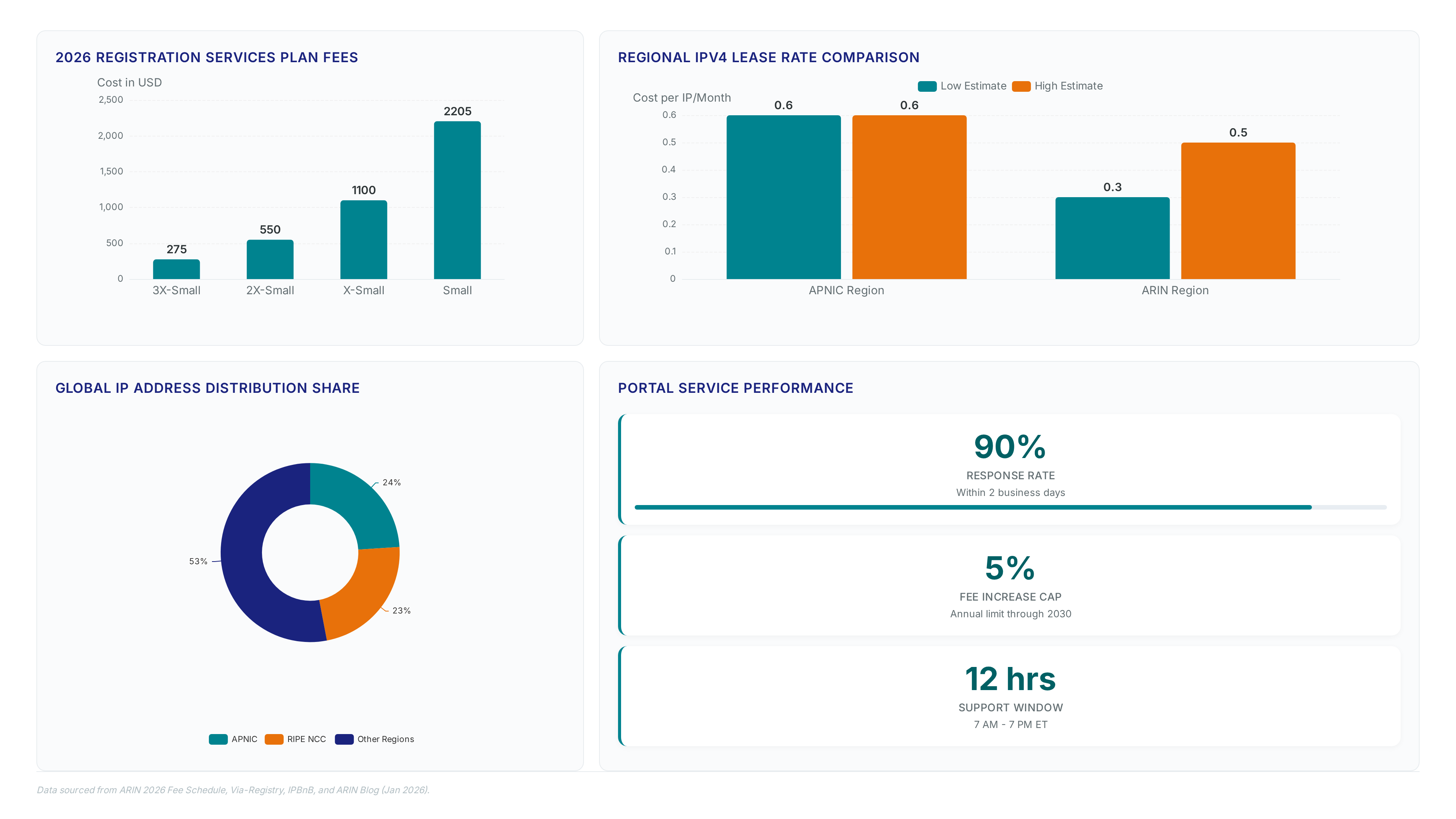
APNIC lease rates now reach $0.60 per IP monthly. Discover how regional supply constraints and block quality impact your network budget today.
IPv4 offers exactly 4,294,967,296 unique addresses. That is the hard ceiling. The 32-bit architecture creates a finite pool that the industry can no...
A perfect 5.0 rating across 32 reviews defines the current standard for trusted IPv4 leasing platforms.
Securing an ASN requires verified contracts with two ISPs and a $500 fee. InterLIR helps optimize your IPv4 holdings for these architectures.
With 4,294,967,296 total addresses fixed, learn how APNIC transfers and leasing models help organizations secure IPv4 space legally.
Microsoft paid $11.25 per address to Nortel in 2011, instantly creating a paid market for IPv4 assets.
Five RIRs manage global resources, yet fragmented records create risk. Learn to audit your IPv4 and IPv6 assets for true governance.
Overlapping RFC 1918 spaces break routing. Use public IPv4 blocks to bypass NAT limits and secure partner access without renumbering networks.
Cut upfront costs by shifting from asset acquisition to operational flexibility. InterLIR ensures RPKI validity for your leased IPv4 blocks today.
AFRINIC charges a one-time allocation fee based on IPv4 block size, unlike flat-rate regions. Learn how this variable structure impacts your budget.
LACNIC approved 135 intraRIR transfers since 2016. InterLIR verifies eligibility to bypass strict holding periods and secure compliant IPv4 blocks.
ARIN enforces a 24-month need justification for transfers. InterLIR verifies seller authority and routing hygiene to secure your /24 block safely.
Five Regional Internet Registries govern global IPv4 scarcity. Learn how InterLIR automates compliance for complex IntraRIR and InterRIR transfers.
APNIC transfers surged from 131 in May to 1,478 in June, defining the liquidity shock of the 2026 IPv4 market.
With small blocks reaching $45 per unit, InterLIR helps secure clean IPv4 assets before 2026 price corrections tighten the market further.
Stop burning cash on bad IP blocks. Validate geolocation and routing before signing any lease to avoid the 2019 RIPE NCC scarcity risks.
RIRs enforce strict rules like ARIN's 12-month lock on new resources. Learn how these policies shape global IPv4 transfers in 2026.
The 2022 IPv4 market saw block transactions drop 28% while total addresses transferred surged 35%, per IPv4.Global data.
APNIC draws a hard line for moving IPv4 addresses and AS numbers no longer under active management.
Start your LIR registration for €350.00 to own a /22 IPv4 block. Eliminate third-party dependency and manage your IP resources with full autonomy.
Prop095v003 restricts APNIC transfers to just 3 regions. InterLIR ensures your IPv4 moves comply with these strict bilateral mandates.
IPv4 transfers demand strict eligibility checks and RIR approval to legally move addresses between parties.
Secure valid ownership by following RIR protocols for your /24 transfer. Learn to verify IP reputation and avoid blacklisting risks today.
RIPE mandates LIR status for transfers as free pools dried up. Learn why a /24 block is the smallest global routing unit today.
With IPv4 Connect reporting that 3,000+ companies now trust their marketplace, acquiring RIPE IPv4 addresses has shifted from a bureaucratic hurdle to...
IRINN imposes fees on transferred IPv4 resources, while APNIC routes InterRIR requests across 56 economies. Learn the specific costs.
Leasing a single /24 IPv4 subnet starts around $150 monthly, a fraction of the capital required for permanent ownership.
Purchase prices hitting $35, 60 per IP make leasing IPv4 blocks at $0.30, 0.50 monthly the only viable scaling strategy for US and EU providers in...
Secure clean IPv4 blocks with full BGP routing. Access inventory from 256 to 2,048 IPs for immediate deployment without capital commitments.
Leasing IPv4 addresses lets networks scale instantly by accessing blocks as small as a /24 subnet containing 256 addresses.
APNIC transfers fail without recipient acknowledgment within 30 days. Learn how preapproval validates needs for 24 months to prevent expiration.
LACNIC charges exactly USD 200.00 for its one-year IPv4 listing. Learn how Policy 2.3.2.18 separates admin validation from commercial deals.
A tenfold surge from $6 to $60 defines the recent valuation trajectory for individual IPv4 addresses.
With 713 Local Internet Registries stuck on the IPv4 Waiting List, the RIPE NCC confirms that address scarcity is now a hard operational constraint.
Leasing costs approximately less than average market rates according to IPXO data. The modern network strategy has shifted from capital-intensive...
Buying IPv4 addresses becomes cheaper than leasing after 36 to 48 months. Avoid indefinite rental fees and secure permanent asset ownership today.
Direct RIPE membership since 2015 defines the operational baseline for Virtuasys and its delivery of IP resources.
Cut IPv4 transfer time to under 24 hours while maintaining strict registry compliance and preventing hijacking with verified ASN context.
Extreme scarcity defines the current IPv4 market. Learn how block sizes from /24 to /17 impact your acquisition strategy and final costs.
Navigate the 2026 IPv4 market with a strict 5-step workflow. InterLIR ensures clean blocks and full RIR compliance for secure transfers.
Unlock over 10,000,000 IPv4 addresses in global pools. Transform dormant blocks into recurring revenue while keeping full ownership control.
Deploy IPv4 resources within 48 hours to bypass scarcity. InterLIR provides compliant, fast leasing for immediate network expansion without asset risk.
Global IPv6 availability hovers around 40%. That leaves a massive gap. Organizations lease IPv4 blocks to bypass permanent acquisition costs while...
Avoid dropped packets from bad IPv4 leasing. Learn the 4 steps to align RIR policies and ROA records for safe, global routing continuity.
Leasing rates for IPv4 addresses held between a low and high monthly rate per unit from June 2025 through May 2026 according to IPXO data.
City accuracy drops to 50–80% without action. Learn why global routing lags 2–8 weeks and how to force sync your IPv4 records today.
With 4.3 billion addresses as the hard global limit, dormant IPv4 blocks represent tangible capital. Learn to audit and monetize unused ranges today.
Leasing a /24 block costs significantly less than the $15 to $26 per address required for outright purchase via ipbnb.com.
Recovered blocks enter a single queue; by July 7, 2023, the registry distributed 5,572 blocks to eligible members via this strict process.
IPv4 transfers demand strict RIR coordination to avoid policy violations. Learn how i.LEASE manages the resource review process for secure transactions.
APNIC mandates a 5-year hold on 103/8 pool addresses before transfer. Learn how this rule blocks speculation and shapes current market liquidity.
With only 4.3 billion addresses possible, leasing offers a practical path. Learn how to verify authentic blocks and structure secure rental deals today.
With only 4.3 billion addresses possible, the 32-bit space is exhausted. Learn how secondary markets now drive global infrastructure deals safely.
With only 3.9 million unallocated addresses remaining globally, the era of free IPv4 expansion is dead.
Only four RIRs currently support moving IP addresses and ASNs across regional boundaries. Inter-RIR transfers enable the specific movement of IP...
Exactly four registries support global IPv4 moves. Learn the specific fee structures and documentation needed to prevent transaction stalls.
Only 4 regional registries enable interRIR transfers today. Learn the dual-consent rules and legacy status outcomes for global IPv4 moves.
InterRIR IPv4 transfers require dual registry consent, creating a mandatory 4 to 8 week window that internal moves simply do not face.
In 2026, RIPE saw 279 inbound vs 22 outbound transfers. Learn the dual-compliance rules needed to secure global IPv4 space today.
With 60% of addresses blacklisted, buying verified clean IPv4 blocks prevents delivery failures and protects your network reputation globally.
With IPv4 still handling the majority of traffic, your vote matters. Learn how 3 open Board seats shape policy before the June 22 deadline.
Transfers of 103/8 free pool addresses face a mandatory five year lockout period according to APNIC transfer conditions.
APNIC publishes only preapproved IPv4 requirements, creating a verified list rather than an open market for specific address needs.
RIPE's May 2026 update shows 841 LIRs waiting 536 days and IPv6 ROA coverage at 44%. Why the waiting list is a supply signal, not a queue, and what to do instea
Scarcity has birthed a liquid secondary market for IPv4 blocks where unused sub-blocks are sold rather than allocated.
With RIPE NCC fees hitting EUR 1,800 in 2026 and only a /24 available, InterLIR offers immediate IPv4 access without the wait.
Unused IPv4 blocks generate zero revenue. Learn how the 24-month RIPE NCC hold impacts your strategy and how InterLIR secures payouts.
Discover why 2026 buyers prefer fixed-price IPv4 deals over volatile auctions. Learn ARIN and RIPE validation steps for secure, clean block transfers.
APNIC allocations now max out at 512 addresses. Leasing offers the flexible capacity proxy companies need to scale without permanent ownership.
A /24 IPv4 subnet delivers exactly 256 addresses, the smallest prefix accepted by global BGP routing without triggering filters that discard longer paths.
With only 4,294,967,296 unique IPv4 addresses available, global governance strictly controls allocation through regional registries rather than direct access.
Move IPv4 addresses across the five regional registries. Learn the strict LIR rules and justified need required for a legal InterRIR transfer today.
With 2024 prices stabilizing near $40 per address, leasing IPv4 avoids stranded assets and offers flexible scaling for modern network growth.
Idle IPv4 blocks are lost capital in this exhausted market. Learn to sell or lease surplus assets for immediate revenue without hidden fees.
APNIC identified 54 million unadvertised addresses. Learn why preapproval is vital before seeking an IPv4 source to avoid deal cancellation.
Recent data shows a weighted average of $19.56 per IP. Discover how to execute valid secondary market transfers and avoid costly routing failures now.
Leasing a /24 IPv4 range costs exactly US$ 189.00 per month under annual contracts, proving that operational access now trumps permanent ownership.
Secure IPv4 blocks with no-revocation guarantees for 36 to 60 month terms, ensuring stable BGP sessions without capital expenditure risks.
Since RIPE limits new allocations to a /22 block, many firms buy IPv4 space on the secondary market. Learn how verified brokers secure legal transfers.
Since IANA's 2011 pool exhaustion, free IPv4 blocks are gone. Learn why leasing is the strategic fix for network expansion today.
Explore why the hard 32-bit ceiling of 4,294,967,296 addresses makes understanding legacy class structures vital for modern network planning.
IPv4's 32-bit design caps the global pool at exactly 4,294,967,296 addresses. Discover how this finite limit shapes modern network routing today.
With 2026 lease prices adjusting due to rising supply, recurring revenue models now outperform one-time IPv4 liquidation strategies.
With human traffic under 10%, machines now drive the critical exhaustion of IPv4 addresses.
The 2026 IPv4 market favors calculated private negotiation over auction frenzy. Learn how escrow services and RIR protocols secure your block transfer today.
IPv4 sale prices jumped from $6 to $60 as free pools vanished. See why addresses are now financial assets, not just utilities.
Bidding wars are out. IPv4 operators now demand fixed-price models to lock in procurement costs and kill speculation.
Avoid the RIPE NCC waitlist with a Managed LIR service. For 600,00 CHF monthly, bypass complex policies and secure IPv4 allocations immediately.
Demand outpaces supply with a 20% rise in inquiries. Learn how managed brokers screen geodiverse blocks to guarantee clean routing.
The global IPv4 pool shrank from 44.8 million to 18.6 million addresses. Discover why leasing bypasses capital risks in this tight market.
Over 33 million IPv4 addresses moved via leasing recently. Discover how automated platforms convert dormant blocks into recurring revenue streams.
Rent IPv4 blocks from /24 to /16 starting at just $25 per IP monthly. Learn the seven technical steps to secure clean BGP routing today.
Leasing IPv4 blocks grants access to inventory but confers zero permanent registration rights or network autonomy.
Renting IPv4 addresses starts at just $0.42 per IP monthly via InterLIR, bypassing the capital exhaustion of permanent acquisition.
Unused IPv4 space is now liquid capital. Learn how the 24-month transfer hold forces many holders to lease rather than sell for immediate returns.
ARIN's IPv4 Free Pool officially depleted on 24 September 2015. The registry still processes limited requests, but the rules have changed...
Transform dormant inventory into revenue. With 4.3 billion addresses exhausted, learn how leasing surplus blocks creates yield without divesting control.
With over 820 million unused IPv4 addresses sitting idle while the global transfer pool shrank by nearly 60%, leasing has become the only viable...
Policy LAC-2019-01 broke the mold. Before 2019, moving IPv4 address blocks across regional borders usually required a corporate merger or acquisition.
Buying an IPv4 address in 2026 costs between $18 and $45 per IP, while leasing runs $0.30 to $0.50 monthly.
Paying $1.20 per IP instead of $50 defines the immediate financial logic behind modern IPv4 leasing strategies.
With 3,687,518,752 addresses delegated, APNIC's free pool is history. Discover how strict limits force operators toward leasing and secondary markets today.
ARIN manages about 100 /8s, yet cross-border deals stall on policy. Learn how strict chain of custody rules shape the global IPv4 market today.
Only 3.9 million unallocated addresses remain. The IPv4 leasing market has shifted from an optional tactic to an operational imperative.
56,629 global IPv4 transactions have occurred since 2012, yet January 2026 saw APNIC transfers drop to just 88. Scarcity has shifted the battlefield.
With only 0.1811 /8s remaining in the pool as of June 2026, direct allocation from APNIC is effectively dead for most enterprises.
Small /24 subnets trade near $30 per IP. Learn RIPE NCC eligibility rules for allocated and independent resources to avoid costly policy violations.
The total theoretical capacity of IPv4 is exactly 4,294,967,296 addresses, a hard limit the RIPE NCC region has already hit.
Since September 14, 2012, RIPE enforces a strict 1,024 address limit per LIR. Navigate this regulatory cap to secure essential IPv4 resources today.
AWS charges $0.005 per hour, making an idle IP cost exactly $43.80 annually. Discover why treating addresses as infinite resources is over.
A clean /24 IPv4 block costs between $9,000 and $15,000 in 2026. This pricing reality confirms that IPv4 ownership has shifted from a technical...
Discover why IPv4 purchasing breakeven stretches to 12 years with overhead, while leasing offers flexibility for under 24-month projects.
APNIC's 2010 policy shift created IPv4 liquidity by allowing transfers, establishing the /24 minimum block size still used today.
Leasing IPv4 addresses now averages $0.40 per IP, offering immediate relief from exhausted inventories.
The global IPv4 transfer pool shrank nearly 60% from 2015 to mid-2024, forcing ISPs to adopt leased address blocks.
Leasing IPv4 addresses costs $0.30 to $0.55 per IP monthly while purchase prices sit between $38 and $58 according to IPv4.Global data from May 2026.
Lease IPv4 blocks to bypass high upfront capital while maintaining legacy systems. Avoid the IPv4 poverty penalty with flexible monthly terms.
Zen Internet withdraws free IPv4 blocks after originating 500,000 addresses. Learn how the shift to leasing impacts your network budget and planning.
APNIC policy version 015 takes effect 20 February 2025, redefining IPv4 transfer rules and compliance for the Asia Pacific region.
Five Regional Internet Registries manage global IP allocation, acting as the sole gatekeepers between IANA and the wider network infrastructure today.
RIPE 93 in Sofia targets IPv4 scarcity with 3,049 votes proving stakeholder engagement. Submit technical proposals by 14 August 2026.
Stop tying up $10,000 in idle assets. Leasing IPv4 blocks offers a flexible OpEx model, letting you scale networks without the heavy capital drag.
Early 2026 data confirms 3.7B IPv4 addresses remain allocated, yet zero are free. Explore how NAT and subnetting sustain global network operations today.
APNIC's Q1 2026 report shows 99.99% uptime despite IPv4 scarcity. Learn how governance adapts as the pool shrinks to 0.18 /8.
RIPE NCC's April 2026 update: 841 LIRs queued, 503-day waits, 1.79M IPv4 transferred. Why an LIR account is now a standing cost, not a resource tap, and how to
A single /16 IP network can generate approximately 30,000 € per month when leased through the InterLIR platform.
With few hundred thousand IPv4 addresses left, leasing offers speed. Learn how operators bypass ownership delays to scale proxy deployment effectively today.
Stop paying inflated broker fees for IPv4 blocks. With only 4,294,967,296 addresses total, InterLIR ensures clean title history and direct seller access.
With only 4.3 billion unique addresses total, the IPv4 market demands agility. Leasing offers a flexible path around permanent scarcity.
Free IPv4 pools are gone. The secondary market is no longer a theoretical alternative; it is the only path forward for network expansion.
Buying a single IPv4 address currently costs between a nominal fee and $60, with most 2026 transactions settling near $45 per unit.
Buying IPv4 addresses in 2026 costs between $18 and $45 per IP, a spread driven by block size and region. Stop treating this as a simple utility bill.
Convert idle inventory into liquid capital with InterLIR's automated leasing. Access clean IPv4 blocks delivered in under 24 hours.
With only 4,294,967,296 unique IPv4 addresses, treating them as mere utilities ignores critical market scarcity and economic reality.
Four regions allow InterRIR transfers, but ARIN enforces a strict /24 minimum. Learn how to navigate these specific policy gaps without rejection.
Five regional registries govern global IPv4 blocks, verifying each LIR before allocation to prevent routing conflicts and ensure network stability.
APNIC imposes a mandatory 5-year lockup on IPv4 transfers from the free pool, trapping capital and favoring legacy holders over new market entrants.
APNIC requires a detailed 24-month usage plan for new recipients. Learn the four specific transfer scenarios and how to validate legacy data correctly.
Over 56,000 transactions prove the market works, but missing Deed of Covenant details causes immediate rejection. Learn the exact steps to validate.
With IPv6 access hitting 48.8%, unmanaged dual-stack environments create blind spots. Learn why technical pleas fail and governance is the only fix.
With only 34% of IPv6 space advertised, clinging to IPv4 Router IDs creates unnecessary phantom infrastructure and collision risks.
The ARIN 57 Meeting Report is an archive, not a to-do list. An IPv4 support specialist reads it for the four dated deadlines that actually touch your address bu
Facing a 503-day wait for IPv4? Our market analysis shows how leasing bypasses the queue while securing clean routing integrity.
With 773 LIRs stuck on the RIPE waiting list, free allocation is over. I analyze the shift to market transfers and rising costs.
Ryan Hamel ended the IPv8 debate on May 4, 2026. We analyze why doubling BGP state tables creates unsustainable overhead for modern networks.
Jamie Thain's IPv8 promises 3 billion addresses per ASN, but zero working implementations exist on off-the-shelf hardware today.
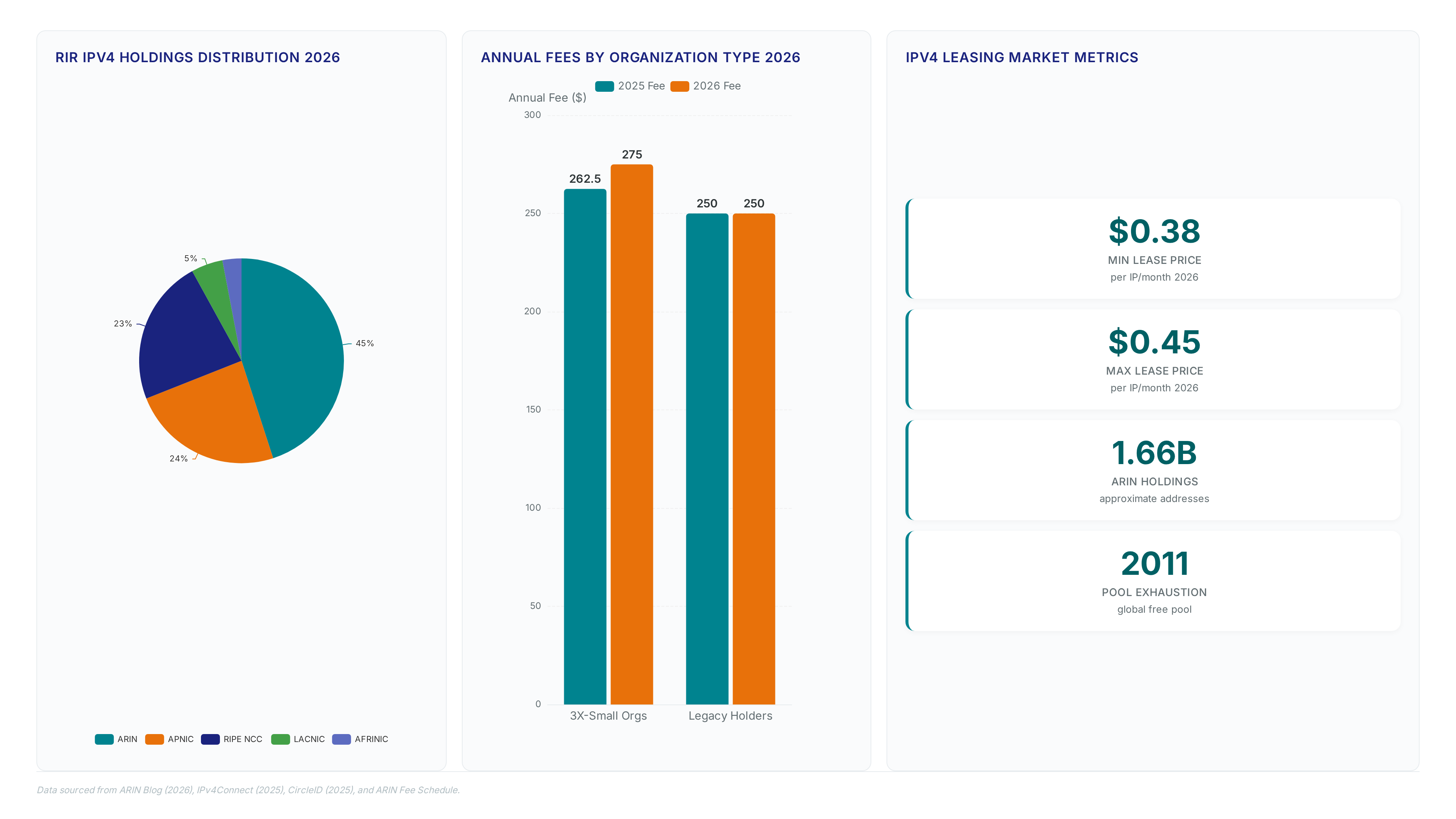
Real enterprise IPv6 sits at 12%. With IPv4 leasing at $0.38, the 2045 sunset date makes economic sense for now.
IPv8 routing requires 192 cores to handle packet rates. Learn why this control-plane indirection adds latency instead of solving scarcity.
See how a single app binding change lifted native IPv6 from 67% to 79.2% in just 16 days by fixing specific fallbacks.
ARIN filled 67 waiting list requests in April using 40 cleared blocks. Learn why verifying IP reputation is critical before you deploy.
IPv8 breaks legacy silicon, forcing upgrades that current multi-billion-dollar SONiC deployments cannot support without major risk.
With 57% of traffic still on IPv4, IPv4x extends space without breaking routers. A pragmatic look at the 96-bit subspace solution.
Jamie Thain proposes repurposing 127.x to solve 10.x overlaps, offering a fix while global IPv6 sits at 50.10% usage in 2026.
ARIN's new 365-day ROA log targets routing hijacks. With 32% of global IPv4 here, secure your reassignments before reputation risks rise.
With fewer than 5 LIRs left and a 477-day wait, direct allocation is gone. I explain why transfers are your only real option now.
Cloudflare's ASPA rollout targets the gap where 53% of IPv4 prefixes remain unchecked, securing paths beyond origin validation.
Litigation has frozen resource allocation for years. With only 30 million addresses, AFRINIC's legal crisis hurts 56 African nations.
The 1994 Toronto decision rejected simple expansion, forcing dual stacks that double memory use and operational costs for networks today.
North America holds 39.5% of global IPv4. I break down ARIN 57 sponsorship tiers to show where your budget actually buys policy influence.
ARIN cleared 149 requests in Jan 2026. I explain why the 388-day queue beats paying $90 per IP on the volatile private market.