Global address policy: How the ASO shapes IP rules
The ASO connects 5 regional registries to ICANN, ensuring global address policy reflects local operator needs without top-down mandates.
Customer Account Manager
Customer Account Manager at InterLIR. Manages long-term customer relationships in the IPv4 leasing and ASN registration space across Europe.
External Profile
The ASO connects 5 regional registries to ICANN, ensuring global address policy reflects local operator needs without top-down mandates.
Changing one digit in DNS configuration activates instant malware blocking. Learn how filtering resolvers stop bad domains before they reach your device.
IPv6 delivers 3.4×10^38 unique addresses to solve exhaustion. Learn how dual-stack bridges the gap while InterLIR optimizes your current IPv4 assets.
Ismar Hrnjicevic's July 2026 analysis shows distinct DNS resolver roles block ads on smart TVs without heavy software on every endpoint.
With 20,000 members, RIPE NCC governs critical IP resources. InterLIR helps you navigate these complex rules and secure clean IPv4 blocks today.
RIPE644 unites ARIN, RIPE, and APNIC markets, requiring 50% utilization within five years to secure global IPv4 assets efficiently.
LIRs manage finite IPv4 space with strict /21 minimums. InterLIR optimizes your existing resources without immediate direct RIR membership needs.
IPv6 delivers 340 undecillion addresses to solve the exhaustion of IPv4's 4 billion slots. This protocol serves as the mandatory evolution for global...
New LIRs face a €1,000 signup fee plus annual dues. Learn why exact references matter to avoid locked resources and operational delays.
With 1,051 exchange points listed, direct peering replaces costly transit. Learn how BGP and ASN settings optimize routing for specific networks.
Secure your own /22 block and avoid third-party markups. Learn why the €1,800 annual fee grants full control over your IP resources today.
Explore how 80,000 unique identifiers manage global routing policies. InterLIR ensures your network has the clean, verified IPv4 resources to connect.
Stop duplicate ROAs that break validation. Learn how cryptographically signed objects bind a prefix to one Origin AS for secure routing.
The €1,800 RIPE fee often masks hidden admin costs. Discover why smart operators choose flexible leasing over rigid direct membership today.
Launched July 10th, 2026, Netomics keeps routing data on-premises. InterLIR supports this sovereignty with secure IPv4 resources for your network.
No specific market figures exist in the provided source data to quantify current leasing volume, so organizations must rely on structural ownership...
Since 2018, brokers have defined the IPv4 market. Learn how leasing replaces ownership to meet immediate cloud demands without RIR delays.
Falling 2026 prices signal market maturity, not collapse. With only 18.6 million addresses left, secure transfers and compliance are now critical for success.
In 2026, you secure registration rights, not ownership. Learn how this shift drives IPv4 block valuation and transfer rules today.
Since APNIC launched RPKI in 2010, five registries now enforce cryptographic certainty, replacing hope-based filtering with valid, invalid, or unknown states.
Malaysia's June 2026 consultation targets a ghost. The proposal seeks to revive the National Internet Registry (NIR) model, ignoring that APNIC...
Selling IPv4 addresses requires navigating complex RIR transfer processes to ensure legal ownership changes and maximum asset recovery.
In 2026, blind trust in market availability is a liability. The operational reality for network infrastructure demands rigorous validation of IPv4...
RIPE NCC caps initial IPv4 allocations at exactly 1,024 addresses. InterLIR helps you manage these finite assets without bureaucratic rejection.
With over 2500 clients relying on IPv4Connect, the market for selling unused IP assets has reached an inflection point.
InterLIR GmbH delivers IPv4 blocks in under 24 hours to solve acute network availability crises.
Renting IPv6 /48 blocks costs $66.65 yearly, proving leasing bypasses traditional scarcity while offering immediate network deployment for servers.
A standard /24 block now commands a market price between $16 and $25 per IP according to InterLIR data.
Leasing IPv4 addresses cuts acquisition costs dramatically compared to buying outright.
Access over 1 million IPv4 addresses via a RIPE NCC–registered broker. Secure clean blocks with delivery guaranteed in under 24 hours globally.
With pools shrinking from 44.8M to 18.6M, learn how InterLIR separates legal title from routing rights for secure IPv4 leasing.
APNIC lease rates now reach $0.60 per IP monthly. Discover how regional supply constraints and block quality impact your network budget today.
With 80,000 active systems globally, choosing the right autonomous system number matters. See how private and public formats define your routing boundaries.
Securing an ASN requires verified contracts with two ISPs and a $500 fee. InterLIR helps optimize your IPv4 holdings for these architectures.
RPKI uses cryptographic certificates to bind IP prefixes, stopping hijacks before they spread across global networks in 2026.
Learn how 4,294,967,296 identifiers solve routing exhaustion. Discover criteria for public ASNs and effective global data exchange strategies.
AFRINIC charges a one-time allocation fee based on IPv4 block size, unlike flat-rate regions. Learn how this variable structure impacts your budget.
Stop route leaks by validating origin against five regional registries. Secure your specific IP prefixes with cryptographic proof today.
Forty-eight views marked the launch of FastNetMon's new on-premises routing intelligence platform on 10 Jul 2026.
A $200 non-refundable deposit starts the clock on IPv4 address transfers in the LACNIC region. This isn't just a fee; it's a filter.
With small blocks reaching $45 per unit, InterLIR helps secure clean IPv4 assets before 2026 price corrections tighten the market further.
RIRs enforce strict rules like ARIN's 12-month lock on new resources. Learn how these policies shape global IPv4 transfers in 2026.
BGP links hundreds of thousands of networks yet lacks inherent verification, leaving global data flow open to hijacks without strict validation.
Secure valid ownership by following RIR protocols for your /24 transfer. Learn to verify IP reputation and avoid blacklisting risks today.
Over 375,000 valid ROA objects now secure the global routing table, replacing fragile honor systems with cryptographic proof for every prefix.
X.509 certificates anchor RFC 6480 to prove IP ownership. Learn how strict validation stops origin spoofing without causing outages.
Five Regional Internet Registries currently manage the world's IP addresses, a structure solidified since the first entity launched in 1992.
Institutions get a /48 network but must prove need for more. Discover how local registry policies link address access to active network participation.
Skip registry delays with 258 subnets ready for immediate deployment. Get full BGP control and clean IPv4 space without the long wait.
Purchase prices hitting $35, 60 per IP make leasing IPv4 blocks at $0.30, 0.50 monthly the only viable scaling strategy for US and EU providers in...
Leasing IPv4 addresses lets networks scale instantly by accessing blocks as small as a /24 subnet containing 256 addresses.
LACNIC charges exactly USD 200.00 for its one-year IPv4 listing. Learn how Policy 2.3.2.18 separates admin validation from commercial deals.
With 713 Local Internet Registries stuck on the IPv4 Waiting List, the RIPE NCC confirms that address scarcity is now a hard operational constraint.
Unlock over 10,000,000 IPv4 addresses in global pools. Transform dormant blocks into recurring revenue while keeping full ownership control.
Deploy IPv4 resources within 48 hours to bypass scarcity. InterLIR provides compliant, fast leasing for immediate network expansion without asset risk.
Global IPv6 availability hovers around 40%. That leaves a massive gap. Organizations lease IPv4 blocks to bypass permanent acquisition costs while...
Avoid dropped packets from bad IPv4 leasing. Learn the 4 steps to align RIR policies and ROA records for safe, global routing continuity.
Leasing a /24 block costs significantly less than the $15 to $26 per address required for outright purchase via ipbnb.com.
Explore how five organizations manage global IP space, from APNIC's 26,067 members to AFRINIC's 2,492, defining strict regional boundaries.
Stop unencrypted text on port 53. This guide shows how Cloudflare logs vanish in 25 hours and how to configure Windows 11 for real privacy.
Q1 2026 delivered a stark reminder: Qrator logged exactly 1 confirmed BGP hijack and 7 route leaks.
Skip the €1,000 signup fee for direct LIR status. InterLIR simplifies ASN sponsorship, handling Idenfy validation and RIPE compliance for you.
APNIC publishes only preapproved IPv4 requirements, creating a verified list rather than an open market for specific address needs.
Discover the fixed €1,800 annual fee and €1,000 signup cost for RIPE NCC membership. Learn why direct ownership beats upstream dependency today.
Discover why 2026 buyers prefer fixed-price IPv4 deals over volatile auctions. Learn ARIN and RIPE validation steps for secure, clean block transfers.
With 2024 prices stabilizing near $40 per address, leasing IPv4 avoids stranded assets and offers flexible scaling for modern network growth.
Idle IPv4 blocks are lost capital in this exhausted market. Learn to sell or lease surplus assets for immediate revenue without hidden fees.
The AWS3 auction hit $3.1B, clearing FCC triggers and sparing EchoStar penalties while freeing spectrum for real 5G network deployment.
Global data centre spending hits $450 billion by 2026 as AI demands lossless networks. Discover why RoCEv2 traffic fails without physical redesigns.
Akamai leads with 79.0 Tbps of deployed capacity, proving public peering remains vital for regional traffic distribution and cache efficiency today.
IPv4 sale prices jumped from $6 to $60 as free pools vanished. See why addresses are now financial assets, not just utilities.
Demand outpaces supply with a 20% rise in inquiries. Learn how managed brokers screen geodiverse blocks to guarantee clean routing.
Leasing IPv4 blocks grants access to inventory but confers zero permanent registration rights or network autonomy.
With over 820 million unused IPv4 addresses sitting idle while the global transfer pool shrank by nearly 60%, leasing has become the only viable...
A 20% rise in IPv4 leasing shows operators moving to anonymous cloud setups with strict Fair Usage Policies for data privacy.
Buying an IPv4 address in 2026 costs between $18 and $45 per IP, while leasing runs $0.30 to $0.50 monthly.
Paying $1.20 per IP instead of $50 defines the immediate financial logic behind modern IPv4 leasing strategies.
With 3,687,518,752 addresses delegated, APNIC's free pool is history. Discover how strict limits force operators toward leasing and secondary markets today.
Renting a VPS solves CGNAT blocking where Cloudflare Tunnel fails for UDP traffic on non-web ports.
With only 2.2% of global ASNs, African firms lack routing identity. Discover how owning your number cuts latency and removes upstream dependency.
Small /24 subnets trade near $30 per IP. Learn RIPE NCC eligibility rules for allocated and independent resources to avoid costly policy violations.
A clean /24 IPv4 block costs between $9,000 and $15,000 in 2026. This pricing reality confirms that IPv4 ownership has shifted from a technical...
Discover why IPv4 purchasing breakeven stretches to 12 years with overhead, while leasing offers flexibility for under 24-month projects.
Inter-RIR transfers take between 4 weeks and 10 months to complete depending on the registries involved.
Zen Internet withdraws free IPv4 blocks after originating 500,000 addresses. Learn how the shift to leasing impacts your network budget and planning.
Learn how RPKI validation prevents the type of routing errors that caused the 2019 Cloudflare outage affecting millions of users globally.
Stop tying up $10,000 in idle assets. Leasing IPv4 blocks offers a flexible OpEx model, letting you scale networks without the heavy capital drag.
Over 105,000 ASNs now power the global internet. Learn how routing policies evolved from 16bit limits to manage complex network boundaries today.
I break down 4 private connectivity patterns to secure your Amazon Bedrock AgentCore targets without public internet exposure.
A single /16 IP network can generate approximately 30,000 € per month when leased through the InterLIR platform.
Stop static filtering failures. Learn how RPKI validation secures the route chain against hijacks, referencing the June 17, 2026 outage.
RIPE NCC General Meeting 2026 (Edinburgh, 20-22 May): why the 394-signature threshold makes it a ratification body, the held EUR 1,800 LIR fee, and what to do b
With few hundred thousand IPv4 addresses left, leasing offers speed. Learn how operators bypass ownership delays to scale proxy deployment effectively today.
Free IPv4 pools are gone. The secondary market is no longer a theoretical alternative; it is the only path forward for network expansion.
Buying a single IPv4 address currently costs between a nominal fee and $60, with most 2026 transactions settling near $45 per unit.
Map on-premises VRF instances to cloud segments using GRE tunnels. Eliminate backhaul latency while maintaining strict isolation for regulated workloads.
With only 34% of IPv6 space advertised, clinging to IPv4 Router IDs creates unnecessary phantom infrastructure and collision risks.
The May 2026 report locks in 5 regional roles. I break down how this rigid framework impacts your IPv4 assets before approval.
The RIPE NCC Academy makes training free but gates certification behind €1,800 LIR membership. A practical guide to pricing the platform before you build a lear
RIPE's new reg-nr attribute publishes verified company registration numbers, but it's partial by design. How to read the reg-nr field without over-trusting regi
With IPv4 validity at 65.5%, ignoring RPKI risks traffic rejection. Learn how to deploy ROA and ASPA objects before enforcement deadlines hit.
See how 71.0% of high-risk prefixes now get RPKI coverage. Local mirrors in Hangzhou cut latency for Chinese ISPs today.
See how rpkispool cuts RPKI storage from 1.44TB daily to just 62.86GB using smart deduplication for better validation.
See how 11 route leaks since December caused a 12-hour outage. Learn why weak export policies, not spies, break BGP stability today.
See how 76% of IPv4 space now uses RPKI to stop hijacks. I break down the new RIPEstat tools you need today.
With 88% expecting cost surges, RIPE offers payment extensions to keep Middle East operators online during active conflict and cash flow issues.
Join me in Riga this June. With $2.5T in AI spending coming, regional coordination is vital for Baltic network survival. Let's connect!
Only 25% of systems enforce Route Origin Validation. See how predictive intelligence scores ASN risk before malicious routes propagate globally.
With 65% of firms using AI, BGP leaks cost more. We weigh PeerLock's speed against ASPA's universal safety for your network.
Since April 2025, AWS charges $0.01 per GB for cross-AZ peering. I show how new billing codes expose these once-hidden network costs.
See how npNOG 10 launched a career path Gartner says will define 30% of enterprise networks by 2027. Real talk on community.
Only 18% rate automation as successful. Learn why dedicated funding drives an 80% success rate over mere tool selection.
I cut IP-to-ASN lookup time to under 100ms by ditching rigid zone files for flexible, database-driven DNS queries that skip octet reversal.
Global internet hit 74% penetration. Adding IPv8 now means replacing billions in legacy hardware that vendors abandoned years ago.
Don't trust IPv8 hype. Data from 2026 proves IPv6 handles mergers better, avoiding the 10x collision risks seen in fragmented legacy networks.
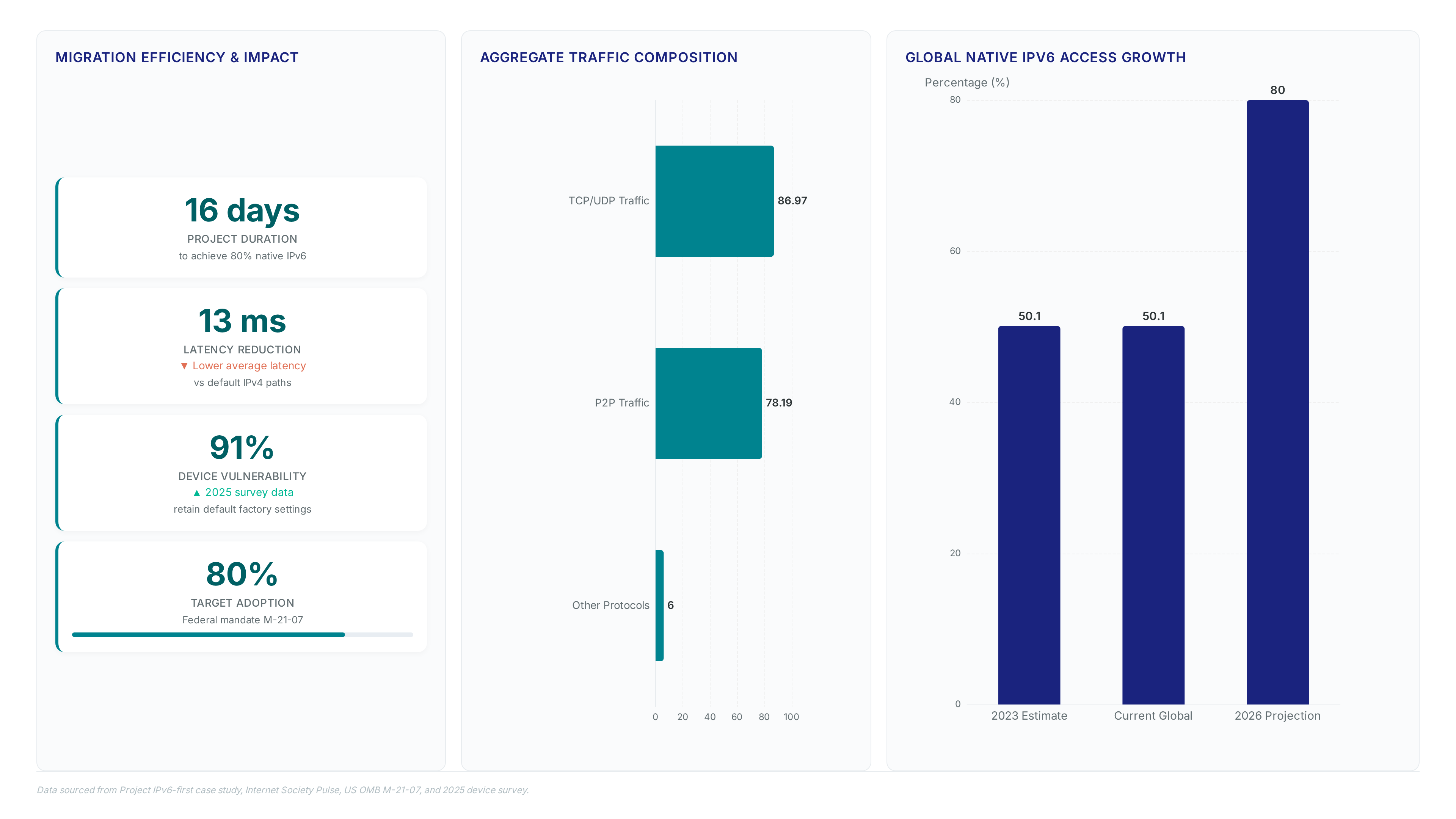
See how a single app binding change lifted native IPv6 from 67% to 79.2% in just 16 days by fixing specific fallbacks.
With native access at 50.10%, basic setup fails. Learn why advanced design skills are the new bottleneck for secure networks.
With a 40% failure rate on large payloads, IPv6 DNS shows why dualstack is vital for real user capability today.
Discover why 1994 IETF mandates created IPv6 complexity. Learn why dual-stack remains vital as we approach 2026 infrastructure trends.
With 57% of traffic still on IPv4, IPv4x extends space without breaking routers. A pragmatic look at the 96-bit subspace solution.
With 841 LIRs stuck on the RIPE waitlist, free IPv4 allocation is gone. I explain why tactical leasing is your only path forward today.
With fewer than 5 LIRs left and a 477-day wait, direct allocation is gone. I explain why transfers are your only real option now.
Stop managing dozens of disjointed stacks. Centralize inspection in 1 VPC to cut costs and fix policy drift across your global network today.
I cut operational friction by embedding global routing in YAML. With AI hitting 58% of clusters, this declarative shift is essential.
Phishing losses hit $70M because reactive tools wait for failure. See how proactive patterns catch invisible threats before money vanishes.
See why eBPF offloading hits a wall at 55K requests. Memory copies add 340 ns latency, making simple kernel modules faster for complex apps.
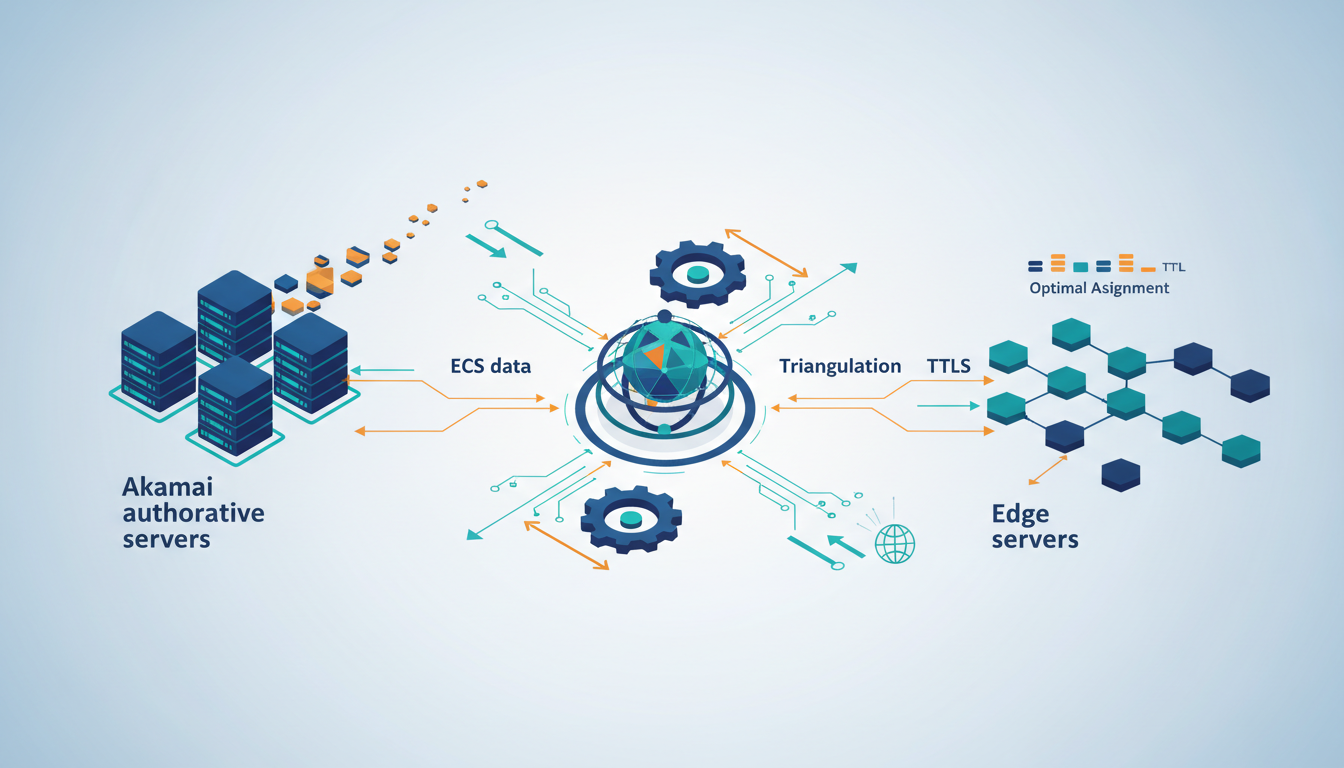
Akamai moves 15% of global traffic, yet DNS steering fails when users query open resolvers like 1.1.1.1 instead of local ISP servers.
I map IPs to ASNs in under 100ms using DNS. With 92,000 active systems, static files just can't keep up anymore.
Stop guessing where traffic goes. DNS logs show 60% of resolutions are external, costing you money. Get real visibility today.
TCP breaks when roundtrips span hours. See why 4 million Starlink users prove IP works, but Mars needs a new approach.
A single code change on Jan 8, 2026, broke DNS because 40-year-old RFC ambiguity let clients assume a record order that never existed.
I analyze how a single bug withdrew 1,100 prefixes, causing a 6-hour outage that proves automated changes need human safeguards.
Client support hit 60% in two years, yet origin servers lag. See how hybrid handshakes close this critical security gap today.
Sparkle enforced active path validation on Feb 3, 2026. Stop relying on unsigned IRR lists for your blackhole requests today.
The IPv4 table added 53,000 entries in 2025. I break down what this 6% surge means for your router memory and planning.
See how ReAct stops 500x NTP amplification even when asymmetric routing breaks standard symmetric filters and drops valid packets.
Securing just the top eight ASes with ASPA records stops 96% of route leak victims. Learn how to verify your transit path today.
Asia's vacancy rate dropped to 10.9% as grids limit growth. I break down why AI demand is outpacing new builds in 2026.
With 8M records at stake, the 15-member ARIN Council needs your voice before the 2026.1 manual locks in new rules.
NRPM 2026.1 went live on March 3, replacing the 2025 edition. Learn why section 8.5.1 changes mean strict new fees for your IP blocks.
I tested the Jan 20, 2026 ARIN update. See how 106 staff shifted to customertocustomer tickets to cut validation bottlenecks for admins.
ARIN cleared 149 requests in Jan 2026. I explain why the 388-day queue beats paying $90 per IP on the volatile private market.
Join me in Jakarta for APRICOT 2026. We'll tackle Prop164 and prepare our networks for the 70% of enterprises adopting agentic AI soon.
See how APNIC's open process serves 56 diverse economies. Real operators bridge the gap between clean protocols and messy infrastructure realities.
At APNIC 61, chairs debated prop164. See why a /36 block might fracture routing tables for millions of users tomorrow.
Video eats 82% of bandwidth, yet Akamai steering breaks when open DNS hides client locations. Learn why hybrid models are now essential.
With IPv6 hitting 50.10%, agentic AI manages networks. I explain why archiving operational exhaust is vital before history fades.
With 65% of firms using AI, BGP leaks cost more. We weigh PeerLock's speed against ASPA's universal safety for your network.
Asia's vacancy rate dropped to 10.9% as grids limit growth. I break down why AI demand is outpacing new builds in 2026.
Akamai moves 15% of global traffic, yet DNS steering fails when users query open resolvers like 1.1.1.1 instead of local ISP servers.
With 88% expecting cost surges, RIPE offers payment extensions to keep Middle East operators online during active conflict and cash flow issues.
See how 11 route leaks since December caused a 12-hour outage. Learn why weak export policies, not spies, break BGP stability today.
See how APNIC's open process serves 56 diverse economies. Real operators bridge the gap between clean protocols and messy infrastructure realities.
See how ReAct stops 500x NTP amplification even when asymmetric routing breaks standard symmetric filters and drops valid packets.
Stop managing dozens of disjointed stacks. Centralize inspection in 1 VPC to cut costs and fix policy drift across your global network today.
TCP breaks when roundtrips span hours. See why 4 million Starlink users prove IP works, but Mars needs a new approach.
Video eats 82% of bandwidth, yet Akamai steering breaks when open DNS hides client locations. Learn why hybrid models are now essential.
See how a single app binding change lifted native IPv6 from 67% to 79.2% in just 16 days by fixing specific fallbacks.
I cut operational friction by embedding global routing in YAML. With AI hitting 58% of clusters, this declarative shift is essential.
Global internet hit 74% penetration. Adding IPv8 now means replacing billions in legacy hardware that vendors abandoned years ago.
Don't trust IPv8 hype. Data from 2026 proves IPv6 handles mergers better, avoiding the 10x collision risks seen in fragmented legacy networks.
With 57% of traffic still on IPv4, IPv4x extends space without breaking routers. A pragmatic look at the 96-bit subspace solution.
With IPv4 validity at 65.5%, ignoring RPKI risks traffic rejection. Learn how to deploy ROA and ASPA objects before enforcement deadlines hit.
With native access at 50.10%, basic setup fails. Learn why advanced design skills are the new bottleneck for secure networks.
With fewer than 5 LIRs left and a 477-day wait, direct allocation is gone. I explain why transfers are your only real option now.
See why eBPF offloading hits a wall at 55K requests. Memory copies add 340 ns latency, making simple kernel modules faster for complex apps.
See how npNOG 10 launched a career path Gartner says will define 30% of enterprise networks by 2027. Real talk on community.
Only 18% rate automation as successful. Learn why dedicated funding drives an 80% success rate over mere tool selection.
Only 25% of systems enforce Route Origin Validation. See how predictive intelligence scores ASN risk before malicious routes propagate globally.
Join me in Riga this June. With $2.5T in AI spending coming, regional coordination is vital for Baltic network survival. Let's connect!
Phishing losses hit $70M because reactive tools wait for failure. See how proactive patterns catch invisible threats before money vanishes.
Stop guessing where traffic goes. DNS logs show 60% of resolutions are external, costing you money. Get real visibility today.
NRPM 2026.1 went live on March 3, replacing the 2025 edition. Learn why section 8.5.1 changes mean strict new fees for your IP blocks.
With a 40% failure rate on large payloads, IPv6 DNS shows why dualstack is vital for real user capability today.
Sparkle enforced active path validation on Feb 3, 2026. Stop relying on unsigned IRR lists for your blackhole requests today.
With IPv6 hitting 50.10%, agentic AI manages networks. I explain why archiving operational exhaust is vital before history fades.
Securing just the top eight ASes with ASPA records stops 96% of route leak victims. Learn how to verify your transit path today.
Client support hit 60% in two years, yet origin servers lag. See how hybrid handshakes close this critical security gap today.
At APNIC 61, chairs debated prop164. See why a /36 block might fracture routing tables for millions of users tomorrow.
I analyze how a single bug withdrew 1,100 prefixes, causing a 6-hour outage that proves automated changes need human safeguards.
Discover why 1994 IETF mandates created IPv6 complexity. Learn why dual-stack remains vital as we approach 2026 infrastructure trends.
Join me in Jakarta for APRICOT 2026. We'll tackle Prop164 and prepare our networks for the 70% of enterprises adopting agentic AI soon.
A single code change on Jan 8, 2026, broke DNS because 40-year-old RFC ambiguity let clients assume a record order that never existed.
With 8M records at stake, the 15-member ARIN Council needs your voice before the 2026.1 manual locks in new rules.
ARIN cleared 149 requests in Jan 2026. I explain why the 388-day queue beats paying $90 per IP on the volatile private market.
Since April 2025, AWS charges $0.01 per GB for cross-AZ peering. I show how new billing codes expose these once-hidden network costs.